




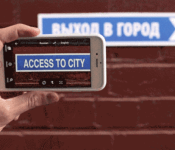
Google Translate just got smarter: Word Lens and instant voice translations in latest update

When Google acquired Word Lens in May 2014, it was clear that it was only a matter of time until the startup’s impressive visual translation technology would be folded into Translate. That moment is coming today – Word Lens integration and improved voice translations are coming in the latest Google Translate update.
Word Lens lets you point your smartphone to a foreign language text and have it instantly replaced with your language of choice, right on the screen. Until this update, you could scan text with your device and have it translated and displayed into a text box, a clunky experience in most cases. Word Lens removes that friction, and everything happens in real time. Street signs, restaurant menus, product labels, there are tons of situations you could find it useful.
This genuinely amazing capability will be available in English, coupled with French, German, Italian, Portuguese, Russian, or Spanish. That means you will be able to translate from English to French, and the other way, but not from French to Russian, for instance. Google says more languages are coming.
The second big feature in this update is instant voice translation. Before the update, translating speech required tapping the mic button each time someone said something, as well as switching between languages in order to accommodate the other speaker. Now that all happens on the fly, because Translate understands different languages without requiring your input.
This feature should make for much more natural conversations, akin to having a human interpreter on your side, translating the back and forth in real time.
The new Google Translate should start rolling from today – we’ll keep an eye out for other features potentially present in the update and for an APK file.
What do you think of these new features?
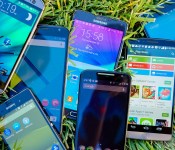
The future landscape of mobile devices

Editor’s Note – In many ways the mobile revolution has only just started. As devices become smarter, as seemingly insignificant objects get connected, and as wireless technologies advance, there will be significant changes in how technology impacts are lives. One researcher who is taking a longer term view of mobile technology is Professor Cristian Borcea of the New Jersey Institute of Technology.
Borcea is an Associate Professor and the Associate Chair of the Department of Computer Science at NJIT, and holds a Visiting Associate Professor appointment at the National Institute of Informatics in Tokyo, Japan. Holding a Ph.D. from Rutgers University, Borcea studies mobile computing and sensing, ad hoc and vehicular networks, and cloud and distributed systems.
Here’s Cristian Borcea talking about his research interests in this April 2014 video:
Professor Borcea and his colleagues have recently been awarded a National Science Foundation Grant to research a novel mobile cloud computing platform that would “support collaborative applications in areas such as healthcare, safety, and social interaction, potentially benefiting millions of users.”
“Our goal is to make smartphones smarter,” said Borcea, who is the grant’s principal investigator. We caught with Professor Borcea and asked him to explain his work and vision to us. In the following guest post, Professor Borcea lays out his vision of cloud-augmented mobile computing and the potential impact his research could have on fields.

The Future Landscape of Mobile Devices
By Cristian Borcea
In the next 10 to 15 years, the mobile landscape will experience a seismic shift that will completely alter the way our devices interact with the physical world. The market will be saturated with intelligent wireless sensors that will impact healthcare, transportation, energy and water distribution networks, etc. For example, body-worn health monitoring sensors will communicate wirelessly with smartphones or smartwatches, which will be integrated with the cloud. The applications of this technology are seemingly endless – from finding a doctor nearby to assist someone who is having a heart attack, to monitoring and potentially stopping the spread of epidemic diseases. In addition to sensors, we will see autonomous devices, vehicles and robots in a multitude of forms (self-driving cars, drones, household robots).
These devices will stream large amounts of data from the physical environment (video, audio, and other types), and this data has to be quickly processed to provide useful real-time assistance to users. However, in order for this vision to become a reality, several problems need to be overcome to ensure that these novel mobile apps work efficiently and protect the users’ privacy. Researchers and computer scientists will have to integrate mobile and cloud computing in order to allow automation and interaction between devices.
At the New Jersey Institute of Technology, my colleagues and I are trying to answer a key question necessary for the shifting mobile landscape: How can we provide fast, scalable, reliable, and energy efficient, distributed computing over mobile devices?
Avatar
Our proposed solution is called Avatar, and it is a mobile-cloud system that enables effective and efficient collaborative apps for mobile users. In Avatar, a mobile user owns one or more mobile devices and has an “avatar” hosted in the cloud. Our version of an avatar is a per-user software entity that acts as a surrogate for the user’s devices, which will reduce the workload and demand for storage and bandwidth. Avatars run the same operating system as the mobiles and can run unmodified mobile apps or app components. Implicitly, they save energy on the mobiles and improve the response time for many apps by executing certain tasks on behalf of the users. The avatars are always available, even when their mobile devices are offline.
Potential application: finding people in a crowd
Currently we see a wide range of applications for this research. For example, through Avatar, a parent could find a lost child by using the child’s photo to search through recent images taken by nearby mobile users. Similarly, law enforcement agencies may search for a person of interest. Being able to efficiently and automatically run such an operation on thousands of mobile devices, selected according to their current location and other properties such as social connections, while preserving the users’ privacy, has been the holy grail of mobile computing for a long time.
The “find person” app could run on either the avatars or the mobile phones, depending upon where the photos are currently located and the trade-offs between computation and communication. Our architecture improves the response time by using avatars to process the photos already uploaded to the cloud, and by deciding how to deal best with the photos residing on mobiles.
In addition to impacting the way parents and law enforcement can find persons of interest, our research will improve healthcare and wellbeing. Users may have health body sensors that report health-related data to smart phones and then on to the avatars; additionally, the phones may record the user location and co-location with other users. A simple example app is one that would allow users or health agencies to monitor and stop, in early stages, the spread of epidemic diseases, by seeing spikes in the data and alerting the CDC to help control the outbreak. These types of applications would have perhaps helped limit the spread of Ebola. When natural disasters strike, such as an earthquake or a blizzard, the mobiles/avatars of users can be queried in real-time to alert emergency teams of the locations of injured citizens. The avatars may share the users’ data even after the mobiles have run out of battery power, thus improving availability.
Privacy in the cloud
The above applications can work efficiently by storing and processing an unprecedented amount of data in the cloud. At the same time, our goal is to also protect the user’s privacy and data confidentiality from the cloud providers. We propose to use a variant of multi-party computation, which is tailored for the Avatar system and cloud:
- Split and store the users’ data between two different cloud providers in such a way that each individual cloud provider cannot access the original data (this is achieved through cryptographic functions);
- Execute the desired program on the data split between the two cloud providers such that the providers cannot see the final result – the requester will get partial results from each cloud provider and use cryptographic functions to merge them into a final result.
The privacy of the users’ data is preserved as long as the cloud providers do not collude with each other. This assumption is supported by the current real-world settings in which the cloud providers are competitors (e.g., Amazon and Microsoft).
Programmability and scalability challenges
In addition to privacy issues, there are substantial technical challenges to Avatar, including programmability and scalability issues. Many current apps are interactive or heavy on communication instead of computation. Therefore, new cloud architectures and protocols are needed to maximize scalability and find a good balance between cost and efficiency. For this reason, we propose to work on re-designing the cloud architecture and protocols to support billions of mobile users and mobile apps with very different characteristics from the current cloud workloads.
Some of our current recommendations include the following techniques: Virtual machine clustering to localize communication; distributed storage and data layout to localize data accesses; deducing data and computation redundancy; and schedule VMs and requests carefully to further reduce computing resource consumption.
Avatar apps execute over distributed and synchronized (mobile device, avatar) pairs to achieve a global goal. Therefore, app components have multiple options about where to place execution to achieve different global performance objectives. However, the programming abstractions should shield the programmers from all these complexities and provide a simple, high-level API. In addition to the app code, the programmer should issue policy and performance objectives that will be translated into an execution plan by the Avatar middleware. For this reason, we propose to work on creating a high-level programming model and a middleware that enable effective execution of distributed applications on a combination of mobile devices and avatars.
Overall, computer scientists have a major task ahead of them in order to integrate mobile and cloud computing, but the impact to the way society manages healthcare, transportation, energy, and safety are immense.
Through our research at NJIT, we’re hoping to find ways to create a new mobile cloud architecture that allows for many of the future mobile apps to happen efficiently and without privacy intrusion. The future landscape of mobile devices over the next 10 to 15 years is exciting, and it’s almost impossible to imagine how far we can improve the fundamental building blocks of the way we interact with our physical and digital landscapes.
Google Translate with Word Lens is now official, rolling out over the next few days
It was about a month ago when we first got wind of a possible Google Translate with Word Lens union, and now Google has made that marriage official. On their blog today, Google has detailed just what Google Translate with Word Lens on Android and iOS is going to be capable of, and it looks like it’s […]
The post Google Translate with Word Lens is now official, rolling out over the next few days appeared first on AndroidSPIN.

ZEROHOUR RELIC XR, for all your portable charger in a tactical flashlight needs
Another nifty idea that graced the floors of CES last week, was a convenient, multi-purpose portable charger built into the form of a tactical flashlight. The ZEROHOUR RELIC XR is well on its way to graduating from idea to store shelves with its ongoing Kickstarter campaign.
Amy Truong and Aaron Son launched the RELIC XR on Kickstarter back in January. As far as success stories go in the crowd funding world, they blew past their goal in the first sixteen hours. They have now more than tripled their goal, and the campaign yet has 22 days to go.

At first glance, you will see an aircraft aluminum constructed tactical-grade, waterproof, compact flashlight with 1,000 lumen LED output. Give the RELIC XR a little twist and you will find full size and micro USB ports tucked away.
Inside of ZEROHOUR’s flashlight is a 3,400mAh battery, ready to keep your Android gear charged on the go. The full size USB slot provides a healthy 5v with 1A of power. That micro USB slot, as you might imagine, is how you recharge the battery pack itself.

For clarity, the flashlight uses its own batteries to operate, so you don’t have to worry about being left in the dark after charging your phone. That is no ordinary flashlight either, with up to 5 modes available, including a low 10 lumen output, variable up to the full 1,000 lumen, an S.O.S. mode and a good old fashioned strobe light.
If you are looking for a new compact tactical flashlight equipped with an extra charge for your phone, head on over to the ZEROHOUR RELIC XR Kickstarter page for more info. $135 will get you into an early bird version of the RELIC XR, and you’ve got until February 5th before the campaign concludes.
What do you say, is a tactical flashlight form factor worth the premium for a 3,400mAh portable charger?

WWE 2K15 and Terraria get discounted in this week’s Deals with Gold

Wrestling fans get ready, because this week’s Deals with Gold is set to bring you wrestling thrills on the cheap. Fans of WWE 2K15 can pick the game up for the Xbox One at a pretty nice 33 percent discount. Also coming along for the ride are a few other notables, including Terraria at a steep 50 percent off.
Sony considering all options amid struggling divisions

Things have not been going well for Sony. Even aside from the disaster that it faced with The Interview, the company has seen its mobile and television divisions struggle. Both of them are losing money and CEO Kazuo Hirai is tasked with composing a strategy to stimulate growth for Sony. Thousands of jobs were slashed in the last year and the computer division (Vaio) was sold. Still, more changes are in order for the giant. Sony is reportedly considering joint ventures and selling divisions to improve. The company is heavily leaning on its film and gaming divisions to carry it; however, that can only go on for so long.
Hirai made it clear last week in Las Vegas to reporters that electronics, entertainment, and finance are all important to Sony. However, he added that “within that there are some operations that will need to be run with caution – and that might be TV or mobile, for example.” Sony recently put a focus on high-end mobile devices but we have yet to see favoring momentum. Plus, the company fails make a push for key markets such as the United States. Sony is company with respectable brand recognition in the U.S.; it just needs to actually use it. A different approach is likely coming to the mobile division, but do not be surprised by a sale if no improvement is made.
Source: Reuters
Come comment on this article: Sony considering all options amid struggling divisions
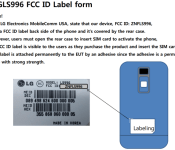
LG G Flex 2 for U.S. Cellular appears in FCC filing

Last week at CES 2015, the LG G Flex 2 was introduced to the world. Both Sprint and AT&T were quick to confirm the handset’s availability to their customers. We can add U.S. Cellular to the list of carriers offering the G Flex 2 because an FCC filing reveals that the carrier has its own variant. It supports LTE bands 5 and 12 in addition to the 850 and 1900 CDMA bands. All of these are supported by U.S. Cellular. The exact model number for the handset in this FCC filing is LG-US995.
Source: FCC
Via: Android Headlines
Come comment on this article: LG G Flex 2 for U.S. Cellular appears in FCC filing
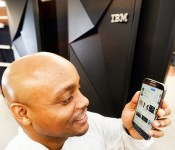
IBM’s monster mainframe is built to handle your mobile shopping

Shopping from your phone is a big deal these days, but it requires a lot of effort behind the scenes to run smoothly — when there are thousands of people tapping “buy” in short succession, they can easily bring a server to its knees. That crush might not be a problem for stores that have IBM’s beastly new z13 mainframe, though. The system’s gobs of CPU power (the “world’s fastest microprocessor,” IBM claims), memory and bandwidth let it handle a whopping 2.5 billion mobile shopping transactions per day, or enough that even a mad rush like Black Friday shouldn’t bog it down. It’s fast enough to analyze every deal in real time, too, so it’s more likely to catch someone who stole your credit card info before you have to dispute any unwanted charges. You’ll probably never know which specific apps and sites are using the z13, but this giant computer might just save you from inordinate waits and rude surprises the next time you’re ordering online.
[Image credit: IBM, Flickr]
Filed under: Cellphones, Internet, Mobile
Via: Bloomberg, Wall Street Journal
Source: IBM

Space epic ‘Rebel Galaxy’ coming to Mac later this year

There’s some good news for space adventure fans on OS X today. Double Damage Games has just announced that its space epic Rebel Galaxy, which was initially announced for PC and Playstation 4, will be coming to Macs this year as well.
If you’re unfamiliar with Rebel Galaxy, here’s a quick description of the game:
Rebel Galaxy is an action-packed, swashbuckling space opera. You’ll battle pirates, explore anomalies, befriend aliens, scavenge battle wreckage, mine asteroids, and discover artifacts. Choose your path as a roguish do-gooder, crafty space-trader or power-hungry privateer – or maybe a little of each! Buy larger and more powerful craft with your hard-earned credits, and outfit them with a variety of wicked weapons and defenses. Set in a galaxy of fantastic sights, and secrets to be found, Rebel Galaxy is above all a space epic of adventure, exploration, and combat.
Double Damage Games says it expects the game to be available later this year, but it will be showing its progress off at PAX South in San Antonio, Texas from January 23-25. In any case, it’s awesome to see some more high-quality games coming to the Mac platform.
Press Release:
Rebel Galaxy Coming to Xbox One and Mac in 2015
Action Adventure Space Epic Sets Sights on Additional Platforms and Will be Playable at This Year’s PAX South
(Seattle, WA) – January 13, 2015
Independent developer Double Damage Games today announced that Rebel Galaxy will be arriving on Xbox One, the all-in-one games and entertainment system from Microsoft via the ID@Xbox self-publishing program, and Mac platforms in addition to the already announced PC and PlayStation 4 versions. Additionally, Rebel Galaxy will be demoing and showing off new gameplay at this year’s PAX South in San Antonio, TX from January 23rd-25th at booth #1637. Rebel Galaxy is scheduled to launch in 2015.
“We’ve wanted to launch Rebel Galaxy on multiple platforms from the beginning, and today it’s a pleasure to announce to Xbox and Mac communities that Rebel Galaxy will be coming to the Xbox One and OSX as well. We wanted to wait to announce it until we had the game up and running on both platforms. That milestone has now been achieved!” said Travis Baldree, Co-Founder of Double Damage Games. “We’ve had so much fun developing this, that we can’t wait for players to get their hands on the game at this year’s PAX South in San Antonio and encourage attendees of the expo to come and demo the game. We’d also like to extend our thanks to Blitworks (blitworks.com) for doing the heavy lifting on all of our ports.”
Rebel Galaxy is an action-packed, swashbuckling space opera. You’ll battle pirates, explore anomalies, befriend aliens, scavenge battle wreckage, mine asteroids, and discover artifacts. Choose your path as a roguish do-gooder, crafty space-trader or power-hungry privateer – or maybe a little of each! Buy larger and more powerful craft with your hard-earned credits, and outfit them with a variety of wicked weapons and defenses. Set in a galaxy of fantastic sights, and secrets to be found, Rebel Galaxy is above all a space epic of adventure, exploration, and combat.
Visit the website: http://rebel-galaxy.com
Follow us on Twitter: @RebelGalaxy
Like us on Facebook: https://www.facebook.com/rebelgalaxy
About Double Damage Games
Co-Founded in 2014 by Travis Baldree and Erich Schaefer, is an independent micro-studio headquartered in Seattle. Travis and Erich were both co-founders of Runic Games, as President and Chief Creative Officer, respectively. They departed in April of 2014 to found Double Damage. Rebel Galaxy is their first project. For more information, visit: http://www.doubledamagegames.com
 AIVAnet