



How to get good audio while shooting video on your iPhone

It’s easy to take and edit quick videos on the iPhone, but getting great audio isn’t always as simple as pointing and shooting. The iPhone microphone isn’t too shabby at close distances, but when you’re trying to film in a crowded room, it’s not quite enough. Here are a few of my favorite ways to avoid tinny or terrible sound when shooting iPhone video.
Get closer to your subject when in a noisy environment
One of the biggest audio mistakes beginning videographers make is trying to film someone speaking from across a room when there’s no way to clearly hear their audio. Background noise, room echoes, and outdoor sounds can all contribute to poor quality here. Instead, if you can’t use an external microphone, try getting closer to your subject. Your shot may be a little more zoomed in than you’d like, but your audio will be crisper.
Use another iOS device
Of course, you don’t have to get close to your subject when using an external microphone. If you have an older iPhone or iPod touch, or you can borrow a friend’s, you can use it as a portable microphone with little problem. Use your iPhone to film how you’d like, then set up the second iPhone near where you want audio. (If you’re filming interview-style, you can even hold it like a portable microphone or hide it, mic-side-up, in a jacket breast pocket.)
To record, just open the Voice Memos app on the second iPhone and dictate what clip you’re shooting (“Christmas party, kids playing with new toys”). Then set your video camera to record, and clap your hands in front of the frame — it’s an old trick, but a good one.
When you finish shooting, you’ll have the video and a separate audio track; you can bring both into iMovie on the Mac and edit accordingly.
Buy an external microphone
If you’re trying to shoot something a little more high-quality, chances are you’ll want to pony up a little cash for an external microphone. There are a few different categories here: on-device mics, wired lavalier mics, and wireless microphones.
There are a bunch of on-device mics available for your iPhone or iPad, depending on what you plan to record. I’ve personally heard good things about Photojojo’s Mighty Mic ($70), Blue’s Mikey Digital ($100), and the Zoom iQ6 ($100); the first is designed for shooting on the go, while the latter two are more for single-room recordings and music captures.
In the wired lavalier section, you’ve got the Movo PM10 ($22) as a cheap but well-reviewed option, and the Rode smartLav+ ($78).
If you have professional wireless lavalier and portable microphones you own, you can hook them up to your iPhone, but you’ll need to pair them with a 3.5mm adapter first.
Your tips?
Those are some of my tips and recommendations; anyone have a setup or tips they like to get good audio when shooting on the iPhone 6? Put ‘em in the comments.
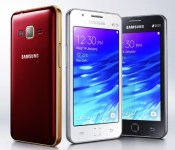
Samsung targets the entry-level segment in India with its first Tizen handset, the Z1

After significant delays, Samsung’s first Tizen smartphone has made its debut. Dubbed the Z1, the device will go on sale in India later today for Rs. 5,700 ($90). To incentivize the purchase of the Z1 over Android handsets available at a similar price, Samsung is bundling a host of entertainment services in a package called “Joy Box”, which allows users access to over 270,000 songs, movies, and over 80 live TV shows.

Microsoft announces the super-affordable Lumia 435 and Lumia 532

A few hours after the mysterious Lumia 532 passed through Brazil’s equivalent of the FCC, Microsoft has made the device official. The Redmond giant also launched the Lumia 435 in single- and dual-SIM versions, with the device becoming the most affordable Lumia handset yet with a price tag of 69 EUR ($80) before taxes.

Alleged picture of Mi5 Plus leaked on eve of Xiaomi’s event

Xiaomi will launch a new flagship device tomorrow (January 15), and while the company has been sending out teasers about the device’s thinness, there are very few solid facts about what will be unveiled. Now, just one day before the launch @leaksfly, a Twitter user, has posted an alleged picture of a device called the Xiaomi Mi5 Plus. The striking thing about the depicted Mi5 Plus is its razor thin bezels. They do look almost too good to be true. What do you think? Fake or real?
As a recap this is what we know for certain, Xiaomi is holding a flagship product launch on the 15th. And that is it! In terms of rumors and assumptions, we know that the thinness of the device will be a key feature, and it will likely be called the Mi5. There has also been some leaked images of the devices uni-body construction, which is said to just 5.1mm thick.

Other rumors are that the device will have a Quad HD display (1440 x 2560) and will use a top of the line Qualcomm Snapdragon processor, either an 805 or an 810. Since the Mi 4 had 3GB of RAM, a 3000+ mAh battery and a 13MP camera, we can expect that the Mi 5 will offer at least those specs, but probably more.

Xiaomi has also hinted that it will actually be unveiling two devices tomorrow, some pundits are suggesting that these will be the Redmi Note 2 and the Mi5. However, there have been times when the rumors were that the Mi5 would feature a 5.2 inch display, and at other times it was a 5.7 inch display. If you combine these with the idea of a Mi5 Plus, then it could be that the two devices that Xiaomi will announce are in fact the Mi5 and the Mi5 Plus. One with a 5.2 inch display and one with a 5.7 inch display.
So stay tuned to find out what Xiaomi has planned for us tomorrow! In the meantime, What would you like to see from the Mi5?
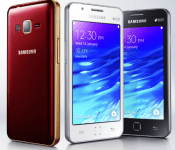
Samsung launches sub $95 Tizen phone for India

Samsung has launched its first Tizen powered smartphone for India, the Samsung Z1. The 4 inch device is very low-end, presumably to hit the target price point. At its heart is a 1.2GHz dual-core processor, it has 768MB of RAM and 4GB of internal storage. There is also a 1500mAh battery, which although it sounds small, is probably reasonable for a device with a 800×480 resolution display. In terms of cameras the Z1 comes with a 3.1 megapixel rear camera, and a VGA front camera with an auto face detect feature.
Besides the underwhelming specs, the big thing here is that the phone runs Tizen 2.3 and not Android. To make a Tizen based phone more attractive Samsung has gone to great lengths to bring some value-add to the Z1.
Users of the Z1 will get access to “a wide range of free entertainment content spanning across categories such as music, movies, videos, mobile TV and radio.” Samsung will also launch a free entertainment package called ‘Joy Box’, that gives Z1 users access to music, TV and movies. Samsung has also partnered with Hungama.com to deliver a wide selection of music available for streaming and downloading.

The Z1 also includes a SOS alert feature. If you press the power button four times, the handset will send out a ‘Help’ message to the user’s primary contacts and track the device’s location to provide necessary assistance.
As Mr. Hyun Chil Hong, President and CEO, Samsung India Electronics put it, “We have customized the Samsung Z1 to meet these unique, entertainment-focused needs of local Indian consumers for a personal and reliable mobile experience.”
The Z1 is a 3G device and works with India’s Reliance Communications and Aircel networks. The Samsung Z1 costs INR 5,700/- (just under $95) and will be available in India from January 14th in White, Black and Wine Red.
Since Samsung has similarly priced Android phones, what do you think is Samsung’s strategy with Tizen?
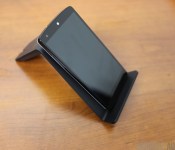
Wireless charging technology in 2015: what you need to know

Wireless charging is a technology with plenty of potential, ranging from promises of cordless charging at your desk to boosting your battery as soon as you walk through the door. However, most Android OEMs only appear to be making a token effort to push this technology into the mainstream and many consumers are still waiting for a truly convincing implementation.
As is currently stands, there are three big groups each promoting their vision for the de-facto future standard of wireless charging: the Wireless Power Consortium, Alliance for Wireless Power, and Power Matters Alliance. Recent merger intentions between two of the industry’s largest groups may signal a big push into products later this year. In which case, we should probably know a little bit more about each of the big names.
Qi
Qi (pronounced chee) is probably the most well-known of the various wireless standards, having made an appearance in the popular Nexus 4 and 5 smartphones, Nokia’s (Microsoft’s) Lumia range, and a handful of flagship smartphones, such as the LG G3 and Galaxy S5. The Qi standard was developed by the Wireless Power Consortium, which was established back in 2008 and currently boasts 206 companies in its membership program, including big tech names like Microsoft, MediaTek, Qualcomm, Samsung, and Sony, among others.

Despite missing from the spec sheets, both the Nexus 6 and Galaxy Note 4 support Qi wireless charging. Although, you will require a compatible cover for the Note 4.
Despite early adoption, this generation has seen Qi wireless charging move from a standard feature in some models, to optional smartphone cases sold separately at additional cost. Many Qi phones no longer come with a charger by default either, see the Nexus 6 or Droid Turbo, turning it an option that many consumers aren’t even aware of.
Qi may have taken a backseat this generation for a number of reasons. Qi cases are slightly more expensive to produce than ones without a coil, which could be the first cut to make as price competition increases. Alternatively, the questionable practically of Qi may be hindering its popularity, but more on that in a minute.

Coils of wire create magnetic fields, which can be used to generate a current flow in a separate, insulated coil. This is the basis of transformer technology.
Qi has been around for quite a while and is based on the core principle of electromagnetic inductance. Essentially, this technology is powered by two coils of wire. The charging station contains one coil which produces an oscillating magnetic field, which induces an alternating current in the receiving coil located on the device being charged. Communication between the base station and receiving unit controls the output power of the transceiver if it is to be used with multiple devices.
The latest Qi specification states a transfer of around 5W of power when using the appropriate secondary coil, which is typical of older smartphone chargers connected to the mains supply.
An important point for later is that Qi uses tightly coupled coils for high transfer efficiency, but this necessitates that the coils are tuned slightly “off-resonance” frequency, as, oddly, two close tightly coupled coils don’t work very well with a matched resonance. This results in the most efficient transfer of power but at the cost of high sensitivity to coil misalignment.

Tightly coupled coils ensure maximum power transfer (left), while smaller loosely coupled coils operate at greater distances with reduced power (right). Source: WPC
The close nature of this connection ensures a good level of transferable power without the need for wires, but it does have its compromises. These drawbacks mainly boil down to the limited distance allowed between coils, which means that devices have to be lined up quite accurately in order to achieve a good connection and power can only be transmitted to one device at a time per transmitting coil. Even though the Qi standard ensures compatibility across all certified devices, different sized smartphones and docking stations sometimes fail to play nicely with each other.
Often it ends up being just as easy to keep a USB cable or standard dock at your desk than it is to buy a compatible, more expensive Qi docking station. The lack of any major benefit over normal charging is a probably cause as to why Qi has not become a more mainstream technology.
Rezence

Highly tuned, high Q resonance circuits create a higher power transfer at the base, allowing for larger coverage distances. Source: Hyperphysics
The Alliance for Wireless Power may not have established products like the Wireless Power Consortium, but its technology is just as promising. Just like Qi, you will find a wide selection of big tech names among A4WP’s members list, including Qualcomm, Samsung, and Intel. All of which are interested in its wireless charging standard known as Rezence.
Rezence, as the name implies, makes use of resonant inductive coupling, which is an ever so slightly different take on the technology used by Qi. The principle still uses coils of wire to create a usable magnetic field, but also tunes the frequency of the oscillation to precisely match between receiver and transmitter. This increases the maximum transfer distance before power diminishes, but looser coupling between the coils results in suboptimal power transfer.
Well coupled (similarly sized) coils allow for an excellent capture of the magnetic field at close range, but quickly fall off at a distance. A loose (smaller), on-resonance receiving coil can continue to make use of the magnetic field at greater distances and can also operate almost anywhere within the magnetic field, albeit with a decreased level of power.

Tight coupled, off-resonance coils (left) allow for maximum power transfer, while loose, resonant coils (right) can be placed anywhere in the field.
Rezence’s latest specification states a maximum power transfer of 5W at greater than 80 percent transfer efficiency, again quite typical of older smartphone chargers, with a maximum of eight devices charging at one. However, this power will decrease with the number of connected devices and distance. 5cm has been stated as a typical operating distance, although no measurement is declared in the specification.
What Rezence may lose in maximum power transfer it makes up for in product flexibility. Rather than producing single use transmitter docks or complex and expensive multi-coil transmitters, Rezence circuits can charge multiple devices, without having to worry about alignment. It’s worth noting that Qi has its own resonant prototypes in the works and chargers can be built to simulate the effects of resonance coupling with existing Qi products, which will appear in the upcoming 1.2 specification. Guided Positioning and Free Position modes for devices are already in the latest Qi specification, suggesting that Qi is also interested in this approach.
Personally, I find the idea of being able to place multiple devices on a charging mat or desk far more useful than requiring a dedicated docking station for each device. That said, Qi may be the better solution if you want the fastest possible wireless charging, although mains charging via Quick Charge 2.0 is faster still. WiTricity is also a member of the A4WP and bases its technology on the same magnetic resonance principle, which it says can work up to several metres in specific scenarios.
The additional distance of a resonance based technology means that charging mats can be placed under tables and other surfaces to create discreet charging stations. Rezence charging accessories and compatible mobile devices will be rolling out throughout 2015.
Power Matters Alliance
The Power Matters Alliance is the last of the big three groups involved in wireless power standards and is overseeing a couple of interesting technologies. The PMA and A4WP are the big two that recently agreed to merge, in order to help promote their standards as an alternative to the more established Qi brand.
Until recently, the PMA was promoting its own inductive charging standard, which is very similar to Qi. In fact, some smartphone vendors had chosen to adopt PMA instead of or alongside the Qi standard in the US, and some chip makers have begun proving dual solutions for both technologies at little extra cost. Last year, Starbucks announced plans to adopt PMA chargers in its stores. In addition to this, the group also manages an extended layer of digital monitoring and policy APIs for wireless power.
However, following the agreement with A4WP, the PMA will now be shifting its focus to include resonance based charging alongside its tightly coupled inductive standard. Both groups will be adopting and supporting each other’s standards for future design specifications, meaning that wireless charging is likely heading for dual-mode operation, offering the benefits of inductive and resonance solutions. Qi also looks to be heading in this direction with its latest prototypes, but it remains to be seen if this more complicated solution is economically viable.
The Power Matters Alliance is also working with a new company named Energous, which own the unique WattUp technology. This is quite a bit different from the magnetic field based technologies of Rezence and Qi. Instead, WattUp uses a radio frequency system to transmit power up to 15 feet from the charging station. Using the 900MHz (5.7-5.8GHz) RF spectrum, WattUp targets your device’s receiving antenna with lots of small signals that add up to a decent current with which to charge your device. Power levels, charging times and schedules can all be managed with the company’s software and up to 12 devices can be charged at a single time.
However, Energous’ WattUp only delivers 1W of charging power at 15 feet, increasing to 4W nearer the charging station, which isn’t as fast or reliable as the competition, especially when you consider that Quick Charge 2.0 mains power typically operates at around 10 watts and can reach 36 watts on supported devices. On the plus side, WattUp can power your devices constantly without having to leave them on a dedicated pad, so your smartphone can start charging as soon as you walk in the door. Bringing WattUp to market is more challenging, as the expensive hub is clearly a bigger investment than a small docking station, but home and business use are both on the cards.
What to expect in 2015
You can now probably see why the industry has been so indecisive about making a commitment to any one standard. There is no perfect solution to wireless power yet. Rather, there’s an assortment of workable ideas to choose from, each with their own pros and cons. Not to mention that better technologies are still being worked on and some ideas haven’t even been presented to consumers yet.

With competition over standards expected to pick up this year, we may see a wider range of smartphone accessories to ensure compatibility with various technologies.
Qi hasn’t taken off in its current form, instead resonance or dual-mode charging is likely to be the next stop
As for where things are heading, Qi clearly hasn’t taken off in its current form, instead resonance and/or dual-mode charging is likely to be the next stop. This should overcome most of the practical and performance issues associated with the early first generation technologies. Ideas like Energous are also promising, especially in the business space where entire offices could be built to operate on wireless power. But this is likely further away and requiring substantially more investment and time to perfect than smaller gadget accessories.
The big question still to be confronted by wireless power is: why should the majority of consumers choose it over the convenience of a bedside USB cable? The first group to solve this issue both simplistically and economically could unlock a market with hundreds of millions of potential customers. Wireless charging still has a lot to prove, but the technology is right around the corner.

Google Play grew much faster than Apple’s App Store in 2014 – report

According to a recent report from appFigures, Google Play has grown more than Apple has in both the number of apps and developers in the year 2014. Google has also grown faster than Apple in the total number of apps available, total number of developers creating apps for the platform, and for the first time in 2014, the Play Store has released more new apps than App Store released in a given year.
Taking a look at the charts below, we’re seeing major growth in the number of apps and developers in the Google Play Store, iOS App Store, as well as the Amazon Appstore from 2010 to 2014. Google ended the year 2014 with over 1.43 million published apps, compared to Apple’s 1.21 million. Amazon is still very far behind, finishing the year with only 293,000 apps in all. We can also see the total number of developer growth for each platform. Google finished the year with almost 400k developers, while Apple nearly made it to 300k. Amazon is nearing the 50k mark to finish out 2014. As you can see, Google Play’s developer community has grown faster than Apple’s for the third year in a row.

Moving forward, we can also see that app development is on the rise. Google Play grew in the number of apps by more than a 100% increase, while Amazon grew a bit more than 80%, and Apple growing by under 60% in 2014. Additionally, more developers joined Google Play in 2014 than Amazon and Apple combined. The Google Play Store now has 388k developers on the Android platform, compared to Apple’s 282k and Amazon’s 48k.

The report also took a look at the fastest growing categories in each app store. Google Play’s Games and Photography apps increased tremendously, while Apple’s Business and Food & Drink categories rose the most. There’s not much jarring information here, but the charts below still show some interesting results.

So, why is Google Play growing so much faster than Apple’s App Store? It’s mainly because Android is so much more popular than iOS globally, and its developer base is simply larger. Also, the difference may have a lot to do with the way Google and Apple publish apps in their respective stores. Apple has a more rigorous app approval process before anything can get published, while Google is a tad more lenient up front, then fixes problems and violations after the app is published. Due to these opposing publishing processes, we’re unsure if these charts account for the removal of apps after they’ve already been published.
Either way, we’re still seeing major growth out of both Google and Apple, so it will be interesting to see who surpasses who in the coming years.

Melt undead with cool new plants in the latest update for Plants vs. Zombies 2

Plants vs. Zombies 2 has today received an update, introducing 16 exciting new levels for players to enjoy. Titled Frostbite Caves Part 1, EA has brought freezing winds and hot new plants – a perfect recipe for melting frigid zombies.

Melt undead with cool new plants in the latest update for Plants vs. Zombies 2

Plants vs. Zombies 2 has today received an update, introducing 16 exciting new levels for players to enjoy. Titled Frostbite Caves Part 1, EA has brought freezing winds and hot new plants – a perfect recipe for melting frigid zombies.
Here’s a quick run through of what’s new in the latest release:
- 4 fiery plants, like Pepper-pult
- 8 primitive zombies, including Dodo Rider
- Zombie Hug-a-thon celebrating Valenbrainz (February 3 – 14)
- The Sap-fling Reforestation Bundle
This update marks the beginning of a chilled adventure for the title, which is set to receive more content after Part 1.
- Free – Download Now
Samsung Galaxy S6 could have a toned down TouchWiz UI, almost “Nexus-like”
One of the biggest criticisms about Samsung devices is its TouchWiz user interface (UI). That’s not to say that there aren’t people that like it, but on a scale from stock Nexus to heavily controlled and themed, the TouchWiz UI is next to almost nothing else. Having seen TouchWiz on almost every Samsung device for […]
The post Samsung Galaxy S6 could have a toned down TouchWiz UI, almost “Nexus-like” appeared first on AndroidSPIN.
 AIVAnet