



Samsung offers to purchase BlackBerry

In the surprise news of the day, Samsung recently made an offer to buy BlackBerry for $7.5 billion. Reuters is reporting that Samsung set the initial price range of $13.35 to $15.49 per share, which translates to a premiumof 38 percent to 60 percent over the current trading price.
So what would Samsung want with such a failing company? According to Reuters, it’s all about the patents. BlackBerry owns roughly 44,000 patents, worth approximately $1.43 billion in net book value. However, a lot of analysts think they are worth much more. Unfortunately BlackBerry isn’t interested in selling only the patents, so Samsung would need to buy the whole company in order to obtain them.
The other problem is getting approved by the Committee on Foreign Investment in the United States (CFIUS), as well as the Canadian government. Samsung does think that if they were to acquire less than 100 percent of the company, the CFIUS approval process would be much easier. However, Samsung doesn’t think they could “accomplish its strategic objectives” without owning 100 percent.
BlackBerry said they have “not engaged in discussions with Samsung with respect to any possible offer to purchase BlackBerry.”
This could get very interesting so stay tuned.
source: Reuters
Come comment on this article: Samsung offers to purchase BlackBerry

Apple Seeds OS X Yosemite 10.10.2 Build 14C99d to Developers [Mac Blog]
 Apple today seeded a fifth beta of OS X Yosemite 10.10.2 to developers, just one week after seeding the fourth beta of OS X 10.10.2 and nearly two months after seeding the first beta.
The new beta, build 14C99d, is available through the Software Update mechanism in the Mac App Store and through the Mac Dev Center.
As with previous betas, Apple asks developers to focus testing on Wi-Fi, Mail, and VoiceOver. Many Yosemite users have had some ongoing problems with Wi-Fi since the new OS was first launched in October, and a November 10.10.1 update did not resolve all of the lingering issues.

The aluminum Nintendo Entertainment System is custom built inside and out

The folks at Analogue Interactive know that making a good looking game console only goes so far, and that it’s what’s on the inside that truly counts. It’s with that in mind that the solid aluminum Analogue Nt — the outfit’s take on the original Nintendo Entertainment System — sports fancy innards in addition to its machined casing. As Polygon writes, the system’s motherboard is custom as well, sporting a fancy black printed circuit board, transparent solder mask and raised copper traces. We’ve embedded a picture after the break. Sounds pretty snazzy, right? Well, the outfit’s still promising audiophile and videophile quality out of their little aluminum box that could, and units still command a $500 starting price for pre-order. You might balk, but remember, this is the same company that charged $1,300 (minimum) for a wood-encased Neo Geo. Comparatively, this is a steal.

A photo posted by Analogue (@analogueinteractive) on Jan 13, 2015 at 9:36am PST
Filed under: Gaming, Home Entertainment, HD, Nintendo
Via: Polygon
Source: Analogue Interactive (Instagram)
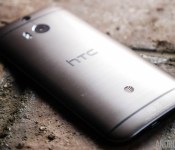
HTC One M9 (Hima) rumor roundup

CES 2015 is now behind us and we are already beginning to turn our attention towards Mobile World Congress. Sometime around this timeframe we not only expect to see Samsung’s latest Galaxy S release, but it’s pretty likely HTC will unveil the One M8’s successor as well.
While there have been rumors about the HTC One M9 (aka HTC Hima) for months now, many of them have either been vague or somewhat contradictory to one another. Still, with it only being a few months (or less) before we see the One M9, we have decided to put together a very early look at what the M9 may end up like. As we learn more about the M9 we will be sure to update this post to give you an even more accurate look at what to expect.
DESIGN

Hima (M9) should feature similar design language to its predecessors
There have yet to be any leaked images or really any major rumors talking about a design shakeup for the HTC One M9 (aka Hima). Given how the One has evolved from the M7 and M8, we imagine the next-gen flagship will retain a similar look and feel when compared to its predecessors, though we expect there will be at least some minor refinements to HTC design’s language.
There have been whispers that HTC will further improve the build quality by switching to a tougher aluminum alloy when compared to the M7 and M8, but really there’s few concrete details about how it will differ. The device is also said to be launching in Gray, Silver, Gold or Gunmetal Gold color choices.
If well-known leaker Upleaks proves correct, we can tell you the size of the phone will be quite similar to the One M8 at 144.3 x 69.4 x 9.56mm. For those wondering, the M8 came in at 146.4 x 70.6 x 9.4mm.
DISPLAY

At least when it comes to size and res, the One M9 should provide a similar experience to the M8
Some of the early rumors associated with the HTC One M9 claimed the phone would have a larger 5.5-inch display, but the most recent rumors have instead pointed towards a more modest 5-inch 1080p display. While not as impressive as the QHD resolutions adopted by some of 2014’s flagship products, the One M9 (Hima) appears to have a much smaller display than most of the phones that have went with QHD, and so the difference in resolution shouldn’t be that noticeable.
HTC ONE M9 SPECS
Again early rumors pegged the One M9 as a device that wouldn’t rock the boat when it came to specs, as it was believed to carry a modest Snapdragon 805 chipset. More recently, more than one rumor has suggested that this isn’t really the case and that the One M9 will actually pack a Snapdragon 810 with 3GB RAM. Considering the fact that the LG G Flex 2 is launching with this chipset, we can’t say we’d be too surprised. Battery life is also expected to make a minor jump upwards, going from the 2600 mAh battery in the M8 to a 2840 mAh battery. As always, except the battery to be non-removable.
As for other sensors? It’s hard to say what HTC will or won’t bring to the table. With more flagships bringing stuff like heart rate monitors and fingerprint scanners to the mix, it’s possible HTC will follow suit. The M7 and M8 didn’t pack these extras, but it is worth mentioning that the HTC One Max did in fact offer a fingerprint reader upon its debut.
CAMERA

Ultrapixels and Duo likely won’t see a return on the rear of the Hima (M9)
HTC has come under a lot of flack for its Ultrapixel camera, but this time around HTC is finally switching things up a bit. Reportedly, the phone will offer a 20.7MP rear facing camera, though the exact sensor isn’t known just yet. On the front, reports say there will either be a 13MP shooter or a 4MP UltraPixel camera — with the former being similar to the Desire Eye’s setup and the latter akin to the new Desire 826.
SOUND QUALITY
One thing HTC is known for is its sound quality, and we don’t except things to change with the One M9. In the past Beats has powered the sound tech behind the One series, but according to at least a few early reports, HTC may be teaming up with Bose this time around.
SOFTWARE FEATURES
Not a lot of rumors have focused on what exactly might be different with the HTC One M9 (Hima) software, though you can expect it to run Android 5.0 Lollipop with HTC Sense 7 on top. No news on special software features or improvements just yet, though we’ll be sure to keep you updated as soon as we learn more.
RELEASE DATE
Just like the HTC One M8, HTC latest flagship is expected to arrive sometime in March, likely around the same timeframe as Mobile World Congress. No exact dates are rumored just yet, though we wouldn’t be too shocked if HTC stages an unveil sometime in earlier March in order to coincide with MWC.
RETURN OF THE MAX SERIES?

The original One Max
A bit earlier in this post we said that rumors originally claimed the One M9 would offer a 5.5-inch display, only for later reports to suggest the actual size will just be 5-inches. As it turns out, the 5.5-inch claim may have some merit, though it applies to the upcoming “Max”-sized model and not the standard M9.
The One Max series has pretty much be a one-off release for HTC. Tons of reports surfaced about an alleged One M8 Max (aka One Prime) last year, though nothing ever became of these rumors. Now the latest claim is that the One M9 Max, aka the HTC Hima Ace Plus, will debut with a bigger 5.5-inch QHD display that is “bezel free” in design, allowing for the phone’s footprint to be as small as possible.
Allegedly the phone will have the same Snapdragon 810 processor and 3GB RAM as its littler brother, the One M9. In fact, the only major difference in specs will be the display size. While the idea of a “larger” M9, alongside a smaller 5-inch model, sounds great — we wouldn’t get our hopes up just yet. Even if the rumored device is real, the rumor mill says it won’t debut until sometime between August and September, and that’s a pretty long ways off.
WRAP UP

One M7 and One M8
Just like the Galaxy S6, all we have is a semi-fuzzy image of what to expect from HTC’s Hima (M9) at this point. That said, most of the rumors are consistent in regards to the fact that the phone won’t see any massive changes in design language and, like the M8, will simply further refine the HTC One formula, instead of trying to reinvent it.
What do you hope to see from the HTC One M9 (aka Hima)? Let us know in the comments. Also be sure to participate in our poll!
(function ()
document.getElementsByTagName(‘body’)[0]).appendChild(opst);
());

Facebook at Work lets business have their very own social network

FB@Work was initially revealed to be Facebook’s secret project aimed at enterprise users. And today, the social media giant has finally unveiled this new business tool called Work (or Facebook at Work).
This will be available as a standalone application on major app hubs and will also be accessible through the browser version of Facebook. Facebook at Work will adopt the theme and UI of the standard Facebook app, so it will act and work like the app normally would but with the name and logo of your choice.
Bear in mind that Facebook is only making the app available as a pilot to begin with, so not everybody will be able to access it immediately. But we can expect Facebook to subsequently fast forward the rollout of the app to everyone across the world. This could finally be your gateway to using Facebook at a workplace, where the use of social networks is usually frowned upon.
There is no word on whether Facebook will charge a fee for these services or rely on ads to monetize this project. Interestingly, this is what Facebook employees use internally to communicate with each other. So its availability in Beta is a little surprising.
What do you make of this new app from Facebook?
Via: Tech Crunch
Come comment on this article: Facebook at Work lets business have their very own social network
Apple Diversifies Chip Orders for iOS Device and Apple Watch Amid Predictions of ARM Macs
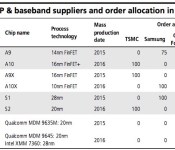
KGI Securities analyst Ming-Chi Kuo, who has frequently offered accurate information on Apple’s product plans based on supply chain information, has released a new report outlining his expectations for the company’s chips over the next several years. Kuo highlights a diversified supplier lineup for Apple’s A-series chips used in its iOS devices, with TSMC, Samsung, and GlobalFoundries all contributing to production.
Kuo sees the 2015 chip breakdown with the A9 chip destined for this year’s iPhones being shared by Samsung and GlobalFoundries, while TSMC handles the A9X that would be used in iPad models. That split is projected to flip in 2016, with TSMC handling the A10 iPhone chips and Samsung being responsible for A10X iPad chips.

Perhaps most enticingly, Kuo projects that Apple could begin launching ARM-based Macs in the next year or two based on its custom chip designs.
Apple may launch Mac products that use own AP in next 1-2 years. This prediction is based on the assumption that Apple’s self-developed AP performs at a level between Intel’s Atom and Core i3 and is good enough for Mac. Using self- developed AP can help Apple better control the timing of Mac launches and Mac product features.
Use of A-series chips in Macs would certainly be limited to lower-end devices at first, but Apple’s emphasis on controlling its supply chain and the improving performance of Apple’s A-series ARM chips compared to low-end Intel chips could lead to a shift in the coming years.
Kuo also looks at the Apple Watch, where Samsung has been reported to be handling the primary portion of Apple’s custom “S1″ chip for the upcoming smartwatch. He believes, however, that TSMC will take over responsibility in 2016 for the S2 in the second-generation Apple Watch.
Kuo certainly does not have a perfect track record with his claims over the years, but he is reliable enough that his predictions are followed closely. Given muddled rumors of Apple’s chip partnerships for future devices, it will be interesting to watch how these supplier deals play out over time.

Ambient Display on the Nexus 6

The display is the notification indicator — for better or worse
You may have heard folks talk about “Ambient Display” on the Nexus 6, with comparisons to Motorola’s “Moto Display” that debuted on their 2013 product line. That’s fine and dandy, because the two are pretty comparable (and Motorola built the Nexus 6). But I’m betting a good many of us have never used either, and aren’t quite sure what all the hoopla is about.
We’re going to break it down a bit so we all are on the same page and know a little more about it.

Samsung in Talks to Buy BlackBerry for $7.5 Billion
Samsung has recently been in talks with BlackBerry about a potential takeover, reports Reuters. The South Korean company has reportedly offered to buy BlackBerry for $7.5 billion, in the hopes of acquiring BlackBerry’s extensive patent portfolio. Executives from both companies are said to have met last week in order to discuss the potential deal.
South Korea’s Samsung proposed an initial price range of $13.35 to $15.49 per share, which represents a premium of 38 percent to 60 percent over BlackBerry’s current trading price, the source said.
The offer price would imply an enterprise value of $6 billion to $7.5 billion for BlackBerry, assuming conversion of $1.25 billion of convertible debt, according to the documents.
BlackBerry has struggled with flagging sales in recent years, and in 2013, the company received a takeover bid worth $4.7 billion from Fairfax Financial, but the deal ultimately fell apart. BlackBerry went on to receive interest from both Apple and Microsoft, among others, but was uninterested in breaking up the company to sell it piecemeal.
Ultimately, the company accepted investments and aimed to re-establish itself in the smartphone market, which led to the launch of the Passport, a large square-shaped phone, and the Classic, a throwback to original BlackBerry designs.
BlackBerry holds quite a few valuable patents, which are estimated to be worth $1 billion to $3 billion. In 2012 alone, its patent portfolio grew by 986 patents, many of which are relevant to competing smartphone companies like Samsung.
Facebook takes its Internet.org app to Colombia

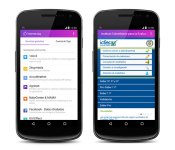
Facebook took it’s Internet.org app to Zambia back in July, and now it’s heading to Latin America. The social network announced today that folks in Colombia would now be able to use a handful of connected tools free of charge. Tigo customers can access Instituto Colombiano para la Evaluación de la Educación (an education service) and Agronet (agriculture and rural development info) at no cost, as well as things like Facebook, Messenger, UNICEF, Wikipedia, AccuWeather and more. In addition to the initial 16 services, more will be added in the future as Internet.org continues to expand its reach to other parts of the world. While a load of useful tools have been a part of the free app for a while, the version that’s launching in Colombia is the first to offer access to government services.
During a Q&A in Bogotá, CEO Mark Zuckerberg said that due to the infrastructure required to do so, giving folks in developing areas access to the entire internet for free may never happen. However, through the Internet.org project, handy apps for searching job listings, speaking with a doctor and getting local news will help give users info they usually wouldn’t have access to. Zuckerberg also noted that by removing the data plan requirement, only the cost of a phone is the barrier to access, and the one-time cost of the device itself is much cheaper. What’s more, once Internet.org reaches more locales, further reducing the cost of those handsets is a goal for the future.
Filed under: Cellphones, Internet, Software, Mobile
Source: Facebook
Google wants to help you customize your Project Ara device with the Ara Configurator app

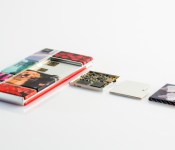
Earlier today, Google held their second developer conference for Project Ara. During the keynote, the company made available the Modular Developer’s Kit v.2 which includes update framework, software and firmware for the Spiral 2 prototype device. Over the past few months, we’ve heard that Ara will be sold in an online marketplace where users will go to assemble their own Ara smartphones. During the tail end of the conference today, Google’s Jason Chua demoed the Ara Configurator app which will allow users to customize their modules, much like we’ve seen with Moto Maker.
The marketplace will make three components available: the endoskeleton, modules and external shells. Users will be eventually be able to find modules they’re fond of, and save them to their online ‘Stashes’. If you want Google to customize your phone for you, there’s an option called ‘simple phone maker’, that will one day create a device specifically tailored to your likes. Chua explains that we may be able to eventually connect the app to social networks, which will allow the Ara Configurator to analyze your social network feeds and recommend different modules to you based on your interests. And yes, you’ll also be able to customize the looks of modules themselves by adding custom images or colors to them. I think we can all agree that a Moto Maker-style website is the best way to sell modules for Ara.
If those updates weren’t enough for the Project so far, Google has also released a new promotional video showing what the final product may look like. Take a look below:
 AIVAnet