


Samsung’s circular display smartwatch will feature wireless charging

A new report has revealed that Samsung’s upcoming circular display smartwatch will come equipped with wireless charging functionality, much like the Moto 360. This is not to say that the device won’t require a cradle, but merely that it will be compatible with a wide range of wireless charging stations.
This smartwatch codenamed Orbis, could be running on Tizen rather than Android Wear which is one of the biggest concerns we have. Barring that, the wearable should match all our expectations and will take the Moto 360 and the LG G Watch R head-on.
Samsung’s current range of chargers for its Gear smartwatches aren’t all that great, so this will be a refreshing change with the Orbis. We’re still waiting for confirmation on this report from Samsung and we hope to learn more as the days progress.
Wireless charging is almost a prerequisite on wearables given the convenience factor. We’re hoping Samsung will go with the Qi standard so that third party manufacturers can build accessories for the device in the future.
Via: Sam Mobile
Come comment on this article: Samsung’s circular display smartwatch will feature wireless charging
Further growth expected in dual camera and OIS modules

Camera technology is an integral part of the smartphone package these days, with OEMs racing to include the latest and greatest photography hardware and features. As a result, the market for high resolution image sensors, Optical Image Stabilization (OIS) modules and dual-camera compatible components is becoming increasingly big business.
From 2013 to 2014, the CMOS Camera Module market grew by 13.4 percent to a value of $16.4 billion. The industry is anticipating further growth of another 15.9 percent to $19 billion come the end of 2015. OIS technology and higher resolution sensors are expected to spur on much of this growth.
Given that high-end smartphones, such as the Galaxy Note 4, Nexus 6 and LG G3, have already adopted OIS modules, the expectation is that the vast majority of flagship smartphones will include the technology in 2015, with the potential for the technology to reach mid-range handsets too. Estimates put shipments of OIS equipped handsets at around 178 million in 2015, surging by 145% against 2014, and could reach 361 million by 2017.

Optical Image Stabilization is quickly becoming the norm in high-end smartphones
Although Sony’s high-end image sensors continue to lead the competition by quite a margin, other companies have managed to benefit from improvements in other camera components. Largan controls almost 90 percent of the profit generated from camera module lenses and has pushed many South Korean competitors to their margins. Sharp has benefited greatly from OIS developments and Sunny Optical Technology has seen its revenue rise due to demand from growing OEMS, including Xiaomi, Lenovo and OPPO.
Dual image sensors are another growing technology, but industry insiders don’t expect this idea to catch on in flagship handsets in the same way as OIS has. Hardware isn’t the problem, as such, as both Qualcomm and MediaTek have taken strides to support multi-sensor camera setups and software functions into their chips.
Instead, the cost of implementing dual 8 megapixel or high image sensors is not worth the small feature set obtained from a dual setup, especially as it does not go towards increasing image capture quality. This could be the reason why HTC has chosen to stick with its lower resolution Ultrapixel sensors in its dual-camera smartphones and has marketed them as more reasonably price mid-range smartphones.
Further down the line, optical zoom technology could also made an appearance in smartphone cameras, although this isn’t expected until 2016 or later. What smartphone camera features do you think are the most important when choosing your next smartphone?

Apple Honors Dr. Martin Luther King Jr. on Its Home Page
Apple today updated its website to celebrate Martin Luther King, Jr. Day with a full page memorial on the company’s home page. The image on the site is accompanied by a message to honor the civil rights leader and his work, “Today we reflect on the life and vision of Dr. Martin Luther King Jr. and the work that continues in service of the broader concerns of humanity.”

Following the rollout of the website change, Apple CEO Tim Cook tweeted his own commemoration that highlighted Apple’s remembrance of King’s legacy.
Honoring the life and legacy of Dr. Martin Luther King, Jr. #MLK Apple http://t.co/ngqL0bym8y
— Tim Cook (@tim_cook) January 19, 2015
Previously, Tim Cook has publicly expressed his admiration for Dr. King, noting in a Charlie Rose interview last year that he keeps photos of King and politician Robert Kennedy in his office at Apple.
“I had the — just tremendous respect for both of them, and so I do,” he said. “I look at them every day because I think for people — there’s still too many cases in the world and in the United States where there’s a class kind of structure or where voting or people are trying to convince each other that this other group of people don’t deserve the same rights. And I think it’s crazy, I think it’s un-American.”
Besides the web page refresh, Apple reportedly also is encouraging its employees to volunteer with a donation matching program, reports 9to5Mac. Instead of a paid day off, Apple is offering to donate an additional $50 for each voluntary hour worked by employees.

The NSA knew North Korea hacked Sony because it hacked North Korea first

The US government recently took the rare step of directly blaming North Korea for the crippling hack of Sony in retaliation for its satire film, The Interview. But how could it be so sure in the face of doubters, who said another hacking group disguised as North Korea, or a malcontent insider were to blame? According to a new pile of Edward Snowden documents revealed by der Spiegel and other publications, it’s simple: the US government inserted backdoor software into North Korea’s computer systems years before the hack even happened.
The NSA used South Korea’s established inroads to install malware on North Korean networks, which was able to provide enough evidence to pinpoint the nation as the source of the Sony hack, according to anonymous government officials. This leads to the question, if the NSA had enough intel, why wasn’t it able to advise Sony of the attack ahead of time? Administration officials said that the “spear-phishing” attacks — which entice e-mail users to download infected files — didn’t look out of the ordinary or raise any alarms. But those attacks allowed the hackers to steal a key system admin’s credentials, which they used to carefully infiltrate the system, search out key files and eventually destroy or leak them.
Though the NSA’s backdoor “beacons” in North Korea’s systems didn’t help it see the hack coming, they were instrumental in building a case against the nation afterwards. The evidence convinced President Obama to quickly accuse Kim Jong-Un’s of orchestrating the hack — the first time the US has made such a charge, according to the New York Times.
Filed under: Internet
Via: The New York Times
Source: Der Spiegel

Apple’s website pays tribute to Martin Luther King Jr.

Apple has given its online home a quick refresh this morning to pay tribute to Martin Luther King Jr. The move marks the first time the company has dedicated a section of its website to the US national holiday, which is observed on the third Monday in January each year.
From the Apple website:
Today we reflect on the life and vision of Dr. Martin Luther King Jr. and the work that continues in service of the broader concerns of humanity.
Tim Cook also paid tribute on Twitter:
Honoring the life and legacy of Dr. Martin Luther King, Jr. #MLK Apple http://t.co/ngqL0bym8y
— Tim Cook (@tim_cook) January 19, 2015
While many in the US enjoy an extra day off, Apple is instead encouraging employees to volunteer. For each and every hour its employees spend carrying out voluntary work, Apple will donate an additional $50 to the Matching Gifts Program.
Source: Apple

Sid Meier’s Starships will explore space on iPad and Mac in early 2015
Legendary game designer Sid Meier continues to keep himself busy. Today it was revealed that he and a small team at developer Firaxis have been working on a space-themed turn-based strategy game, Sid Meier’s Starships. It’s due for release early in 2015 for the iPad and Mac, along with the PC.
According to GameSpot, the new game will be published by 2K Games. It states:
In the game, you’ll control a fleet of starships as you journey through the galaxy to complete missions, protect planets and their inhabitants, and build a planetary federation.
As you trek through the stars, you’ll be challenged to expand your federation’s influence and reach. You’ll also amass futuristic technology and take part in turn-based combat using a deep roster of customizable ships.
Even more interesting is that people who own Firaxis’ 2014 released game Civilization: Beyond Earth who decide to get Sid Meier’s Starships will see special links between both games that 2K claims will “enhance and expand upon both game experiences.” Pricing for Sid Meier’s Starships has yet to be revealed.
Source: GameSpot

Report sheds light on the HTC One M9 and a new wearable device

As most of us know by now, HTC is prepping the launch of its Hima/One M9 flagship. The company has even teased the imminent arrival of the flagship by posting a teaser which says “utopia in progress”. A new report now tells us what this event could have in store for us.
In addition to the obvious arrival of the One M9 or the Hima flagship, the company will also launch a new wearable, according to Bloomberg. The company has announced a partnership with fitness brand Under Armour to introduce fitness bands, so this isn’t really a surprise.
This mystery wearable could be based on the UA Record app which is developed by Under Armour. This app is available on all major mobile app hubs around us.
Speaking about the smartphone, the report says that the Hima will come with an octa core Snapdragon 810 SoC, a 20-megapixel rear camera accompanied by a front facing Ultrapixel sensor and Dolby 5.1 speakers. We expect to learn more about the smartphone over the coming weeks. The company is expected to unravel all the mystery during its March 1 event.
Source: Bloomberg
Come comment on this article: Report sheds light on the HTC One M9 and a new wearable device
A small portfolio and long product cycles help Xiaomi keeps costs low

Xiaomi’s product line-up is looking rather good these days, especially with those very reasonable price tags attached. Despite shifting over 60 million smartphones this year, the question of the company’s profitability keeps cropping up. Speaking in a recent interview, Xiaomi VP Hugo Barra talked extensively to clear up and confusion about exactly how the business model works.
Xiaomi’s key to keeping costs low and profits up comes from a combination of a small portfolio, long term component contracts and an average selling time well above the competition. Even its older smartphones continue to retail at discount prices long after new products are released. Combined with savings from a online-only retail scheme, Xiaomi stands to save considerable amounts when compared with its competitors, allowing it to sell its wares at lower prices.
“The more focused the portfolio, the more efficient we can be at managing those costs”
Xiaomi’s products tend to remain available for purchase for around 18 to 24 months and go through three or four price cuts before being removed from sale. For example, the Mi2 and Mi2S were on sale for around 26 months. The original RedMi 1 launched all the way back in September 2013 and has only just been succeeded by the RedMi 2. Similarly, long term use of similar components across devices has helped Xiaomi negotiate discounts over time, further reducing long term costs.
“The vast majority of the components [in our devices] are still the same, so in terms of supply chain and component sourcing, we’re on the same supply contracts as Redmi 1, which means we’re still getting the same discounts on components,”
This lean, focused product portfolio doesn’t just help Xiaomi benefit from reduced components costs, it also allows the company to more easily maintain software support for its hardware. While other companies, notably Samsung, can only reasonably offer a few updates for their broad range of devices, Xiaomi can save money on and offer better support for its smaller selection.
Looking forward, Xiaomi is continuing with the same strategy as it moves into new markets, such as India. However, the company is also looking into operator partnerships and is currently running a trial with Airtel in India, as well as talking to partners in Taiwan, Malaysia and Singapore. This could see the company’s already inexpensive handsets arrive under new subsidized schemes in certain markets in the future.
2015 is sure to test Xiaomi’s golden formula as the company seeks to expand further across Asia and beyond.
HTC One M9 internals detailed, HTC smartwatch reportedly on the way too

HTC is set to unveil this year’s flagship — likely to be called the HTC One M9 — on March 1 at Mobile World Congress in Barcelona. According to Bloomberg, the device will feature impressive hardware, and will not be the only new product HTC showcases at MWC, as the Taiwanese vendor is alleged to also unveil its first smartwatch.
Apple Watch: With great intimacy comes great responsibility

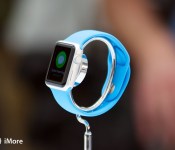
Here’s how notifications work on the Apple Watch: When a new one comes in, the “taptic engine” — a linear actuator — literally taps you on the wrist to let you know about it. There’s no loud buzzing to draw anyone else’s attention, just a subtle but recognizable tap, just for you. The “short look” for the notification provides a minimum of information. Nothing for anyone else to spy, just the icon for the app that’s notifying a brief bit of context as to who or why. If you lower your wrist, it goes away. If you don’t, or if you tap it, it expands into a “long look” and gives you the details. That kind of staging respects that with greater intimacy comes greater responsibility. And I hope that it’s a sign of more features to come.
Part of the reason I quickly stopped wearing my Pebble and haven’t had much interest in other smartwatches is exactly that lack of discretion and/or granularity — that understanding that the closer something is the more subtle and sophisticated it needs to be.
Privacy, like security, comes at the cost of convenience. Right now, when I travel with my iPhone, I have to consciously think about how much information I want to let leak out onto the Lock screen. I only ever allow mail notifications for VIP anyway, but if I have my iPhone out in public an put it down on a table — terrible habit, I know — everyone around me can hear it buzz. If I have Lock screen notifications left on, everyone glancing at my phone can see any incoming messages or mail. There are situations, both personal and professional, where I just don’t want that to happen. So, I typically turn previews off. (Even then, they can still see who’s messaging me, but without that information I couldn’t decide which notifications can and can’t be ignored — again, the cost of convenience.)
Taking a cue from the Apple Watch, it’d be great if the iPhone could also stage my notifications. A taptic engine won’t work on a device that isn’t always in contact with your skin — and it wouldn’t need to if the watch is picking up your notifications anyway — but a short look that only expands into a long look if the motion co-processor feels it getting picked up, or the multitouch screen detects a tap event, is still really interesting to me. It would remove the burden of having to micro-managing privacy from me and have iOS just take care of it. Moreover, it would make that kind of privacy protection available to people who wouldn’t otherwise know they could micro-manage it.
The contextual awakening of the objects around us might change the way we interact with the world around us, but the thought process and technologically being surfaced in the Apple Watch will change the way that world interacts with us.
 AIVAnet