


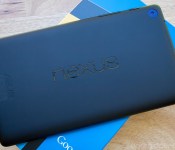
Android 5.0.2 factory images posted for cellular Nexus 7s

If you’re still rocking a 2013-era Nexus 7 with LTE, or a 2012 mobile version, we’ve got some great news today. Google has just dropped the Lollipop factory images for the both devices, and they’re version 5.0.2 to boot.

Woman in India rape case sues Uber

A woman who claims she was raped by an Uber driver in New Delhi last month has filed suit against the US-based car-sharing company. In a civil complaint filed yesterday in California, the unnamed woman, who’s referred to as “Jane Doe,” said the company put its bottom line ahead of ensuring rider safety — especially its female passengers.
The suit claims the company lacks systems to properly track Uber rides in progress and doesn’t adequately screen potential drivers. Those shortcomings, the complaint states, end up “risking the safety of its unbeknownst customers.” This all stems from an Uber ride back on December 5th of last year. As detailed in court documents, the woman used Uber’s app to request a ride home after dinner with a friend – however a driver identified as Shuv Kamir Yadav instead drove her to a secluded area and sexually assaulted her.
In all, the suit claims Uber was negligent in its hiring, supervision and retention of employees. It also alleges the company was fraudulent when it claimed to have thoroughly screened its drivers and when it claimed to be able to track routes. In addition, the complaint cites battery, assault and false imprisonment, as well as intentional and negligent infliction of emotional distress.
Not long after the rape was initially reported, Uber was banned from operating in India’s capital. CEO Travis Kalanick released a statement at the time, saying the company would do everything it could to help “bring this perpetrator to justice and to support the victim and her family in her recovery.” However, the suit alleges the company failed to involve the victim, as she had requested, in efforts to upgrade its policies. In the days and weeks that followed, the company vowed to improve passenger safety – citing beefed-up background checks and options for passengers to share their locations with friends. This month, it slowly started operating within New Delhi again after applying for a taxi service license.
We reached out to Uber today for comment, and will update this story if it responds.
Filed under: Misc, Transportation, Internet
Via: Ars Technica
Source: Legal complaint
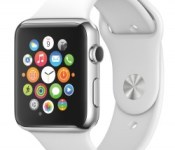
Apple Asking Some Developers to Have Apple Watch Apps Ready by Mid-February
 Apple appears to be asking some high profile app developers and partners to have their Apple Watch-compatible iPhone apps prepared and ready to launch in the App Store in mid-February. According to a source that spoke to MacRumors, Apple has asked its one of its biggest Apple Pay partners to prepare an iOS application with WatchKit support that’s ready to launch in the App Store by February 12.
It is unclear if Apple asking the same of other developers, but it is possible the company is hoping to test some third-party Apple Watch apps with employees ahead of the device’s launch to get a better feel for battery life when using non-Apple apps. As we detailed earlier today, thousands of Apple employees in the Cupertino area are wearing and testing the device on a daily basis to work out final kinks ahead of an April launch.
It’s also possible that Apple could use this high-profile partner’s app in an upcoming demonstration or launch event to show off how Apple Pay works on the Apple Watch. Apple Pay will be a key function of the Apple Watch, letting users authorize credit card payments right from their wrists. As has been outlined in the past, the Apple Watch will authenticate payments biometrically, requiring a passcode when the device is first placed on a wrist and again if it loses skin contact.
Apple CEO Tim Cook said earlier this week that Apple Watch development is on track and that the device will launch at some point in April. Pricing for the Apple Watch is largely unknown, but will start at $349 for the least expensive option.
ROCKI finally gets Spotify Connect support
After a long wait, Spotify support has finally come to ROCKI, but not quite how you would have expected. The tiny device that turns your ordinary speakers into DLNA compatible outputs launched with the promise of Spotify integration but it failed to appear in the app.
It appears that the reason for this is that they were instead working towards ROCKI to become a Spotify Connect endpoint, meaning you don’t even have to leave the Spotify app to send music to the ROCKI connected speakers.
The functionality is delivered to your ROCKI by an OTA firmware update, which if you’re device is plugged in constantly like mine then it’s probably already updated. Simply fire up Spotify and click the Connect button to see your ROCKI as an endpoint.
The full press release is down below:
Boston – (January 26, 2015) – ROCKI, whose 3-ounce device allows mobile phone users to wirelessly play music they love on speakers they already have, has announced a partnership with Spotify, the number one digital music service in the world, to let Spotify subscribers play music wirelessly to ROCKI-connected speakers from within the Spotify app.
Spotify Premium subscribers can select their ROCKI device under the Spotify Connect icon to stream Spotify through their ROCKI connected speakers.
“We could not be more thrilled to work with Spotify Connect,” says Nick Yap, Founder and CEO of ROCKI. “Spotify’s 60 million active users (including 15m paid subscribers) want the freedom to play music on speakers wherever they are – in different rooms at home, at friends, or on vacation. Now Spotify subscribers don’t have to replace existing speakers or lug a wireless speaker with them to enjoy Spotify wherever and whenever they want.”
ROCKI is a compact and lightweight portable Wi-Fi device that plugs in to any speaker to Wi-Fi enable it. Using Wi-Fi, ROCKI receives audio from smartphones, tablets or PCs, at a greater fidelity and over greater distances than Bluetooth. The free downloadable ROCKI app, available for Android and iOS, allows users to access their saved music, a growing number of cloud music services and now online music streaming service Spotify.
With consumers increasingly relying on mobile devices to source their music wherever they go, they need an easy way to get music from their devices to existing speakers. Demand for ROCKI is driving sales globally, with distribution partners already in 12 countries and 10-fold annual growth rate. ROCKI is available on Amazon, Grommet, as well as www.myrocki.com for $49.
All current and future ROCKI devices will work with Spotify Connect.
The post ROCKI finally gets Spotify Connect support appeared first on AndroidGuys.

Google Now to start showing updates and notifications from 40 apps

Google Now is quite limited as far as notifications are concerned. While it can manage sports scores, weather, stocks, flight timings etc, it had no third party app support. That changes today with Google officially bringing support for 40 new applications such as Pandora, Trip Advisor, Zillow, eBay, Shazam, Ford, Instacart, Airbnb and a whole lot more.
These apps will be supported with a new update to the Google app, which should be rolling out any minute now. Bear in mind that you will only be notified for apps that you choose, which will save you the trouble of clearing out unnecessary cards on Google Now.
It does take us a little by surprise that Google waited this long to introduce this feature, but it’s here nonetheless. You can find the complete list of apps now supported by Google Now in this page here.
Do you like the new changes made by Google? Make sure you let us know.
Source: Google Search
Come comment on this article: Google Now to start showing updates and notifications from 40 apps
40 third-party apps pick up Google Now cards support
Google Now and the associated cards that come along with it is one very handy little addition to the Android world. Google is now integrating more apps into the Google Now experience and will be delivering context aware cards from 40 various apps and services that might already be installed on your device. The list […]
The post 40 third-party apps pick up Google Now cards support appeared first on AndroidSPIN.
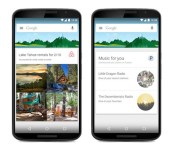
Google Now will soon offer card integration with 3rd party apps

While Google Now cards can be very useful, don’t you wish they extended outside of Google’s own apps and services in a bigger way? In a new post from Google in their Inside Search blog, it seems that such integration is finally on its way!
Google Now has teamed up with “30+ developers” to bring 3rd party Google Now cards that retrieve information from many of our favorite apps including Pandora, Runtastic, the Guardian, Ebay and Kayak. A full list of the 40 currently supported apps can be found here. In typical Google fashion, these new cards won’t go live today, though Google says they should be rolling out over the next few weeks.
While Google’s post explains a bit on what to expect, some details are still unknown, such as how interested developers can get in on the action and whether or not users will have the same level of control over 3rd party Now cards as they do with standard ones. At the very least, we imagine Google will make it easy to switch off cards from apps we aren’t interested in.
So what’s the advantage of getting Google Now cards for things like news, music recommendations and other similar types of cards? As Google puts it, it helps alleviate the need for constantly opening up apps for basic information or having to rely on notifications, which can often arrive at the wrong time or become a cluttered mess.
For more details on what to expect be sure to check out the official post from Google.

AT&T and Dish were the big spenders in the FCC’s wireless auction

There’s no doubt that companies spent a ton of money in the FCC’s latest wireless auction — $44.9 billion of it, to be precise. But who was it that was so eager to part with their cash? You don’t have to wonder for much longer. The FCC has revealed the winning bidders, and there’s little doubt as to who the frontrunners are. AT&T was by far the biggest spender. It shelled out almost $18.2 billion for 251 licenses to use that coveted AWS-3 spectrum, or nearly three times what it spent on 700MHz frequencies back in 2008. Dish, meanwhile, made its broadband ambitions pretty clear by snapping up a sizable $13.3 billion in airwaves.
As for the others involved? Verizon certainly wasn’t conservative, having bid $10.4 billion, but that’s not a big leap versus the $9.3 billion it spent acquiring 700MHz spectrum years ago. Also, smaller carriers didn’t have much of a stake in this auction. T-Mobile ponied up a ‘modest’ $1.7 billion, and Sprint already said that it would sit things out in favor of the 600MHz auction coming in 2016. All told, most of the newly available wireless bandwidth is headed to just a handful of companies, only one of which is a relative newcomer. That’s good to hear if you’re one of their subscribers (especially if you regularly deal with congested networks), but it’s lousy if you were hoping for an abundance of fresh competition.
[Image credit: AP Photo/Mark Lennihan]
Filed under: Cellphones, Wireless, Mobile, Verizon, AT&T, T-Mobile
Via: The Verge
Source: FCC, Dish, AT&T (BusinessWire)
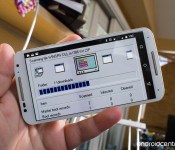
Antivirus for Android — do you need it?

Do any of us really need antivirus software on our Android phones and tablets?

In a past life I worked basic tech support at both Best Buy’s Geek Squad and Staples’ Easy Tech programs. I have heard every possible explanation for why a computer might have been infected with something, and happily collected a paycheck while fixing the same things over and over again. Most of the time, when someone asked me what antivirus software I used I would be perfectly honest with them and explain that I didn’t use any third-party software antivirus software on my Windows machine. I’d explain that I was very aware of where I was browsing and what I was clicking, and keeping my system up to date handled the rest. I didn’t recommend this experience to most, because computer viruses wouldn’t exist if their success rates were zero and there are absolutely people who need those tools, but it’s a strategy that has kept me safe so far.
Much like computers, you can’t go too far on the Internet without stumbling across an article trying to scare you into believing your Android device is under constant threat from the countless nasty things on the Internet today. Where things differ for the average user is just how far out of your way most folks have to go in order to be in any real danger on an Android device. But you wouldn’t know it by the sheer number of security and antivirus apps available to mobile devices today.
We get asked all the time whether our mobile devices need antivirus software, and while the answer isn’t as clear cut as we’d like it’s time to explain things as clearly as possible.

Nokia’s Z Launcher adds new features, including support icon pack
Nokia has released an update for its Z Launcher Beta on the Google Play Store. The launcher adapts to the user’s usage throughout the day. By learning how he or she uses it, the app promotes his or her favorite apps.
Another feature known as Scribble allows you to draw a letter in order to find things related to it. Launch is a tool used for Apps, contacts, and websites, and Adapt “learns to promote the right stuff at the right time.” Still, the most exciting news probably is its preliminary support for icon packs.
You can check the Z Launcher out either in the link above or the widget below.
FEATURED POSTS


The post Nokia’s Z Launcher adds new features, including support icon pack appeared first on AndroidGuys.
 AIVAnet