


Accessory of the Day: iSmooth Galaxy S4 screen protectors (3 pack), $7.97
This ultra-clear screen protector for your Samsung Galaxy S4 offers a bubble-free and easy installation. All purchases come with a lifetime warranty and the reviews are through the roof. At $7.97 (Prime), this 3-pack is a must buy for anyone looking to protect their beautiful S4 screen.
Join Prime and get this deal with FREE two-day shipping!
Also worth checking out:
The post Accessory of the Day: iSmooth Galaxy S4 screen protectors (3 pack), $7.97 appeared first on AndroidGuys.
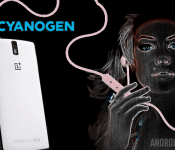
Friday Debate: Is Cyanogen heading in the right direction?

Cyanogen has been in the news a lot recently, in large part due to their aggressive statement that they hope to “steal Android from Google”, which led Simon Hill to ask the question, “Can Cyanogen make it without Google?” Additionally, many found it interesting that Microsoft is reportedly joining in as a minor investor in the company.
With all this in mind, for this week’s Friday Debate we are discussing Cyanogen’s current direction, where it’s heading and whether it can truly separate from Google in the way that it is claiming. Additionally, how do you feel about Microsoft getting involved as a minor investor?
This week there wasn’t a lot of community responses, though you can check out the official forum thread to read all the responses we received.
What Team AA has to say
Gary Sims
Can Cyanogen’s version of Android survive without Google. Absolutely not. Any company or investor who is putting money into Cyanogen is just burning their money.
OK, you might think I am being a bit harsh, but let me tell you my reasoning. First, recent history is showing that Cyanogen is turning out to be a pretty juvenile company. The whole OnePlus One and India thing proves it. If I was a handset maker there is no way I would touch Cyanogen, it is too dangerous, too flaky. What this means is that even if Cyanogen came up with the best Android variant on the face of the planet, it would still be a hard sell.
But the second point is that it can’t come up with the best Android variant. You see it has been tried by companies with deeper pockets than Cyanogen and there is limited appeal to consumers.
There are lots of Android variants out there, there is CyanogenMod, there is ColorOS, MIUI, and FlyME. You could even consider the skins that Samsung and HTC put on their devices as a variant of Android. But they all have one thing in common, they use Google’s services. You get Google Play, Gmail, Maps, YouTube, and so on.
There are a couple of Android variants that don’t use Google’s services, namly Amazon’s Fire OS, and the now dead Nokia X. Amazon has a huge online footprint, and it has managed in part to convince tablet users that its ecosystem is enough. But it didn’t do so well for smartphones. The Nokia X had lots of potential, and I would have really liked to have seen how it would have played out over several years. But even with names like Nokia and Microsoft behind it, the lack of Google’s service seemed to be a show stopper for many consumers.
One thing is for sure, if Cyanogen starts to make a divergent version of Android then Google will come down on it like a ton of bricks. There are clauses in the SDK that insist on a unifying of Android, not a divergence. Once Google declare Cyanogen divergent then the SDK becomes off limits, and of course Google will pull support for its services from Cyanogen. At that point Cyanogen is dead. Is that wrong? Well, that is a whole different discussion.
Robert Triggs
I’m a little torn about this. One the one hand, I want to see Cyanogen take the beloved ROM as far as it can and I wouldn’t mind Google loosening its grip on Android a little either. On the other, there’s a big difference between dreaming big and what can be accomplished in reality, and I can’t see how breaking away from Google benefits Cyanogen OS development or its users right now.
This seems like a case of biting off more than you can chew. As Gary said, there are bigger, richer, and more experienced companies that haven’t managed to replicate the utility provided by Google and I don’t see Cyanogen replacing the entire Google ecosystem with a superior version anytime in the next decade. Perhaps a slower path, similar to MIUI, would be viable; gradually building up its software, then forming a hardware base, leading to a sustainable ecosystem over time. Instead, Cyanogen has run straight for the nukes, announcing ambitious plans without a clear roadmap or history of success.
I believe it’s a big oversight by Cyanogen to deliberately make enemies of its contemporaries. Every statement drips headline baiting venom, but I want details and results, not self-indulgent hot air.
As for Microsoft’s investment, I don’t think there’s much too it. Microsoft backs lots of companies, some which rival its own goals and products. It’s a cheap, see-what-happens investment for Microsoft, but it probably won’t generate a return.
Part of me doesn’t want to write Cyanogen off, as I hate the taste of my own words, but I really can’t see the end benefit to users from arguing with Google, and consumers are a better measure of success than ideology.
Matthew Benson
Let me preface this by stating I’ve never spent much time with Cyanogenmod nor have I personally rooted any device. I have, however, been bequeathed with rooted devices, but that’s another story.
The situation surrounding Cyanogenmod is quite precarious to say the least, though I honestly question just how much of a real threat it presents to Google. By-and-large, the masses don’t care about Cyanogenmod much less know of its existence. I personally associate it with XDA Developers for whatever reason, something that is as far from mainstream users as one can get.
This is not to say that there is no mainstream appeal of Cyanogenmod. On the contrary I think that with its cornucopia of customization while still preserving the integrity of AOSP, there is a lot to love. Still, the question is, if Cyanogen wants to “overtake” Google, can it actively seek to attract droves of new users when its core installation procedure requires root and flashing, two things that just don’t ring up with casual customers.
Amazon has managed to push its Fire OS in no small part thanks to its internal ecosystem and by providing products that make full use of it. The fact that the Kindle Fire HDX units have some excellent specs doesn’t hurt either. Now we need only look at the Fire Phone and a totally different story is said. Even if Cyanogen begins to offer products with the OS splinter pre-installed, like the OnePlus One shipped with outside China, the question is who will make such a device, especially given the recent legal issues it ran into in India? The company doesn’t seem too sold on compliance related issues, how will this factor in?
The Microsoft issue seems to be, sadly, another attempt at the folks over in Redmond trying to remain relevant in the mobile space. You know that the Windows Phone team is just chomping at the bit for access to the smorgasbord of Android apps, and by investing in Cyanogen, Microsoft is slowly inching towards a Blackberry-type paradigm. I suppose one might argue that it’s troublesome for app developers to port their creations to all platforms, but at the same time I can’t help but feel that the “Android compatible” issue is just plain cheating: don’t bother trying to make a compelling reason for developers to migrate; heck, don’t even make them consider your platform period!
At the end of the day however, if, Cyanogen can get it’s forked OS on the dinner plates of enough users, I for one would welcome it with open arms. Vanilla Android is just too plain for me, which led to the proclamation that the only thing missing from the Nexus 6 was TouchWiz in a previous Friday Debate. Plain and simple is all fine and dandy, but what of those who want some more to eat with their candy?
Bogdan Petrovan
I’m ambivalent about the whole situation. On the one hand I agree with the general opinion that Cyanogen is biting more than it can chew, especially since it’s biting the hand the feeds it, at least for now. But if you look past McMaster’s deliberately shocking comments, the idea itself is quite intriguing. What if every company out there could make its own unique flavor of Android, with unique services integrated deep into it, the way only Google can do right now? I am talking about more than skinning and superficial touches. Right now, Google is doing some amazing things that give great value to users; but for the crowd that doesn’t want to be part of the Googlesphere, because of privacy issues or just out of sheer contrarianism, having an alternative, or more, would be great. Microsoft has tried and, so far, failed, to create an alternative to Android and iOS, but they are doing a far better job at creating a suite of cloud services and apps. They could partner with CM to mix Android with their cloud services – it may crash and burn, but it may also be the beginning of a real alternative to Google’s suite.
But before Cyanogen can establish itself as a platform for other companies, its more urgent concern should be keeping Google happy and not alienating current and potential partners. I suspect McMaster’s bravado is just a way of drumming up excitement among potential partners or buyers. Perhaps Cyanogen is just looking for an early exit. If that’s the case, losing access to Google’s services may not matter that much. But if Cyanogen is really thinking long-term, they are really playing with fire here.
Now it’s your turn
You’ve heard from our community members and Team AA, now it’s your turn. How do you feel about Cyanogen’s recent direction, Microsoft investing and everything in between? We welcome you to leave your responses in the comments below, or you can get even more detailed in the forums.
// <![CDATA[
(function () ());
// ]]>

How to upload a non-square photo to Instagram

Ever take a really awesome photo on your iPhone only to find out it doesn’t translate well to Instagram as a square photo? Yeah, we’ve all been there. While you could always settle for a cropped version, you don’t have to. With the help of another App Store app you can post your photos to Instagram in their original aspect ratio.
There are lots of App Store apps that allow you to add borders and upload non-square photos to Instagram photos. My favorite is InstaSize because it’s easy to use. Also: it’s free. There are ads but if you like it enough, you can remove them forever for a nominal IAP via the Settings section.
- InstaSize – Free – Download Now
How to upload a photo to Instagram that isn’t square with InstaSize
- Launch the InstaSize app.
- Choose the photo you’d like upload in its entirety to Instagram.
- Tap on InstaSize in the bottom navigation if it isn’t already selected.
- Tap on Borders in the bottom navigation and choose the color you’d like to surround the image. I typically stick with white because it doesn’t distract or even look like there’s a border present.
- You can also use any of the filters or other features InstaSize features if you’d like.
- Once you’re ready to share to Instagram, tap on the Share button in the upper right hand corner.
- Type in whatever you’d like the caption to be and then tap on Instagram.
- Tap on Open in Instagram in the Share sheet that pops up.
- You can now edit further in Instagram if you’d like and continue to post the photo just like you would any other photo.


Apple Shares Reach New Highpoint Following Record-Breaking Quarter [Mac Blog]
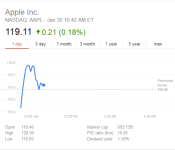
After opening Friday morning, shares of Apple stock briefly grazed the $120 per share mark, setting a new record high for the company in the market (via AppleInsider). AAPL is currently trading around the $119 mark as of writing, giving the iPhone maker a nearly $700 billion market cap.
Apple announced its earnings for the first fiscal quarter of 2015 on Tuesday, reporting $74.6 billion revenue and 74.5 million iPhones sold on the strength of the iPhone 6 and iPhone 6 Plus. Apple shares previously almost hit today’s record high, with a $119.75 price per share, in November of 2014, but regressed down to around $110 in the weeks since.

Many analysts remain bullish on Apple’s stock, predicting that the company’s shares are undervalued and could trade for up to $130 or higher within the next year. With the immense popularity of the iPhone 6 and 6 Plus only growing, and the confirmation of the Apple Watch’s launch this April, such predictions may not be far off.

Tesla’s long-delayed Model X SUV is testing in California

It may look like a Prius that’s been vomited on by Mad Max, but the vehicle you see in the clip below is probably Tesla’s long-delayed Model X SUV. You see, when companies begin stress-testing vehicles, they dress them down with a dodgy paint job and go riding out a deserted airfield, like the one at the old naval base in Alameda. No amount of weird paint, however, could disguise the latest all-electric vehicle to roll off the production line, especially one as long-awaited as the X.
It’s been a long road, getting from there to here. The Model X was originally announced back in 2012, but by the start of 2014, issues with the battery meant the date was pushed back to early 2015. Then, back in November, Elon Musk revealed that the company was having difficulty mass producing components for the falcon-winged vehicle, pushing the launch date back to the tail-end of 2015. If the company is feeling bullish enough to let its high-riding whip out in public, then perhaps he’ll make that deadline. It looks like, despite the heftier build, that the Model X will still be mightily fast, let’s just hope that the company puts Insane Mode as a button right on the steering wheel.
Filed under: Transportation
Via: TechCrunch

SF Launcher 2 review: the launcher that brings Google Now style straight to your home-screen

Earlier this month, Talk Android’s Justin Herrick reported on app developer Jack Thackar’s complete remake of his original SF Launcher, which you can view here. The new launcher, SF Launcher 2, features an amazing imitation of the Google Now app, but instead of notifications, you can customize your home-screen with apps and widgets inside of the notification cards.
This custom launcher doesn’t just stop there, though. Fully implementing Google’s new Material Design elements, colors and actions are present to satisfy your thirst for all things Lollipop.
Thanks to Justin’s tip on the new launcher, I decided to give it a test drive for a couple of weeks. Here are my thoughts on Thackar’s work.
The first thing you notice is that this launcher handles almost exactly like Google Now. Your home-screen is now a single-column of card customization, allowing you to vertically scroll through all the notification cards you create. (I frequently will say notification cards, but they’re not dismissible notification cards like you see in Google Now, however their style and behavior in this launcher is identical to those you see in that app. From here on out, I will just say cards.)
Creating cards that contain app icons is as simple as dragging and dropping apps from the app side panel onto the background of home-screen.

You heard right, so far as I know, there is no app drawer with this launcher. Your apps appear in a pop-out side drawer on the left side of the screen. You can access this panel by clicking the “hamburger” symbol in the top left of the screen or by clicking the Back button while at the home-screen. While you’re clicking the hamburger, notice the smooth Lollipop animation that accompanies it!
The apps in the panel remind me of Aviate Launcher’s app drawer. They can be sorted alphabetically (an option in SF Launcher 2’s settings), which creates an alphanumeric vertical bar on the side allowing you to quickly jump to the app you’re looking for.
To add a widget to the home-screen, click the three vertical-dots in the top right of the screen and select “Add Widget”. This will create a pop-up of all your widgets available to be added.
Unlike with the app icons, which you can manually place anywhere creating a card, the widget card automatically gets dropped to the bottom and it will be in a minimal size. To adjust its size and re-position it, swipe the card from the right edge of the screen. This will give you your options to scale the widget plus move it above or below its fellow cards on your home-screen.
This swipe-from-right ability works on all cards. You’ll notice that one of these options allows you to customize the appearance of the background of the card. The Card Background color features all of Google’s specific Material Design colors in an easy to use color palette interface.

Thackar didn’t stop there in customization. The banner at the top is also modifiable with all of the locations Google has created for Google Now available for your selection. He even has the banner set to change versions based on the time of the day, just like what you would see in Google Now.


Are you wondering if all of those icon packs you’ve purchased over the years are compatible with SF Launcher 2? They are!

The icons in both the cards and in your app panel will change according to the pack you select. As far as I know, though, this is a launcher-wide change and does not allow you to alter app icons on an individual level, unlike with other launchers like Nova.

There are many other nice additions inside of SF Launcher 2. I put together a YouTube video walking you through the app, which you can view below.
Click here to view the embedded video.
The launcher comes in two varieties: a free version and a paid version. Giving some love to owners of the paid version of SF Launcher, Thackar has made it to where if you purchased the premium version of the predecessor app, you own the premium version of SF Launcher 2. Alternatively, if you want to see what SF Launcher is all about, your premium key for SF Launcher 2 also unlocks all the features in that app. The combined key costs $3.99 USD.
Overall, I love this launcher. I had been oscillating between Nova Launcher and Flow Home (Beta) Launcher, but I was getting a little tired of being bogged down by social media cards. I like Flow Home and don’t get me wrong, Flow Home is a fantastic launcher even in beta form. I even wrote a favorable review on it here. What I especially like is its Google-Now-meets-Windows-Metro design; however, I just found myself really wanting to know what was on my calendar vs what “my good friend” Wil Wheaton is up to. This launcher solves that issue, brings wonderful style to my home-screen, and let’s me customize it a great deal. Besides, I have my Twitter app for Wil Wheaton news.
Come comment on this article: SF Launcher 2 review: the launcher that brings Google Now style straight to your home-screen
Cricket bulks up data allotments, offers discounts for auto-pay
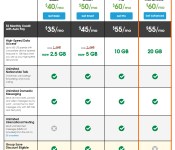
Following closely on the heels of last week’s carrier changes, Cricket Wireless on Friday dropped prices for its prepaid rate plans. Cricket will now offer a $5 discount per month if you sign up for the auto-pay service, bringing its Basic Plan down to $35 per month. Additionally, you can now score up to 2.5GB of high speed data, up from the previous 1GB allotment.
Cricket is also offering, for a limited time, an Advanced Plan for $60 (or $55 on auto-pay) which includes 20GB of data. The catch here is that you need to have an LTE-capable smartphone.
The new rate plans take effect immediately; Cricket will provide one month of free service to anyone who signs up for the Smart, Pro, or Advanced.Plan.

The post Cricket bulks up data allotments, offers discounts for auto-pay appeared first on AndroidGuys.
Huawei Ascend P8 to launch on April 15th in London

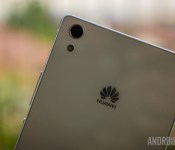
Not much is known about Huawei’s next Ascend P smartphone, other than a small selection of rumors, but Huawei has already set a date for its launch. The Ascend P8 will be unveiled on April 15th at an event taking place in London, according to Huawei’s director of communications, Jerry Huang.
Rather than unveiling its latest flagship smartphone at the upcoming Mobile World Congress, Huawei will again be hosting its own launch event in Europe. However, the company is said to have three wearable products planned for its event at MWC this year as well.
Previously, Huawei launched the P6 in London, followed by the P7 in Paris. The European market is becoming increasingly important for Huawei, as it attempts to shake-off lingering perceptions that it is just another Chinese brand. The company is looking to build a strong brand presence in Europe this year, particularly in the UK.
“We chose Europe because Europe is the market where we have very good sales of high-end smartphones.” – Jie Jinjin, Huawei’s vice president of handsets
Jinjin did not give away any specific details about the Ascend P8, but did hint at what the company has been focusing on for its next flagship. Another sleek, industrial design is apparently an important feature, but Huawei won’t be slimming its handset down further if it comes at the cost of other important attributes, such as battery life. Huawei has also apparently been working with partners to bring some of the industry’s best camera technology to its new smartphones.
We may still be a few months away from the Ascend P8’s launch, but do you have any specific wishes for Huawei’s next flagship smartphone?
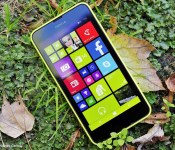
Cricket bumps $40 base plan from 1GB of data to 2.5GB, Lumia 530 and 635 for free

AT&T’s prepaid carrier Cricket is increasing the data allotment for all of their plans without making any changes to the pricing. It’s a bit of a shake-up, offering one of the best data packages among prepaid carriers. Additionally, after factoring in a mail-in rebate, you can grab a Nokia Lumia 530 or Lumia 635 for free.
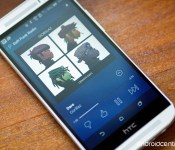
Pandora’s app redesign is now available to all streamers

Pandora Radio announced an upcoming update late last year, which included a redesign of its mobile apps. The new design was available as a beta to just a fraction of Pandora users, but the update has hit supported Android hardware today.
 AIVAnet