


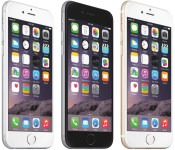
Apple Likely Sold More iPhones in China Than in the U.S. Last Quarter [iOS Blog]
A day before the company is set to announce earnings for its first fiscal quarter of 2015, Financial Times highlights a recent report suggesting Apple may report it sold more iPhones in China than in the U.S. for the first time ever.
According to analysts from financial firm UBS, China accounted for 36 percent of iPhone shipments in the most recent quarter, compared to 24 percent for the U.S. The analysts also compared the numbers to 2013, noting that a year before China accounted for only 22 percent of shipments with the U.S. at 29 percent.

Creative Strategies analyst Ben Bajarin concurs with the UBS report, believing around 2 million more iPhones were sold in China than in the U.S. during the quarter. With the upcoming launch of the Apple Watch, he also believes it’s just the beginning of the country’s fiscal dominance over Apple sales.
“It’s already been a good year, building up to the climax of this quarter,” said Bajarin, referring to Apple’s momentum in the world’s largest smartphone market. “It leads to a lot more optimism for China . . . Their potential headroom in China is higher than it is here [in the US].
They will likely do more in China than US from here on out,” he said. “It certainly shows how important the China market is to Apple’s upside.”
Apple has been emphasizing the importance of China for the company for some time, most recently meeting with the Chinese government to discuss data privacy and security, partnering with popular mobile payment service Alipay, and planning multiple Apple Store openings like the one in Chongqing opening this week.
On the distribution front, 2014 most notably saw a partnership between Apple and the world’s largest carrier, China Mobile. The partnership allowed iPhones to be sold in 3,000 more cities where Apple previously had very little presence, undoubtedly aiding the Cupertino-based company rising Chinese in recent quarters.
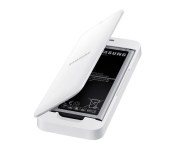
Save 25% today on the Samsung Galaxy Note 4 battery charging bundle
 Made for the Galaxy Note 4 power junkie, this battery charging bundle keeps a spare battery prepped and ready for those desperate occasions. Included is an extra OEM battery, spare battery charger and even a plastic case to store your other battery in to keep it safe from wear. Yours today for only $29.95!
Qualcomm to deliver updated version of the Snapdragon 810 in March

The saga regarding the Snapdragon 810 and overheating issues continues. Will Samsung use the Snapdragon 810 in the Galaxy S 6 is one of the biggest questions this year. There have been reports indicating that Samsung would go exclusively with the homegrown Exynos, and others indicating that Samsung could never drop Qualcomm completely.
Now the Wall Street Journal is reporting that Qualcomm has worked around the heating issue and will deliver a new version of the chip to Samsung in March. Some analysts have already predicted that Samsung will launch the S6 in Korea on time, but delay it in other markets because of this very reason.
Some blogs are taking this news as in Qualcomm has made a special modified version of the 810 specifically for Samsung, but that might not be true. This report seems to indicate that Qualcomm has made the necessary changes to the chip, which would be used by all manufacturers.
I keep saying this story will be interesting. In fact, it could be the biggest story of the year. Samsung can’t afford any mishaps with the Galaxy S 6, and Qualcomm’s year is dependent on the 810. If this goes sour, Qualcomm might have a hard time digging out of this mess.
source: WSJ
Come comment on this article: Qualcomm to deliver updated version of the Snapdragon 810 in March
T-Mobile introduces a new program SCORE!
Yesterday, T-Mobile announced a captivating program for customers of its Prepaid and Postpaid plans. The program called SCORE! is a membership based program and anyone can enroll in for just $5 a month. The program guarantees the member a free entry-level smartphone after the completion of 6 months or can choose to wait 12 months and unlock the hottest deals on all the T-Mobile’s smartphones including the 4G LTE range.
The company with this program aims to help people get the smartphone they want. Being the first of its kind, this program surely will attract the attention of the rival companies and they are also expected to come up with some counter measures.
“SCORE! is a radically new Un-carrier approach to locking in lower costs on your next smartphone,” said John Legere, president and CEO for T-Mobile. “And, it’s yet another breakthrough improvement over the old-school carriers’ restrictive service contracts, hidden subsidy costs and slooooow upgrades.”
To put things in perspective, you could get an Alcatel ONETOUCH Evolve 2 for free after the completion of 6 months if you joined SCORE! (based on today’s pricing) and an LG L90 LTE for free after 12 months or at least $150 off of a smartphone like the Samsung Galaxy S5 or even deeper savings on any other smartphone.
You can get a SCORE! membership either online from t-mobile.com or from T-Mobile stores starting today.
Soure: T-Mobile
The post T-Mobile introduces a new program SCORE! appeared first on AndroidGuys.
Accessory of the Day: RAVPower dual USB power bank $29.99
Need a little portable power? The RAVPower Dual USB Charging Bank refills your battery at a speed of up to 3 amps and can fill a Galaxy S5 over three times on just one charge. There are plenty of power supply options floating around online but not many are #1 best-sellers with 5 star reviews. With a built-in flashlight and LED’s rounding out the feature set, this is a great buy at just $29.99 (Prime).
Join Prime and get this deal with FREE two-day shipping!
Also worth checking out:
The post Accessory of the Day: RAVPower dual USB power bank $29.99 appeared first on AndroidGuys.
Missouri lawmaker proposes law requiring customers to show ID with mobile payments

A Missouri lawmaker is pushing for a law that would require a person to present identification every time that they use a mobile payment system on their phone or tablet.
Last Wednesday, Democratic Rep. Joshua Peters of St. Louis introduced a measure that would require a customer to show a state drivers license or other identification when they use a mobile wallet app or other electronic payment system. The measure also forces merchants to record the license or identification number or else the merchants would be responsible for illegal purchases.
Obviously, the goal of this measure is to slow down the likely increase in fraudulent transactions using Google Wallet or Apply Pay. But this comes off as an extreme over-reach for a new type of technology.

One of the biggest advantages of using Google Wallet and Apple Pay is the ability to purchase items without pulling out a card to show retailers. If customers are forced to dig into their wallet to get their ID during a purchase, why wouldn’t they just use their credit cards?
I also can’t imagine businesses will be thrilled at the idea of having the full responsibility of maintaining additional customer information, in this case identification numbers, for every purchase in their store.

Strung Along, a unique platformer game for Windows 8 and Windows Phone

Stung Along is one of the more unique platformer games that is available for Windows Phone and Windows 8 devices. You control a wooden string puppet across multiple levels of game play.
You will have to avoid obstacles and avoid over extending your puppet that will break its strings. The levels are timed, so you will need to balance speed with caution to avoid snapping your puppet’s strings. The Windows Phone version is available for low-memory devices and after spending a little time with the game, it does have a bit of appeal.

Google’s wireless service could launch nationwide in first half of the year

More details have emerged about Google’s secret plan to become a wireless service provider.
The Information and the WSJ reported last week that Google is readying the launch of its own MVNO service, using Sprint’s and T-Mobile’s networks. Now WSJ is back with a few more details on how Google wants to disrupt the highly competitive wireless industry.
According to the WSJ, Google’s current goal is to launch its service in the first half of 2015, though this timeframe is subject to change; a launch that was previously scheduled for October 2015 was cancelled. Contrary to speculation that the service would be initially limited to a small number of test markets, Google’s service is likely to be offered nationwide, says the report.
Google’s wireless service will rely heavily on Wi-Fi connections
Google’s wireless service will rely heavily on Wi-Fi connections, with cellular service bought from T-Mobile and Sprint as fallback when Wi-Fi is not available. Google already has a deal in place with Sprint, though the carrier reportedly used a volume clause to protect itself from giving too much access to Google.
At least initially, Google doesn’t want to lower prices, one person familiar with the matter said. The actual goal is to give users excellent service without them having to commit to a long-term carrier agreement. But Google is working on a technology that would see wireless providers bid for connections in real time, ensuring that the user gets the smallest price. Indirectly, this competition could lead to smaller prices, the source said.
There are already companies out there using Wi-Fi to bring prices down. Just last week, FreedomPop launched a plan that gives customers access to 10 million Wi-Fi hotspots for just $5 a month. Google will presumably attempt something similar. The company could even rely entirely on data, giving users access to Google Voice over data, instead of conventional voice access. Google is also interested in the use of currently unused radio spectrum to build a network of Wi-Fi hotspots in certain cities.

Sennheiser module shows how Project Ara could be great

Project Ara recently held its second dedicated developer’s conference and modular component development looks to be making strides outside of Google’s R&D department, as is the aim. The latest example comes from a collaboration between Sennheiser, a popular German audio company, and Phonebloks, an early player in the modular game that began collaborating with Project Ara back in 2013. Between them, the two have come up with a couple of neat modular component concepts for those who want a little more from their smartphone’s audio.
The first concept module, named “amphion”, was one of the most popular requests from the Phonebloks community. It is designed to deliver high quality audio capture and playback. Packed with an energy efficient class G amplifier and a low-noise microphone input path, Sennheiser reckons that its design not only meets the demands of the audiophile, but is also perfect for musicians or journalists looking to capture some high quality audio for use at a later date.
The module also houses a low latency digital signal processor, presumably to make use of Sennheiser’s customised EQ and other digital effects, as well as your phone’s usual playback tasks. The DSP is also user programmable, opening up the module to tweaking and experimentation by other developers.

The “proteus” audio block concept comes with two audio jacks for users to more easily share their musical finds with friends. Sennheiser suggests that this could have other interesting implications too, such as using two stereo jacks to connect up four microphone inputs for pin-point directional audio capture.
As Project Ara moves closer to a consumer release, we will hopefully see a few more unique and interesting ideas appear from various component designers. What do you think about Sennheiser’s modular concepts? Do you have any module ideas or wishes of your own?

Bitcoin’s first licensed US exchange opens with approval from 25 states

Virtual currency bitcoin is starting to get its act together. A startup funded with $106 million from the New York Stock Exchange as well as banks and venture capital firms, is set to launch the first licensed US bitcoin exchange. Coinbase reckons it’ll add increased security to traders as well as monitor real-time pricing of the world’s foremost cryptocurrency. If you’ve forgotten, unlike normal currencies, bitcoin is traded virtually and isn’t backed by a central government: reasons why the currency often fluctuates severely. The collapse of Mt. Gox last year stung investors, both professional and otherwise, for a total sum of around half a billion dollars. As the WSJ notes, the value of a bitcoin is currently around $240: it was stood at $1,200 per ‘coin.
The startup’s founders have managed to gain licenses from half of the states’ financial regulators, including (importantly) both New York and California. The exchange can only do business in the states in which it’s gained approval, taking 0.25 percent from most transactions, with the first two months charge-free. The exchange already has 2.2 million “wallets” on file, and plans to operate in 30 countries by the end of the year – it’s already set up in 19 of them.
Meanwhile, Gemini (backed by the Winklevoss twins), has claimed support from an as-yet unnamed New York bank. The legitimacy of Bitcoin is on the increase, but for those of you hoping that the value of Bitcoins will evaporate into nothing and you’ll never have to read about them again — well, it’s not looking good.
Filed under: Internet
Source: WSJ
 AIVAnet