



CEO: “Today, Cyanogen has some dependence on Google. Tomorrow, it will not.”

Kirt McMaster, the outspoken CEO of Cyanogen Inc., has been in the news lately for expressing some controversial opinions on things like Google’s “tyrannical” control over Android or Samsung’s complete inability to build a decent mobile operating system.
But the opinions expressed on Thursday at The Information’s “Next Phase of Android” event in San Francisco are his most contentious yet. Not only has McMaster clarified his views on Google’s control over Android, but he laid out Cyanogen’s vision for a future devoid of any Google reliance.
To remove all doubts right from the get go, here’s how McMaster introduced himself: “I’m the CEO of Cyanogen. We’re attempting to take Android away from Google.” Asked to detail his vision, McMaster explained that Cyanogen wants to provide a version of Android that is open down to its core, that partners can use to build highly integrated services, in a way that is not possible right now with Google’s Android.
“We’re making a version of Android that is more open so we can integrate with more partners so their servicers can be tier one services, so startups working on [artificial intelligence] or other problems don’t get stuck having you have to launch a stupid little application that inevitably gets acquired by Google or Apple. These companies can thrive on non-Google Android.”
McMaster said Google Now is a model of a service that plugs into the core of the system, in a way third-party apps cannot. He went on to say that Aviate launcher (owned by Yahoo, one of the companies rumored to have shown interest in buying Cyanogen) could gain that sort of access to the innards of the Android OS, if it were to partner with Cyanogen.
So Cyanogen sees itself as a platform for other companies to build services that integrate deeply into Android, which is not possible with the Google-controlled Android. Won’t that infuriate Google? Of course it will, but Cyanogen isn’t worried, because its future is free of Google:
“We’ve barely scratched the surface in regards to what mobile can be. Today, Cyanogen has some dependence on Google. Tomorrow, it will not. We will not be based on some derivative of Google in three to five years. There will be services that are doing the same old bulls— with Android, and then there will be something different. That is where we’re going here.”
McMaster sees his company as a “white horse that opens the entire platform up.” “Google is running the table, and nobody likes that,” he said.
Right now, Cyanogen needs Google for its suite of services, like the Play Store, Gmail, and Maps. By imposing certain conditions to companies wishing to install these apps on their devices, Google has so far maintained a firm, if veiled, control over its platform. Companies that fork Android are shut down from Google apps, making it very difficult to create viable competing Android-based platforms. Amazon, which spent years creating alternatives to Google’s apps, is the one notable exception.
Cyanogen wants to solve this problem by working with partners, and by supporting alternative app stores. In fact, Kirt McMaster said Cyanogen would have its own app store in 18 months.
For the full transcript of the event, including commentary from Nextbit, the company building Baton, an app syncing service built into the next version of Cyanogen, check out The Information (paywalled).
It remains to be seen if Cyanogen’s grand ambitions will ever materialize. There are huge obstacles to overcome, not the least being Google’s attitude towards Cyanogen. So far, Cyanogen has enjoyed access to Google’s apps for its OnePlus and Micromax commercial implementations. It’s not clear how Cyanogen plans to play it cards, as it still needs Google to play nice for now. But its plans are clearly diverging from that.

How to disable Cortana from the task bar in Windows 10 Preview

One of the prominent new features in the task bar in the Windows 10 Technical Preview is the Cortana search box to the right of the Start button. It’s a really great tool to have close at hand, but, it does also use up quite a bit of real estate. So, it’s understandable you might want to make it go away – especially if you can’t use Cortana right now.
Fortunately, that’s really simple.

Over-hype expert Peter Molyneux warns Microsoft not to do the same for HoloLens

Famed game designer, and former Microsoft executive, Peter Molyneux has offered his own opinions on the recently revealed Microsoft HoloLens holographic headset, stating that the company should be careful not to over-promise the capabilities of the device. Ironically, Molyneux has had a long history of doing that very same thing with many of his games.
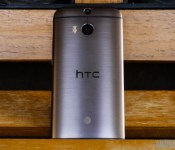
Opinion: For HTC, the only way is up

HTC’s story is one of ups and downs. Since its founding in 1997, the company made the jump from contract manufacturing (think today’s Foxconn) to successfully selling devices under its own brand. In the 2000s, HTC quickly climbed to the top of the mobile industry, thanks in part to an early bet on Android. But the good times didn’t last – market share, profits, prestige… it all went away, and HTC found itself struggling to stay relevant, pushed in a corner by Apple, and especially Samsung.
In the past two years, HTC has been as down as a company can be without closing down or selling out. “We’ve been through hell, but we survived,” an executive told us during one of the company’s regular Frequencies meetups. But can HTC do more than just survive? Can it thrive again?
“We’ve been through hell, but we survived”
If you believe HTC’s communication head Jeff Gordon, 2015 will be a great year for the Taiwanese company, thanks to the “best ever” product lineup and some “huge surprises.” Yes, 2014 was supposed to be a “positive” year too, and while cutting costs and increasing revenue in Q4 were positive developments, last year wasn’t what HTC had hoped for. With that said, 2015 shapes up to be different. March 1, the day the new One is set to launch, could be the day HTC begins its symbolic comeback.

HTC is promising Utopia for its MWC 2015 event
On the financial side, HTC already managed to stabilize by streamlining its portfolio, outsourcing some of its production, and other cost cutting measures. While painful, these measures allowed HTC to turn a (tiny) profit in the last three quarters of 2014. More importantly, after three years of falling revenue, HTC managed to increase its quarterly sales in Q4 2014. We’ll see if the trend continues in Q1 2015, but signs are positive.
Financial health is a reflection of a company’s product strength, and on this front as well, HTC seems to be going steady. The One flagship series isn’t a hot seller, but HTC seems to have carved a niche for itself, with its focus on design and premium build. Mind share is strong, and when people talk about attractive phones, the M8 comes up inevitably. Perhaps more important than the top of the line, the mid-range is strong as well. HTC calls phones like the Desire Eye and the Desire 820 “premium mid-range” and it has a point – these are some of the best phones you can get without spending flagship money. And the strength extends down-range, even though HTC hasn’t really tried to compete in the budget category.

The HTC Desire Eye caters to the selfie lovers
More reasons to be optimistic are in the pipeline. Due at MWC in Barcelona, the One M9/Hima will bring a few tweaks to the series’ iconic design, and a big upgrade in a key area – camera. Multiple reports point toward a 20MP camera – HTC is done with the UltraPixel experiment and with the gimmicky depth sensor found on the M8. That’s great news – the inconsistent camera experience was one of the reasons the One (M8) only scored a special mention in our best Android smartphones roundup. The M9 shapes up to be a very well balanced device that combines premium design with solid specs and a refined software experience.
HTC is not just a phone company anymore
But HTC is not just a phone company anymore. There’s talk of a smartwatch (or at least a fitness band) launching along the M9 on March 1. If HTC manages to apply some of its design prowess to the wearables category (where design is probably the #1 differentiator), it could have a hit on its hands. Also, at CES, the company talked about its ambition to connect all aspects of our lives, from our health to our homes. The whimsical Re camera is a step in that direction, though perhaps not the most promising one.
Then there are the tablets. The Nexus 9 isn’t a popular device, the way the affordable Nexus 7 was before it. But HTC probably sees the Nexus 9 as a brand enhancer, rather than a moneymaker. HTC will surely follow up with its own brand tablet, perhaps as soon as MWC. The tablet category isn’t growing explosively anymore, but for HTC, expanding in this area is still vital, after years of relying exclusively on phone sales.
To wrap up: a refined flagship; a solid mid-range; new tablets; new wearables; expansion beyond mobile; slowly improving financials. These are all reasons to be excited for HTC in 2015. What about the pitfalls?
The mobile landscape in 2015 is more competitive and complex than ever. HTC was a victim of Samsung’s cutthroat tactics, but now the Korean giant is getting a taste of its own medicine from Xiaomi. Things are in flux, and that means both opportunity and danger for tiny HTC. Because odd as it may sound, HTC is a small player – with a 0.9% sales share, it ranked 16th in Strategy Analytics’ global tracker in Q3 2014, behind Oppo and Vivo. It sold 25 times fewer phones than the leader, Samsung.
http://embed.chartblocks.com/1.0/?c=546b614dc9a61d340d999f8a&t=8d5a273b4d8afcf
HTC’s slice of the market is thinner than ever
As a small fish in a large, crowded pond, HTC needs to put out great devices, but it also has to convince buyers that its products are better than competitors from Apple, Samsung, Xiaomi, LG, Lenovo/Motorola, and countless others. That requires smart marketing (an area where HTC struggled in the past, by its own admission), a flair for what consumers want, and the willingness to sacrifice profits. That’s clearly a challenge for a company that lacks the luxury of having a large, diversified group at its back, ready to support it with resources and money.
Turbulent as it may be, the current situation could give HTC the chance to snatch back some of the market share it lost so quickly since 2011. Is it now or never? Nobody can say for sure, but it’s hard to imagine HTC surviving for much longer without returning to real growth. Some voices are already calling for selling out to some cash-flush competitor hungry for international recognition. So, from that perspective, HTC’s only chance is to go up.

Amazon Prime annual membership discounted to $72 for one day only

If you’re looking to become an Amazon Prime member, now is the time to do it as the retailer is offering the annual membership for just $72, down from its usual price of $99. In addition to the discount on the membership, Amazon is streaming all ten episodes of its original series Transparent for free to non-Prime members on January 24.

Two Sundance experience apps available for Google Cardboard owners

Google Cardboard owners have the opportunity to experience the Sundance Film Festival from afar. Two Sundance experience apps are available right now in the Play Store and virtually bring people to the event. Evolution of Verse (or just VRSE) is an “expanding universe of Virtual Reality experiences.” The app combines beautiful landscapes and high quality sound for an immersive setup with Google Cardboard. The other app is Kaiju Fury and it places viewers in the midst of a battle between two massive creatures. Both creatures destroy the city as the military works to put an end to them.
Don’t have any way to use Google Cardboard? Then purchase the affordable equipment!
Hit the break for download links.
Play Store Download Link (Kaiju Fury)
Play Store Download Link (Evolution of Verse)
Source: Google
Come comment on this article: Two Sundance experience apps available for Google Cardboard owners

Largest Apple Store in Asia officially opens doors in Hangzhou, China

Apple has officially opened doors to the public at its Westlake store in Hangzhou, China. The Westlake Apple Store is one of five retail stores opening in the country before the Chinese New Year, which falls on February 19. Apple has promoted the launch of the store – which is the largest Apple Store in Asia – with a mural by famed calligrapher Wang Dongling.
Tim Cook shared the launch of the Westlake store on Twitter:
Starting Something New in Hangzhou, China! #AppleStoreWestLake pic.twitter.com/8L5gVKfLjn
— Tim Cook (@tim_cook) January 24, 2015
The new stores increase Apple’s retail presence in China to 20, with Tim Cook stating that a further 25 stores will be opened in the country over the next two years. With iPhone sales amounting to 45 percent of all smartphone sales in the country, it makes sense for Apple to focus its attention in the region.
Source: Apple

Poll: Did you install the new Windows 10 Technical Preview?

Microsoft caught us off guard somewhat with an earlier than anticipated release of the new Windows 10 Technical Preview. Due to land next week, it pushed out earlier today to Windows Insiders allowing eager enthusiasts to get their own first look at the latest incarnation of Microsoft’s operating system.
But, while all insiders can download and install it, that doesn’t necessarily mean that they did, or are going to. So, did you install the new Windows 10 Technical Preview?

Google addresses WebView security concerns, makes recommendations on how to stay safe

If you are still waiting for Google to do something about the WebView vulnerabilities in older Android releases, you may not be a fan of their official response to the matter. Google says they’ve already fixed it, sort of, but at least offered ways that you can protect yourself and your data going forward.
In a recent Google+ post, echoing an older DevBytes video and our own take on the matter, Google has addressed the WebView issues that have been of growing target for complaints of the free and open source Android OS. Android releases prior to KitKat, that is, versions 4.3 and older, have a known code injection flaw in the WebView element.
WebView is broken, don’t use it
WebView is a tool within Android that allows apps to display web content within the app, you’ve all seen these before as ads at the bottom of a free game or an in-app web based help page. Although the Google+ post goes on to describe a few best practices, the underlying message is unforgiving and clear, WebView is broken, so don’t use it.
Perhaps Google’s advice is easier said than done, especially for the casual gamers in the crowd, but disabling the default Android browser and installing Chrome, Dolphin or another full web browser is good advice regardless the issues. Developers, please familiarize yourself with the best practices for your apps, to keep us secure.

Now, didn’t you say that Google fixed the issue? Well, yes, sort of. Google took the time in the Google+ post to explain that they have limited resources for working on older versions of Android. Plainly put, Android 4.4 KitKat included the fix to the WebView bug. Keeping in mind that KitKat is over a year old now itself, having been through versions up to 4.4.4 before giving way to Android 5.0 Lollipop, which is also a couple versions in already. Android 5.0.2 Lollipop is already shipping out to some devices.
Bottom line, users of devices running Jellybean and older are just out of luck. Please take the precautions discussed, or have a look at installing a custom ROM, if one is available for your Android unit.
Is this an acceptable response from Google, or should they dedicate more staff to fixing older Android releases? Before you answer, I might suggest taking a look at the latest Android distribution numbers.

Survey finds 50% of phones activated last quarter came from Apple, 26% from Samsung

Apple trumped all other smartphone manufacturers last quarter based on consumers activating a device. The usual Android foes were all far behind Apple with Samsung leading the way. Consumer Intelligence Research Partners (CIRP) conducted a survey with five hundred subjects in the United States and aimed to find which phone brands were most popular among activations. The devices, both old and new, were activated between October and December of last year.
Samsung trailed Apple by 24% and that was the closest any company came to catching the clan in Cupertino. After that, the numbers dropped off significantly. The third place company was LG with 11% and Motorola finished fourth at 4%. Rounding out the bottom was HTC (2%), Nokia (2%), Amazon (1%), and “other” with 4%. BlackBerry, who may or may not be facing an acquisition in the near future, had no activations from the survey.
Josh Lowitz, the co-founder of CIRP, explained that the loyalty of Apple customers is far greater than that of Samsung and LG’s. He said:
“iPhones drew from loyal Apple customers, with 86% of buyers upgrading from an older iPhone. Samsung and LG saw far lower loyalty rates, with 25% of Samsung owners and 18% of LG owners who activated a phone in the quarter switching to an iPhone.”
Source: Consumer Intelligence Research Partners (PDF)
Via: Phone Arena
Come comment on this article: Survey finds 50% of phones activated last quarter came from Apple, 26% from Samsung
 AIVAnet