


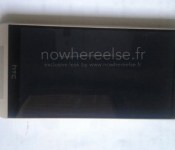
What We Know: HTC One M9 (Hima) rumors and leaks thus far
Last year’s HTC One M8 was one of the hottest Android devices to be released, mainly because it featured a premium aluminum unibody in a slim package. With expectations among consumers rising, HTC has their work cut out for them to top an already good design with their upcoming One M9.
Rather than passing along every single rumor that comes across our plate we’ve opted to cover only those devices that we find most relevant. To that end, the “What We Know” column aims to highlight the flagship smartphone models that are looming on the horizon.
What you’ll find below is a list of rumors, leaks, speculation, images, and other information that pertains to the HTC One M9. We’ve done our best to gather up the juiciest stuff floating around, even if it conflicts with other reports. Unless otherwise noted, this is all to be considered unofficial and unconfirmed.
Note: This post will be updated continually until such time that the device is announced by HTC and made official.
Design
The one thing that HTC has perfected on its flagship devices is the design. The HTC One M8 was very well-received and even critically acclaimed for being one of the first Android devices to feature an all-metal encasing, so it is expected that it will continue that trend.
The One M9 is expected to come within a 144.3 x 69.4 x 9.6 mm frame. Comparing it to its predecessor, it is 2.1 mm shorter vertically and 1.2 mm thinner horizontally. The One M9 also comes in at 2 mm thicker, most likely to support the bigger battery expected in the device.

In the first batch of leaks from NoWhereElse, their images depict that the reasoning for the slimming down is due to the fact that HTC removed the outer metal rim seen on the One M8.
To give a better perspective of the aesthetic changes, Senior Editor of NoWhereElse posted an image via his Twitter account detailing the differences. The range from the lack of metal rim, front sensor/flash, and a smaller gap between the HTC logo on the bottom of the display.

Another change made to the design is the location of the lock buttons. They now will join the volume rockers on the right-hand side of the device, whereas it used to be on the top of the device. The button placement can be seen in the latest leaks obtained by NoWhereElse from case renders for the One M9.

Display
The HTC One M9 has been rumored to have a screen size ranging from 5 to 5.5 inches, with the latter being more widely supported, and even backed by infamous leaker upleaks. HTC will not join the fray of QHD displays, but retain FHD support.
A 5 inch display sporting 1080p resolution comes in at 443 ppi, so the picture will definitely be crisp. It is also expected that HTC will stick with LCD display technology and not move to AMOLED, although that is unconfirmed.
While nothing has been announced as far has what glass the display will feature, it is safe to assume that the device will feature Corning’s latest Gorilla Glass 4, as will other flagships of 2015.
Camera
If there was any area of the HTC One M8 that was lacking, it was definitely in the camera category. HTC kept trying to boost their UltraPixel setup claiming that quality wasn’t related to the amount of pixels. Consumers voiced their opinions of their distaste for the 4 UltraPixel camera seen on the One M8, and it seems as they have listened.

According to upleaks, the device will now boast a massive 20.7 megapixel camera in the rear and a reported 13 megapixel or 4 UltraPixel camera up front. The 13 megapixel camera for the front-facing shooter has been reported more often, and even showed up on an AnTuTu Benchmark, but the UltraPixel setup hasn’t been ruled out entirely.
Internal Hardware
The internal aspects of the HTC One M9 are the part of the device that is most widely agreed upon, as it has been seen on the AnTuTu Benchmark as well as reported by upleaks. The device will feature Qualcomm’s 2.0 GHz octa-core Snapdragon 810 processor that will be backed up by 3 GB of RAM, and an Adreno 430 GPU.

It is unknown if the rumored overheating issues on the Snapdragon 810 processor will cause any delays for the release of the One M9, but according to Bloomberg, Samsung has already jumped ship.
The One M9 will feature 32 GB of ROM and will have the option to expand up to 128 GB. Including an external microSD slot on their devices have been a staple for HTC and is one of the reasons why consumers like their devices so much.
To top off all of the internals, a rumored 2,850 mAh battery will power the HTC One M9. This is a significant boost from the HTC One M8’s 2,600 mAh battery. As always with HTC, the battery is expected to not be removable.
OS
HTC’s latest device will be running Android 5.0 Lollipop straight out the box. While some of the devices HTC has released are already receiving the latest Android OS update, none have been shipped with a device before. On top of Android Lollipop will come HTC’s custom user interface (UI) called Sense.
The Sense UI version on the One M9 will be updated to 7.0, up from version 6.0 that is currently seen on the One M7 and M8. HTC has done a fairly good job keeping their new update under-wraps and little is known about it, except for a few screenshots from You Mobile.


The images barely give us a peek into what to expect from Sense 7.0, except for the fact that it features Material Design and it has newly added detailed battery stats. It is also expected to feature an avatar maker and other features such as BlinkFeed.
Launch
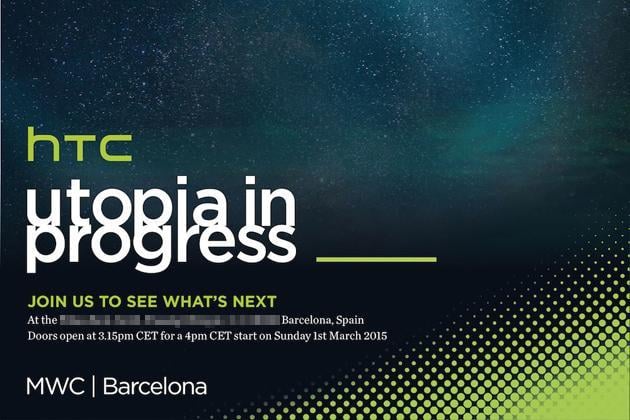
It has been announced that HTC will debut the HTC One M9 (Hima) March 1st at Mobile World Congress (MWC) in Barcelona this year. It is was announced by an image that stated “Utopia in progress.”
The AndroidGuys team will continue to keep this article updated with the most recent news surround HTC’s next flagship, the One M9. So, be sure to bookmark this page and check back often as this page will continually receive updates!
The post What We Know: HTC One M9 (Hima) rumors and leaks thus far appeared first on AndroidGuys.

Amazon Ends Wallet App Beta Program, but Still No Sign of Apple Pay Loyalty Rewards Program [iOS Blog]
Amazon today ended the beta for its Amazon Wallet app, approximately six months after the company launched it last summer. The company began sending emails last night to those signed up for the beta, announcing the company would be shutting it down and removing the Wallet app from Google Play and Amazon’s own Appstore (via CNET).
Unlike Apple’s new Apple Pay payments service that ties directly to credit and debit cards, Amazon Wallet focused on gift and loyalty cards that users could manage and store within the app for use in physical stores or online. Amazon did not confirm whether the Wallet app might be revived in the future, but did mention it was a learning experience for the company as a whole.

“We have learned a great deal from the introduction of the Wallet and will look for ways to apply these lessons in the future as we continue to innovate on behalf of our customers,” Amazon spokesman Tom Cook said in a statement.
The company has been far more than an online marketplace for a few years now, throwing its hat into the ring of everything from streaming devices to personal voice assistants. But it hasn’t been clear sailing either, especially with the Fire Phone, which debuted last summer. The phone received mediocre reviews and has seen a series of price drops in an attempt to sell more units.
Loyalty programs are currently one aspect missing from Apple Pay, but the company has been rumored to be planning a rewards-focused loyalty program for the service. Reports late last year hinted at a holiday launch date for the service, though the rumors failed to come true.
Apple’s loyalty program is rumored to see Apple partner with various companies, from retailers to major hotel chains, to provide customers who use Apple Pay at their locations with various rewards. Though Apple Pay is still a fairly new service, its continued growth amongst both customers and partners mean a rewards-style program could quickly prove valuable for consumers and help drive even more usage.

Google spends more on lobbying than Comcast, AT&T, Verizon, Facebook, and Apple

Google might be buying up a lot of tech companies, but they are also spending a considerable amount of money on lobbying efforts in Washington. According to Consumer Watchdog, Google spent a record $16.83 million to influence regulators in 2014. That’s up from $14.06 million in 2013.
Google bested Comcast, which spent $16.80 million in 2014. They even went ahead of Verizon ($11.22 million) and AT&T ($14.56 million). Apple and Facebook combined didn’t even spend as much as Google, $4.11 and $9.34 million respectively.
I guess it isn’t a surprise that Google tops the list since they have their hand in so many different things. The real question is if Google was able to effectively sway decision makers?
Full Press Release
Google Spends Record $16.83 Million On 2014 Lobbying, Topping 15 Tech And Communications Companies; Facebook, Amazon, Apple Also Post Records, says Consumer Watchdog
SANTA MONICA, Calif., Jan. 21, 2015 /PRNewswire-USNewswire/ — Google spent a record $16.83 million on lobbying in its efforts to influence federal regulators and lawmakers in 2014, just ahead of Comcast’s reported $16.80 million, according to records filed with the Clerk of the House and analyzed today by Consumer Watchdog.
Consumer Watchdog, a nonpartisan nonprofit public interest group, monitors the lobbying disclosure reports of 15 tech and communications companies. Facebook, Apple and Amazon also set corporate records for the amount they each spent. The 15 companies spent a total of $116.62 million on lobbying in 2014, a 3 percent decrease from a total of $120.28 million in 2013. Six of the 15 companies increased their 2014 spending, while the rest cut back from 2013 levels
“It’s important to understand just how much money these companies are throwing around in Washington to buy the policies they want,” said John M. Simpson, Consumer Watchdog’s Privacy Project Director. “Policymaking is now all about big bucks, not big ideas.”
Here is a link to the Clerk of the House’s Lobbying Disclosure database: http://disclosures.house.gov/ld/ldsearch.aspx
Google spent $16.83 million on lobbying in 2014 compared with $14.06 million in 2013, a 20 percent increase. Google’s fourth quarter lobbying expenditure was $3.78 million, a decrease of 5 percent from $3.98 million, in 2013.
Microsoft, Google’s archrival, which used to regularly outspend the Internet giant, spent roughly half of what Google spent. Microsoft reported spending $8.33 million, a decrease of 20 percent from $10.49 million spent on 2013 lobbying. Fourth quarter lobbing expenses were $2.25 million compared to a $2.77 million, a 19 percent decrease from 2013.
Facebook, which has substantially increased its Washington presence over the last three years, posted another company record in its effort to influence policymakers. Spending soared 45 percent to $9.34 million from $6.43 million in 2013. Fourth quarter spending was$1.99 million compared to $1.48 million, an increase of 39 percent.
Amazon also posted a company record its disclosure forms show. It reported lobbying expenditures of $4.74 million, a 37 percent increase from $3.46 million in 2013. Fourth quarter spending was $1.67 million vs. $960,000, an increase of 74 percent.
Apple, too, is increasing its Washington activities. It spent $4.11 million in 2014, a record and a 22 percent increase from $3.37 millionspent in 2013. Fourth quarter spending was $1.19 million vs. $990,000 a 20 percent increase.
Here are the 2014 lobbying amounts for five other tech firms:
- Cisco spent $2.35 million in 2014, a 25 percent decrease from $3.12 million in 2013. Fourth quarter spending was $310,000 vs.$890,000 a decrease of 65 percent.
- IBM spent $4.95 million in 2014 a 30 percent decrease from $7.06 million in 2013. Fourth quarter spending was $1.15 million vs.$1.90 million, a decrease of 39 percent.
- Intel spent $3.80 million in 2014, a 13 percent decrease from $4.39 million in 2013. Fourth quarter spending was $980,000 vs.$1.45 million vs., a decrease of 32 percent.
- Oracle spent $5.83 million a decrease of 3 percent from $5.99 million in 2013. Fourth quarter spending was $1.66 million vs.$1.60 million, an increase of 4 percent.
- Yahoo spent $2.94 million in 2014, an increase of 6 percent from $2.78 million in 2013. Fourth quarter spending was $740,000 vs.$720,000, an increase of 3 percent.
Two of three telecommunications companies decreased their spending on lobbying, while one increased expenditures in 2014:
- AT&T spent $14.56 million, a 9 percent decrease from $15.94 million in 2012. Fourth quarter spending was $3.06 million vs. $3.64 million, a decrease of 16 percent.
- Sprint spent $2.99 million, a 9 percent increase of from $2.75 million in 2013. Fourth quarter spending was $772,658 vs.$716,887, an increase of 8 percent.
- Verizon spent $11.22 million, a decrease of 17 percent from $13.44 million in 2013. Fourth quarter spending was $2.97 million vs.$3.46 million, a decrease of 14 percent.
Here are 2014 lobbying expenditures for two cable companies:
- Comcast spent $16.8 million in 2014, a 10 percent decrease from $18.71 million in 2013. Fourth quarter spending was $5.03 million vs. $4.78 million, a 5 percent increase.
- Time Warner Cable spent $7.83 million in 2014, a 6 percent decrease from $8.29 million in 2013. Fourth quarter spending was$2.2 million vs. $2.49 million, a decrease of 12 percent.
Come comment on this article: Google spends more on lobbying than Comcast, AT&T, Verizon, Facebook, and Apple

Moto 360 hits Google Play for those in Germany, France, Canada and 4 others

The Moto 360 might not be the only circular Android Wear watch in town these days, but it still remains one of the best AW watches around, despite shortcomings like its flat-tire display and less than perfect battery performance. For those in the US, the Moto 360 has been available both through Google Play, the Motorola webstore and many other retailers for quite a while now. For those outside the US, while there are many channels (including Moto’s store) that offer up the watch, Google Play hasn’t been an option — until today.
Google has now updated its support page to list several new countries where the Moto 360 is hitting Google Play. Specifically we are talking about Canada, France, Germany, Italy, Netherlands, Spain, and the United Kingdom. While the addition of Google Play as a retailer might not make a big difference from some, it’s still nice to see Google offering the watch directly in more markets.
Keep in mind that just because the support page has been updated doesn’t mean all these markets now have the Moto 360 ready for purchase. We are hearing reports that several of the above countries merely have a listing that says “coming soon”, though hopefully it isn’t long before the watch is stocked and ready to go.

Settings on Windows 10 for Phone and PC are stark and simple

The Settings area on Windows PCs has always been a challenge. At once it needs to be simple and easy to navigate, while also letting power users have all the options that they want to change. That is a tall order to fulfil.
Windows 10 completely revamps Settings once again, but this time it trickles down to the phone. Indeed, the Settings on Windows Phone is a bit of a mess with a seemingly endless unorganized list.
Apple Seeds OS X Yosemite 10.10.2 Build 14C106a to Developers [Mac Blog]
Apple today seeded a sixth beta of OS X Yosemite 10.10.2 to developers, just a week after seeding the fifth beta of OS X 10.10.2, and two months after seeding the first beta.
The new beta, build 14C106a, is available through the Software Update mechanism in the Mac App Store and through the Mac Dev Center.

As with previous betas, Apple asks developers to focus testing on Wi-Fi, Mail, Bluetooth, and VoiceOver. Many Yosemite users have had some ongoing problems with Wi-Fi since the new OS was first launched in October, and a November 10.10.1 update did not resolve all of the lingering issues.

Get unlimited 4G LTE data for $50 from MetroPCS

MetroPCS which is a subsidiary of T-Mobile has now announced an irresistible 4G LTE plan for customers looking to get unlimited data on their device.
It costs only $50 a month if you sign up for the plan by April 5. Beyond that, the plan will set you back by $60 each month. But with this plan, customers are entitled to unlimited voice minutes, text and 4G LTE data with no hidden charges as the carrier specifically mentions.
MetroPCS also has plans in the $40 and $50 range which come with 2 and 4GB of 4G LTE data respectively. These plans also come with unlimited voice and texts. Given that the carrier is offering the unlimited LTE plan for $50 until April 5.
“MetroPCS has a solid track record of giving customers the best value in prepaid wireless and schooling the competition at the same time,” said John Legere. “MetroPCS is at it again today with 4G LTE Unlimited for just $50 bucks, the best value anywhere!”
You will need to own a MetroPCS certified 4G LTE smartphone to be eligible for the promotion. The carrier is launching the Samsung Galaxy Light for $49 and the LG Optimus F60 for $59, so you can get either of these devices to be eligible for the promotion.
Hit the break for the full press release from the carrier:
BELLEVUE, Wash.–(BUSINESS WIRE)–T-Mobile’s (NYSE: TMUS) flagship prepaid brand is helping customers get more of what they want out of their wireless plan − more blazing-fast 4G LTE data. For a limited time, MetroPCS customers can upgrade to Unlimited 4G LTE data for the unheard of price of just $50 per month. That is the undisputed best Unlimited LTE data plan in the prepaid industry. And, unlike some “promotional” offers, when you sign up by April 5, you get Unlimited LTE with no pre-planned end date, so you can enjoy your Unlimited LTE plan with confidence. Even better, it’s all riding on T-Mobile’s nationwide 4G LTE network.
To hit the ground running with your new LTE data, anyone activating a new line or upgrading their smartphone before April 5 can get their hands on the latest LTE smartphones from Samsung or LG at incredible prices − no gimmicks or mail-in rebates:
Samsung Galaxy Light – $49
LG Optimus F60 – $59
And on top of that, every MetroPCS customer with a 4G LTE data bucket will get an additional gigabyte of 4G LTE data on T-Mobile’s network starting today – automatically. No hoops to jump through. You don’t have to do a thing.
“MetroPCS has a solid track record of giving customers the best value in prepaid wireless and schooling the competition at the same time,” said Legere. “MetroPCS is at it again today with 4G LTE Unlimited for just $50 bucks, the best value anywhere!”
As always with MetroPCS rate plans taxes and regulatory fees are included, so there are no surprises and no crazy strings attached:
$40/month for unlimited data, talk and text + 2GB of high-speed data at up to 4G LTE speeds (up from 1GB)
$50/month for unlimited data, talk and text + 4GB of high-speed data at up to 4G LTE speeds (up from 3GB)
$60/month for unlimited 4G LTE data, talk and text (sign up for $50/month until April 5 with a MetroPCS LTE smartphone)
For more information, please visit http://www.metropcs.com
$50 promotional plan available only to customers with MetroPCS GSM phones with LTE connectivity. Bring your own device phones and CDMA phones are not eligible for this plan.
Come comment on this article: Get unlimited 4G LTE data for $50 from MetroPCS
Instagram beta lets Android users test future features
Do you want to test new features for Instagram? The company has provided a way to do just that with its beta program, which you can find on this Google Group page.
The company notes that before you try Instagram beta, it will:
- Replace the regular Instagram app.
- Its actively developed features may not work perfectly. Instagram will need your feedback to figure out what’s wrong.
- You can leave the program at any time and use the re-download the regular version of Instagram from the Play Store.
To become a tester:
- Join the Google Group, which you can find at the top of the link above.
- Download Instagram from the Play Store.
- Open the Play Store app and re-install Instagram by choosing Update or Install
- Lastly, it recommends that you report problems through the “Report a problem” option in settings. After you’ve done this once, you can turn on Shake to report in the future.
You can also find troubleshooting tips on the page. While Instagram Beta is free, Instagram also warns you to not re-distribute the app unless you obtain permission first.
Source: Instagram’s Twitter
The post Instagram beta lets Android users test future features appeared first on AndroidGuys.
Chrome 40 for Android arrives on the stable channel

Chrome 40 is now rolling out for Android, and while the milestone number might make it seem like this is a big update, it’s actually relatively minor. The biggest changes mentioned in the Chrome blog are the new updated page info and content settings UI.
Surely Chrome 40 has more going on than that right? While there aren’t many front-facing changes, the good news is that a slew of bug fixes and performance improvements are baked in. For those wanting to know about the specific bugs squashed, a partial list of the changes found in the build can be seen in the Git log.
As is customary with all Google updates these days, today’s update may actually take several days or even weeks to reach everyone. For those that don’t like waiting, you can download the APK through Gappsearly. For those that downloaded, are you experiencing any noticeable improvements when it comes to speed, stability and overall performance? If so, tell us about the experience in the comments below.

10 things we learned about the next chapter of Windows 10

What did we learn about Windows 10 from Microsoft’s latest event? A whole lot, as it happens
The dust has settled but the excitement hasn’t died down – and probably won’t for a long time to come. Microsoft has delivered its “Windows 10: The next chapter” event out at its campus in Redmond and it didn’t disappoint. Going into it we had only ideas at what we might see, but there were a whole lot of things that we weren’t ready for.
There was a lot to take in during the presentation, but already there are some parts of it that stand above the others. We learned a lot about Windows 10 the platform, the future, and even saw some hot new hardware.
So, here’s 10 things we learned about the next chapter of Windows 10.
 AIVAnet