


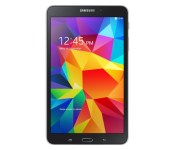
Benchmark reveals new Galaxy Tab 4 8.0 variant with a 64-bit chip

A new benchmark listing has revealed Samsung’s intentions to launch a new version of the Galaxy Tab 4 8.0 sporting a 64-bit processor. The revelation was made by GFXBench, which has spilled the beans on several devices in the past.
This tablet sporting the model number SM-T333 is shown to be packing Qualcomm’s budget ranged Snapdragon 410 SoC, which is used on multiple midrange smartphones that have launched recently.
This chip uses the 64-bit CPU architecture which makes it fully compatible with Android 5.0, although having a 64-bit processor isn’t a prerequisite for running Android Lollipop.

Barring this, the tablet is shown to be packing similar hardware as the current Galaxy Tab 4 8.0 variant which includes the 8 inch 1280 x 800 resolution display, 16GB of internal storage, 1.5GB of RAM, Android 4.4.4 KitKat and a 3.15-megapixel rear camera.
Would you be interested in this new variant of the Galaxy Tab 4 8.0? Let us know below.
Source: GFXBench
Via: Sam Mobile
Come comment on this article: Benchmark reveals new Galaxy Tab 4 8.0 variant with a 64-bit chip

‘The LEGO Movie Video Game’ for iOS Hits the App Store [iOS Blog]
Popular children’s film The LEGO Movie has been translated into an iOS app, which was released in the App Store today. The LEGO Movie Video Game, like other LEGO games, is a premium title that’s based on the movie, offering the same fun characters and plot line in a playable format.
In the game, players will take on the role of Emmet, an ordinary rule-abiding lego guy who has to take on the job of saving the world from an evil tyrant, with the help of the friends he meets on his journey.
The LEGO Movie Video Game features more than 90 characters from the movie, and there are 45 levels to play through across worlds like Cloud Cuckoo Land and Flatbush Gulch. There’s also an all new animation style.

KEY FEATURES:
– A delightful and surprising mix of over 90 characters as seen from the film, including Batman, Superman, the Green Ninja, Gandalf, Benny, and more.
-Journey through fantastical worlds like Flatbush Gulch, Cloud Cuckoo Land, and more in 45 exciting levels!-Smash bricks in a fascinating environment made of LEGO bricks.
-Collect and use LEGO instruction pages to build in a new way.
-Harness the awesome power of the Master Builders to virtually build extraordinary LEGO creations.
-Enjoy a brand new animation style as seen in the film that simulates the movement of actual LEGO toy sets.
Like other LEGO games, the new LEGO Movie game is quite large, requiring 2.2GB of space to download and 1.1GB of space to play after installation is complete. The game does have in-app purchases, but for a limited time, “Confetti” and “Bubble” Red Brick abilities are free to purchase to celebrate the game’s launch.
The LEGO Movie Video Game can be downloaded from the App Store for $4.99. [Direct Link]
What we know: Sony Xperia Z4 rumors and leaks thus far
Sony’s flagship devices have become stale in recent years, with most enthusiasts agreeing that Sony makes good quality smartphones without the required innovation to boost sales. This has resulted in an overwhelming loss for Sony’s smartphone division (almost two billion dollars). Console sales are keeping the company afloat for now, but that might change soon with the Sony Xperia Z4 rumors painting a picture of a powerful new smartphone with perhaps enough changes from the previous generation to boost sales.
Note: This article contains some of the most popular leaks and rumors for the Xperia lines’ new generation, and will be continually updated to include more as they become available.
Design
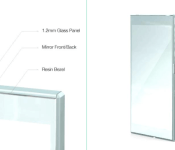
Very little has been leaked about the design of the Xperia Z4, however the few leaks that do exist seem very promising. The image at the top of this post (if you are on a mobile device, switch to the desktop version of the site to see it), shows an apparent leak from an e-mail between Sony executives. Gizmodo reveals that the message was between the Sony Picture Entertainment CEO (Michael Lynton) and the vice president of consumer marketing (George Leon), as the image is supposedly an official concept for the phone’s design that will be showcased in a new James Bond movie called “Spectre.”

The concept art above seems to further solidify the idea that Sony has decided to take a somewhat more futuristic approach to designing the handset. The new model doesn’t do away with much of the company’s previous design though, as it is still very square and button placement does seem to have remained the same.
Compact and Ultra
Two additional variants of the Xperia Z4 are rumored to be in the works as well, the Z4 Compact and Z4 Ultra. GSM Arena cites a Japanese Blog as confirming the release of the two Z4 variants. Unfortunately I do not speak Japanese, and the Google Translated page makes little sense, so we’ll just have to take their word on this one.
Display
5.5 inches seems to be the consensus when it comes to the rumors on the Z4’s display. Resolutions from 1080p up to 4K have been “whispered” around the web, though a QHD (2560×1440 pixels) is the one most frequently seen. The Z4 Compact and Ultra are said to be 4.7 and 6.44 inches respectively. Most rumors on the web seem to agree that the Compact will sport a 1080p display, whereas the Ultra will sport a 4K display.
Hardware
According to Android Origin, the newest flagship from Sony will have specs to match the smartphones of the future, with:
Main Variant:
– 4 GB of RAM
– Qualcomm Snapdragon 810 CPU (2.8 GHz)*
– Adreno 430 GPU
– 32 GB of internal storage (base)
– 3000 to 3500 mAh battery
Compact:
– 3 GB of RAM
– Qualcomm Snapdragon 810 CPU (2.8 GHz)*
– Adreno 430 GPU
– 32 GB of internal storage (base)
– 3000 mAh battery
Ultra:
– 3 GB of RAM
– Qualcomm Snapdragon 810 CPU (2.8 GHz)*
– Adreno 430 GPU
– 32 GB of internal storage (base)
– 3500 to 4000 mAh battery
The phones should also include all the newest wireless sensors such as bluetooth 4.1 and Wi-Fi a/b/g/n/ac. All three variants are also said to be IP68 water and dust resistant. The only significant reported difference between the variants’ hardware is that the Z4 Ultra may include a stylus in order to better compete with the likes of the Samsung Galaxy Note 4.
*Note: The newest leak from TechRadar seems to suggest a Qualcomm Snapdragon 805 will be used instead, though this will soon be outdated and all other leaks I’ve seen have pointed to the 810 instead.
Camera

Cameras on smarphones are continually getting better, and the rumors for the Z4’s cameras show no signs of slowing down.
Supposedly the Z4 Compact and main variants will have the same 5 megapixel front-facing camera, paired with a 20.7 megapixel rear-facing shooter. The sensor is reported as being quite large for these cameras, which should help improve low-light performance.
The Z4 Ultra however is said to include a 16 megapixel rear-facing camera, with a smaller sensor than the other two devices.
Audio
Audiophiles rejoice, for most rumors of the Xperia Z4 include some pretty major audio enhancements. An amplifier, paired with better stereo separation in the loudspeakers should improve on the previous generation’s audio quality. The walkman app included with all Xperia devices should also be getting a major update, as reported by Digital Trends, most likely because of the Sony Walkman ZX2, which is an audiophile based music player going for $1200 in the US. If you’d like more information on the ZX2, check out our article here.
Software
Not much has been said about the OS for the Z4 at all, however this picture was also leaked in the e-mail between Sony execs:

The image suggests some kind of newly designed lockscreen, and possible even an adaptive display of some kind (though they could just have set it up nicely too).
Launch
So when can you get your hands on these devices? Rumors and leaks point to around November 2015 for the variants, which is still quite a ways away unfortunately. The release of the Compact and Ultra variants may have been delayed due to complications with their CPU’s (there have been rumors of overheating). It’s not all bad news though, as the main Xperia Z4 variant is rumored for a May 2015 release which is only a couple of months away!
The post What we know: Sony Xperia Z4 rumors and leaks thus far appeared first on AndroidGuys.

Can Google disrupt the wireless industry?

Yesterday a report surfaced from The Information claiming that the long-rumored Google wireless service is nearly upon us under the name Project Nova, piggybacking off of Sprint and T-Mobile’s networks as an MVNO. We have to wonder, what exactly does Google hope to accomplish by entering into this space? Obviously the biggest goal could be disrupting the cellular industry, but in what ways would Google be able to accomplish this?
While we have no way of knowing for sure what Google plans, we can certainly look at the limited evidence around us and speculate a little. With that in mind, let’s take a look at what a Google-ran carrier might look like and how it could potentially change the game.
Google Wireless: the technology behind it
So how might Google’s service differ from traditional carrier services and other MVNOs? That’s a good question.
While initial reports haven’t given us much to go on, yesterday Android Police reported that this isn’t the first time they’ve heard of Project Nova. Reportedly they received a tip last year that they hesitated to report on due to a lack of further information. Based on this tip, Nova could be a data-only service that uses data for everything including calls. Furthermore it would reportedly offer unlimited data, though it would push calls and other operations over to Wi-Fi whenever possible

The original AP tip also claimed that Google Voice would serve as the backbone of Nova’s data plans, though that was before GV features started integrating into Hangouts. In a nutshell, that means Google Wireless (or whatever they call the final product) could give you a data-only plan and a voice number that would work through Hangouts. The end-product would be an experience that acts a lot like a traditional carrier and yet relies on cellular data to make all the magic happen.
Google’s wireless service could offer unlimited data, though it would push calls and other operations over to Wi-Fi whenever possible.
If this sounds familiar, that’s because the model described is very similar to Republic Wireless, with the biggest change being the reliance on Google Hangouts for calls. This is Google though, and that means there has to be more to their service. After all, Google wouldn’t step into this space if they didn’t have a bigger ambition that goes beyond what we’ve already seen from competitors.
So what other kind of technologies might Google bring to the table, other than simply relying on a data-only MVNO model? According to the Wall Street Journal, Google has been lobbying the FCC to free up vast amounts of low-quality wireless spectrum. This type of spectrum can’t transport wireless signals across long distances, but Google could use the signals across smaller ranges (like specific cities) as a way to improve wireless networks. As Google said during a recent letter to the FCC, these frequencies could be used for “the next generation of unlicensed broadband services” or “entirely new technologies and innovations”.
Using a network of Google Fiber driven Wi-Fi and new technologies that potentially utilize higher-frequency spectrum, Google could provide a faster phone service that reverts to using Sprint and T-Mobile networks when folks are away from publicly available Wi-Fi networks.
What the plans might look like, where they might be offered
There’s quite a few ways that Google could go about this. First, it could offer its services for free as part of a Google Fiber subscription, making the use of Fiber-backed public and private networks free for their wireless service. Second, they could make it dirt cheap and maybe even somehow ad advertising to augment costs, though we have a feeling consumers wouldn’t care for this ad-driven approach too much.
We also have to wonder if their MVNO would be prepaid, postpaid or come in more than one flavor. Given the “open nature” of Google (in most things), we’d say that they likely won’t subsidize their devices too heavily, if at all, and so a no-contract model is probably more likely. Regardless, at the very least we can expect pricing to be more aggressive than most other carriers out there.
As for availability? I personally have the feeling that the rollout will be limited, especially if the service is tied into special technology that goes beyond a typical MVNO setup. Obviously this is speculation, but we shouldn’t be too surprised if Google targets the same cities that currently offer Google Fiber — though it would be amazing if they end up having a wider launch of the service that goes beyond a few metro areas.
The phones

Here’s an interesting question: what phones would Google support? Would they allow you to bring any compatible GSM (for T-Mo) or compatible CDMA (for Sprint) device? Would they offer their own products? It seems like a safe bet that the Nexus 6 and Nexus 9 Wi-Fi would be made available, but that’s a pretty limited selection. That means Google either needs to embrace the BYOD model, create new GPe devices, or open up its service to OEM-skinned products from Motorola, Samsung, HTC and others.
We also have to wonder how the network would work, considering it is using both a CDMA-based and a GSM-based carrier. Would customers choose either a Sprint-based plan or a T-mobile-based plan? It is also possible that Google could use both networks simultaneously, though that would mean relying on LTE only (as legacy frequencies like 3G would add extra headaches) and ensuring all phones that are compatible with the service play nicely with all necessary frequencies.
Possible killer weapons

Quicker updates
There are many times when unlocked or global devices start receiving updates significantly quicker than carriers, with AT&T and Verizon being two of the worst offenders when it comes to update timeliness. While it seems obvious that Nexus device on Google Wireless would get extremely quick updates, what if Google did the same with OEM-skinned devices that were compatible with its network?
A US network that offered updates nearly as quickly as unlocked devices? If Google could actually pull this off, that would be amazing. That said, I’ll admit I’m not sure if the fact that Sprint and T-Mobile are providing the cellular network would get in the way of this or not. Still, I suspect that quicker updates would be just one of many weapons in Google’s arsenal.
Being more open, and near-bloat free
Another way that Google could stand out is by simply being more open, embracing the idea of custom ROMs, modding and keeping carrier bloatware to a minimum. If Google is simply utilizing services already tied into Android (such as Hangouts), Google’s service could be the most “pure” bloat free experience on the market.
Think of Nova as the “Nexus” of carriers
The Nexus program is designed to be a reference platform, not just for developers and modders, but for OEMs as well. The idea is that a Nexus device is showing what a Google-driven experience can and should look like, armed out of the box with the newest version of Android. The hope is that OEMs follow their example with their own OEM-skinned offerings.
I sincerely doubt that Google is getting involved with the wireless industry in order to just make money. This is just another way — alongside Project Loon and many others — to get more folks online and connected to their services. It also will hopefully serve as a shining example for carriers on how to make a consumer-friendly service that breaks conventions.
While T-Mobile is already doing its fair share to shake up the wireless industry, more innovative players in this space certainly can’t hurt any. Whether I personally think that Google can disrupt this industry? While they certainly have the means, I don’t think it will happen anytime soon — at least given the slow rollout we’ve seen with Google Fiber so far. What do you think, would you like to see Google get involved in the wireless game or are they best left sitting this one out? How to do you think Google might change up the wireless game?

AT&T BlackBerry Passport passes through the FCC

In some slightly obvious but still somewhat surprising news, the AT&T BlackBerry Passport has just now slid through the FCC. Despite being [announced at CES 2015],(http://crackberry.com/blackberry-classic-and-passport-confirmed-att), the actual submission to the FCC for the AT&T specific BlackBerry Passport was only submitted on January 7th, 2015.
The next stop is almost certainly the actual arrival on AT&T and the FCC documents may possibly hint at that as well or at the very least break down a closer timeframe. All of the confidentiality agreements with the FCC expire on January 22nd, 2015 with the exception of the photos the FCC normally takes of the device, so maybe AT&T will show availability soon? Here’s to hoping. You can sign up for direct updates on the AT&T BlackBerry Passport through the AT&T site right here.
WorldCard Mobile Phone Kit review
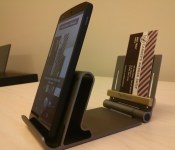
The folks over at PenPower Technology have a new thing for us to take a look at, and it aims to give us a new way of organizing contacts and turning any business card into a digital phone contact. Pretty cool, right? Here’s the setup:

We’ve got the all-aluminum base holding the phone tall in the front and a foldable stand in the back to put the business card. The bronze-looking bar in front of the card can slide up and down to hold the card in place. The kit comes with an activation code to use within the WorldCard Mobile Lite app to access all the features. The app isn’t the easiest thing to use, and it’s still stuck in the Gingerbread era in terms of design and usability which is a big no-no in my department. Design aside, the app uses your phone’s camera to automatically focus on and detect a business card, take a picture of it, and convert it into information you need.

For the sake of good ol’ Andy’s privacy, I did cover up the information, but I promise you the data matched up perfectly and the application scanned the card’s contents and put them in the right areas, which included first and last name, phone numbers of both personal and work and street addresses. I was impressed.
But I’m very happy that the contacts aren’t just stored within the app, but you are able to sync them with whatever social media you desire. I immediately was able to sync Andy’s contact with my Google and LinkdIn account quite easily.
WorldCard Mobile Kit has different applications for multiple types of operating systems, including iOS, Mac X10.6.8 and up, Windows 8, 7, Vista, XP and of course, Android 2.3 and up. I am only using the Android version, so I will not be using the full experience of syncing across phone and desktop.
The entire kit costs $59.95, but is it worth it? That depends. The idea of using the stand is for convenience and getting rid of the “shaky hand” effect when trying to take pictures of your business cards yourself, but I’m not sure if paying that much is worth it, especially since having shaky hands for picture taking isn’t a problem for most people. It’s a nice design, and I’m a fan of the quality materials put into the product, but unless you have stacks and stacks of business cards you need to quickly convert into the cloud, I’m not sure if you need this. My main point is this product is for a specific group of people who deal with meeting of a lot of new contacts and clients and need a quick way to organize those contacts so you can see them on your phone or laptop whenever. Plus, the price of the kit also unlocks the full potential of the app you can get on the App Store and Play Store.
If you need something on your desk handy enough to convert contact cards for digital use, then yes, give this a try! Here’s a link to their webpage for more information.
The post WorldCard Mobile Phone Kit review appeared first on AndroidGuys.
T-Mobile’s Smartphone Equality levels playing for field for all credit scores

T-Mobile on Thursday introduced a new program that aims to give everyone the same chance at best available device prices. You know that credit score that’s been haunting you for the last few years? T-Mobile doesn’t care about that. All they wanna know is that you’ve been good with them for the last 12 months.
Called Smartphone Equality, it’s T-Mobile’s way of recognizing that you’re a good customer. After all, you’ve paid your bill on time for the last year. Why can’t you qualify for the same prices as others? Shouldn’t you be able to get that zero down, low-monthly equipment rate, too?
Customers qualify by paying for their wireless service on-time for 12 straight months. That’s it. Every single customer with a monthly voice plan can qualify to get the Un-carrier’s best device pricing and financing − including $0 down on the hottest smartphones with no interest and no credit check.
Smartphone Equality kicks off on January 25 and becomes immediately available for existing customers. To that end, T-Mobile says there will be many subscribers who are eligible for the best pricing.
The post T-Mobile’s Smartphone Equality levels playing for field for all credit scores appeared first on AndroidGuys.
Report: Google to become MVNO on backs of Sprint and T-Mobile
Google has been working on a solution for mobile service for a while. We haven’t necessarily received any official confirmation, but it has been in reports and rumors for a while. Now, it seems we may be closer than ever to that becoming a reality.
The Information has a report that Nick Fox, a Google executive, is leading what’s called “Project Nova”, which will see Google buying wholesale access to service from T-Mobile and Sprint to provide to consumers. This would make it an MVNO.
Google is always looking for ways to push companies to think for the consumer and push to be better. Just look at Google Fiber, which has done exactly that in the cities it has been released. It will be interesting to see how Google does this as an MVNO and not an actual carrier.
I personally like the idea of Google providing wireless plans, and would be willing to try it out. Would you give it a shot?
The post Report: Google to become MVNO on backs of Sprint and T-Mobile appeared first on AndroidGuys.
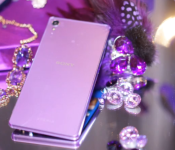
Purple variant of the Sony Xperia Z3 announced for Hong Kong

Sony has announced a new variant of their Xperia Z3 smartphone that will be headed to Hong Kong by the end of the month. The new version introduces the color purple to Sony’s portfolio of Xperia Z3 devices and has been officially dubbed the Purple Diamond Edition. Sony also struck a deal to pre-load some content from Disney’s Frozen movie on the device.
The new Purple Diamond Edition will sell for HK$ 4,998 ($645 USD) when it is available for order.
source: Sony Mobile (Facebook)
Come comment on this article: Purple variant of the Sony Xperia Z3 announced for Hong Kong

Russia’s new combat robot shoots guns and drives ATVs… slowly

When someone describes a machine as a “combat robot,” you’d probably imagine something akin to the Terminator or perhaps even Boston Dynamics’ BigDog. Maybe that’s why Russian president Vladimir Putin didn’t look impressed when he was presented his country’s newest combat robot prototype — because instead of coming face-to-face with a RoboCop, he ended up meeting a frail-looking fella slouching on an ATV. Putin recently visited the Central Scientific Research Institute of Precision Engineering Tochmash in Moscow (think Russian DARPA), where he watched the curious robot gingerly drive on a track like a sweet grandmother with bad eyesight.
It did shoot a handgun five times, though, so it earned some badass points, at least. This robot was originally developed as part of the program aiming to create a cyborg for the International Space Station. Still, it’s not yet autonomous, so someone was controlling it remotely during Putin’s visit. Its creators hope to develop it further, so it can not only discharge firearm on the battlefield, but also administer first aid.
Despite Putin’s blank expressions and bored demeanor caught on cam during the demo, he had nothing but good things to say about the program, according to Russia Today. He said that everything he’s seen that day confirms that Russia’s military is “on the right path to achieve the desired objectives.” Those “objectives,” RT said, include “building autonomous tanks, unmanned vehicles, and other weapons one won’t be ashamed of in the 21st century.” He also praised everything his scientists and engineers have accomplished, thus far: “These advanced developments look really interesting,” he said, “sometimes more like a sci-fi movie.”
Filed under: Robots
Via: Motherboard, Popular Mechanics
Source: Sputnik News
 AIVAnet