


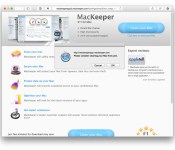
What ‘MacKeeper’ is and why you should avoid it

Literally every time I work in the computer store, we’ll get a customer whose Mac is plagued with problems they don’t understand: Their Mac is acting slow. It crashes. And more. And in more cases than not, we find that they’ve installed a program called MacKeeper. Removing MacKeeper fixes the problem. So what is MacKeeper and why should you avoid it? Read on for details
MacKeeper was originally developed by a company called Zeobit and was sold a couple of years ago to another firm called Kromtech. The software purports to be a suite of more than a dozen individual utilities that are actually supposed to improve the performance and stability of your Mac — antivirus software, optimization software, junk removal tools and more.
MacKeeper uses scare ads that appear as “pop-under” ads on web sites, telling people to clean their Macs. The pop-under business is the first thing I really don’t like about MacKeeper. Quite frankly, I think it’s a real bottom-feeder technique and a really low-class way to do business, and it tells me that they’re not concerned with what people think of them.
MacKeeper’s developers have been called out in the past for hosting fake web sites promoting their products and also for “sockpuppeting” phony user reviews. When they’ve been called out on this behavior in the past, they’ve conveniently blamed it on overly zealous affiliate marketers, saying it’s not them, it’s someone else. I’d posit that if your affiliate marketing strategy is attracting lying douchebags and scum, then you’re the problem as much as they are.
But the real problems with MacKeeper that I can see is that it provides questionable value to most users, can destabilize an otherwise stable Mac, and embeds itself so thoroughly into the operating system that removing it is an uncomfortable and weird process.
Removing a Mac app should never be more involved than dragging it into the Trash and emptying the Trash, and perhaps entering an administrative password if it’s a legit app you’ve downloaded from the Mac App Store. MacKeeper tries to get in your way, makes you verify that you don’t want it, and even prompts you to explain why. That’s not cool. That’s certainly not something supported by Apple’s own interface guidelines for legitimate app developers.
What’s more, “uninstalling” MacKeeper doesn’t get rid of all of it — you’ll find various traces of it in your Mac’s system library folder, and they take a bit to get rid of (just search for anything with zeobit or MacKeeper in the name, and you’ll turn up files).
I’ve seen multitudes of forum posts and comments on web sites calling MacKeeper a virus or a malware package. The pathetic thing is that it isn’t. It’s just extremely persistent, poorly developed software whose developer tries very hard to keep you using the software and engages in really shady tactics to get you to use it in the first place.
I don’t really understand all the whys of MacKeeper destabilizing an operating system, but I can tell you unequivocally that when we pull it from customers’ Macs, they don’t have those same problems anymore.
The folks who sell this software aren’t thieves, for whatever it’s worth. My own father tried it out on his Mac, paid for it, and immediately regretted it. After he finally extricated MacKeeper from his Mac, he requested a refund — and after a time got one, fortunately. So they will refund you if you feel like you got ripped off. (And no, he didn’t come to my store to have it fixed — he’s a bit more self-sufficient.)
But it’d be better if you didn’t feel ripped off to begin with.
So if you’ve ever seen an ad for MacKeeper — even if it’s here on iMore — and thought about giving it a try, my recommendation is not to. And if you do and run into problems, don’t say I didn’t warn you.
Bloomberg also reporting that the Samsung Galaxy S6 won’t be using the Snapdragon 810 due to overheating
A week ago we heard the first suggestions that the Samsung Galaxy S6 won’t be using the Snapdragon 810 due to overheating issues that Samsung has been experiencing. Today, Bloomberg has also made the same claims, with its sources saying that overheating issues were found during testing and that Samsung isn’t willing to take a risk […]
The post Bloomberg also reporting that the Samsung Galaxy S6 won’t be using the Snapdragon 810 due to overheating appeared first on AndroidSPIN.
Forget about the Snapdragon 810; the Snapdragon 820 is set to be the star in the second half of 2015
The Qualcomm Snapdragon 810 processor hasn’t even touched the hands of consumers yet, but we’re already hearing about its successor, the Snapdragon 820, thanks to a leak of Qualcomm‘s 2015 release roadmap. The new Snapdragon 820, expected to roll out in the second half of 2015, will employ the new 14nm manufacturing process in what will be […]
The post Forget about the Snapdragon 810; the Snapdragon 820 is set to be the star in the second half of 2015 appeared first on AndroidSPIN.
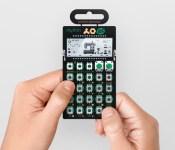
Teenage Engineering will put a synth in your pocket for $59

Teenage Engineering has carved out a niche in the electronic music world. Its OP-1 is a highly adaptable synth that puts industrial design on par with sound quality and features. If there’s one thing the OP-1 isn’t, it’s affordable. The basic synth is priced at a cool $799, pitting it against considerably more-established options from Roland, Korg, Moog and others. With its latest products, however, the Swedish startup is looking to put a whole lot of music-making power in your hands for a very low price.
The Pocket Operator (PO) series is a set of three miniature battery-powered synths, all priced at $59. There’s the PO-12 “Rhythm” drum machine, the PO-14 “Sub” bass synth, and the PO-16 “Factory” melody unit. All three have 16-step sequencing and a selection of 16 sounds to choose from, and also offer 16 additional effects. There aren’t any official videos available just yet (we’ll update the article when they become available), but you can check out a clip of musician Cuckoo playing with a prototype PO-12 (which has been known about for some time) after the break.
Video of a prototype OP-12 — the final version has a display and more effects.
As you’d expect from Teenage Engineering, the POs are very pretty. Powered by two AAA batteries, the synths are totally stripped back. Each is just a circuit board with a display and a number of mechanical switches and knobs. They do have the built-in speakers, 3.5mm in and outs, parameter locks and sync functionality you’d expect from a pocket synth, but the whole vibe is very barebones.

Teenage Engineering is collaborating with fellow Swedish brand Cheap Monday — best known for clothing Williamsburg’s finest in skin-tight jeans and all manner of knitwear — to bring its POs to market. Cheap Monday has its branding on each of the POs, and is also offering a range of Teenage Engineering-themed graphic tees and pins for displaying your brand allegiance. In addition to the clothing tie-ins, it’s producing a more-functional case (priced at $39) for protecting your synths. All of the gear will launch tomorrow, timed with the start of NAMM trade show — at $177 for the full suite, we expect them to sell very well.


Samsung drops Snapdragon 810 in favor of Exynos for Galaxy S6 – Bloomberg

Samsung will be using in-house Exynos chips for the Galaxy S6, dropping Qualcomm’s Snapdragon 810 processor due to overheating issues, a credible report claims.
The report comes from Bloomberg, which cites “people with direct knowledge of the matter.” This isn’t the first time we’re hearing that Qualcomm’s latest high-end chip is suffering from overheating issues – our Robert Triggs explained the problem in detail here, while several independent reports from Taiwanese industry publication Digitimes claimed the same thing.
Samsung has tested the eight-core Snapdragon 810, but the overheating prompted it to opt for one of its own solutions for the Galaxy S6, which is due in March. The Bloomberg report does not specify whether Samsung will use Exynos chips exclusively or just for a majority of its devices. Digitimes previously claimed that Samsung would go for a mix of 90% Exynos to 10% Snapdragon, and gradually increase the share of Snapdragon as Qualcomm irons out its issues.
Overheating aside, Samsung has other reasons to favor its own chips – putting Exynos in the high-volume Galaxy S6 would keep more profits in-group, and the big.LITTLE technology used on Exynos is more mature than Qualcomm’s. Snapdragon 810 is Qualcomm’s first eight-core big.LITTLE chip, while Samsung announced its first big.LITTLE chip in January 2013.
Qualcomm has been a big winner of Samsung’s run at the top of the mobile industry, having supplied chips for a majority of Samsung’s flagship phones. Meanwhile, Exynos chips have been plagued by sub-par LTE integration and performance issues.
LG and Xiaomi both announced Snapdragon 810-powered devices this year. Answering to a Bloomberg inquiry, LG said: “There will be no problem with the G Flex2 phones. We are taking every measure to ensure there will be no overheating problem.”

Acer launches two Chromebooks built to withstand the classroom

Acer has launched two Chromebooks targeted at the education segment. Available in 15-inch (C910) and 11.6-inch (C740) versions, the Chromebooks feature durable shells that can withstand up to 130 pounds of force and survive 18-inch drops without any damage. Both models also come with reinforced hinges, with the more portable C740 getting extended metal hinges that ensure the Chromebook doesn’t twist under stress.
Samsung Galaxy S6 won’t be waterproof, and neither will the Galaxy S6 Edge
The Samsung Galaxy S6 rumours are still coming in thick and fast today. Today’s rumour says that the Samsung Galaxy S6 won’t be waterproof, and neither will its expected curved edge variant, the Galaxy S6 Edge. This is significant as its predecessor, the Galaxy S5, surprised everyone with its IP67 rated certification, allowing it to be […]
The post Samsung Galaxy S6 won’t be waterproof, and neither will the Galaxy S6 Edge appeared first on AndroidSPIN.

Field Trip app for Android updated with Material Design and improved notifications

Get those consent forms signed by your parents, kids, and get ready for a new Field Trip. Although, this isn’t really a new adventure, it’s just a great update by Google’s Niantic Labs to their Field Trip app for Android. Material Design leads the charge, bug fixes and performance improvements follow the company line and improved notifications bring up the rear.
For many, Google’s Niantic Labs is best known for their popular augmented reality game, Ingress. In the game, players physically traverse the globe while digitally conquering an in-game alternate reality. Field Trip is an app that provides a tour guide approach to the same globe trotting, revealing interesting information about places and things all around the world, just without the portals to smash.
While sitting on your couch at home, you can scroll through a map in Field Trip, landmarks will be presented to you in the new Material Design inspired layout, providing a brief history of the location. Get up off that couch, walk down the street with notifications enabled in Field Trip to receive alerts when you pass a point of interest.

Thanks to Material Design and the principals of Android 5.0 Lollipop, the new notifications from Field Trip are a bit more convenient. Google has teamed with over 240 partner publishers to provide information about the new places you’ll discover, or re-discover. Each of the partners followed a new standardized notification design, bringing a consistency most would expect from an app of this caliber, all of which making for ease of navigation and landmark discovery.
If you are interested in using your Android device to learn a little bit more about the word around you, head on over for your free copy of Field Trip from the Google Play Store.
Any Field Trip and Ingress users out there – which app do you use more to discover the world around you?

Apple’s latest acquisition will tell it what the world is listening to

When Apple spent $3 billion to buy Beats, it certainly made the headlines, but the company also goes to great lengths to keep smaller deals under wraps. One that has completely flown under the radar is its recent acquisition of Musicmetric. The service, if you’re not aware, specializes in tracking how artists and their tracks are performing not only in the charts, but how often they’re being pirated or how many potential new listeners they might have over a certain amount of time.
Musically reports that Apple may have taken control of Semetric, the UK company behind Musicmetric, as far back as October, but only notified UK authorities earlier this month. But what does it want with the company? Considering that Apple now operates two music services, iTunes and Beats Music, providing enhanced trends and listener data for music labels and rights holders could certainly be a priority. Musicmetric pulls in its data from P2P networks, reviews and comments from millions of websites, blogs and social networks, giving Apple a better understanding of what artists have “buzz” or are going viral before its actually reflected on iTunes or Beats Music.

The change of ownership could have a knock-on effect on one of Apple’s music rivals too. Spotify teamed up with Musicmetric at the start of 2013, providing analytics for over 20 million tracks alongside Musicmetric’s other music data. That said, Spotify already owns The Echo Nest, a “music intelligence platform” that analyzes links between artists and tracks (and powers Spotify’s own radio service).
Given the nature Musicmetric, it’s not likely to become a dedicated service. Instead, it’s likely that Apple will use detailed information on how music, but also movies, TV shows and other digital offerings are performing across the web, while providing users with trending charts and better recommendations. Apple is reportedly already working to incorporate Beats Music into iTunes, maybe it could use those new datasets to understand that people aren’t really fans of U2.
Source: Musically

iPhone sales surge in South Korea, China and Japan

According to Counterpoint Research, Apple saw a heavy increase in iPhone sales after the launch of the iPhone 6 and iPhone 6 Plus in key Asian markets, including South Korea, China and Japan.
The Cupertino giant managed to claim one-third of smartphone sales in South Korea in November 2014, which is a first for any foreign brand, as stated by Counterpoint’s research director based in Korea, Tom Kang:
No foreign brand has gone beyond the 20% market share mark in the history of Korea’s smartphone industry. It has always been dominated by the global smartphone leader, Samsung. But iPhone 6 and 6 Plus have made a difference here, denting the competition’s phablet sales.
Korea being the world’s highest penetrated phablet market (handsets with 5″ above screens) earnestly needed a large screen iPhone for quite a time and now this thirst has been quenched.

Kang noted that Apple would have managed to capture an ever larger chunk of the market share in South Korea, totaling to as much as 40 percent, if there was a better supply of 64GB and 128GB variants of the iPhone 6 and 6 Plus in the country.
A similar trend was witnessed on a global scale, with monthly iPhone sales crossing the 20 million mark for the first time ever in November 2014. In China, Apple registered an increase of 45 percent from November 2013, which led the vendor to become the third-largest in the country with a market share of 12 percent, behind Xiaomi (18 percent) and Lenovo (13 percent).
The iPhone 6 contributed to two-thirds of all iPhone sales in China during the period, but Counterpoint noted that increased supply of iPhone 6 Plus would lead to the 5.5-inch device contributing to a larger chunk of the sales.
While Apple was able to stave off challenge from Samsung’s Galaxy S5 and Galaxy Note 4, Xiaomi’s latest devices, the Mi Note and Mi Note Pro, are expected to pose a larger threat to iPhones in the country in the coming months. In Japan, Apple’s iPhones accounted for more than half of all smartphone sales in October and November.
Source: Counterpoint Research
 AIVAnet