


Acer announces two new Chromebooks for students

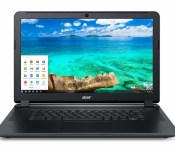
If you are looking for a new laptop for next term, you may be interested to note that Acer has just unveiled two new Chromebook models specifically designed for students, the C910 and C740.
The Acer C740 Chromebook is the smaller of the two, coming in with a screen sized at just 11.6 inches and a resolution of 1366×768. The C740 also comes with a 16GB solid-state hard drive, battery life that will last around 8.5 hours of use, and comes with the choice of Intel Celeron or Core i3 processors and 2GB or 4GB of RAM.
The C910 is the larger and slightly more high-end model, featuring a 15.6 inch screen with the choice of either a Full HD (1920×1080) display or a more budget friendly 1366×768 option. Again you will find choices for either a Celeron or i3 processor, but the C910 comes with 4GB RAM as standard and larger 16GB or 32GB internal memory options.

Acer has designed both Chromebooks to withstand the trials of the school-yard. They can each withstand up to 132 pounds (around 60kg) of force, the corners won’t buckle from accidental drops up to 18 inches in height, and the hinges have been reinforced so that they won’t easily snap.
The C740 Chromebook stats at $259.99, while the basic C910 model costs a little more at $299.99. Both will be available in the US come February.
The Galaxy S 6 probably won’t stop Samsung’s profits from sliding for two consecutive years

Samsung has already reported a profit drop for 2014, and many are hopeful things will pick up in 2015. Unfortunately, analysts believe that profits will continue to slide in 2015.
Although final numbers aren’t in for 2014, it’s expected that Samsung’s net profits will have dipped 27.3 percent this year to 22.1 trillion won ($2.03 billion). 2015 will also show a drop, but the good news is that it won’t be as much. Analysts are predicting only about a 6 percent drop to 20.8 trillion won ($1.91 billion) for 2015.
Analysts are still predicting sluggish sales for the Galaxy flagship, which will be the Galaxy S 6 this year. There is just too much competition from other Android manufacturers and Apple has finally joined the larger display party. Better performance from memory chips could help, but analysts appear to be split on that issue.
Once the king of the ring is now the underdog. This is going to be a crucial year for Samsung.
source: Korea Herald
via: G4Games
Come comment on this article: The Galaxy S 6 probably won’t stop Samsung’s profits from sliding for two consecutive years

A brief attempt at explaining the madness of cryptocurrency

Cryptocurrency may as well be called “cryptic currency,” because it’s nowhere near as easy to figure out as typical money. For one, while most of them (and yes, there’s more than one) have names that end with “-coin,” they don’t usually come in physical form. Yes, they do represent money in digital form, but using them is a bit more complicated than digital payment services like, say, PayPal or Google Wallet. Also, unlike banks and online services, they’re decentralized, with no single governing body overseeing and verifying transactions — there’s a reason why Bitcoin was (is?) the currency of choice for black market regulars.
Bitcoin (“BTC”) isn’t only recognized as the first cryptocurrency, it’s also the basis for every other crypto-coin that’s popped up since it was formally introduced in 2009. “Satoshi Nakamoto” (the pseudonym used by the person or the group of people who created Bitcoin) designed it as a peer-to-peer system that relies on users to keep working. Also, all transactions are recorded on a public ledger (called “block chain”), so even though no name or email address is associated with an account, the system’s not entirely anonymous.
Similar alternative currencies follow that structure even now, though they add features of their own, as well. Litecoin, for instance, was designed for faster transactions (the average confirmation time for each Bitcoin transfer is 11 minutes as of January 2015, because it has to be verified by a miner — more on this later), while Quarkcoin promises a more secure system. Others rely on their novelty more than anything, such as Dogecoin, which likely appeals most to fans of the (in)famous doge meme and Coinye West that was seriously a thing until Kanye went on stage to court and didn’t let it finish had it shut down.

Now, if you’re wondering if you should invest in any kind of cryptocurrency, the answer isn’t simple: it depends, as their values fluctuate quickly and widely. Take for example, Bitcoin, which reached its current all-time high of $1,242 per coin in November 2013, whereas each BTC was worth only around $200 a few months before that. As of this writing, Bitcoin’s value is back to $210, and who knows if it’ll ever be worth more than $1K apiece ever again. Point is, if you plan on investing your life savings on Bitcoin or any other alternative, you’ll have to study it closely and prepare for the consequences. Instead of getting your kids’ college tuition or your retirement fund when you’re ready to liquidate, you might end up with but a fraction of what you originally invested.
Still want some first-hand experience with these crypto-coins anyway? We put together basic info you should know before getting started, using Bitcoin as the reference currency.
HOW TO GET CRYPTOCURRENCY
These are some of the most common ways to get Bitcoins or any of its alternatives:
- You can use one of the many exchange services that buy and sell BTC for US dollars/whatever your local currency is. This is obviously the easiest way to get started, as all you need to do is choose among one of the many options available. Some money changers are pretty strict and will ask for a copy of your ID and proof of address, but that’s still easier than the other two ways below.
- You can sell goods and services through Bitcoin marketplaces. A quick Google search will point you to online buy-and-sell websites that accept or specifically ask for Bitcoins for transactions.
- Finally, you can “mine” for Bitcoins. This one isn’t something we’d recommend if you’re new to cryptocurrency, as you’d need specialized hardware (ASIC miners, in particular, which are USB-powered devices that don’t do anything else) to do it for you. “Mining” is the process of verifying transactions and adding them to the public ledger or the block chain, in Bitcoin’s case. In addition, it’s the only way to introduce new Bitcoins into the circulation, as miners are rewarded for every block of transactions they process.
As we mentioned earlier, cryptocurrencies aren’t regulated by any institution, so there’s no bank that would print more money when the need arises. Take note, though, that the system makes it harder to mine the more blocks of transactions are processed. The rewards were also designed to be cut in half every four years to prevent inflation and to keep the total number of Bitcoins in circulation to 21 million at most. At the moment, the reward for each block mined is 25BTC, and the process has become difficult to the point that you’ll now have to join a mining pool if you actually want to earn anything. A mining pool combines the resources of a group of people to mine Bitcoins and divides the loot amongst the members.
Sound complicated? Well, mining isn’t exactly a simple concept. Watch the video above first, then let’s try to visualize the idea: Imagine that you’re an actual miner with a pickaxe in your hand, and there’s a big boulder in front of you with golden coins hidden in its very center. To get to the gold coins, you’ll have to chip away at the boulder: the better your equipment is, the faster you can go. Unfortunately, you’re not the only one trying to get to the center of the boulder, and it’s a race against you and other miners with better, more high-tech pickaxes. That’s why the best way is to pal up with other people to get to the very center of the boulder and divide the loot. As time goes by, though, you’ll notice that boulders become harder to break and the gold coins in the center become fewer.
That’s but an oversimplification of the process, of course, but it should give you an idea of how it works. The boulder in this case represents a block or a big bunch of transactions miners have to verify and solve. Each piece of rock a miner chips away represents a verified transaction, and the gold coins represent the Bitcoins a miner can earn and introduce into the circulation.

WHERE TO STORE CRYPTOCURRENCY
Before you exchange your hard-earned dollars or mine for some BTC, though, you’ll first need a wallet to keep your virtual money in. Within these wallets, you’ll find your secret codes or keys needed to be able to spend your coins, as well as an address (which functions similar to a PayPal email, except it’s a long code of letters and numbers) that you need to give people sending you money. Some wallets can even generate several addresses so you can give a different one to every person you’re transacting with as an extra precaution.
There are many types of Bitcoin wallets, including desktop programs and mobile apps, which are ideal if you want to pay for purchases in brick-and-mortar stores. Some of them can be accessed online, but in case you end up with an inordinately large amount of Bitcoins, you’re likely better off keeping most of it offline in what’s known as “cold storage.” While Bitcoins stored online are more easily accessible, everything stored offline is much safer. When exchange service Bitstamp was hacked in early January, the thieves got away with “only” $5 million, because most of the company’s reserves were stored offline.
We kept saying earlier that Bitcoins don’t have a physical form — we’ll that’s still true, but in addition to apps, programs and online services, another way to store the cryptocurrency is through “paper wallets.” There are businesses that will print your address and private key as QR codes on a card. Want something fancier than a paper card? A website called Casascius sells actual physical Bitcoins (which you can see in the top image) with your address and private key hidden underneath a hologram. They used to come loaded with spendable BTC, but after being questioned by the feds, the owner has decided to sell them empty — you’ll have to find a way to load the coin on your own.
For those who think paper and flashy coin wallets are too risky, there are special hardware wallets that promise to keep your money secure while also being easier to access, such as that prototype bracelet by MEVU. Some physical wallets even take on an unusual form, like a CD or a vinyl encoded with private keys as audio files.

SECURITY BREACHES AND CONTROVERSIES
Since cryptocurrencies aren’t governed by an institution — there’s a Bitcoin Foundation, but it merely promotes the currency’s use and doesn’t function like a bank — they’ve become ideal for transactions that, well, aren’t exactly legal. As we’ve mentioned earlier, Bitcoin is the online black market’s preferred method of payment; drug and gun transactions, among other items. Prominent black market website and marketplace “The Silk Road” had $25 million worth of Bitcoins seized by the US government during a raid back in 2013. The government ended up auctioning 50,000 BTC from what was confiscated. A Bitcoin exchange executive and Foundation member was even sentenced to two years behind bars for helping run an underground dollar-to-BTC operation for Silk Road regulars.
Also, because exchange services keep part of their reserve in online wallets, quite a few companies were hacked in the past year. One of the most high-profile Bitcoin-related security breaches happened to Japan-based exchange company Mt. Gox, which lost 850,000 BTC and ultimately had to shut down. According to the latest info from authorities in Tokyo, it could have been an inside job. Mt. Gox’s CEO, Mark Karpeles has recently been accused of being Silk Road’s mastermind who hid behind the name Dread Pirate Roberts, something which he categorically denied.
Speaking of naming people as the face behind pseudonyms, Newsweek published a piece in 2014, pinpointing Japanese-American and California-native Dorian Nakamoto as the Satoshi Nakamoto. Dorian also denied being Bitcoin’s creator and even raised a legal defense fund to sue the publication as the publicity has apparently caused a major inconvenience and hurt his family.
[Image credit: Getty Images, Bitcoinmining.com (What is Bitcoin mining), Bcoinmarket (Bitcoin Walllet Intro), AFP/Getty Images]

Samsung loses market share to Apple in its home stomping grounds

New market research is showing that Apple has gained market share in Japan, China and Korea. In fact, iPhone sales reached a record high in Japan and Korea during October and November, at the expense of Samsung, Sony and LG.
Samsung is clearly one of the top smartphone makers globally. But in Korea, its home country, it is nothing less than dominant. Samsung historically commands anywhere from 60% and upwards of the smartphone market. However with the launch of the larger iPhones, Samsung has seen some of that dominance erode away.

According to Counterpoint Research’s latest markets report, Apple’s market share in South Korea jumped from below 15% to over 30% during October and November, primarily due to demand for the iPhone 6 and 6 Plus. Tom Kang, Counterpoint’s Research Director in Korea, has even suggested that if there was a better supply of 64GB and 128GB iPhones then Apple’s market share could have reached 40%.
Japan is one of the top premium smartphone markets in the world. Apple has a good track record in Japan, but it was often behind Sony in terms of market share. However with the launch of the iPhone 6 in September, Apple’s market share has jumped significantly. Apple managed to command more than half of the smartphone sales in October, as well as November 2014. Sony was the biggest loser dropping from a high of 30% to just 17%.

In China the iPhone 6 helped Apple achieve a 12% market share, making it the third largest OEM in China behind Xiaomi and Lenovo. According to Counterpoint’s Research Director Neil Shah, “Apple with iPhone 6 & 6 Plus has been able to impact Samsung’s premium Galaxy S5 & Note 4 sales. But with the launch of Xiaomi Note & Note Pro it is going to be a fierce battle in the premium segment, with Samsung being attacked from both ends.”
Bloomberg: Samsung to drop Snapdragon 810 in favor of the Exynos chip for the Galaxy S 6

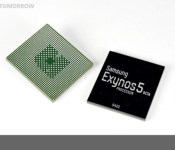
Samsung has been making their own Exynos-branded chips for a while now, and it was only a matter of time until they utilized them on most of their devices. Whether it was production issues or the ability to play nice with LTE, Samsung has always to utilized both the Exynos and the Qualcomm Snapdragon for specific markets, but that might change with the Galaxy S 6.
We have heard a number of rumblings that Qualcomm’s latest and greatest chip, the Snapdragon 810, has overheating issues. Qualcomm wants you to believe there isn’t an issue because the LG G Flex 2 and the Xiaomi Mi Note were both announced using the said chip, but those manufacturers might have made modifications. It was already rumored that Samsung might tone down the use of the 810 in the Galaxy S 6, but Bloomberg is now reporting that Samsung plans on using the Exynos exclusively. According to them, Samsung will go with just the Exynos for all markets.
This is going to be interesting since Samsung has yet to go full-on with the Exynos. Will production keep up and/or will their be communication problems with the LTE bands. We can only assume that Samsung has their ducks in a row, but you can never know for sure until the devices are launched into the real world away from the test kitchens.
source: Bloomberg
Come comment on this article: Bloomberg: Samsung to drop Snapdragon 810 in favor of the Exynos chip for the Galaxy S 6

Microsoft acquires text analysis startup Equivio, plans to bring machine learning to Office 365

Microsoft announced that it has acquired text analysis startup Equivio, with plans to integrate the service’s machine learning technology for eDiscovery and information governance into Office 365 “in the months ahead.”

GamerGate target starts online harassment prevention program

Despite Twitter making it easier to report cyber harassment, its measures still fall woefully short. To wit, game developers Zoe Quinn, one of GamerGate’s biggest targets, and Alex Lifschitz have teamed up to form an online abuse help network. Crash Override says its goal is to provide a support network for victims of SWATting, doxxing and other maliciousness both preventatively and reactively. It accomplishes this by using “well-established, humane and transparent channels to disempower abuse and reduce the ability abusers have to perpetuate it.” The outfit notes that in its trial runs it’s effectively helped abuse targets head off SWATting attempts and lock down their personal information, too, all without resorting to more harassment. What’s more, Crash Override counts whitehat hackers, infosec professionals and lawyers among its agents.
As The Mary Sue reports, the services offered are free of charge with Lifschitz and Quinn running everything with out-of-pocket funds. If you need their help or would like to lend a hand (Crash Override is a by victims, for victims organization), feel free to drop ‘em a line.
[Base image credit: cafuego/Flickr]
In the past month we have prevented several potentially deadly SWATings and secured more people against hacking and doxxing attempts.
– Crash Override (@CrashOverrideNW) January 17, 2015
We hope to continue to help those who unfortunately find themselves targeted and unsure of where to find help.
– Crash Override (@CrashOverrideNW) January 17, 2015
8chan doxed me this week, and @CrashOverrideNW gave me advice and support through that. They’re good people who know their shit.
– Andrew Todd (@mistertodd) January 17, 2015
Filed under: Gaming, Home Entertainment, Internet, HD
Via: The Mary Sue
Source: Crash Override

Bizarre looking Heart 401AB handset to launch in Japan this March

Remember when the technology race used to be all about miniaturisation and smaller form factors? Well, Ymobile is attempting to revive this spirit, somewhat, with its Heart 401AB handset, which is destined for release in Japan this March. Although, this odd design comes with its own set of rather severe compromises.
Forget QHD displays, blazing fast LTE or cutting edge dual cameras, the Heart 410AB doesn’t even care for sending emails or text messages. Instead, the phone makes use of Japan’s PHS network, which is only really used for low-cost voice call devices, and can manage around two hours of talk time per charge. When you do fancy making a call, the phone twists and folds out from its heart-shaped shell into something with a closer resemblance to a miniature phone. Adorable.

The handset also boasts an impressive sounding 160 hours of standby time. Which is great, as you won’t have to worry about battery life as you gaze into the 0.9-inch 128 x 36 pixel, monochrome display to peruse your favourite contacts.
 So the Heart 401AB is a fashion accessory at its core, but Ymobile has tried to make it a little more useful, with a smartphone app for transferring your contacts, remote locking control, and a USB socket that also functions as an earphone jack.
As for the intended market audience, the Heart 401AB isn’t quite as bizarre as it first sounds. Carriers in Japan, including Ymobile, offer data-only plans for some smartphones, so a small accessory phone designed purely for voice calls does at least have a purpose.
A “special exhibition” for the Heart is planned from February 1st to March 20th, with the phone launching in Japan shortly afterwards.
If you’ve spotted an odder handset, I’m eager to see it. Drop a comment below.

Energy comparison sites will soon be more honest about who pays for listings

If you’re on a UK price comparison site looking for a new energy deal, it’s possible that some of the best options are being hidden from you. Last year, collective switching site The Big Deal revealed that many of the biggest sites are burying tariffs and instead promoting those that give them a commission from the UK’s major energy providers. For some comparison sites, this means automatically filtering results pages to only show affiliate fee-linked deals if you opt to switch energy tariffs “today” or “now.” While the practice is being investigated by the Energy and Climate Change Select Committee, energy regulator Ofgem is hoping it can crack down on misleading sites with a new version of its opt-in Confidence Code.
To keep this accreditation, price comparison sites will now have to show all of their available energy tariffs by default. In addition, the wording on these sites needs to be clear so that customers know exactly how the results are being filtered. If Ofgem thinks it’s still misleading, sites could be banned from offering a choice between all tariffs and commission-only results pages — it’ll just have to use the former exclusively. Accreditation will also require that sites clearly explain their commission arrangements so that customers are aware before choosing a new deal. Not every major price comparison site is accredited, but those who are have until March to comply with Ofgem’s new rules. While it’s not compulsory for the wider industry, it’s certainly a start and could make these sites a little more transparent.
[Image Credit: Sunshinecity, Flickr]
Filed under: Household
Via: Sky
Source: Ofgem
Samsung Galaxy S6 to launch at MWC 2015, but no LG G4

Mobile World Congress 2015 will be upon us before we know it, and plenty of big names in the industry are preparing to launch new smartphone and wearable products in just over a month’s time.
For starters, Samsung is expected to launch its Galaxy S6 flagship in Spain on March 2nd, as it did in previous years for its Galaxy S2 and S5 smartphones. Apparently, Samsung is still undecided about the final design of the Galaxy S6 and is mulling over a number of prototypes. A Note Edge style curved screen on one or both sides of the display is potentially on the cards and an employee from one of Samsung’s contractors has recently restated the likelihood of a metallic case for the Galaxy S6.
With Samsung smartphone shipments taking a hit last year, the company has some tough decisions to make about this year’s flagship. Samsung is also rumored to have some smartwatches and possibly Tizen related technologies to show off at this year’s event as well.
One company that won’t be unveiling its next flagship at MWC 2015 is LG. A company executive has ruled out a G4 launch so soon, as LG typically launches its flagship smartphone around early May time. Not to mention that it has recently unveiled the high-end G Flex 2 as well.
“We rolled out the G3 in May last year so we do not plan to unveil the G4 at this year’s Mobile World Congress and spend more time perfecting the new phone.”
However, LG will be present to show off some new wearable and IoT devices, possibly in the area of internet connected appliances and more TVs. There is also the potential for LG’s mysterious webOS smartwatch, which was spotted at CES 2015, to make another appearance, perhaps in a more official capacity this time.
Don’t forget, HTC is also expected to unveil its latest flagship on March 1st, along with the company’s first smartwatch. There will be plenty of other gadgets and mobile products unveiled in Barcelona too, and we’ll be there to bring you coverage directly from MWC 2015.
 AIVAnet