



Sid Meier’s Starships will explore space on iPad and Mac in early 2015
Legendary game designer Sid Meier continues to keep himself busy. Today it was revealed that he and a small team at developer Firaxis have been working on a space-themed turn-based strategy game, Sid Meier’s Starships. It’s due for release early in 2015 for the iPad and Mac, along with the PC.
According to GameSpot, the new game will be published by 2K Games. It states:
In the game, you’ll control a fleet of starships as you journey through the galaxy to complete missions, protect planets and their inhabitants, and build a planetary federation.
As you trek through the stars, you’ll be challenged to expand your federation’s influence and reach. You’ll also amass futuristic technology and take part in turn-based combat using a deep roster of customizable ships.
Even more interesting is that people who own Firaxis’ 2014 released game Civilization: Beyond Earth who decide to get Sid Meier’s Starships will see special links between both games that 2K claims will “enhance and expand upon both game experiences.” Pricing for Sid Meier’s Starships has yet to be revealed.
Source: GameSpot

Report sheds light on the HTC One M9 and a new wearable device

As most of us know by now, HTC is prepping the launch of its Hima/One M9 flagship. The company has even teased the imminent arrival of the flagship by posting a teaser which says “utopia in progress”. A new report now tells us what this event could have in store for us.
In addition to the obvious arrival of the One M9 or the Hima flagship, the company will also launch a new wearable, according to Bloomberg. The company has announced a partnership with fitness brand Under Armour to introduce fitness bands, so this isn’t really a surprise.
This mystery wearable could be based on the UA Record app which is developed by Under Armour. This app is available on all major mobile app hubs around us.
Speaking about the smartphone, the report says that the Hima will come with an octa core Snapdragon 810 SoC, a 20-megapixel rear camera accompanied by a front facing Ultrapixel sensor and Dolby 5.1 speakers. We expect to learn more about the smartphone over the coming weeks. The company is expected to unravel all the mystery during its March 1 event.
Source: Bloomberg
Come comment on this article: Report sheds light on the HTC One M9 and a new wearable device
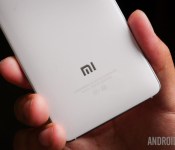
A small portfolio and long product cycles help Xiaomi keeps costs low

Xiaomi’s product line-up is looking rather good these days, especially with those very reasonable price tags attached. Despite shifting over 60 million smartphones this year, the question of the company’s profitability keeps cropping up. Speaking in a recent interview, Xiaomi VP Hugo Barra talked extensively to clear up and confusion about exactly how the business model works.
Xiaomi’s key to keeping costs low and profits up comes from a combination of a small portfolio, long term component contracts and an average selling time well above the competition. Even its older smartphones continue to retail at discount prices long after new products are released. Combined with savings from a online-only retail scheme, Xiaomi stands to save considerable amounts when compared with its competitors, allowing it to sell its wares at lower prices.
“The more focused the portfolio, the more efficient we can be at managing those costs”
Xiaomi’s products tend to remain available for purchase for around 18 to 24 months and go through three or four price cuts before being removed from sale. For example, the Mi2 and Mi2S were on sale for around 26 months. The original RedMi 1 launched all the way back in September 2013 and has only just been succeeded by the RedMi 2. Similarly, long term use of similar components across devices has helped Xiaomi negotiate discounts over time, further reducing long term costs.
“The vast majority of the components [in our devices] are still the same, so in terms of supply chain and component sourcing, we’re on the same supply contracts as Redmi 1, which means we’re still getting the same discounts on components,”
This lean, focused product portfolio doesn’t just help Xiaomi benefit from reduced components costs, it also allows the company to more easily maintain software support for its hardware. While other companies, notably Samsung, can only reasonably offer a few updates for their broad range of devices, Xiaomi can save money on and offer better support for its smaller selection.
Looking forward, Xiaomi is continuing with the same strategy as it moves into new markets, such as India. However, the company is also looking into operator partnerships and is currently running a trial with Airtel in India, as well as talking to partners in Taiwan, Malaysia and Singapore. This could see the company’s already inexpensive handsets arrive under new subsidized schemes in certain markets in the future.
2015 is sure to test Xiaomi’s golden formula as the company seeks to expand further across Asia and beyond.

HTC One M9 internals detailed, HTC smartwatch reportedly on the way too

HTC is set to unveil this year’s flagship — likely to be called the HTC One M9 — on March 1 at Mobile World Congress in Barcelona. According to Bloomberg, the device will feature impressive hardware, and will not be the only new product HTC showcases at MWC, as the Taiwanese vendor is alleged to also unveil its first smartwatch.
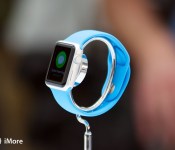
Apple Watch: With great intimacy comes great responsibility

Here’s how notifications work on the Apple Watch: When a new one comes in, the “taptic engine” — a linear actuator — literally taps you on the wrist to let you know about it. There’s no loud buzzing to draw anyone else’s attention, just a subtle but recognizable tap, just for you. The “short look” for the notification provides a minimum of information. Nothing for anyone else to spy, just the icon for the app that’s notifying a brief bit of context as to who or why. If you lower your wrist, it goes away. If you don’t, or if you tap it, it expands into a “long look” and gives you the details. That kind of staging respects that with greater intimacy comes greater responsibility. And I hope that it’s a sign of more features to come.
Part of the reason I quickly stopped wearing my Pebble and haven’t had much interest in other smartwatches is exactly that lack of discretion and/or granularity — that understanding that the closer something is the more subtle and sophisticated it needs to be.
Privacy, like security, comes at the cost of convenience. Right now, when I travel with my iPhone, I have to consciously think about how much information I want to let leak out onto the Lock screen. I only ever allow mail notifications for VIP anyway, but if I have my iPhone out in public an put it down on a table — terrible habit, I know — everyone around me can hear it buzz. If I have Lock screen notifications left on, everyone glancing at my phone can see any incoming messages or mail. There are situations, both personal and professional, where I just don’t want that to happen. So, I typically turn previews off. (Even then, they can still see who’s messaging me, but without that information I couldn’t decide which notifications can and can’t be ignored — again, the cost of convenience.)
Taking a cue from the Apple Watch, it’d be great if the iPhone could also stage my notifications. A taptic engine won’t work on a device that isn’t always in contact with your skin — and it wouldn’t need to if the watch is picking up your notifications anyway — but a short look that only expands into a long look if the motion co-processor feels it getting picked up, or the multitouch screen detects a tap event, is still really interesting to me. It would remove the burden of having to micro-managing privacy from me and have iOS just take care of it. Moreover, it would make that kind of privacy protection available to people who wouldn’t otherwise know they could micro-manage it.
The contextual awakening of the objects around us might change the way we interact with the world around us, but the thought process and technologically being surfaced in the Apple Watch will change the way that world interacts with us.
Rumor: another Apple about-face – selling a stylus

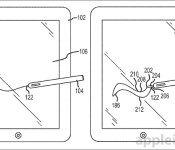
This patent application was published way back in March of last year… could Apple actually be planning to use it? One analyst thinks so.
“If you see a stylus, they blew it,” proclaimed a defiant Steve Jobs once upon a time (not too long ago). The man, the myth, the legend was seeking to explain the brilliance of the iPhone: the fingers that everyone have were enough of a stylus that the PDAs of the past had all gotten it wrong. Some time later, Samsung unveiled the original Galaxy Note with a stylus, and as such the dawn of the phablet craze began. These days, just about every company under the silicon sun has a large screen productivity-purposed device, and it seems Apple may be one of them, should a new report pan out.
For well over a year now there has been chatter about a so-called iPad Pro, in part because of an assumed parallel between the computing hardware and tablet offerings (Macbook Air, Macbook Pro; iPad Air, iPad Pro) and countless rumors, “insiders”, and analysts. One such analyst, Ming-Chi Kuo from KGI Securities, has put a number of puzzle pieces together and determined that not only will Apple release a 12.9 inch iPad in 2015, but that it will also put forth a stylus. Kuo is one of the most prominent Apple analysts and some of his past predictions have been spot on. The report, obtained by Apple Insider, looks at key patents filed by Apple rather than (apparently) any kind of insider-source, as Kuo has been wanton to do in the past.

His belief is that Apple will release the stylus somewhat after the iPad “Pro” as opposed to bundling it in (reducing costs/retail pricing), and that it will be a rather standard affair for the first year, with limited customer interest at only around 2-2.5 million units sold. In later iterations however, he mentions everything from wireless charging to motion sensing, to 3-D handwriting, becoming a possible reality.
Given that several large screen mobile devices already make prominent use of a stylus (see the Microsoft Surface Pro 3, the Galaxy NotePRO 12.2, the Toshiba Encore 2 Write, and even the Wacom Cintiq Companion Hybrid among others), the idea of an XL iPad adding support for a first party tool would be par for the course. Complaints about the iPhone 6’s lack of true multitasking have been lobbed over at Cupertino for some months now, as they have been about the iPad series itself. While the addition of an officially sanctioned stylus wouldn’t guarantee major changes with the software, at the very least it would suggest that productivity features on native Apple applications and iOS itself would need to be rewritten and adjusted to taylor to the tool.

Apple has an idea for an unusual stylus tip, but will it see the light of day? And what use would it have for that matter?
Should Apple introduce a stylus, it technically wouldn’t be in “defiance” of what Steve Jobs held to be true: the device in question is cited in reference to an iPad not an iPhone. Still, given the size of the iPhone 6, there is no question that a stylus might be useful for a “smaller” form factor as well, considering Samsung has been playing it up for the past four years with the Galaxy Note line. Tim Cook is also decidedly not Steve Jobs, and the launch of an iPhone phablet is in-and-of-itself a bold move that had some very good results.
Still, you just know that somewhere at Samsung HQ the irony of the current situation is not lost.

A Google-backed startup wants to change VR as we know it

What do you do when a good idea fails? You invest in a better version of it. We’ve known about Google’s huge bet on startup Magic Leap for months, but a recent patent application explains why Mountain View has thrown over $540 million at an unknown entity. We don’t know exactly what Magic Leap will offer, but by piecing together various patent applications we can surmise it relates to a wearable display system that will supposedly enable a super-realistic type of VR it calls “cinematic reality”.
We’ve seen a ton of patent filings from Magic Leap, covering both the tech behind its efforts and the outcome. Without going into too much detail (Road To VR breaks the hardware patents down neatly, if you’re interested), the company is working on a lightweight wearable display system that combines sensors with a fiber-optic projection display to create the illusion of 3D. It does this by detecting what you’re focusing on and layering two-dimensional images at the right depth. You’ll then be able to interact with the projections using a “tactile glove” to detect movements.

In its latest patent filing, Magic Leap gives a clue as to what those interactions could look like. Business Insider has pulled loads of images from the application, which show various use cases for augmented reality, including in-store advertising, productivity and interactive entertainment. One drawing, for example, shows a “friendly monster” in a store enticing a child to interact with brands.
It seems Magic Leap will offer a cross between Google Glass, Oculus Rift and ARI from ‘Heavy Rain’
If you piece the fragments together, it seems Magic Leap will offer a cross between Google Glass, Oculus Rift and Heavy Rain‘s Added Reality Interface (ARI). In the 2010 video game Heavy Rain FBI agent Norman Jayden can use a pair of VR sunglasses to augment his reality, switching his mundane surroundings for a beach, rainforest, or even the surface of Mars, using a glove to interact with an interface that floats in front of him. The vision laid out in patent filings suggests — if Magic Leap can follow through on its ideas — we’re close to seeing an even-more-advanced version of ARI become a reality.
Filed under: Wearables, Google
Via: Business Insider, The Verge
Source: Magic Leap (USPTO)
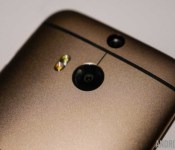
Bloomberg: One M9 to feature 20MP rear camera, smartwatch coming along

A Bloomberg report reveals some details about HTC’s new flagship phone, expected March 1. HTC’s first smartwatch could be announced at the same time.
Citing a person familiar with the matter, Bloomberg reports that the next One flagship (tentatively known as M9 or Hima) will feature an improved camera and audio experience. The device will feature a 20MP camera as its main shooter, while the UltraPixel sensor, a key spec of the previous two generations of the One series, will be moved to the front. Such a setup would be similar to the Desire 826, announced at CES, which also features an UltraPixel frontal camera.
The M9 will be powered by Qualcomm’s eight-core Snapdragon 810 chip, the source said, and feature a design that resembles the One M8 in aspect and size. While metal isn’t mentioned, it’s very likely that HTC will keep the highly successful metallic design language of the One family, probably with some small modifications.
The device will feature Dolby 5.1 audio technology and run HTC’s 7th generation Sense interface, “with improved location-based services.”
The report also briefly mentions the long-rumored HTC smartwatch, which will reportedly be introduced along the M9 at HTC’s pre-MWC March 1 event. The only detail about the wearable is the integration with Under Armour’s fitness service. During CES, HTC announced that it would weave Under Armour’s services into its 2015 products, including wearables.
HTC confirmed in October 2014 that it had worked on and ultimately axed an Android Wear smartwatch. The company’s marketing head said at the time that HTC needed more time to develop a competitive product.
Check out our HTC One M9 rumor roundup for more details on HTC’s next big thing. What do you think of the M9 so far?

LG’s Tone Infinim Bluetooth headset now comes in white gold

LG’s wraparound Bluetooth headset, the Tone Infinim (HBS-900), is now available in a white gold color variant. Boasting Harman-Kardon sound, retractable earbuds (with the wires housed in the plastic body) and the ability to read notifications out loud from a connected device, the Tone Infinim stands out from the sea of Bluetooth headsets currently available, as we’ve noted in our review.

Microsoft integrates with Moodle to bring Office 365 to the classroom

Microsoft‘s Open Technologies subsidiary today announced new integration between Office 365 and Moodle, partnering with support and hosting services provider Remote Learner. This partnership brings with it a more productive experience for both teachers and students who use Moodle, affecting credentials, calendar management and course content.
 AIVAnet