



Facebook begins testing sound clip transcription in Messenger

Facebook‘s David Marcus took to his, well, Facebook page today to detail a new voice transcription feature that the company is testing for Facebook Messenger. The feature will take any sound clip that you send or receive and transcribe its contents in text below the voice clip itself.

How to enable iTunes Match on your Mac or Windows PC with iTunes

Not only does iTunes Match let you store your iPhone and iPad music on the cloud, but it lets you do the same across Mac and Windows PC computers as well. For example, if you have your entire music library on your iMac, you may not want to use the hard drive space on your MacBook Air. Instead, just use iTunes Match to stream music. This method isn’t just convenient, it can also result in you saving tons of hard disk space on your Mac.
How to enable iTunes Match on your Mac or Windows PC
To use iTunes Match on your Mac or Windows PC, you’ll need to be subscribed to the service.
Once you’ve subscribed, follow these steps:
- Launch iTunes on your Mac or PC.
- Click on Store at the top.
- Click on Turn On iTunes Match.
- Click on Add Computer.
- Type in your Apple ID credentials when asked.
Let iTunes Match do its thing. When it’s done, all your music across all your computers should be accessible for streaming.


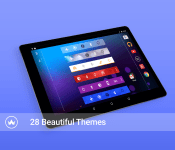
Hoot Apps’ new widget to rival android’s quick settings?

Hoot Apps has recently released “Action Widgets,” an app created to simplify the process of changing common android settings, without having to distrupt your current task. It accomplishes this by adding a bar of quick settings to your notification panel, or to your home screen depending on your preference. The quick toggles are chosen by the user, and an extensive selection of over 20 toggles is included. Matching the variety of toggles, there are also 28 themes available for the app.
If you’d like a quicker way to access some of your settings, then check out the link down below!
FEATURED POSTS


The post Hoot Apps’ new widget to rival android’s quick settings? appeared first on AndroidGuys.
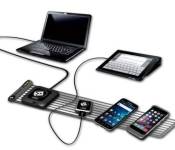
The state of wireless charging: Interview with Randy Marx, fliCharge CEO

A few weeks ago I had the opportunity to review a Qi wireless charger from WoodPuck. The WoodPuck was a beautiful piece of hardware, but I had some issues with the accessory. I found that charging my phone was inconsistent and inefficient. Admittedly, part of that could have been because of my setup. I was trying to use the WoodPuck with my LG G3 from AT&T. Although most versions of the G3 are Qi compatible, AT&T disabled that option in favor of their own wireless charging standard. I had to order a special adapter just to make it work. While I had to jump through some hoops to get the WoodPuck up and running, it not only showed me how far wireless charging had come, but also how far it has to go. Wireless charging solutions have a lot of potential, but at the moment, a cord is the most efficient method to charge your electronics. When I got the opportunity to talk with Randy Marx (CEO of fliCharge) about their wireless charging solutions, I thought I could take the opportunity to learn more about the state of wireless charging technology.
Wireless charging is starting to become a major feature of modern smartphones. Not very long ago wireless chargers required big ugly cases for your phone and ugly matts for your desk. Recently, we’re seeing the charging pads turned into nice looking accessories, like the WoodPuck, and cases are no longer required for most smartphones. Before long we could see the tech built right into tables, nightstands, car armrests and other places. Imagine going to Starbucks and just setting your phone on the table to top off your battery. It sounds like a great idea, but we have a way to go.
Right now, there are several different standards that are fighting for market share. This causes confusion with consumers and causes problems for manufacturers. This was one of the main things I wanted to address with Mr. Marx, does he see the wireless carriers agreeing on a standard? He said, “In the end we believe the consumer will determine the future of wire-free charging. From our research, consumers are looking for more than a ‘fancy phone charger.’ To dominate the market and replace cord charging a wire-free solution needs to be highly efficient, cost effective and interoperable for charging multiple devices be it at home, in cars, at school, or the office.”
One of the biggest issues I’ve run into with wireless charging is the performance. Wireless chargers can be finicky, if a phone is aligned wrong on a charging pad, it might not charge. Also, phones take a lot longer to charge when compared to a regular old cord. Until overall performance and ease of use improves, it’s going to be hard for consumers to make the change to wireless charging. What does Mr. Marx think it will take to make wireless charging more popular and possibly a future standard for consumers? “We believe infrastructure, with emphasis on automotive, will be the key to timing. From commuters to contractors and service people to law enforcement and emergency workers, having a charged phone or other battery-operated device in their vehicle is very important if not life critical. Once wire-free charging is employed in everyday life across multiple demographics in automobiles, commercial vehicles, schools, businesses and at home it can become the standard. We are seeing progress in these areas and believe this can happen during the next 3-5 years, possibly earlier.”
With my main questions addressed, it was time to move onto fliCharge and what sets it apart from other wireless charging solutions. First, fliCharge is different from the Qi standard. Where the Qi is an inductive charger, the fliCharge is a conductive charger. FliCharge claims that their system is compatible with most battery operated devices. What really sets the fliCharge apart though is their focus on the automotive world. They already have their wireless charging solutions available for over ten different vehicles including: Dodge, Ford and Toyota vehicles. Furthermore, they are working on products for offices and schools that can charge many devices at once. Mr. Marx went on to say, “The fliCharge technology is a significant improvement that we believe the general public will continue to embrace. In fact, we have found that with fliCharge’s high charging efficiencies, consumers can’t tell the difference between our charge rate and plugging into an electrical socket. Also, the ability to place a device anywhere on a fliCharge pad is very easy, convenient and safe – this includes in vehicles where specific placement of a device may be dangerous if not impossible.”
I have to admit that the fliCharge intrigued me. Who doesn’t want to do away with all the power cords that have become a part of our daily lives? Think how great it would be to set your phone down to charge in the car without worrying about cords. I don’t know if anyone has ever looked into it, but I bet trying to plug a micro-USB cord into your phone while driving, is nearly as dangerous as texting while driving. If fliCharge’s performance claims hold up, it would be a good first step towards showing me that wireless charging is a viable solution. If I found fliCharge in my new car or in use at my office, it would be hard to pass up the convenience of a single charger for my electronics at home. By focusing on the automotive world fliCharge have found a creative way into peoples lives, while also creating something that makes a lot of sense. It will be interesting to see how the fliCharge performs when stacked against the other wireless charging standards, but it sounds like they might be on the right track.
Source fliCharge
FEATURED POSTS
The post The state of wireless charging: Interview with Randy Marx, fliCharge CEO appeared first on AndroidGuys.

What do we think of Project Ara? | The Friday Debate Podcast 001

What if you could build your smartphone yourself, with the ability to swap the very pieces that put it all together? That is exactly what Project Ara is – and despite it being shrouded in some mystery, we are going to get our first real look at the new take on smartphones when it hits the Puerto Rico test market later this year. From the very people who live for the smartphone world, our panel of four talk about whether or not such a system will be sustainable, marketable, and – perhaps most important of all – successful. This all sounds like a great way to kick off the first episode of our brand new podcast series based upon The Friday Debate threads you read here on the website.
And with that, welcome to this inaugural episode of The Friday Debate Podcast! Host Joshua Vergara is joined by lead editor Andrew Grush, writer Jonathan Feist, and our app guy Joseph Hindy to dissect Project Ara. We even talk about what kinds of Ara phones we would make ourselves. It’s all an exciting start to what will be our weekly endeavor into all topics Android.
The Friday Debate Podcast – discussing topics in Android every week.
Links to Podcast
RSS Feed
iTunes
Direct Download
Relevant Links
Project Ara: Can it find success, or is it just too ambitious?
Google will launch Project Ara market pilot in Puerto Rico later this year
Google wants to help you customize your Project Ara device with the Ara Configurator app
Follow our Hosts

Joshua Vergara
Twitter | Google+

Joseph Hindy
Twitter | Google+

Andrew Grush
Google+

Jonathan Feist
Twitter | Google+
Recorded on January 15, 2015 – Hosted and Produced by Joshua Vergara

IRIS Laser HUD is a projection display for your car that pairs with your smartphone
 The IRIS laser HUD was announced at CES and takes a new spin on displaying your phone information on your vehicle. Instead of working like an in-vehicle dash display, the laser HUD actually projects real-time information in front of you on your windshield. Things like incoming calls and texts and driving directions will appear at eye level, making it easy to keep up with what’s going on. The device even allows you to reply to certain notifications with specific gestures.
The HUD pairs with most smartphones using Bluetooth, and it’s completely open source, so theoretically many developers should be able to take advantage of it within their apps. It’s supposedly launching later this year for $399, so if you’re interested in making your car as futuristic as possible, keep an eye out for it.
source: IRIS
Come comment on this article: IRIS Laser HUD is a projection display for your car that pairs with your smartphone
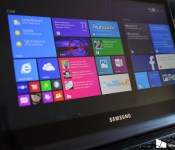
Google security researcher outs another exploit in Windows 8.1 and 7

After having outed a vulnerability in Windows a few weeks ago, Google is at it again. This time a Google security researcher detailed another vulnerability in in both Windows 8.1 and Windows 7. Similar to the exploit that Google previously detailed, this vulnerability could allow a user to impersonate another ID, allowing encryption and decryption of data he or she otherwise wouldn’t have access to.
OnePlus Two rumoured to have Snapdragon 810, 4GB RAM and Quad HD display
The OnePlus One was probably the most surprising device of 2014 and although OnePlus weathered quite a few criticisms for the marketing and sales of its maiden device, it still hasn’t stopped the immense interest in its follow-up device, expected to be called the OnePlus Two. Rumours specs have dropped today, suggesting that the new […]
The post OnePlus Two rumoured to have Snapdragon 810, 4GB RAM and Quad HD display appeared first on AndroidSPIN.

iMore show 439: Ally’s selfie wand
The iMore show brings you everything you need to know about the week in iPhone, iPad, Mac, and Apple! On this episode Ally’s back from Hogwarts and she’s brought a selfie stick with her. Rene is back from CES 2015 and he’s brought thoughts on the MacBook Air and ARM Mac rumors. Peter’s been holding down the fort and wants to talk stability.
Support the iMore show: Go to lynda.com/imore for a free 10-day trial and learn something new for 2015!
Hosts
Feedback
- Email: podcast@imore.com
- Twitter: @iMore with hashtag #askimore
- Comment: Leave one below!
Samsung Galaxy S6 will have a touch-based fingerprint sensor much like the iPhones
We’re expecting quite a lot from the Samsung Galaxy S6 seeing as it’s been rumoured that Samsung took the device back to the drawing board to try and recapture its lost 2014 sales. While we’re expecting at least something innovative to pop up during Samsung‘s inevitable announcement at MWC 2015, it looks according to SamMobile, […]
The post Samsung Galaxy S6 will have a touch-based fingerprint sensor much like the iPhones appeared first on AndroidSPIN.
 AIVAnet