


Apple’s Siri investment and the watch and HomeKit payoffs

I use Siri all the time. It’s gotten so that I’m often too lazy to tap or type. I use it for reminders, for alarms, for searches, for reservations, and for a lot more. If I have an idea and I’m driving and don’t want to forget it, I’ll just say “Hey, Siri”, dictate a note, and touch it up later as needed. And in my experience, John Gruber is spot on. Daring Fireball:
I’ve noticed over the past year that Siri is getting faster — both at parsing spoken input and returning results. I use iOS’s voice-to-text dictation feature on a near-daily basis, and it’s especially noticeable there. I’ve been using a Moto X running Android 5.0 the past few weeks, so today I did a side-by-side comparison between Siri and Android’s Google Now, asking both the simple question, “What temperature is it outside?” Both phones were on the same Wi-Fi network. Siri was consistently as fast or faster. I made a video that shows them in pretty much a dead heat.
iOS 8’s streaming speech-to-text is especially notable. You see it rendering while you’re speaking and what’s more — you see it changing the words it’s already rendered as it gets additional context. Apple’s been investing a lot in voice, and it’s paying off. Sure, it would be great if they localized processes that didn’t require internet access, like setting an alarm, but compared to 2011, it’s already night and day. It’s gone from punchline to productive feature.
Lastly, a rather obvious but important observation: Improvements to Siri across the board — reducing latency, improving accuracy, increasing utility — are essential to the success of Apple Watch. And — given the previous note on first impressions — it’s pretty important that Siri integration on Apple Watch work well right from the start.
It’s always been interesting to me that Siri — natural language interface — has existed beside multitouch on iOS. It’s been there as an option for when touch wasn’t ideal due to circumstance, or optimal due to task. The Apple Watch will likely magnify that — there’ll be more occasions when touch isn’t ideal or optimal. For some of that, you’ll be able to Handoff to iPhone. For a lot, you’ll be able to just talk. HomeKit will be similar as well, with Siri moving from secondary to equal or even primary interface. HomeKit on the watch even more so.
Like Continuity and Extensibility and Touch ID, the investment in Siri will likely pay off beyond it’s initial implementation.
More: Daring Fireball, and don’t miss the Google+ thread.

Update to Google Maps Android app allows you to share directions [APK Download]

Google Maps was updated today to version 9.3. You won’t find too many new things, but one notable is the ability to share your directions with others. Just search for a place or address, then select the type of navigation, followed by your route selection. Then hit the three dot menu at the top right, and you will see the Share Directions option.
Tapping on Share Directions will open the normal Android Share Menu, allowing you to share the complete text and Google Maps link to apps such as Gmail, Hangouts, Facebook, or whatever shows up in your Share Menu.
The update won’t hit all devices for several days so we have the APK download link, as well as the Google Play link after the break.
Come comment on this article: Update to Google Maps Android app allows you to share directions [APK Download]
Project Ara team shares more details about Spiral 2 modular smartphone

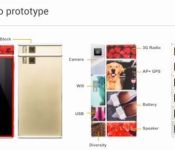
During the second developer conference for Project Ara that is underway, we already learned that the team has dubbed the second iteration of the modular smartphone as “Spiral 2″ and plans to use Puerto Rico as a test market later this year. We now know a little bit more about what has changed in the Spiral 2 compared to previous versions of the device.
Probably the biggest change that has been made in response to developer feedback is to move the electro-permanent magnets from the modules to the chassis, or endoskeleton, of the device itself. According to the ATAP team, developers indicated the magnets were consuming as much as 40% of the useable space on their modules.
Another change that was made was to place the 3G antenna in its own module. Down the road this will make it easier for consumer to select the kind of antenna they want to include when 4G antenna modules hit production.
Some of the other hardware included in the Spiral 2 includes a 1280 x 720 resolution display, a Wi-Fi and Bluetooth module, a Receiver module with light and proximity sensors, a 5 MP camera module, the 3G antenna module previously mentioned, a Band 5 antenna module, and a processor module. Currently the processor module can include either an NVIDIA Tegra K1 or a Marvell PXA1928 chip.
Looking ahead to the Sprial 3, which is the device expected to be used for market testing in Puerto Rico, Google anticipates having a 4G LTE module available, inductive connections for modules, and a Rockchip AP reference design. If sales commence, even on a test basis, Google also anticipates having a marketplace setup and available for buyers to purchase modules from.
One other bit of news that surfaced is that Google has determined they will not be able to utilize 3D printing of the modules, at least not for the next iteration or two of Project Ara devices. This will likely result in some limitations to the level of customization available for buyers. Google sounds like they are still planning to implement 3D printing at some point though.
Click here to view the embedded video.
Come comment on this article: Project Ara team shares more details about Spiral 2 modular smartphone

VLC releases preview app for Android TV

VLC, the popular video player already for a large swath of platforms, has released a preview version of its app for Android TV today. The player, which is known for supporting a crazy number of file formats, should be a boon to Android TV going forward.

Google Maps for iOS Gains Restaurant Filters, Weather Info and More [iOS Blog]
Google today updated its Google Maps app to version 4.2, adding a number of new features to enhance the user experience including filters to sort restaurant searches by cuisine and built-in weather information for various cities around the world.
It’s now possible for users to drop pins for both starting and destination points when mapping out directions, and Google Maps allows users to add transit directions to their calendars. Finally, the update also includes several bug fixes.

What’s new
– Filter searches for restaurants by cuisine type
– See current weather information for cities around the world
– Drop a pin for your starting and destination points in directions and navigation
– Add transit directions to your calendar
– Bug fixes
Google Maps can be downloaded from the App Store for free. [Direct Link]

Google partners with car manufacturers to create self driving cars

Google has just announced its partnership with a handful of car manufacturers to expedite production on their self-driving car concept. Last month, Google unveiled their first working prototype of the self-driving car. Though the search giant could make a single prototype, it was manufactured in Detroit by an engineering and speciality manufacturing company called Roush, not a major car company. Now, they’re partnering with top auto makers like General Motors, Ford, Toyota, Daimler AG and Volkswagen to speed up the process.
Chris Urmson, director of Google’s self-driving car project, told Reuters in an interview that with the addition of top auto manufacturers, Google plans to have self-driving cars on the road by 2020. He also explains that Google does not see any particular regulatory hurdles that may delay the cars’ availability within 5 years.
Though many believe that self-driving cars are a gigantic safety hazard on the road, Urmson remains confident in his vision. He explains:
You’re really changing the relationship you have with transportation. You’re changing what it means to get around… You look at a car … and people forget just how much magic there is in that thing.
We can expect to see prototypes hit the road relatively soon, but Google won’t have a product for average consumers in a few years’ time.

Samsung offers to purchase BlackBerry

In the surprise news of the day, Samsung recently made an offer to buy BlackBerry for $7.5 billion. Reuters is reporting that Samsung set the initial price range of $13.35 to $15.49 per share, which translates to a premiumof 38 percent to 60 percent over the current trading price.
So what would Samsung want with such a failing company? According to Reuters, it’s all about the patents. BlackBerry owns roughly 44,000 patents, worth approximately $1.43 billion in net book value. However, a lot of analysts think they are worth much more. Unfortunately BlackBerry isn’t interested in selling only the patents, so Samsung would need to buy the whole company in order to obtain them.
The other problem is getting approved by the Committee on Foreign Investment in the United States (CFIUS), as well as the Canadian government. Samsung does think that if they were to acquire less than 100 percent of the company, the CFIUS approval process would be much easier. However, Samsung doesn’t think they could “accomplish its strategic objectives” without owning 100 percent.
BlackBerry said they have “not engaged in discussions with Samsung with respect to any possible offer to purchase BlackBerry.”
This could get very interesting so stay tuned.
source: Reuters
Come comment on this article: Samsung offers to purchase BlackBerry

Apple Seeds OS X Yosemite 10.10.2 Build 14C99d to Developers [Mac Blog]
 Apple today seeded a fifth beta of OS X Yosemite 10.10.2 to developers, just one week after seeding the fourth beta of OS X 10.10.2 and nearly two months after seeding the first beta.
The new beta, build 14C99d, is available through the Software Update mechanism in the Mac App Store and through the Mac Dev Center.
As with previous betas, Apple asks developers to focus testing on Wi-Fi, Mail, and VoiceOver. Many Yosemite users have had some ongoing problems with Wi-Fi since the new OS was first launched in October, and a November 10.10.1 update did not resolve all of the lingering issues.

The aluminum Nintendo Entertainment System is custom built inside and out

The folks at Analogue Interactive know that making a good looking game console only goes so far, and that it’s what’s on the inside that truly counts. It’s with that in mind that the solid aluminum Analogue Nt — the outfit’s take on the original Nintendo Entertainment System — sports fancy innards in addition to its machined casing. As Polygon writes, the system’s motherboard is custom as well, sporting a fancy black printed circuit board, transparent solder mask and raised copper traces. We’ve embedded a picture after the break. Sounds pretty snazzy, right? Well, the outfit’s still promising audiophile and videophile quality out of their little aluminum box that could, and units still command a $500 starting price for pre-order. You might balk, but remember, this is the same company that charged $1,300 (minimum) for a wood-encased Neo Geo. Comparatively, this is a steal.

A photo posted by Analogue (@analogueinteractive) on Jan 13, 2015 at 9:36am PST
Filed under: Gaming, Home Entertainment, HD, Nintendo
Via: Polygon
Source: Analogue Interactive (Instagram)
HTC One M9 (Hima) rumor roundup

CES 2015 is now behind us and we are already beginning to turn our attention towards Mobile World Congress. Sometime around this timeframe we not only expect to see Samsung’s latest Galaxy S release, but it’s pretty likely HTC will unveil the One M8’s successor as well.
While there have been rumors about the HTC One M9 (aka HTC Hima) for months now, many of them have either been vague or somewhat contradictory to one another. Still, with it only being a few months (or less) before we see the One M9, we have decided to put together a very early look at what the M9 may end up like. As we learn more about the M9 we will be sure to update this post to give you an even more accurate look at what to expect.
DESIGN

Hima (M9) should feature similar design language to its predecessors
There have yet to be any leaked images or really any major rumors talking about a design shakeup for the HTC One M9 (aka Hima). Given how the One has evolved from the M7 and M8, we imagine the next-gen flagship will retain a similar look and feel when compared to its predecessors, though we expect there will be at least some minor refinements to HTC design’s language.
There have been whispers that HTC will further improve the build quality by switching to a tougher aluminum alloy when compared to the M7 and M8, but really there’s few concrete details about how it will differ. The device is also said to be launching in Gray, Silver, Gold or Gunmetal Gold color choices.
If well-known leaker Upleaks proves correct, we can tell you the size of the phone will be quite similar to the One M8 at 144.3 x 69.4 x 9.56mm. For those wondering, the M8 came in at 146.4 x 70.6 x 9.4mm.
DISPLAY

At least when it comes to size and res, the One M9 should provide a similar experience to the M8
Some of the early rumors associated with the HTC One M9 claimed the phone would have a larger 5.5-inch display, but the most recent rumors have instead pointed towards a more modest 5-inch 1080p display. While not as impressive as the QHD resolutions adopted by some of 2014’s flagship products, the One M9 (Hima) appears to have a much smaller display than most of the phones that have went with QHD, and so the difference in resolution shouldn’t be that noticeable.
HTC ONE M9 SPECS
Again early rumors pegged the One M9 as a device that wouldn’t rock the boat when it came to specs, as it was believed to carry a modest Snapdragon 805 chipset. More recently, more than one rumor has suggested that this isn’t really the case and that the One M9 will actually pack a Snapdragon 810 with 3GB RAM. Considering the fact that the LG G Flex 2 is launching with this chipset, we can’t say we’d be too surprised. Battery life is also expected to make a minor jump upwards, going from the 2600 mAh battery in the M8 to a 2840 mAh battery. As always, except the battery to be non-removable.
As for other sensors? It’s hard to say what HTC will or won’t bring to the table. With more flagships bringing stuff like heart rate monitors and fingerprint scanners to the mix, it’s possible HTC will follow suit. The M7 and M8 didn’t pack these extras, but it is worth mentioning that the HTC One Max did in fact offer a fingerprint reader upon its debut.
CAMERA

Ultrapixels and Duo likely won’t see a return on the rear of the Hima (M9)
HTC has come under a lot of flack for its Ultrapixel camera, but this time around HTC is finally switching things up a bit. Reportedly, the phone will offer a 20.7MP rear facing camera, though the exact sensor isn’t known just yet. On the front, reports say there will either be a 13MP shooter or a 4MP UltraPixel camera — with the former being similar to the Desire Eye’s setup and the latter akin to the new Desire 826.
SOUND QUALITY
One thing HTC is known for is its sound quality, and we don’t except things to change with the One M9. In the past Beats has powered the sound tech behind the One series, but according to at least a few early reports, HTC may be teaming up with Bose this time around.
SOFTWARE FEATURES
Not a lot of rumors have focused on what exactly might be different with the HTC One M9 (Hima) software, though you can expect it to run Android 5.0 Lollipop with HTC Sense 7 on top. No news on special software features or improvements just yet, though we’ll be sure to keep you updated as soon as we learn more.
RELEASE DATE
Just like the HTC One M8, HTC latest flagship is expected to arrive sometime in March, likely around the same timeframe as Mobile World Congress. No exact dates are rumored just yet, though we wouldn’t be too shocked if HTC stages an unveil sometime in earlier March in order to coincide with MWC.
RETURN OF THE MAX SERIES?

The original One Max
A bit earlier in this post we said that rumors originally claimed the One M9 would offer a 5.5-inch display, only for later reports to suggest the actual size will just be 5-inches. As it turns out, the 5.5-inch claim may have some merit, though it applies to the upcoming “Max”-sized model and not the standard M9.
The One Max series has pretty much be a one-off release for HTC. Tons of reports surfaced about an alleged One M8 Max (aka One Prime) last year, though nothing ever became of these rumors. Now the latest claim is that the One M9 Max, aka the HTC Hima Ace Plus, will debut with a bigger 5.5-inch QHD display that is “bezel free” in design, allowing for the phone’s footprint to be as small as possible.
Allegedly the phone will have the same Snapdragon 810 processor and 3GB RAM as its littler brother, the One M9. In fact, the only major difference in specs will be the display size. While the idea of a “larger” M9, alongside a smaller 5-inch model, sounds great — we wouldn’t get our hopes up just yet. Even if the rumored device is real, the rumor mill says it won’t debut until sometime between August and September, and that’s a pretty long ways off.
WRAP UP

One M7 and One M8
Just like the Galaxy S6, all we have is a semi-fuzzy image of what to expect from HTC’s Hima (M9) at this point. That said, most of the rumors are consistent in regards to the fact that the phone won’t see any massive changes in design language and, like the M8, will simply further refine the HTC One formula, instead of trying to reinvent it.
What do you hope to see from the HTC One M9 (aka Hima)? Let us know in the comments. Also be sure to participate in our poll!
(function ()
document.getElementsByTagName(‘body’)[0]).appendChild(opst);
());
 AIVAnet