


New Xiaomi accessories: the ultra-compact Mi Box Mini and the swanky Mi Headphones
Xiaomi just launched the Mi Note and its souped up sibling, the Mi Note Pro. Dubbed by Xiaomi the “most epic flagships of the year,” the two phones impress through style and features. But that’s not everything that Xiaomi showed off today: joining the company’s growing stable of accessories are the Mi Box Mini Android streaming set and the Mi Headphones.

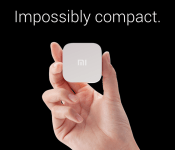
Like the name implies, the Mi Box Mini is a compact device that connects to a TV over HDMI and streams content, like music and TV shows. The diminutive device joins the Mi Box, the media set released last year as part of Xiaomi’s assault on the living room.
The Box Mini is a square box roughly the size of a generic phone charger, and the charging pins further add to the resemblance. Small as it may be, there’s a ton of components inside (282, according to its maker). The processor is a quad-core Cortex-A7 from MediaTek, there’s 1GB of RAM, 4GB of storage, dual-band WiFi, Bluetooth, and DTS 2.0 with Dolby Digital Plus. The only port on the device is an HDMI (1.4a) with 1080p and 3D support, and a Bluetooth remote provides control. The Mi Box Mini runs Android 4.4.2, and buyers outside of China should get access to the Play Store.

The Mi Box Mini costs ¥199 or about $30, and will go on sale from January 20.
The second accessory unveiled today is the Mi Headphones, featuring large beryllium diaphragm speakers and interchangeable over-ear and on-ear covers. The headphones are billed as great companions to the Mi Note and Note Pro, which themselves feature Hi-Fi audio.

#gallery-1
margin: auto;
#gallery-1 .gallery-item
float: left;
margin-top: 10px;
text-align: center;
width: 33%;
#gallery-1 img
border: 2px solid #cfcfcf;
#gallery-1 .gallery-caption
margin-left: 0;
/* see gallery_shortcode() in wp-includes/media.php */


The Mi Headphones cost Mi Headphones for ¥499 or about $80 and will go on sale over the following weeks.
Impressed with Xiaomi today?
Xiaomi’s new $30 Android streaming box is the same size as your phone charger

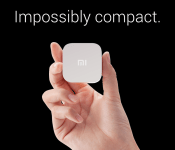
Along with the launch of the Mi Note and the 2K display Mi Note Pro, Xiaomi also announced an Android media streaming box that is about the same size as your phone charger. Dubbed the Mi Box Mini, the latest streamer from Xiaomi features 282 integrated components, including a motherboard that’s about one-third the size of an average credit card.

Earth to Judy Jetson: The fashion app of your dreams has arrived

Need help choosing today’s outfit? There’s an app for that. It’s called ClosetSpace and in addition to the aforementioned feature, it also offers an on-demand pro stylist ($25/month) and outfit recommendations based on the weather. It all works based on you either uploading photos of individual pieces or adding them from retailer catalogs, and it’ll analyze your collection and offer deals from brands and services based on what’s in your closet. The app’s available for Android and iOS, too. What’s more, should you want to offload a few pieces, in the future the app’ll connect you to secondhand marketplaces where you can list them with one click, according to TechCrunch. Sounds pretty futuristic, yeah? Well, we’re guessing that if all you wear is American Apparel tees and Levis, this might not be nearly as useful.
Filed under: Cellphones, Mobile
Via: TechCrunch
Source: ClosetSpace, Google Play, iTunes
Samsung explains Tizen is “lighter” than other software

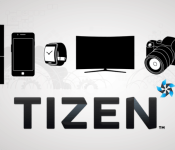
Take a look at any Android device manufactured by Samsung and the common theme is the software. The company aims to improve upon Android with its own software overlay called TouchWiz. Some consumers feel that TouchWiz is overbearing and too confusing; however, that has not stopped Samsung from selling millions of devices with it. And TouchWiz has come very far since its inception and now looks much more clean. With Tizen, the company’s in-house software, ready for showtime, Samsung wants to inform everyone of its benefits. Tizen is said to be “lighter” than other operating systems because of its less demanding requirements.
Here is a piece of what Samsung had to say about Tizen’s benefits:
The benefits of Tizen are very simple: Tizen is “lighter” than other operating systems. In other words, Tizen requires less processing power and memory, thereby ensuring faster device speeds while consuming less energy. As a result, consumers will benefit from a smoother user experience through the likes of shorter boot time, faster web browsing and seamless multitasking, all the while enjoying longer battery life.
Because it is lightweight, Tizen is optimal for use across a wide spectrum of smart connected devices in the IoT space. While devices with high demand for computing power, such as smartphones and TVs, are part of the IoT, so are devices that require relatively less computing power, such as wearables, vacuum cleaners and washing machines, which need an operating system like Tizen that is lightweight enough to run the devices without burning through processing power, memory and overall device performance.
Samsung will remain committed to other operating systems (or at least for now). Why? Because it is already so invested in Android. Samsung says its ongoing commitment to other operating systems ensures “seamless interoperability and connectivity among the billions of devices being used daily.”
Source: Samsung Tomorrow
Come comment on this article: Samsung explains Tizen is “lighter” than other software

Heels made from aluminum foam, designed by the cosmos

These are the shoes we’d imagine Lady Gaga would wear if she were Cinderella. As much as they look like crumpled aluminum foil, though, their designers, Azusa Murakami and Alexander Groves, were inspired by something a lot bigger: the rough surface of Comet 67P/Churyumov-Gerasimenko, where ESA’s Philae lander is currently sleeping. In the absence of actual Churyumov-Gerasimenko samples, the duo collectively known as Studio Swine, 3D-scanned meteorites at the Natural History Museum in London after securing sponsorship from Microsoft. They meshed various scanned surfaces together and formed the shoes’ base shape using aluminum foam. A CNC mill then scooped out part of the structure for the wearer’s feet (these are shoes, after all), which was then lined with soft Italian leather. Despite the rugged ultra-metallic look, the designers claim these heels are nearly weightless, as aluminum foam is 90 percent air. We guess fashion doesn’t always have to hurt after all.
[Image credit: Studio Swine]
Filed under: Misc
Via: Wired
Source: Studio Swine

HTC road map details Lollipop update schedule for multiple devices
 HTC’s flagship One devices have already started seeing the Lollipop update, but the company has been quiet about getting their other devices caught up. Thanks to a leaked update road map, though, we’ve got a better idea about when specific phones should be seeing the 5.0 upgrade.
The plastic HTC One E8 is next up to bat slated for a second quarter update, and the Desire EYE, One EYE, and Butterfly Fly are expecting the update between April and June.
The third quarter of this year should be busy for HTC, with the HTC One Max, One M7 Dual Sim, Desire 816, Desire 820u, One M8 Mini, and the Chinese One E8 and One M8 EYE all seeing 5.0 updates.
On top of the Android 5.0 updates, the company is expected to launch Sense 7 with its new flagship that’s due for an announcement in just a few months.
source: HTCViet
via: Phone Arena
Come comment on this article: HTC road map details Lollipop update schedule for multiple devices

Baby Popeye and Pro Football BBM Stickers now available in the BBM Shop

Hitting up the BBM Shop today I noticed a couple of new additions that are now available to purchase if stickers are your thing.
Ara Configurator: the app for building your Project Ara modular smartphone

Google created quite the news day today with regard to Project Ara. Talk Android had previously discussed some of the information released today when Google released the Project Ara MDK 0.2 a few days ago. We knew the new prototype would be called the Spiral 2, that there would be an Ara Manager app, the Greybus protocol was mentioned briefly, and we talked about the Ara module marketplace.
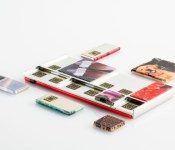
Today, Google branded the module marketplace as Ara Configurator, which will be your one-stop shop for customizing and purchasing your Spiral device’s modules. Additionally, this will be the location for customizing the modules’ shells, which are the plastic covering the back of said modules. The shells feature all those pretty designs on the modules’ backside that you see in the Project Ara photos.
Very similar to Motorola’s Moto Maker (or Nike’s NikeID, whichever you have more experience with), the Ara Configurator will feature a step-by-step process for customizing your Ara device. It will not be limited just to the modules, though, as you will be able to select from an assortment of chassis (dubbed as endoskeleton). And if you’re wanting to skip getting your hands too dirty with all of this customization, Ara Configurator will feature pre-assembled devices based on what activity you plan on associating the device with most (i.e. gaming or photography).
You can read more about the latest news surrounding Project Ara by checking out these stories on Talk Android: Project Ara team shares more details about Spiral 2 modular smartphone and Google to bring Project Ara devices to Puerto Rico first.
Source: The Verge
Come comment on this article: Ara Configurator: the app for building your Project Ara modular smartphone

Google adds navigation sharing in latest Maps update

Google today released a new update for its Maps application. Version 9.3 is a rather minor update, which introduces the ability to share loaded directions. Much like printing out directions from Google Maps on paper, the app will share said route directions as instructions for the recipient to follow.

Transport inspectors say Uber blocked their accounts to avoid fines

Uber likes to play chicken with local ride-sharing laws, hoping to keep its service in cities long enough to generate positive public buzz. Case in point is Queensland and Western Australia, where UberX is illegal and carries fines of up to $1,700 (AUS) for infringing drivers. According to emails obtained by ABC News in Australia, Uber has actively blocked the accounts of transport inspectors to avoid the penalties, which it pays on behalf of drivers. One inspector said “due to blocking by Uber, only two covert rides were undertaken… time was spent purchasing new credit cards, activating Gmail accounts and setting up two more phones.”
One driver there said he was told to keep operating and that Uber, which was recently valued at $40 billion, would cover any fines. That leaves Queensland’s local government in a bind; they want the service gone, but the nation’s Transport Act limits the actions they can take. Many UberX drivers have been fined more than once, and there’s no limit on the books as to how many can be issued, according to ABC. And despite the efforts, “Uber’s business is still expanding,” in the area, according to one inspector. They’ll keep fining drivers, but in the meantime, lawmakers there are looking into new regulations that could give them more teeth.
Filed under: Transportation
Source: ABC Australia
 AIVAnet