


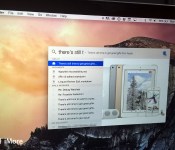
Yosemite Spotlight, spam email, tracking pixels, and what you need to know

By default, OS X Yosemite‘s Mail app won’t “load remote content” such as the types of images typically requested by marketing emails and spam. You can change that in preferences if you really want to see remote images in your emails — such as the products being advertised by Apple, Best Buy, or other retailers in their mailings — but if you accidentally or deliberately click on spam, those images will load too. Even with “load remote content” left off, however, if any such marketing or spam email shows up as a Spotlight search result, Heisse reports that such remote content will load. So, what’s going on and what can you do about it? ITWorld translates:
The potential privacy glitch affects people who have configured the Mac Mail App to turn off the “load remote content in messages” setting, as security experts have long advised. Spammers, stalkers, and online marketers often use remote images as a homing beacon to surreptitiously track people opening e-mail. Because the images are hosted on sites hosted by the e-mail sender, the sender can log the IP address that viewed the message, as well as the times and how often the message was viewed, and the specific e-mail addresses that received the message. Many users prefer to keep their e-mail addresses, IP addresses, and viewing habits private, a goal that’s undermined by the viewing of remote images.

When you visit a website, that website gets information about you. That includes your Internet Protocol (IP) address, the type and version of computer operating system and browser you’re using, and other technical details. Your IP address can be used to determine your Internet Service Provider (ISP) and the general area where you’re located. If you’ve ever used something like Google Analytics — which most sites, including iMore, use benignly to figure out how many readers come here, from where, and what they’re reading the most — then that’s the type of information that can be collected.
As described above, email can be turned into a pseudo webpage by requesting server-side images — including tracking pixels — be loaded into them. Instead of attaching an image, which embeds the image in the email, they pull it from a website: http://example.com/image.gif. If “load remote content” is enabled, that image will be pulled as soon as you open the email, and the website will get your IP address and other information just as if you visited the site directly.
The issue here is that even if you have “load remote images” turned off in Mail, Spotlight will still load them. So, if a search you type into Spotlight returns a marketing or spam email message as the Top Hit, it will automatically load those images, and if it returns it as a Mail & Messages hit, and then you click on it, it will load those images.
I typically leave “load remote content” on, so I’m not overly concerned about this. I find it annoying to have to click on the “Load Remote Content” button every time I want to see an Apple or B&H or other product email I’ve subscribed to. A combination of Gmail, iCloud, and Mail.app anti-spam means I almost never see spam anyway, and I don’t click on them when I do. I also delete my spam messages frequently. So, I’ve also never, in all the years Spotlight search has been available, had a spam mail message return as the first, automatically previewed, result.
My guess is most people are similar, and won’t run into this problem either. That said, it is a problem, and some people are really and rightly concerned about online tracking, especially those being stalked. It would absolutely behoove everyone if Spotlight, when providing Mail results, honored the “load remote content” setting in Mail.
Hopefully Apple will implement that as soon as possible. In the meantime, if tracking pixels are a concern, you can disable Mail as a result type in Spotlight. It’s less convenient, but that’s typically the price we pay for security.

Although Apple has almost certainly been notified about this issue, I’ve also filed a bug report with Radar, should anyone with access want to dupe it.
Bug report: rdar://19439666
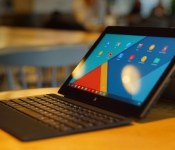
Jide’s Ultra Remix Surfaces, wants to provide Window(s) to productivity

From this angle (or any, really) one might be hard pressed to see anything other than a Microsoft Surface.
Many believe that the motivation behind Microsoft’s Surface line of tablet PCs is to inspire OEMs to make similar, competitive products. This was especially a relevant point in the early days of Windows 8 when manufacturers were still focused on laptops with the slate form-factor primarily embraced by RT products. While inspiration may be the main ingredient, it’s questionable just how enamored Redmond will be at the sight of Jide’s Ultra Remix tablet. The bigger cause of concern? Hard to guess: the design itself or the fact it’s running Android.

This curious creation is the brainchild of a trio of former senior engineers at Google: Jeremy Zhou, David Ko, and Ben Luk. They, along with a team comprised of former staff at Sony, Baidu, Amazon, and even Microsoft itself (among others). The Remix appears to be little more than a geek’s fantasy of running Android on a Surface, but the hardware doesn’t disappoint either. In addition to the kickstand (which can be positioned at either 40 or 80 degrees), it also has an 11.6 inch, 1920X1080 screen and a 1.8 GHz Nvidia Tegra 4 on-board. Add to this 2GB of RAM, 16GB or 64GB of on-board storage, a pair of 5 megapixel front/rear cameras and dual-band Wi-Fi (a/b/g/n). It is only 860 grams and sports an nice 8100 mAh power cell. And let’s not forget the pre-requsite magnetic keyboard (replete with touch pad) and magnetic charging port.
Running on this familiar-looking piece of kit is a variant of Android 4.4.2 called Remix OS. The mobile software platform makes use of a taskbar to facilitate multi-tasking (just like Windows), which interestingly seems to have chosen Lollipop’s system navigation buttons. The OS also allows for apps to be ran in a phone-sized state thus avoiding the stretched out form factor that typically occurs when running them on an optimized screen resolution/size. And, just like Windows, you can have multiple… windows open. Given the similarities, it actually would be most-fitting should Jide work in a licensing agreement with Microsoft to have Office for Android pre-installed.

When the Jide Ultra Remix tablet hits China it should retail for around $349 (16 GB) and $449 (64GB) and be offered in a variety of color options. A US/UK release is expected in Q2 or Q3. Suffice to say, it does look nice and provided it has decent build quality, could actually present a challenge not only to Chromebooks, but to larger Android tablets that offer bigger screens yet the same basic Android interface present on all non-forked devices.
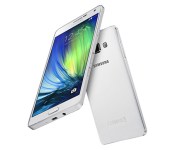
Samsung’s super-slim Galaxy A7 prioritizes looks over power

Samsung has to deal not only with Apple’s new iPhones on the high-end side, but excellent Chinese Android models like the Xiaomi Mi4 further down the food chain. To stop the bleeding in the latter segment, it just launched the Galaxy A7, its best mid-range model and slimmest smartphone to date. As we saw earlier, the 6.3mm thick body sports a Snapdragon 64-bit octa-core CPU with 2GB of RAM, 16GB of storage, a 5-megapixel front and 13-megapizel rear camera. The 5.5-inch AMOLED screen is likely 720p, though Samsung didn’t specify it.
Samsung is also emphasizing its own software features like call noise reduction, extra security and multi-screen apps. There’s no word yet on availability or price, but the Korean giant is targeting Europe and Asia with the Galaxy A7, judging by the dual-SIM option. But in the latter market, it’ll be in tough against models like the $320 Mi4, which has much better specs across the board for probably much less money.
Filed under: Cellphones, Mobile, Samsung
Source: Samsung
Do you take too many selfies? This study says you may be a narcissist or a psychopath
Selfies are a phenomenon that have by now engrained themselves in our society, fortunately or unfortunately. For some of us it’s a guilty pleasure whereas for others it’s a way of life. But if you take too many selfies, does this say something about you as a person? One study from Ohio State University says it does, and […]
The post Do you take too many selfies? This study says you may be a narcissist or a psychopath appeared first on AndroidSPIN.
OnePlus sells close to one million OnePlus One handsets
Despite all the criticisms and marketing flops, it looks like OnePlus has come out of 2014 a winner. Reporting that it has sold almost one million OnePlus One handsets, co-founder Carl Pei reflected on what was a surprising year for his fledgling start-up. “We basically weren’t prepared for what happened. We thought that all our demand […]
The post OnePlus sells close to one million OnePlus One handsets appeared first on AndroidSPIN.
Microsoft hits back at Google for publishing Windows 8.1 vulnerability before being fixed

Microsoft has lashed out at Google for making a Windows 8.1 vulnerability public. Chris Betz, heading up the Microsoft Security Response Center (MSRC), published a new blog post over on TechNet talking about security and how tech companies should work together to better protect consumers against threats from exploits in software, something the company feels Google disregarded.
Here’s what we expect from Samsung at MWC 2015

With CES 2015 finished up, awards given and hundreds of tech reviewers ready to crash for a few days to recover from the adventure, it is time to start thinking about what comes next in the world of Android. As far as the big events go, next up is very exciting, as we are headed into flagship season and MWC.
Samsung has been a major manufacturer of Android devices in the last few years. They have a fairly regular routine of launching one iteration after another of most styles of phone they offer. That approach has changed a little in the last half year or so, with stiff competition and the consumer desire for more premium feeling devices than Samsung’s normal plastic offerings, at a lower price than a flagship normally affords.

What should we expect from Samsung moving forward?
We applaud Samsung for reigning things in a bit. While we love the idea of having seemingly limitless options of Android devices to choose from, we’ll take quality over quantity any day. It appears that Samsung knows this, as the expectations for their next flagship device(s) may be the best that the South Korean manufacturer has yet delivered.
Materials
Starting with build materials, Samsung tested the waters late in 2014 with the Galaxy Alpha. The Alpha was touted as Samsung’s first major Android phone built of metal. While the design of the phone was not a huge departure from other Samsung devices, the metal made for a more premium feel over Samsung’s typical plastic offerings

The Samsung Galaxy Note 4 was also a welcome design change, although it did not rock the same metal build, the phone itself brought a glossy and premium look to it. This lead to the notion that the Note 4 is the phone that Samsung should lead off from in future flagship devices.
Display
One of the key features to the Note 4 that helped Samsung stand out in the crowd came in the second iteration of the device, called the Note Edge. Adding a curved display to an Android phone may not be a new concept, but the Note 4 based version took it to the next level of functionality. If you are unfamiliar with the benefits of the curved edge of the Samsung Galaxy Note Edge, I will just leave you with this video to see what I mean.
Samsung Galaxy S6
Our expectation is that Samsung will take the ‘you can’t have too much of a good thing’ approach with the Galaxy S6. That said, it is likely that the Galaxy S6 will come in two variations as well. The flat panel S6, with metal build materials, of course, and a Galaxy S6 Edge, rocking a similarly styled curved edge to the Galaxy Note Edge.

It is Samsung’s history to announce their ‘S’ line flagship at Mobile World Congress (MWC) held in Barcelona every year. MWC will be held in early March for 2015, a little bit later than the normal February dates that gave Samsung a couple months to actually launch their flagship device in April or so. We expect that Samsung will be on track for April once again, regardless their announcement date.
We’ve got a full Samsung Galaxy S6 rumor roundup all ready for your perusal, but the highlights include a 5.5-inch display, on the flat panel, 5.3-inch on the curved version. As long as Qualcomm is right that the Snapdragon 810 is still on track, it is most likely we will find the new high-end 64-bit SoC in the Galaxy S6. And an Exynos version as well, for certain primarily-Asian markets. Head on over to the Galaxy S6 rumor roundup for more details.
For good measure, check out this awesome looking fan depiction of what the Galaxy S6 could look like.

Smartwatch
But wait, there’s more! You didn’t think the next flagship Galaxy S6 was all that Samsung has in the works did you? How about a new smartwatch? Not just any smartwatch, of course, as rumor has it that Samsung is headed to MWC with a completely round watch face design. Something we’ve seen in the Motorola Moto 360 and the LG G Watch R already.

We’ve heard rumblings of a round faced Samsung smartwatch since early 2014. More recently, as suggested, those rumblings suggest a launch at MWC, and in common Samsung smartwatch fashion, we expect the new watch to run their own mobile operating system, Tizen.
Tizen
We are still debating internally the pros and cons of Samsung pushing forward with their own operating system, Tizen. There is little dispute that Samsung has built much of their success in the mobile sector thanks to the power of Android. Should they forego Android and move to their own OS?

We’re not here to debate Tizen, but we’ll tease the debate just a little. On one hand, Samsung is pushing out Tizen powered smart TVs and smartwatches all around the globe. As with any ecosystem, users of these Tizen devices may look for a Tizen phone to match. On the flip side, well, Android. Despite their best efforts, Samsung’s ecosystem can not yet compete on level with Google and Android.
As far as Tizen goes, we expect 2015 will be a big year for Samsung, shipping many general consumer electronics powered by Tizen. They may even finally get around to launching that Tizen smartphone we’ve heard about time and again. However, we do not expect to see Samsung bring any Tizen phones to MWC. Their next round of flagships, including the Galaxy S6 and Galaxy S6 Edge, should run Android Lollipop.

See you at MWC
There you have it, our expectations, based on what we know so far, are for two versions of Samsung’s next flagship release, the Samsung Galaxy S6 and a curved screen variant, plus a round faced Moto 360 competitor smartwatch. You can be sure there will be other electronics at the show, including appliances and smart home technology too.
With several weeks until the show, there is plenty of room for Samsung to make changes to their lineup. Stay tuned, as we’ll be sure to bring you all the latest credible leaks and rumors as they come around. We’ll also be at the show, to bring you the same great coverage as we did for CES.
What do you think Samsung will bring to MWC 2015?
Twitter wants to put ads in other companies’ apps

Twitter isn’t growing as quickly as it used to, so it can’t just count on a horde of new social networkers to pump up its bank account. What’s it going to do, then? Sell ads elsewhere, apparently. Sources for the Wall Street Journal claim that Twitter is planning to offer ads for the tweet feeds you see in other companies’ apps and websites, sharing the money it makes with its partners. It’s not certain who’s onboard with the idea. Twitter reportedly cited both ESPN and Flipboard as examples during a presentation at CES, but a WSJ tipster says that there’s no official deal with ESPN just yet.
There’s also no comment from Twitter so far. However, the strategy would effectively make it a very targeted ad network that makes cash whenever a company wants to capture the social zeitgeist, such as reactions to live events. It wouldn’t have to worry so much about getting new users, since it’d make money even if you’re simply visiting a news site that happens to have a live Twitter stream. And before you ask, there aren’t any signs that these ads would pop up in third-party Twitter clients like Tweetbot — from all indications, this would be strictly for content providers that want to make a little money on the side.
Filed under: Internet
Via: TechCrunch
Source: Wall Street Journal

Android Authority this week

New devices, amazing technologies, lots of gadgets, some more useful than others. It was the week of CES, and, as always, it was a wild ride. The star of the show was LG’s curved G Flex 2, but a slew of other devices made their debut in Las Vegas. HTC brought the selfie-focused Desire 826, Lenovo launched several smartphones, ZTE had a nifty Android-powered projector, Sony introduced a new Smartwatch 3 model and a crazy expensive Android Walkman, Nvidia made a big fuss about its latest mobile chip, and, outside of CES, Samsung announced its newest mid-range smartphones. And that’s the biggest news – dozens of smaller companies announced everything from smart flower pots, to motorized belts, to self-driving vehicles.
Welcome to Android Authority this week.
Video roundup
Here’s Jayce’s video take on the events of the week.
Inside AA HQ
One of the reasons we love big shows like CES, MWC, and IFA is because they are some of the few times when AA members can get together. We talk online all the time, but there’s really nothing like meeting IRL for building the team and getting the creative juices flowing. Darcy, Derek, Andrew, Josh, Kev, and Lanh had a blast in Vegas, but they also worked hard to bring you quality coverage. For a big picture view of the week’s events, check out our roundups below, our CES 2015 tag page, and our YouTube channel.
Android Authority is podcasting again! This week’s Friday Debate included the first episode of AA’s new Friday Debate podcast, starring Josh, Kev, Lanh, and Andrew. The guys talked about a bit about themselves, and riffed on all the cool – and not so cool – stuff they saw at CES. We’re going for an audio-only format for now, but we could go video if we figure out how to bring you a great experience. Expect team AA members as regulars, talking about all things Android and more. Guests from throughout the industry will be joining us from time to time. We’re on YT for now, but we’ll get on other podcasting platforms soon. Let us know what topics would you like us to cover in our podcast!
As always, on our Sunday Giveaway, we put up for grabs a cool device. Today, it’s a G Watch R. Good luck!
The stuff you shouldn’t miss
Here are some interesting posts for your Sunday reading:
- Friday Debate: What was the best and worst of CES 2015? (Post and Podcast)
- Opinion: Fresh back from CES, Andrew looks at HTC’s road ahead for 2015
- Tech talk: Rob weighs down on the rumors about Snapdragon 810 overheating issues
- Roundup: CES takeaway: Android Auto
- Roundup: CES takeaway: wearables
- Roundup: CES takeaway: smartphones and tablets
- Opinion: Competition is not always good for customers, argues Simon

Top news of the week
And here are the top news in the Android world this week:
ZTE
- ZTE Grand X Max+ hands-on and first impressions
- ZTE SPro 2 first look and hands on
- ZTE Star 2 hands-on and first impressions
Lenovo
- Lenovo announces the 64-bit P90 and VIBE X2 Pro at CES
- Lenovo launches VIBE Band VB10 fitness band and VIBE Xtension Selfie Flash

Asus
- Asus launches 5.5-in ZenFone 2 and ZenFone Zoom, featuring 3X optical zoom
- Asus Zenfone 2 hands-on and first impressions
- Asus Zenfone Zoom hands-on and first impressions

G Flex 2
- LG G Flex 2 hands-on and first impressions
- LG G Flex 2 officially announced with Snapdragon 810 and improved design
- LG G Flex 2 vs Samsung Galaxy Note Edge quick look
- LG G Flex 2 vs LG G Flex quick look
- The bendy LG G Flex 2 is coming to AT&T, Sprint and US Cellular

Sony
- Sony SmartWatch 3 gets a new stainless steel version, interchangeable bands too/
- Sony’s new 128GB Hi-Res Walkman offers excellent audio, for a price
- Sony SmartWatch 3 steel model hands on
- Sony goes all in with Android TV for their 2015 Bravia Smart TVs
- Hands-on with Sony’s 2015 Bravia TVs with Android TV

Nvidia X1
- Nvidia announces latest mobile processor, the Tegra X1
- Nvidia Tegra X1 powers Nvidia Drive CX car infotainment system
- Tegra X1 – a closer look at Nvidia’s “superchip”

Samsung
- Samsung’s new mid-rangers Galaxy E5 and Galaxy E7 debut today in India
- Samsung Galaxy Grand Max launches in South Korea, Galaxy A7 to debut in Malaysia
HTC
- HTC launches Desire 826 with UltraPixel selfie camera
- HTC Desire 826 vs HTC Desire Eye quick look
- HTC Desire 826 hands-on

Sound off
We always want to hear your feedback. Whether it’s criticism or praise, feel free to tell us what you think about Android Authority’s content, design, and community. Comment here or get in touch with us on our social channels:
Happy Sunday!

Google’s Translate app will soon support live translation

Google is set to update its Google Translate app to support simultaneous translation, a feature Microsoft recently implemented into Skype. According to The New York Times, the functionality will recognize and convert detected speech input to text in a chosen output language. It’s especially handy for those who require convenient access to immediate translation support.
 AIVAnet

