



Even if the FCC goes forward with Title II classification, expect significant delays

Federal Communications Commission Chairman Tom Wheeler has recently made news for his hint that he would classify broadband providers under Title II. This classification would in effect give the FCC the actual power to punish providers if they tried putting forward corporate-friendly “fast lanes.”
Even if Wheeler announces his plan for Title II classification (and it passes the FCC vote later in February), consumers shouldn’t expect to see the classification take effect for likely several years.
Cable and wireless companies have all but guaranteed that they will sue the FCC to stop any Title II classification. To be fair, so have those who are in favor of Title II classification (assuming that the FCC voted to not impose Title II classification).
“The big dogs are going to sue regardless of what comes out. We need to make sure that we have sustainable rules, and that starts with making sure that we have addressed the multiplicity of issues that come along and are likely to be raised.” – FCC Chairman, Tom Wheeler
Several months ago, Verizon General Counsel Randal Milch admitted in a blog post that any FCC plan which doesn’t decrease already light net neutrality rules “fairly guarantees litigation.” This followed Verizon CFO Francis Shammo telling a crowd at the 42nd Annual Global Media and Communications confab in New York, that if the FCC went to Title II classification, there would be a “very litigious environment.”
AT&T’s SEVP of external and legislative affairs, Jim Cicconi, issued a statement claiming that “if the FCC puts such rules in place, we would expect to participate in a legal challenge to such action.”
The irony in this is that Verizon is the reason that the FCC is in the position that they are in today. Verizon previously sued and won to overturn the FCC’s 2010 Open Internet Order which gave the FCC extremely soft power over broadband providers. This forced the FCC to come up with new rules.
The surest way to avoid Title II would have been to accept the 2010 rules, as all major ISPs but Verizon did. ISPs are reportedly furious at Verizon because its lawsuit has raised the possibility that they could face utility regulation over broadband service. The 2010 order contained stronger rules against fast lanes but didn’t hold up in federal appeals court, with judges deciding that the FCC would have to use Title II instead of Section 706 to enforce them. – Ars Technica
Verizon is now so desperate to stop the likely Title II classification that they are asking the FCC to use the 2010 rules that Verizon itself killed in court previously.

Congress is also trying to get involved in the Title II debate. Republican Congressional leaders have been working to put together a new plan that would prevent broadband providers from giving priority for some websites over others while allowing providers to stay out of the Title II classification.
A spokesman for the House Energy and Commerce Committee said that Chairman Fred Upton and Communications Subcommittee Chairman Greg Walden are also trying to find a “sustainable bipartisan path forward that won’t end up in court.” – NextGov
A number of Democrats also are reintroducing a bill that would ban paid prioritization agreements between content providers like Netflix and ISPs like AT&T and Verizon. Sen. Patrick Leahy (D-Vt.) and Rep. Doris Matsui (D-Calif.) reintroduced The Online Competition and Consumer Choice Act.
As Tim Wu, who came up with the net neutrality term, said recently: “There will be blood.”
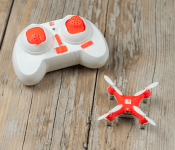
Get the SKEYE Nano Drone for $34.99

Back in November we first posted up word of the SKEYE Nano Drone, a sleek little drone with an extremely low price on the AA Deals store. That initial deal actually sold out pretty quickly, but thankfully it has now returned to the store after a short absence at the same killer price point of $34.99.
The SKEYE Nano Drone is a sleek, small and agile flying machine that is just 4 x 4 centimeters in size and is perfect for airborne stunts. In addition to being small enough to go just about anywhere (indoor and out), and cheap enough that it won’t hurt your wallet, the Nano Drone also has three distinct flight modes: one for beginners, another for more advanced pilots and a new expert mode for seasoned drone veterans. There’s also LED lights for night flights, meaning you can use this drone anytime, anywhere.
Get this deal now
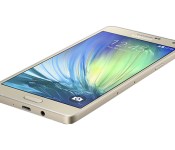
Samsung introduces 5.5-inch Galaxy A7


Samsung on Monday introduced its Galaxy A7, the largest of now three A Series smartphones. Featuring a 5.5-inch HD Super AMOLED display, the handset will be sold in two variants: one with a Qualcomm Snapdragon processor, the other with Samsung’s Exynos chipset.
Additional specifications include 1GB RAM, 16GB internal storage (with microSD expansion up to 64GB), and a 2600mAh battery. In terms of camera’s the Galaxy A7 packs a 13-megapixel rear and 5-megapixel wide-angle front-facing camera. As for the version of Android, this one runs 4.4 KitKat.
We strive to develop devices that appeal to a broad range of consumers and are ahead of the next big social trend,” said JK Shin, CEO and Head of IT & Mobile Communication at Samsung Electronics. “Combining both a stunning metallic design and a powerful performance, the Galaxy A7 is stylish while delivering the superior user experience.
Slated to ship in white, black, and gold, the Samsung Galaxy A7 comes with Bluetooth, NFC, and LTE Cat 4 connectivity. It’s not clear what Samsung has planned for pricing or exact availability but we’ll likely hear more in the coming weeks.


The post Samsung introduces 5.5-inch Galaxy A7 appeared first on AndroidGuys.
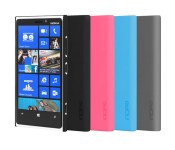
Today you can save 40% on these ultra-slim hard cases for Nokia Lumia 920

Measuring less than 1mm thin, Incipio’s Feather Case is ideal for the Nokia Lumia 920 user seeking inconspicuous, first-class protection. The case is made of a strong polymer that’s incredibly light and features a soft, matte finish. Get yours in black, pink or gray today for only $14.95!
Not one but two Galaxy S 6 phones to be announced in March along with a circular smartwatch

The Galaxy S phone usually gets announced around February or March, so it’s no surprise that the plan remains the same this year. Reports indicate a March release at Mobile World Congress, but what might be different this time is that we could see two variants of the Galaxy S 6 get announced this year.
It’s been rumored before, but it looks like Samsung will release a curved edge display version of the Galaxy S 6 along with the “regular” version. Whether it will be one curved edge, like the Galaxy Note Edge or be a double curved edge remains to be seen, but I suspect with LG showing off a dual curved edge prototype at CES, Samsung is likely going to try their best at being the first to market.
The Galaxy S 6 is expected to sport a similar metal / plastic design as the Note 4 and A series. It’s possible Samsung could adopt an all metal build, but I wouldn’t bet on that one. I would also expect a quad HD (2560 x 1440) display, a 64-bit octa-core Snapdragon 810, an OIS rear camera, and a bumped up 5 MP front-facing camera.
We also heard last week that Samsung was prepping a round smartwatch and it looks like we will see it alongside the Galaxy S 6 announcement. The bad news is that it will more than likely be running Tizen, not Android Wear.
Are you excited for the Galaxy S 6 and/or a round smartwatch running Tizen?
source: Business Insider
Come comment on this article: Not one but two Galaxy S 6 phones to be announced in March along with a circular smartwatch

Interview with TYLT
With an increasing number of phones offering wireless charging capabilities, good wireless charging products are in growing demand. Tylt is one such company that has stepped up to address this need, and while it is still a young company, it has been making quite a name for itself in the wireless charging market. At CES 2015, Tylt introduced a few new useful additions to their product portfolio, and we got to spend some time with their VP of Product Development, Kannyn MacRae, to talk about the Tylt car charger and the Tylt Vu Solo!
The award-winning Tylt Vu series has done very well since its introduction, but Tylt is now setting their sights beyond just your desktop space. With its latest product, Tylt is now looking to bring a wireless charging solution into your car, an area in which not a lot of products are currently available. The Tylt Vu Wireless Car Charger looks and can be setup like any other car mount, with a big suction cup to easily attach it to your windshield and dashboard, along with an adjustable holder and a one touch release.
Of course, being able to wirelessly charge your device while it is in the holder is a big plus. It has a three coil setup, so you don’t have to worry about accurate placement. The bottom place is also replaceable, with another coming with an additional slot that can be used to charge another device that may not come with wireless charging capabilities. There is a cigarette lighter adapter that can be used to charge the three coils with a proprietary non-microUSB cable. The adapter is where an additional USB port is found to allow the charging of the second device.
Along with the Vu Wireless Charging Car Mount, Tylt also introduced the Vu Solo, a single coil flat charger which serves as a lower price entry point, but comes with the same signature Tylt colors and build quality the company is famous for. There is also a patented alignment piece on the cable that lets you know exactly how to align the phone on the charger, solving one of the issues with most single coil wireless chargers.
The Tylt Vu Car Charging Mount and and Vu Solo will be available in a couple of months, priced at $79.99 and $49.99 respectively. When available, you will be able to pick these up from the Tylt website directly.
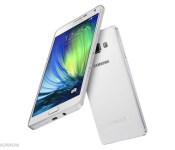
Samsung’s newest metal phone is the Galaxy A7

Samsung has already unleashed the Galaxy A3 and the Galaxy A5, so it’s no surprise that they just announced the Galaxy A7. Just like its predecessors, it sports a partial metal build, but it’s more powerful and has a larger screen.
The A7 sports a 5.5-inch 720p (1280 x 720) AMOLED display, a 64-bit octa-core Qualcomm Snapdragon 615 processor featuring both 1.8 GHz quad-core and 1.3 GHz quad-core processors (1.5 GHz and 1.0 GHz for the dual-SIM version), 2 GB of RAM, 16 GB of internal storage, microSD slot for expandable storage, 13 MP rear camera, 5 MP front-facing camera, 2,600 mAh battery. To top it off, it comes in a 6.3 mm body.

Pricing is expected to be around $420 and will launch later this quarter. You will have your choice of dark blue, white or gold for colors.
source: Samsung Tomorrow
Come comment on this article: Samsung’s newest metal phone is the Galaxy A7
Windows 7 mainstream support ends Tuesday, patches continue until 2020

It’s the end of the first phase of support for Windows 7, as Microsoft’s self-imposed deadline to offer mainstream support for the OS ends on Tuesday, January 13. However, the company has pledged to continue to offer extended support for Windows 7 for another five years, until January 14, 2020.
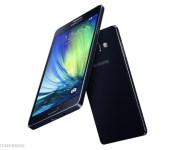
Samsung officially launches 6.5mm thin, 5.5 inch, octa-core Galaxy A7

The Samsung Galaxy A series of phones has been slowly growing. Samsung launched the Galaxy A3 and the Galaxy A5 at the end of October, and the A5 went on sale in China at the end of November. The A3 and A5 became available in the USA at the end of December. Now just a couple of weeks into 2015 and Samsung has added another model to the A series, the Samsung Galaxy A7. It is a 5.5 inch device, with a HD Super AMOLED display, that measures just 6.5mm thick. Samsung is calling it “one of the slimmest Galaxy smartphones equipped with premium hardware.”
If you have been following the news and rumors of the new A series, then the A7 won’t be much of a surprise to you. The phone had been expected to appear soon, and there have been various signs that it would be launching in Asia around now. Most of the leaked details where right about the A7. The only real surprise is the choice of processor package. All the models will use an octa-core processor, coupled with 2GB of RAM, however depending on your region you will either get a 64-bit Qualcomm Snapdragon 615 SoC or a 32-bit Exynos 5430 SoC. The Qualcomm Snapdragon 615 SoC uses four Cortex-A53 cores clocked at 1.5GHz and four Cortex-A53 cores clocked at 1.0GHz. This technically makes the CPU a big.LITTLE processor as the cores are heterogeneous, in that they don’t all offer the same performance, however they are all in fact Cortex-A53 cores. The Samsung Exynos 5430 uses four 32-bit Cortex-A15 cores, clocked at 1.8GHz, coupled with four Cortex-A7 cores clocked at 1.3GHz.

The single SIM versions of the phone offer full 4G LTE support, whereas the dual-SIM version only offers 3G. The latter will use the Samsung Exynos 5430, while the processor found in the 4G models will depend on where you are in the world.
Besides the octa-core processor and 2GB of RAM, the Galaxy A7 has 16GB of memory and a 2600mAh battery. As for optics, the A7 offers some of the same features from the A3 and A7. There is a 13MP rear facing camera and a 5MP front-facing camera with advanced selfie features such as ‘Ultra Wide Shot’ and ‘Auto Selfie’ modes. The latter allows you to take a photograph using only a voice command or a wave of the hand.
The A7 runs Android 4.4 KitKat and includes all the normal bells and whistles like Wi-Fi, Bluetooth, and GPS. The LTE versions also include NFC. There is no current information about a possible upgrade of the Galaxy A7 to Android 5.0 Lollipop.

The Galaxy A7 will become available globally during the next two months, but there is no official word on pricing. The A3 costs around $330 in the US, while the A5 costs around $410. It is likely that the A7 will cost around $500 (+/- $25).
Samsung’s A series covers several different size and performance points. The A3 is a 4.5 inch quad core device with 1GB of RAM and a 1900MAh battery, the A5 is a 5 inch quad-core device with 2GB of RAM and a 2300mAh battery, and the A7 is a 5.5 inch octa-core handset with 2GB of RAM and a 2600mAH. All three models in the A series come with 16GB of internal storage and a micro SD slot.
So what do you think of Samsung’s A series? Impressed?
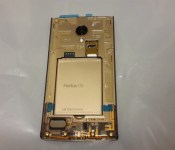
LG Fx0 impressions: Firefox OS is no threat to Android right now

Regardless of what side of the “OS coin” one falls on, there is no question that Google’s Android has taken center stage of the mobile marketplace, with Apple’s iOS taking the role of supporting cast. Backstage we have the two understudies: Microsoft’s Windows Phone and Blackberry’s BB10, and somewhere off set, in a quiet office, lies Mozilla’s Firefox OS, still attending casting calls.
Given the fact that Android has the lead, the idea of new challengers helps to keep Mountain View on its proverbial toes. Interestingly enough, Firefox OS (hereafter to be referred to as “Fx”) isn’t so new, having launched on several carriers last summer in Spain, though given the extremely low-end hardware it was pushing, one might be forgiven should they have missed it entirely.
Meanwhile, here in Japan, a quiet cold war has been brewing among the conservative carriers, NTT docomo and KDDI au, with Softbank taking a much more liberal approach to business given things like its 2013 acquisition of Sprint Nextel. The silent fight taking place is not between each other, but instead, a dependency on Google. Docomo’s canceled Tizen prototype phone was leaked some time ago, and then just a couple of weeks back, au surprised seemingly everyone when it announced the Fx0, a Firefox smartphone that had (relatively) amazing specs, was made by Korean OEM LG, and would be releasing just days later, on Christmas.
Having now spent more than a week with the Fx0, I am here to share my impressions, and to provide a discourse as to the threat (or lack thereof) it stands to Android. Before I begin however, I want to issue a stern warning to anyone who is itching to import one of these devices, as they can indeed be had on eBay: the carrier, KDDI au, will under no circumstances, unlock their phones. This means that if you buy one, unless there is some kind of magic 3rd party solution by the folks at XDA or elsewhere, you will never be able to use it with any foreign SIM. Furthermore, au operates on CDMA networks and thus even if the device was unlocked, barring you have a Verizon SIM, there would be little point. With that said, let us begin:
In for the experience
 When au announced the Fx0, suffice to say there was a bit of a shock to be had. The carrier has long been trying to improve its market position, as it’s usually ranked last place among Japan’s big three carriers. In recent years, it has begun selling products the other two ignored, including the LG G Flex, HTC One (M7), HTC Butterfly, and several Motorola phones. The logo was changed to come across as more mature and refined, and some months back, the carrier opened a gigantic flagship store in the Shinjuku area of Tokyo. Couple this with the carrier’s long history of releasing “concept” devices, and the Fx0 actually seemed surprisingly par-for-the-course in the carrier’s continued attempt to gain relevancy.
The first reaction I had to the press images was mixed: the transparent design looked mildly interesting, but also somewhat tacky and cheap. The fact that au was making a point of advertising the designer Tokujin Yoshioka, someone neither I nor anyone I know had even heard of, seemed like a misplaced marketing mishap. Aside from the fact that it was running an OS that the world doesn’t really care about – especially not Japan – it seemed quite shocking, as did the fact that only a few stores in the country (one being the aforementioned Shinjuku flagship) would carry it initially.
Walking into the store to purchase one, the staff immediately tried to do what could only be described as talking me out of the decision, for they were clearly attempting to explain the “concept” nature of the product and all the warnings that would ensure. Upon indicating I was purchasing it for “something like developer use” they immediately left me alone and the sale was on.

The packaging is nothing short of exquisite. LG’s attention to detail is fantastic, with the package encased inside a plain white box, and with a slide-out inner box of Gold color. The phone comes with a transparent matrix-grid back cover, however a transparent version was also included with it free of charge. In addition, a thick gold bumper is available, but at the price of ¥6588.

Indeed the phone looks very nice in person. The transparent nature seems to mask the fact that the product is a $500 piece of plastic with mid-range specs: it has a 4.7 inch IPS display (1280 X 720), a Snapdragon 400 CPU, a 2370 mAh battery, 16GB of on-board storage and 1.5GB of RAM, an 8.0 megapixel rear camera and 2.1 megapixel front, and support microSDXC up to 64GB. These specs are technically nothing high-tech to be sure, but when one considers the remainder of the Firefox OS platform, they are as killer as killer can get. Relatively, of course.

Firefox OS
To be fair, Firefox OS isn’t horrible. The OS itself is very clean, and in some ways a hybrid of iOS and Android. The problem, though, is that it lacks the refinement that its rivals – Windows Phone 8.1 included – have. While Firefox OS 2.0, the build running on the Fx0, at least has cut and paste, but the overall product is very bare bones and at times, and a bit buggy.
#gallery-1
margin: auto;
#gallery-1 .gallery-item
float: left;
margin-top: 10px;
text-align: center;
width: 33%;
#gallery-1 img
border: 2px solid #cfcfcf;
#gallery-1 .gallery-caption
margin-left: 0;
/* see gallery_shortcode() in wp-includes/media.php */


The pull-down notification shade is very familiar, and in a move that I can only describe as semi-brilliance, Mozilla has decided to move all the quick access buttons (such as Airplane Mode, GPS, Bluetooth, etc) to the bottom part of it, something that makes accessing them so much easier than reaching for the top a la TouchWiz. Of course by doing this, I am eternally trying to swipe up from the bottom of the screen because that is the most logical place for them to appear from. It also features a built-in data usage monitor so you can constantly see how much you’ve been eating up every time you access the notification shade.
The home screen is essentially the same as iOS, with grids of icons (all of them circular in this case) which can be rearranged by long-pressing and sliding, and a bit of Android going with the permanent embedding of a search widget hovering at the top part of the screen.
#gallery-2
margin: auto;
#gallery-2 .gallery-item
float: left;
margin-top: 10px;
text-align: center;
width: 33%;
#gallery-2 img
border: 2px solid #cfcfcf;
#gallery-2 .gallery-caption
margin-left: 0;
/* see gallery_shortcode() in wp-includes/media.php */


Unfortunately, many other elements of Firefox OS 2.0 are problematic:
1. You can not seem to edit any draft e-mails that aren’t locally saved (on the device). This is a jarring issue for a user coming from Android, where the default mail system (Gmail) is completely cloud based.
2. The OS tends to be overly sensitive to touch. Many times, especially when browsing the web, I have gently pushed the screen in an attempt to prevent it from turning off, only to find that it thinks I’m trying to save a picture.
3. Typing is a somewhat cumbersome experience. This is largely a personal issue as I use Swiftkey, and have done so since it was in beta. On the whole, there are just a handful of keyboard replacements to be had, all apparently from independent developers.
4. The ‘Marketplace’ is so barren that it makes Windows Phone look like a venerable encyclopedia of what’s what. It’s almost strange to see the handful of Japanese staples that are present, including messaging app Line, travel info app Navitime, and shopping portal Rakuten, simply because it’s so obvious that their inclusion is clearly the work of KDDI’s pushing for it. Line in particular is an extremely bare-bones experience, with many key features from the Android/iOS version missing including VoIP calls, Timelines, and more. Texting also becomes insanely glitchy with the auto-predictive input enabled and thus I was forced to disable it. Other than these few apps, there is absolutely nothing to speak of, save for dozens upon dozens of “shovelware” the likes of which populated the Android Market in the early days, and which still remain big on Windows Phone and Amazon’s Fire OS.
Video courtesy of Engadget Japan
The Facebook app is also extremely glitchy, and due to the hardware’s lack of back/menu buttons, a minuscule pop-up menu must be activated to do things as simply as navigating one page back.
That is actually a major issue in an of itself: the distinctive lack of buttons. To an extent, every argument about why iOS needs to have additional system buttons (be they on-screen or hardware based) holds true here. The OS has a function similar to that in Windows 8.1 wherein you can swipe in from the left side to change active applications, however I found myself doing it by mistake any number of times out of habit (from using iOS) thinking it will go back to the previous screen or “layer”. In my own personal opinion, Firefox OS really needs to address this issue because even something like the aforementioned Facebook app becomes a chore when you’re constantly having to activate a minuscule tab to pull up the back button, only for it to then disappear again.

The verdict
At the end of the day (or week as it were in this case), I am left contemplating a very critical question in regards to this phone: who is it for exactly? The Fx0 is, as far as I know, the most expensive “concept” product ever pushed out by a carrier here. At just under $500, you would expect the device to offer real substance. To an extent this is true, in that the phone is on-par with similar mid-tier products offered by Android OEMs, LG included. But for the significant number of shortcomings with respect to the OS itself, coupled with the lack of applications, the end result is nothing short of a mystery.
There is no question that the Fx0 is intended to be a developer phone, as the probability of any casual consumer dropping so much money (or commit to a two year contract for that matter) is extremely unlikely. Similarly, even phone enthusiasts might be hard pressed to splurge given that there is such limited functionality, especially app-wise. KDDI plans to sell the Fx0 at carrier stores and retail venues later this month. As Japan has a no return policy on just about everything (especially anything electronic) there is no “test window” grace period as Americans have: you buy it and you are stuck with it.
As it stands now, Firefox OS is in no way a threat to Android, iOS, or even Windows Phone and Blackberry for that matter. Putting aside my personal feeling that it doesn’t do anything better or more efficiently than any existing mobile OS, Firefox OS clearly has a lot of work cut out for it. While the core OS itself is surprisingly decent, the lack of hardware and lack of developer support are absolutely crucial for the success of the platform. This situation will only become more problematic for Mozilla when Samsung finally releases its Tizen mobile OS platform. While it might have similar problems, Samsung at least has the financial resources and name recognition to potentially provide better support for Tizen.
 AIVAnet

