


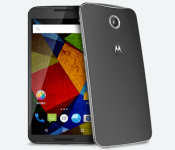
Motorola is headed back to China, bringing the new Moto X Pro

Following Lenovo’s Motorola acquisition, we assumed Moto would make its way back to other markets where they’ve been scarce in the past, specifically China. In a post today, Motorola has announced their return to the Chinese smartphone market set for early sometime this year, and the devices they’re bringing with them are pretty interesting. Among the Moto X (2nd Generation) and the 2014 Moto G with LTE, Motorola is returning to China with a handset called the Moto X Pro, which is basically a Nexus 6 sans Nexus logo.
The Moto X Pro (pictured above) should look familiar, since it’s the same chassis we got with Google’s Nexus 6 handset. Aside from the exclusion of Google services and the Nexus logo, we’re seeing basically the same specifications as we did on the Nexus 6: a 6.0-inch QHD display, 2.7GHz Snapdragon 805 processor, a 3220mAh battery and a 13MP rear-facing camera with OIS. This device should also come with Motorola’s suite of apps and software enhancements, instead of Google’s.
The Moto X (2nd Gen.) will go on sale in China sometime in early February, while the Moto X Pro and LTE-capable Moto G won’t be available until after Spring Festival, which is toward the later half of February. What’s more, Motorola is also bringing Moto Maker to China, but customers will have to wait until after the Chinese New Year to get their hands on a customized Moto X.
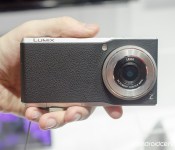
Camera, or phone? Panasonic’s Lumix CM1 aims to be both with little compromise

Well, it’s mostly a camera — but we’re okay with that.
 Panasonic is known far more for its cameras than its mobile phones, but the new Lumix CM1 combines its imaging expertise with a full-on smartphone experience to create one unique device. On one side is a standard phone experience with a familiar KitKat interface running on a 4.7-inch 1080p display and powered by a Snapdragon 801 processor. On the other side, you basically have a high-end point and shoot camera, with a 20.1MP 1-inch sensor, f/2.8 28mm Leica lens and complete manual controls
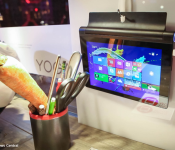
AnyPen tech by Lenovo lets you use a carrot as a stylus

Perhaps the problem with a stylus or digital pen for tablets is the fact they are yet another tool you need to carry around. For instance, I rarely use my Surface Pro 3’s pen, ergo I did not pack it for this trip. What if I had a situation where I wanted to use it? Well, I am out of luck.
Lenovo solved this problem on their Yoga Tablet 2 with AnyPen technology, which was announced yesterday. Instead of a specialized writing instrument, Lenovo lets you use virtually anything on their tablet: scissors, a knife, pencil, pen, and yes, even a carrot.
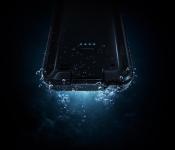
CES 2015: LifeProof Announces Waterproof Battery Case [iOS Blog]
Today at CES, waterproof case maker LifeProof announced the fre Power, a waterproof battery case that provides 2,600 mAh of additional battery life.

LifeProof fre is the original four-proof case, designed for maximum protection against water, drops, dust and snow. The sleek structure includes a built-in screen protector and full access to all device features and functions. fre Power not only provides protection from the elements, but also adds an additional 2,600 mAh of battery power. The lithium ion battery doubles the iPhone 6 battery life, while smart charging technology automatically shuts the case off when the device is fully charged.
The new case is waterproof up to 6.6 feet for one hour and, when all the ports are closed, can be sealed for protection against dust and snow. It’s also drop proof up to 6.6 feet and, according to LifeProof, meets military standards for shock and impact protection.
The company also announced the LifeActiv accessory line, a new set of mounts that allows owners to use their devices in multiple environments. The line includes the $39.99 Bike + Bar mount for bikes, motorcycles and more, the $29.99 Belt Clip for backpacks and hips and the $29.99 Multipurpose Mount for walls and mirrors and the Suction Mount for cars and glass.
It’s unclear when the fre Power and LiveActiv accessories will launch, but LifeProof’s website signals they could arrive in 2015. While the company revealed pricing for the accessories, it did not reveal pricing for the new waterproof battery case.

Qualcomm flaunts Snapdragon 810 SoC perks

Qualcomm announced their new flagship processor Snapdragon 810 at CES 2015 which takes mobile processing capabilities to the next level.
The G Flex 2 is the first smartphone in the world to feature an the Snapdragon 810 Octa-core CPU from Qualcomm. The 64-bit processing beast can handle things like wireless 4K video streaming using Qualcomm’s prototype adapter, seamless LTE to Wi-Fi call switching and vice versa, wireless docking so that you can work on your device and the desktop at the same time, and Fluence Pro, which basically can filter noise from areas you chose graphically on your screen to avoid the background traffic noise for example.
Qualcomm has advanced its chipset in the basic ways too like faster and more organized processing. Android Lollipop was so good with Snapdragon 805. I wonder what it would be like 810. Qualcomm also released a series of brief videos introducing these new features. You can take a look at them below.

The post Qualcomm flaunts Snapdragon 810 SoC perks appeared first on AndroidGuys.

Dear BlackBerry, Ryan Seacrest isn’t done with the QWERTY keyboard

Maybe you remember the bizarre collision of worlds at last year’s CES when Ryan Seacrest touched down in Las Vegas to introduce the Typo, a physical QWERTY keyboard case for the iPhone 5/5s. If you do, then you may also recall the controversy and legal tussling over the original Typo’s striking resemblance to BlackBerry’s Q10 keyboard. One court ordered a sales injunction and another Typo revision later, Seacrest and his partner Laurence Hallier are back at CES to debut another physical keyboard accessory, this time it’s the Typo2 for the iPad Air and iPad mini lines. The pair carved out some time during the madness of CES to speak to me about Typo’s bumpy start, the impact of customer feedback on product design and the boldfaced names that swear by their QWERTY case.
So you guys debuted the first Typo at CES 2014. I have to ask, “Why not just use your BlackBerry? Why did you make the Typo?”
Ryan Seacrest: Well, we made the Typo because we had a couple of devices sitting on the table for many, many dinners. Laurence and I are good friends, and we decided that we wanted to be a little more efficient with ourselves and our lives. And we liked the iPhone, but we couldn’t type on it well. So we wanted to create a physical keyboard where we could use our iPhones with speed and with efficiency.
Laurence Hallier: Honestly, we thought it was a hobby.
Were you guys aware prior to the launch that there was a striking resemblance and that it was potentially going to bring legal troubles?
LH: No, we did our homework to find out what was out there, what wasn’t out there. And we didn’t just do this haphazardly. So we looked at what was out there and we certainly got [outside] opinions and all that. But the lawsuit itself… we can’t comment. It’s an ongoing thing, but it doesn’t affect any of our current products that are out: the Typo2 for iPhone 5, the Typo2 for iPhone 6 and, of course, our iPad keyboard.
Do you think since that design kind of mirrored the familiar look of the physical QWERTY keyboard that people were familiar with from BlackBerry, that helped attract a target base for this… for people that crave a physical QWERTY keyboard?
LH: I mean, I think that a lot of people are fans of the physical keyboard. BlackBerry was definitely one of the companies in that space. But before that there was the Treo; Motorola made [a physical QWERTY with] the Droid 4…
RS: When I was in elementary school, the Commodore 64. I mean, we typed WITH KEYS on keyboards. Growing up, that’s how we did it. And that’s what we wanted to create to be able to attach as a case to the iPhone.
How involved are you in the design, Ryan?
RS: For me, Laurence would make all of the trips overseas to Taiwan and he’d sit with the engineers and designers. And then he’d bring back the prototypes and we would use them ourselves… you know, for 24/7 for months and months and months. And give each other feedback about how they were working, what was working, what was going well, what was not going well. And that was how we incorporated the notes.
LH: The best answer to that is to say that for 12 months, we had prototypes going back and forth, back and forth. We just couldn’t get it to a place we wanted it to be. The goal was not to have a product out to market; it was for us to be able to type at the speed that we want to type at accurately. Hence, the “Typo” name. I think Ryan was always our number one tester.
RS: For me, this is my office; this is how I work. I do everything mobile-y because I’m in so many places every single day, every single week. This was a lifesaver for me. This was a game changer for me to be able to have something that I could really type an email out that looks as if it’s coming from a computer.
As for the name, it’s catchy definitely. Typo is catchy, but it’s a bit counter-intuitive. Do you have any regrets attaching that name to it… calling it Typo?
RS: Do you know no one mentions that to me? NO ONE. No one. And I talk to a lot of people. No one says anything to me about the name. They say… when they see it sitting on a table, whether it be in a meeting or at a lunch or something, they see it sitting on the table and they say where they can get that. And you tell them typokeyboards.com. And they never say, “Why’s it called Typo?”
LH: We just wanted a very simple name people would remember.
In terms of customer feedback, the original Typo wasn’t on the market very long due to the injunction. And then the Typo 2 was announced in mid-summer and shipped in September. How much of that feedback was coming in — was it unsolicited? Were you actively polling them? And what were some of the refinements they suggested if any?
LH: On our website is info@typokeyboards.com. We read every single email we get in. So we get feedback very quickly. When you develop a product… and I would say our product is very unique in that… 84 percent of our buyers from the surveys we’ve done, say they keep it on the phone 24/7. So they give you feedback. They’re not shy. And if they have a problem, they let you know. So for us the feedback is easy. We get a lot of feedback. And listen, this is not the perfect product, nor is any product. But it’s as close as we’re ever going to get being able to type super fast on a phone.

The Typo2 for iPad Air/2.
What about products? Was there anything from the customer feedback where they requesting, “I want it specifically for the iPad Air and the mini?”
RS: Yes, for every mobile device from the beginning. We want it for everything.
LH: No doubt. And it’s difficult because the Android market is fragmented. So it’s very difficult for us. We wanted to bring a product out for Apple. We’ve now come out with iPad products. We intend to build a keyboard for the Samsung Note line. That’ll be out in a few more months.
Starting just with the latest Note or going back?
LH: No. The 4. What’s being announced at CES and what’s coming out in a few months.
We’re gonna look at the Android market… that’s probably the number one thing we get by email is, “Do you have one for the iPhone 6 Plus and do you have one for blankety blank Android?”
I’m glad you brought up the 6 Plus. Is it too unwieldy the size? Is that why you didn’t do it?
RS: It became top heavy, bottom heavy… it seesawed.
LH: The core of this business is that if the product is not a lifesaver and if it doesn’t work really well for the consumer, we’re not going to come out with it. So we prototyped the 6 Plus. We tried it. You know, it’s a big phone.
RS: It was hard to perfect it.

A close-up look at the Typo2 for iPad Air’s full QWERTY layout.
How different is the Typo2 case for the iPads here as opposed to the one for the iPhone 6, other than the layout?
LH: We looked at the products out there. We didn’t really take any inspiration from this because it’s thumb-typing. We really took inspiration from “what does the consumer wants that actually wants a keyboard for their iPad?” And there was three basic things that everyone wanted that wasn’t being served. Obviously, being as thin as possible, as small as possible. Add no bulk no weight to the iPad. Detachable was important only because people don’t like the single angle. So if you’re in Southwest, you’ve got an angle this much. If you’re in first class, you’ve got a bigger angle. So we really felt this was an integral part of solving this problem of what do you do with an iPad. We’re finding so much good feedback on this. People want to buy this [the hinge] on its own. So this hinge actually was developed by the same company that did the MacBook Air. So it’s a pretty revolutionary hinge. And we had to re-engineer it be much much smaller.
What about wearables? Is Typo just a one-off for you guys? Is there a more of a vested interest in tech? Would you be interested in pursuing something like a tracker..?
LH: I think both Ryan and I have a the philosophy that unless the product really enhances your life, it’s not to our interest. Our business is that we really want to improve people’s lives… with the keyboard, we feel we have something to add. … I just don’t think we have much to add to there. … These are not easy things to do.

The media mogul and tech entrepreneur Ryan Seacrest talks Typo2.
Last thing I’ll ask you guys. I noticed on the site there’s a quote from Arianna Huffington… you mention your target user is that prosumer, but do you find that other media personalities and celebrities are adopting the Typo 2 because they were so addicted..?
LH: Yes, but they won’t let us use their name.
RS: I was at GMA (Good Morning America) three or four mornings ago before New Year’s Eve and all Amy Robach could talk about was, “How can I get that Typo2 for my iPhone 6? This is going to change my life.” And I’ve talked to a few [journalists] who have refused to get the iPhone 6 until they can get the Typo 2 to make the jump for the phone.
LH: Arianna was one of them. She emailed me…
RS: I think the whole GMA cast another group too.
LH: We have a ton of celebrities, but they won’t let us use their name.
This interview has been condensed and edited.
[Image credit: Will Lipman Photography]
Filed under: Cellphones, Mobile, Apple, Blackberry
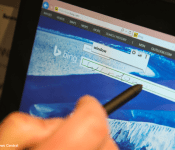
Lenovo’s unannounced handwriting tool for Windows is kind of amazing

Lenovo has a lot of hardware they are announcing this year at CES, but one of them is a bit of a secret. Tentatively called WRITEit (or WriteAnywhere, they have not decided), the software is in its alpha stages though they may have it for release before summer.
WRITEit is what Microsoft should have built into the OS as it lets people use a stylus anywhere there is a text box in Windows.
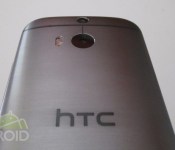
HTC One (M9) in China could feature a processor from MediaTek

Take a look at the processor in any Android device in the United States and there is a very good chance that a Qualcomm Snapdragon is found. The same cannot be said for devices in other parts of the world though. Qualcomm, NVIDIA, Intel, and MediaTek will all be fighting to power devices in different regions. With the next HTC flagship in China, MediaTek is reportedly supplying the processor. The exact reason behind HTC’s decision to go with MediaTek is unknown, but there have been rumors that Snapdragon 810 production is rocky. By splitting the work among two suppliers, HTC can deliver a global launch.
Source: China Times
Via: G 4 Games
Come comment on this article: HTC One (M9) in China could feature a processor from MediaTek
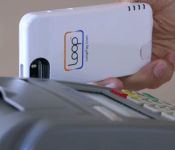
LoopPay to partner with OEMs to bring mobile payment-enabled cases to Samsung devices

Not too long ago, we heard rumors that Samsung was in talks with mobile payment startup LoopPay to bring mobile payments to more smartphones. The big draw with LoopPay is that it works with legacy point of sale terminals, transferring payments via a small electromagnetic field that imitates a card swipe without actually having to swipe anything. This already sounds better than using NFC payments, right? Mobile payments are about to get even better, because for their big CES announcement LoopPay has just unveiled their partnership with XPAL Power, a subsidiary of TennRich International (a Mophie and Belkin supplier), and Trident Case, a phone case manufacturer. The mobile payment startup and its new OEM partners plan to create LoopPay-enabled phone cases for the Samsung Galaxy S5 and Note 4, due out sometime in 2015.
XPAL Power plans to create a back cover for the Galaxy S5, which should be available sometime in early 2015. Trident Case, on the other hand, is creating a fully-fledged case for the Galaxy Note 4, which is expected to be out around late 2015. LoopPay’s new OEM partnership is leading us somewhat astray, though. If the mobile payment company is planning to partner with Samsung for, say, the S6 or Note 5, it seems a tad unnecessary to create phone cases for these devices. But who knows, there’s still a chance LoopPay and Samsung will partner up, even after LoopPay’s new partnerships.
Be sure to stay tuned to Android Authority for the best CES 2015 coverage!
CES 2015
LoopPay adds two smartphone accessory manufacturers that will embed its revolutionary mobile
payment technology into their accessories for various handset models
Las Vegas, NV, 2015 Consumer Electronics Show – January 6, 2015 – LoopPay, Inc., the world’s
most accepted mobile wallet solution, announced today two new OEM partners that will embed
LoopPay’s technology into their products to let consumers turn their smartphones into mobile
wallets. In addition to the new LoopPay products on display at the International Consumer
Electronics Show (CES), which include the LoopPay Card and CardCase for iOS and Android, the
company is now working with OEM partners to embed its patented technology into a broad array of
devices, from cases and accessories to wearables and smartphones. The two new OEM partners
announced at CES include XPAL Power (subsidiary of TennRich International – who manufactures
products for companies like Mophie and Belkin), and Trident Case®, a leading ruggedized phone
case manufacturer, with many other partners in the pipeline. LoopPay is also working with
chipmakers to embed LoopPay’s technology and security into silicon, making it easier for future
OEM partners to incorporate LoopPay into their devices.
LoopPay’s patented Magnetic Secure Transmission™ (MST) technology can send standard mag
stripe card data or send one-time-use Tokenized card data to existing merchant POS systems. Nearfield-communication
(NFC) technology, which mobile payment solutions like Apple Pay rely on, is
currently only accepted at about three percent of U.S. merchant locations. LoopPay’s MST is
accepted at nearly 90 percent of merchant locations today, making it the world’s most accepted
mobile wallet.
XPAL Power is expected to embed MST technology into its products, including a new back cover for
the Samsung Galaxy S® 5 coming in early 2015. “I am excited to work with this great new mobile
payment system and bring MST technology to the Galaxy S 5, one of the world’s best-selling
smartphones. This technology will allow consumers to make payments with their phones almost
anywhere they swipe a credit card today with existing merchant hardware – that means no new
POS equipment is required,” said Christian Scheder, CEO of XPAL Power.
Trident Case has also entered into a strategic alliance with LoopPay to bring to market a new series
of rugged Trident smartphone cases that include MST technology. Trident is developing a LoopPay-eady case for the Samsung Note 4 with availability later in 2015. “We’re very excited to introduce
this line of cases using LoopPay’s advanced contactless payment technology,” said Vickie Achee,
Trident Vice President of Marketing.
“Consumer interest in mobile payments has skyrocketed recently. However, to reach widespread
adoption and usage, consumers need a technology that’s secure and convenient. Convenient means
letting consumers use the cards they want at the places they shop (what a wallet should do),” said
Will Graylin, CEO of LoopPay. “We invented a solution that lets users digitize all of their cards and
works virtually everywhere. We want to deliver the kind of convenience that can start shifting
people to rely on their mobile wallets and leave their physical wallets at home.” Graylin will speak
at CES on Jan. 6 at the Las Vegas Convention Center, on “The Future of Mobile Payments.”
The LoopPay CardCase is now available for the iPhone 6 at $59.95, with the iPhone 6 Plus CardCase
expected Feb. 1, 2015. The CardCase comes with a hidden compartment to conveniently hold a
driver’s license and backup payment card without adding bulk to the case, allowing consumers to
leave their physical wallets at home. Android users can purchase a standalone LoopPay Card
accessory for $49.95.
The LoopPay Card and CardCase are available online at LoopPay.com, Amazon.com, and are
featured in the SkyMall print catalog available on thousands of daily airline flights. LoopPay was
recently ranked highest by the leading consumer review magazine when compared to Apple Pay,
Google Wallet and Softcard, and is the most accepted mobile wallet in the world today.
CES attendees are encouraged to visit LoopPay in the South Hall of the Las Vegas Convention Center
(LVCC), booth #21928 for live demonstrations. Click here for more information on “The Future of
Mobile Payments” discussion featuring LoopPay CEO Will Graylin, Tuesday, Jan. 6, 9:00–10:00 a.m.
at the LVCC North Hall room N261.
Follow @LoopPay on Twitter, Facebook and LinkedIn.
About LoopPay™ ounded in 2012 in Boston, MA, LoopPay is the most widely-accepted mobile payment provider,
empowering consumers to finally leave their physical wallets at home. LoopPay’s patented
Magnetic Secure Transmission™ (MST) technology turns existing mag stripe readers into mobile
contactless readers without any change or cost to merchants or their payment processors,
providing tokenized security and two-factor authentication for secure mobile payments at more
than 10-million locations today. MST can be embedded into any device, including smartphones and
wearables for less than $1. Consumers can today select from an array of devices that match their
phones and lifestyles, including the LoopPay Fob, ChargeCase, CardCase and Card. All cards
including payment, gift, loyalty, reward and IDs can be stored in the LoopPay app for convenience
and security, as all data is password and PIN-protected. LoopPay also encrypts and stores all card
track data in secure memory within any device and is a Level One PCI Certified Payment Provider.
To learn more and order LoopPay products, visit http://www.LoopPay.com.
CES 2015: The Audi smartwatch made by LG is a thing of beauty
Don’t you love it when things are unintentionally spotted and turn out to be absolute gems? During Audi‘s presentation at CES 2015, at some point, an Audi executive demonstrates the ability to control a car with a smartwatch. That device, a Audi smartwatch shall we say, is something we’ve never seen before, nor does it resemble […]
The post CES 2015: The Audi smartwatch made by LG is a thing of beauty appeared first on AndroidSPIN.
 AIVAnet