



Ecobee3 smart WiFi thermostat uses remote sensors for accuracy

As manufacturers start to figure out the long term benefits of smarter thermostats and a generally connected home, it’s going to become important to measure more than what’s happening in the room with the thermostat. While that is usually a primary location in the home, if you have bedrooms or hallways that are traditionally warmer or cooler than the primary living space that could be important information to collect. The Ecobee3 smart thermostat solves this by relying on multiple remote sensors, which you can place wherever you choose. In their demo at CES this year, you can see the starter kit includes a single extra sensor to help you determine how many you might need to measure your whole house.
The best part about these remote sensors is the way that they can be mounted just about anywhere, and the Ecobee3 thermostat or app will help you see exactly what is happening to the temperature throughout your house.

E-Ink Prism demo and interview at CES
E-Ink is typically known for their battery-friendly grey scale displays that are found on some devices and wearables such as ebook readers, the YotaPhone and the Pebble smartwatch, but now, the company is looking to expand their horizons beyond just mobile technology. If you find the static paint on your walls and buildings too mundane, E-Ink’s latest product will certainly pique your interest. At CES 2015, we got to spend some time with Giovanni Mancini, Head of Global Marketing at E-Ink, where he introduced the E-Ink Prism!
With Prism, E-Ink is hoping to add an element of dynamism to architecture and interior design. By taking E-ink technology and adding color to it to create a color-changing film, the ambitious aim is to easily change the look and aesthetics of environments according to your needs. It is visually similar to paint, but obviously, unlike paint, can be used to change the color of a wall instantly, along with various other applications.
While the product on the floor at CES may seem simple, the possible applications are boundless. Fully programmable colors and patterns means that you can program a wall color or pattern to respond to changes in temperature, noise, or motion, to change the color of the door while a room is in use, or even change the color of your furniture, with its rugged but flexible nature allowing the integration of the product with different materials and structures.
E-Ink displays on mobile devices are well known for their frugal power consumption, and that feature translates to this larger scale as well, with Prism able to work without the need for electrical connections, unlike digital displays that we see around. The only issue, if you were looking forward to color e-ink displays on your mobile devices, or even if you were looking to pick it up for some home decoration, is that for now, the primary applications and market is with regards to large architectural installations, such as in hotel lobbies, airports, corporate offices, and more.
A demo product, created in conjunction with architects and designers will be available by the end of 2015. You can find out more about E-Ink Prism here, and stay tuned with Android Authority, as we continue to bring you more great coverage from CES 2015!

AT&T Announces New Limited Data Rollover Feature for Mobile Share Value Customers
 Following T-Mobile’s recently announced “Data Stash” program allowing customers to roll over unused data to subsequent months, AT&T today announced it will launch a similar data program later this month. The new feature will be available at no additional charge to the 50 million users on the carrier’s Mobile Share Value plans.
“Rollover Data is an added benefit of being an AT&T Mobile Share Value customer and it’s just another way that we’re saying thanks to our more than 50 million plus Mobile Share Value subscribers,” said Glenn Lurie, President and CEO, AT&T Mobility. “We’re providing even more value and flexibility, and the best part is it’s simple, shareable and easy to track for our customers. All Mobile Share Value customers get this automatically.”
AT&T’s new Rollover Data feature does differ in one important respect from T-Mobile’s program. While T-Mobile’s rollover data expires after 12 months, AT&T customers can roll over unused data for only one month, with users tapping into the rollover data only after their normal monthly allotment has been exhausted.
As an example:
If you have four lines and have a 15GB AT&T Mobile Share Value Plan and only use 10GB in a given month, you’ll roll over 5GB and have a total of 20GB available to use within the next month. If you were to only use 10GB in the second month, you’ll again roll over 5GB and have a total of 20GB available the next month. Bottom line: if you have unused plan data this month, it automatically rolls over to be used within the next month in case you need more than your plan’s allotment.
AT&T will automatically enable the rollover feature on all Mobile Share Value plans starting January 25. Customers can track their rollover data using the MyAT&T mobile app [Direct Link] or on AT&T’s website.

Monster sues Beats Audio over allegations of fraud

Monster LLC which helped kick start the Beats line of headphones back in 2008 has now sued the Apple owned Beats by Dr. Dre brand over allegations of a “sham” transaction. The company has filed an official complaint at the Superior Court in San Mateo County, California. Apple hasn’t yet been named in the suit filed by Monster as the issue pertains to the change in ownership of Beats since it was partially acquired by HTC in 2011.
The suit claims that Beats bought back 25.5% of its stake from HTC shortly a month after it was acquired, indicating foul play. The acquisition by HTC effectively meant the end of Monster and Beats’ relationship due to the change-of-ownership clause mentioned in the original contract. This, according to Monster, cost the company millions in revenue.
Beyond this, Beats bought back its remaining shares which were owned by HTC, thus severing ties with the Taiwanese manufacturer. Beats was then acquired by Apple in a landmark $3.2 billion deal in May 2014.
Further, Monster CEO Noel Lee was allegedly tricked into selling his shares in Beats in September 2013 (8 months before Beats was acquired by Apple) after one of the board members (name not disclosed) mentioned that there would be no “liquidity event” for the next two years. These shares, according to Lee, could have been worth more than $100 million in value today were they not sold.
As is usually the case with courtroom battles, this one could take some time before seeing a resolution. Beats or HTC haven’t commented on the matter yet.
Source: WSJ
Come comment on this article: Monster sues Beats Audio over allegations of fraud
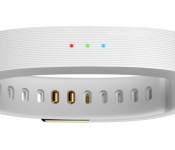
Razer announces new Nabu X smartband for as low as $19.99

Razer already made a big splash with the Forge TV announcement, and now they are hoping to capture a little attention in the wearables market. They just announced the Nabu X, which is a smartband that tracks fitness data and provides notifications from your smartphone.
The Nabu X is for those that want very simple. It’s actually a cheaper version of the Nabu that was introduced last November. You won’t find a display on this one, and it can’t even tell you the time. What you will find is three colored LED indicators that are programmable along with vibrations to alert you of notifications from your paired smartphone. The Nabu X will also work with third-party apps that are available in the Nabu Marketplace. There is also an accelerometer to track your activity data.
You will have your choice of black, white, or green and it will be priced at $19.99 for Razer Insiders (loyal customers) or $49.99 for everyone else. Razer is planning a spring release.
Be sure to check out our complete CES 2015 coverage.
Full Press Release:
RAZER LAUNCHES ENTRY-LEVEL SMARTBAND WITH NOTIFICATION FEATURES, FITNESS TRACKING AND SOCIAL FUNCTIONS
Nabu X joins award-winning Nabu in Razer’s wearables category; ships this month to qualified Razer Insiders in United States and Europe for $19.99 (MSRP: $49.99)
LAS VEGAS (CES 2015) – Razer™, a world leader in connected devices and software for gamers, today announced the launch of Razer Nabu X, a wearable that delivers notifications from smartphones, tracks fitness data, and has social band-to-band capabilities, all in a discreet form factor. The Razer Nabu X will be priced at $19.99 to qualified fans at Razer’s Insider forums and start selling on Jan. 13. Retail units will be shipping in spring for $49.99.
The Razer Nabu X uses three colored LED indicators and vibrations to alert users of any notifications received on a paired smartphone, while the Razer Nabu features an OLED private message screen that displays short text previews of incoming notifications. Both the Razer Nabu X and Razer Nabu will work with the full suite of third-party developed applications available on the Nabu Marketplace.
“The greatest barriers to entry for new technology are price and complexity, and we’ve eliminated both of those with the Razer Nabu X,” says Min-Liang Tan, Razer co-founder and CEO. “We’ve taken what makes the Nabu such a compelling wearable – discreet notifications, activity tracking and band-to-band communication – and incorporated them into the Nabu X. It’s the basic alternative to the Nabu that’s extremely affordable and simple to use.”
The Nabu X’s sensor module houses a highly precise accelerometer, paired with finely tuned algorithms to ensure the most accurate activity data is captured for its users. A vibration motor ensures users are discreetly notified of incoming notifications, and the three LEDs can be color-customized to indicate what type of notification is being received. The sensor module is also detachable to allow users to mix and match between three planned strap colors: black, white, and green.
The Nabu X is designed for absolute comfort during daily wear with a soft-rubber finish, extensive water resistance, and one-size-fits-all watch-like strap. It’s also easy to use, with wrist-turn detection and light taps on the sensor module to activate the LED indicators.
Like the Razer Nabu, the Nabu X can be paired to connected apps on a user’s iOS or Android smartphone where collected data can be displayed and device settings can be finely tuned. Connected apps can be discovered via an in-app marketplace, with more to be added over time.
Early adopters and Razer fans can get the Nabu X at an exclusive price of $19.99 via Insider, Razer’s premier community-driven platform. To sign-up for Razer Insider and to get more information, go to https://insider.razerzone.com/index.php.
For more information on Razer Nabu X and how to get one, visit http://www.razerzone.com/nabu-x.
About the Razer Nabu X
The Nabu X joins the Nabu in the company’s wearables category, both as separate solutions to be sold side-by-side. The company’s first wearable features a private message OLED screen, while the newest addition employs three LED indicators to notify users.
The Razer Nabu is an award-winning wearable that was first introduced at the Consumer Electronic Show (CES) in 2014 where it won a “Best of CES” award as “People’s Choice,” besting a field of more than 40 finalists by earning 50 percent of the popular vote during the show.
Nabu and Nabu X comparison table
Price:
Exclusive Insider-only price: U.S. $19.99
Find out more at http://insider.razerzone.com
Retail: U.S. $49.99 / EU €49.99
Availability:
Razerzone.com – Jan. 13, 2015
Worldwide – Spring 2015
– See more at: http://www.razerzone.com/press/detail/press-releases/razer-launches-entry-level-smartband-with-notification-features#sthash.0nnedeNf.dpuf
Come comment on this article: Razer announces new Nabu X smartband for as low as $19.99

Maelstrom VR app lets you walk around in two worlds
 I’m standing in a crowded press room at CES 2015, nearly identical in size and noise level to a dozen others I’ve been in this week, only I’ve been told this room has a separate room inside it that only I can see. A VR developer has hands me a pair of smart glasses so I can see this other world, and as I put the hardware on I can. This second world isn’t full of people, but instead has a series of waypoints on the floor that activate when I approach. There’s no gamepad or controller to help me get to these waypoints. I’m going to have to walk there myself, which is fine. When I take a step forward in the real world, I also take a step forward in this second world.
Virtual reality and augmented reality constructs are fun, but it’s complicated to create an experience where you can seamlessly enter the digital world without either a controller or padding to help as your body accidentally glances off of a wall. VR developer Sean McCracken is here in Las Vegas showing off an app that creates an effect similar to demonstrations shown with Google’s Project Tango with what is arguably more logical hardware. Instead of walking around holding a tablet, Maelstrom is all about using smart glasses to enter the digital world.

New LAPD Tasers will trigger body cameras when fired

Remember those 7,000 body cameras that Los Angeles Mayor Eric Garcetti promised to buy for local police officers this year? Well, now the LAPD has ordered more than 3,000 Tasers that can activate them automatically as soon as the safety is flicked off. The police department has opted for the Taser X26P, a “smart” weapon unveiled two years ago, to refresh 2,270 of its older stun guns. A second order will introduce a further 860, all of which are designed to work in parallel with Taser’s AXON body cameras. As Reuters reports, later this year the LAPD will be able to pair the two over Bluetooth so that, in theory, there’s a video recording every time an officer fires a Taser. The weapon itself can also record important information about each incident, such as the date, time and duration of each shock. As tensions grow around officer misconduct in the US, it’s hoped the tools will provide greater transparency and accountability, in particular as evidence in court.
[Image Credit: Taser]
Filed under: Misc
Source: Taser
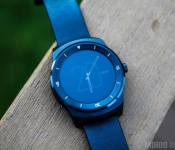
LG reportedly working on WebOS and SIM-enabled smartwatches

More speculation is circulating about LG’s future smartwatch plans, this time from the sidelines of CES in Las Vegas. According to sources from LG, the company is looking to build a more flexible ecosystem for its future smartwatches, which could include switching over to WebOS sometime next year.
LG’s previous smartwatches have all been built on the Android Wear platform, but the company may be looking to break free of the restrictions of Google’s operating system. The most likely replacement would be WebOS, which LG purchased from Hewlett-Packard back in 2013 and has been using to power its recent Smart TV range.
We’re going to slowly try to build an (software) ecosystem around areas we can have more control over,
This is not the first time that we have heard about the possibility of a WebOS smartwatch from LG. Late last year a leaked LG hosted website for a WebOS watch appeared but was quickly taken down.
Apparently, LG plans to expand the use of the WebOS platform to more of its internet-connected televisions this year and then to home appliances and possibly mobile products later. However, the source stated that Android would remain the major platform behind LG’s mobile devices in the near future and there is no indication that LG will attempt to revive WebOS as an Android smartphone competitor. Instead, LG may be planning to trial WebOS on a single smartwatch to test the waters.
A separate source also repeated earlier rumors that LG is preparing to launch a SIM-enabled smartwatch early this year, which will free the watch from dependency on a paired smartphone. However, no details about the hardware or operating system were given.
LG may have been slightly slower than the competition at releasing its first smartwatch, but its latest G Watch R has proven to be one of the best wearables around. 2015 is going to be an important year for the smartwatch market, so we will be eagerly watching LG’s plans this year.

Strong iPhone 6 and 6 Plus Sales Lead to Smartphone Market Share Growth for Apple
The latest smartphone sales data released today from Kantar Worldpanel ComTech highlights good news for Apple on the strength of the iPhone 6 and 6 Plus launch, with Apple gaining share year-over-year in every country surveyed except for Japan.
The report, focusing on the September-November 2014 period, points out that Android market share dropped in most European markets and saw its first decline in the U.S. since September 2013. In the surveyed period, Apple reached 42.5 percent of UK sales, up 12.2 percentage points from the same time in 2013.

In the U.S., the Cupertino-based company’s share of smartphone sales grew 4.3 points to reach 47.4 percent of the market, an unsurprising performance given the strong early sales of the company’s latest iPhones. More data from Apple on October-December iPhone sales will be announced later this month when the company releases its quarterly earnings report.
Apple’s strong performance is being attributed in part to enthusiasm for the redesigned bodies and larger screens of the iPhone 6 and 6 Plus, with the iPhone 6 leading the smartphone pack during the time period.
“The iPhone 6 was the best selling phone in the three months through November 2014, capturing 19% of smartphone sales”, said Milanesi. Verizon and AT&T made up 57% of iOS sales while Verizon and T-Mobile were the top two carriers for Android accounting for 33.7% of all Android smartphones sold.
Despite declines in many markets, Android remains the dominant platform in Europe with 69.9 percent of the market, although that number is down 3.2 percentage points from the same period in 2013. Kantar also notes that customers switching from Android to iOS remained at a steady 18 percent from 2013 to 2014, suggesting Apple’s larger-screened phones have yet to represent significant motivation for switchers.

Fuhu to market nabi tablets ranging from 32-inches to 65-inches (ultra HD) later this year

Fuhu already offers the 20-inch and 24-inch nabi Big Tabs so why stop there? This news might be a little crazy, but certainly not a shocker to me. Last year when I met the folks from Fuhu at CES, they showed me a 70-inch concept tablet that could be marketed to schools. They really didn’t divulge much, but it’s obvious they had a lot of ideas they were working on because they now plan on launching a number of larger tablets ranging from 32-inches all the way up to 65-inches.
These larger tablets are manufactured by LG and will be priced from $699 to $3,999 for the 65-inch 4K Ultra HD model. They could be targeted to businesses, but they really think there is a market in the home, specifically the kitchen and living room. By connecting with home appliances, your kitchen instantly becomes smarter. They can also serve as an entertainment hub in the living room with games and other educational activities. Current and newer smaller nabi tablets could also serve as controllers or second screens.
More importantly, these new tabs could serve as the new TV since you are unlikely to have two 65-inch displays in the same room. They won’t have built-in tuners, but how many people utilize the built-in tuners on their TV anyways? We already have smart TVs, but these TVs would be smarter because you could watch a cooking show and download the recipe or app associated with it at the same time. They will have the full Android experience, including Google Play. Now you can already duplicate this with a cheap stick that includes the full Android interface for your TV, but it won’t be touchscreen. That’s where the money is, not to mention a lot of proprietary software.
Fuhu plans to offer Ultra HD in the 55-inch and 65-inch models, and they will have HDMI connections, as well as WiFi, Bluetooth, and NFC. You can expect to be able to buy these tablets during the 2nd quarter of this year.
Is this something you would consider buying? The only issue I have here is the the cost based on longevity. You are essentially buying a tablet, and we all know how rapid hardware is improving. Your normal 10-inch tablet has a life expectancy of only 2 to 3 years since there is always better processors and displays coming out. Throwing $4,000 on a “tablet” that I might want to replace in two to three years concerns me just a tad. What do you guys think?
Click here to check out last year’s 70-inch concept tablet. It’s the third video. And of course, be sure to check out our complete CES 2015 coverage here.
source: USA Today
Come comment on this article: Fuhu to market nabi tablets ranging from 32-inches to 65-inches (ultra HD) later this year
 AIVAnet