


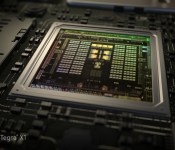
Tegra X1 – a closer look at Nvidia’s “superchip”

One of the first announcements out of CES 2015 was Nvidia’s new Tegra X1 SoC, the graphics giant’s successor to its rather good Tegra K1. Featuring the latest powerhouse ARM Cortex-A57 and A53 CPU combo and Nvidia’s Maxwell GPU technology, the company’s first 20nm SoC looks to be as energy efficient as it is powerful. Let’s delve a little deeper into what the Nvidia Tegra X1 has to offer.
CPU
The first thing you’ll probably have noticed about the Tegra X1 is that Nvidia appears to have ditched its customized 64-bit Denver CPU architecture, as found in the Nexus 9’s Tegra K1, and has gone back to a more standard 64-bit ARM configuration. That is not to say this chip isn’t interesting, Nvidia will be among the first to bring an octa-core Cortex A57 and A53 SoC, arranged in two groups of four, to market. This design is similar to Qualcomm’s upcoming Snapdragon 810 and Samsung’s existing Exynos 5433.

There are a couple of reasons why Nvidia may have chosen to go back to ARM’s designs. Nvidia itself stated that time-to-market is the leading reason, suggesting that shrinking its Denver CPU design down to 20nm was more time consuming than picking up and tweaking an ARM design. Alternatively, perhaps Nvidia wasn’t convinced by the performance results of its custom CPU, although it has hinted that Denver may reappear in a future SoC. Regardless, let’s take a look at what Nvidia has done with ARM’s reference designs.

The high-end A57 CPU cluster has 2MB of L2 cache shared across the four cores, along with 48KB L1 instruction and 32KB L1 data caches. The four energy efficient A53 CPUs share 512KB of L2 cache and have two 32KB L1 caches for instructions and data.
As the multiple CPU core design suggests, Nvidia’s chip operates as a big.LITTLE design in order to more efficiently share workloads across the most appropriate CPU cores. However, Nvidia has opted for its own custom interconnect, rather than ARM’s CCI-400, and cluster migration, rather than global task scheduling, to open up all eight cores for use at once.
Nvidia touts that its interconnect design significantly outperforms Samsung’s System LSI used in the Exynos 5433, boasting 1.4 times more performance for the same amount of power or half the power required to produce the same level of performance. This is partially down to cache coherence, which reduces the power/performance penalties usually associated with cluster migration. Nvidia has also decided to use its own System Electrical Design Point power management system to throttle and gate clock speeds, rather than ARM’s in-house Intelligent Power Allocation feature.
Although the Tegra X1 has gone back to an ARM CPU design, Nvidia clearly believes that its own customizations can improve on the standard ARM formula.
GPU
New technology also makes its way into the GPU aspect of Nvidia’s latest SoC. The Tegra X1 again features Nvidia’s proprietary graphics architecture, although this time the SoC is packing the company’s latest Maxwell architecture, which powers the high-end GTX 980 range of graphics cards, as well as the incredibly power efficient GTX 750Ti.

Take Nvidia’s own benchmarks with a pinch of salt, but the X1 appears to offer at least an additional 50 percent boost over the K1.

Nvidia claims to have doubled the GPU performance and halved the chip’s power requirements compared with the Tegra K1. Nvidia’s benchmarks suggest that this energy efficiency has been ploughed straight back into increasing performance, meaning that the X1’s GPU is still likely to be quite power hungry. Just like the Tegra K1, the X1 is probably destined for tablet products, where manufacturers can squeeze in some extra battery capacity.
The GPU design has changed a little compared with last generation, featuring two Maxwell SMMs (Streaming Multiprocessors) for a total of 256 CUDA cores, compared with a single Kelper SMX and 192 CUDA cores in the Tegra K1. Although the number of CUDA cores may not have doubled up, Nvidia states that a Maxwell SMM is up to 40 percent more efficient than an older Kepler SMX. Furthermore, the move to two complete SMMs means that important geometry and textures units have been doubled.
Nvidia has also quadrupled the number of ROPs to 16 and has added a 256KB L2 cache between the ROPs and the 64-bit memory interface, which should help the GPU drive those higher resolution displays. General memory improvements will also play a big part in the Tegra X1’s performance leaps at higher resolutions, as this is generally an area in which mobile devices suffer from bottlenecks.
Speaking of memory, Nvidia has also implemented a new and improved memory compression features in the Tegra X1, to further alleviate DRAM bandwidth demands on the chip’s 64-bit memory bus. The GPU continues to support a range of OpenGL 4.x and DirectX 11.x features, including Tessellation, Tiled Resources and Voxel Global Illumination, ensuring that Nvidia mobile customers can make the most of the latest gaming effects and efficiencies.

One final important feature added to the Tegra X1 is support for “double speed FP16” (16-bit floating point operations) in the GPU’s CUDA cores. Typically Maxwell only features FP32 and FP64 cores, but Nvidia has altered FP16 operation handling in the X1, whereby a limited set of FP16 operations can be packed together and computed over a single FP32 core. This is not ideal, but will allow Nvidia to compete with its rivals in situations where FP16 operations are important. Overall, these changes add up to 1024 GFLOPs (1 TFLOP) FP16 performance and 512 GFLOPs for FP32 operations.
Feature Set
Nvidia hasn’t just gone all-out with its CPU and GPU design. Tying the whole SoC together is a 64-bit wide LPDDR4 memory interface that supports up to 4GB of RAM. Peak memory bandwidth has been boosted up to 25.6 GB/s, up from 14.9GB/s and energy efficiency has improved by around 40 percent. The Tegra X1 now supports eMMC 5.1 memory for faster reading and writing of high speed storage cards.

Video and display support has also been bumped up this generation. The Tegra X1 supports 60fps 4K H.265, H.264, VP9 and VP8 video encode and decode, improving on the 30fps 4K limit of the Tegra K1. External displays are now also supported at 60fps for 4K video content via HDMI 2.0 and HDCP 2.2 connections. JPEG encode and decode has also received a fivefold speed boost, up from 120 MP/s to 600 MP/s, although the other ISP features appear the same as the Tegra K1. The Dual ISP supports 4096 focus points, 100 MP sensors and up to 6 camera inputs.
Sum-up
The Tegra X1 is a clear improvement over its predecessor and should provide a considerable jump in GPU performance. As Qualcomm, Samsung and MediaTek all move over to new ARM Cortex CPU designs this year, Nvidia is banking on its graphics prowess to set it apart from the competition. We will have to wait to get our hands on the chip to know for sure if the Tegra X1 has what it takes to challenge the mobile market’s biggest players, but Nvidia’s latest effort certainly looks like a strong contender this year.
BMW teams up with Samsung, slaves your Beamer to your Samsung tablet

Riddle me this, dear reader: when is a car no longer a 1.5-ton machine? When it becomes an accessory to a 1-lb tablet, perhaps?
The common motif at CES 2015 this year is the highlighting of the Internet of Things (IoT) and how all of our physical possessions can be controlled by one another with the user at the helm. Talk Android reported yesterday about Viber’s new Android Wear app that will allow consumers to start their vehicles, lock and unlock the doors, and track their automobiles via GPS from their smart watch (of course, so long as the car has Viber’s SmartStart 4.0 installed).
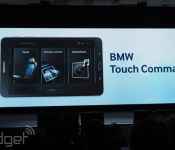
So what will BMW’s Touch Command bring to the masses? Keep reading after the break for more information.
Samsung and BMW are wanting to step it up a notch and bring your Beamer totally under the purview of your Samsung tablet. The partnership will bring features like those mentioned above, as well as the ability to control many aspects of your vehicle’s comfort systems. Climate control, music volume, panini press, and seat adjustments are all discussed as controllable features from BMW’s Touch Command app on your Sammy tablet.
Personally, I find myself a little bit concerned on the matter of driver distraction with this product. Perhaps they’ll address that issue between now and when BMW and Samsung release Touch Command? So far, they’ve both been silent about when it would arrive to the market.
Click here for more of Talk Android’s continuing coverage of CES 2015.
Source: Engadget
Come comment on this article: BMW teams up with Samsung, slaves your Beamer to your Samsung tablet

Sony announces lollipop update for Xperia Z3

Sony promised to update the Xperia Z3 to Android 5.0 (Lollipop) and it looks like they will keep their word. In their CES 2015 press conference, Sony announced that the rollout should start sometime in the next month. COO of Sony Electronics Michael Fasulo, didn’t get into specifics about the date or schedule, just promised the rollout would begin in the next month. This is definitely great news for those out there that own the Sony Xperia Z3.
Source CES 2015 and Android Central

The post Sony announces lollipop update for Xperia Z3 appeared first on AndroidGuys.
Dolby Vision imaging tech is coming to Warner Bros. movies

Dolby doesn’t want to limit its Dolby Vision tech just to Netflix and other streaming services so the outfits’ partnering with film studios too. First up is Warner Bros. where flicks including Edge of Tomorrow, The Lego Movie and Into the Storm are getting the high-dynamic range treatment early this year — just in time for the launch of TVs with the tech baked in, according to the company. Additional new release movies and catalog titles are en route this year, as well. For the tech to really take off, however, Dolby’ll need to expand beyond one studio but we’d imagine WB is a pretty decent place to start. If anything, the announcement means Edge of Tomorrow‘s bleak version of the future’s going to get a little brighter sometime soon.
[Image credit: Associated Press]
Filed under: Home Entertainment
Source: Dolby
NSFW: CES is dead? Not so fast

NSFW is a weekly op-ed column in which I talk about whatever’s on my mind. Sometimes it’ll have something to do with the technology we cover here on iMore; sometimes it’ll be whatever pops into my head. Your questions, comments and observations are welcome.
Despite a flurry of product announcements since the weekend, it’s worth noting that the Consumer Electronics Show — CES 2015 — officially opens its doors today and runs through the rest of the week. So far I’ve read a lot of “CES is dead” style articles over the past few days, some from journalists who aren’t going, some from those who are there and are just miserable about it.
I don’t take much stock in any of that naysaying, and I don’t think you should, either. Having said that, I think some perspective on CES is important.
First, a disclaimer of sorts: Despite having covered tech since the late 90s, I’ve never been to CES. For a long time it overlapped with Macworld Expo, which was my priority. I don’t say this as a particular badge of honor. I consider it good fortune.
Since coming on board with iMore in 2013, I’ve been lucky that we’ve had more than enough boots on the ground that I haven’t had to go. This year Rene, Serenity and Georgia are there. Ally’s on vacation and I’m back at the ranch, keeping the livestock safe from coyotes.
I say “good fortune” and “lucky” because the plain and simple fact of the matter is that I don’t much like to travel for work, at least not for trade shows, and especially not to giant trade shows like CES.
I love to spend time with colleagues and friends. I love to meet readers. I love to meet new people and see interesting products.
What I don’t love is being cooped up in a plane. I don’t like hotels. I almost inevitably get sick when I travel. I miss my family. I miss my cat. I miss my bed. The long days, the sensory overload, the need to shout constantly to be heard, all of it wears me out. Even if I don’t get sick, I come home feeling like crap for a week. I’m a delicate freakin’ flower, what can I say? Anyway, enough about me.
CES is like a lot of industry events: A lot of companies trying to make a lot of noise about their products, some succeeding, many failing. There’s a lot of crap to sift through. You practically need a crystal ball just to figure out which products exhibited at CES will actually come to market.
Those products that actually will have an impact on the marketplace are fewer. It can be notoriously hard to predict. Sometimes it has as much to do with timing and luck as it does with good product design and slick marketing.
As a practical example: We’ve been hearing endless blather about 4K TVs for a couple of years. To listen to some pundits at CES, 4K TVs were an imminent inevitability. The future of home cinema, et cetera.
That “imminent” was a bit of irrational exuberance. Even Apple’s 5K iMac is still a bleeding edge product for many of us. Still, it’s a recurrent enough that I think we can safely accept that 4K is the direction we’ll move in next, when it comes time to replace those flat-panel HDTVs we replaced our CRT sets with. Especially as prices on 4K sets go from second mortgage loans to something we’re more likely to put on a credit card.
3D TV, on the other hand…
Still, for all of its myriad faults, CES is an important cornerstone event in the consumer electronics world. It’s the coming-out party for a whole swath of products we’ll be talking about more in 2015 and beyond. Products like HDTV, the Compact Disc, Blu-ray, HDTV, the Xbox and more all made their debut at CES. Of course, that happened amidst the backdrop of thousands of other products that either went nowhere or had their time in the spotlight and fizzled.
One of the biggest challenges any tech journalist has to cover CES is to differentiate sizzle from steak. It’s a tougher job than many might think. You have to cut through the marketing hype, see the products for what they are, and try to figure out how the public is likely to react to them once they’re out in the world. Some do a better job than others.
At their worst, the tech pubs covering CES will endlessly regurgitate press release after press release, contributing to the “drinking from a firehose” effect that makes CES so overwhelming to begin with.
At their best, the tech pubs covering CES will be able to provide some context for the announcements that will enable their readers to understand the trends in consumer technology and how those trends are likely to affect consumer buying decisions and their lives.
On balance, I have great faith that the Mobile Nations team will be able to do exactly that.
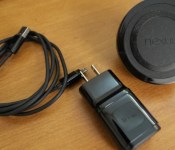
Two major rival wireless charging groups join forces to accelerate adoption

Wireless charging has constantly fallen short of making its major market breakthrough. Various developers have dipped their toes in the water, but very few have made a long term commitment to include the technology in all of their products. Part of the problem is that no-one is quite sure about the best wireless charging technology to pick. However, that choice could soon be made for them, as two of the largest wireless charging groups have signed a letter of intent to merge.
The Alliance for Wireless Power (A4WP), which backs magnetic resonance charging technology, and the Power Matter Alliance (PMA), which maintains a standard based on inductive charging, are looking to create a unified organization, which will be named later this year, with the aim to help push this promising technology to mass-market.
As the two groups base their standards on two different methods of wireless charging, the merged group expects that future smartphones and other devices may incorporate both technology types. This has the benefit that users will be able to power up their device on a range of chargers, but might add considerable costs to product manufacturing.
However, this merger currently leaves one of the biggest technologies out of the talks. The Wireless Power Consortium (WPC), which consists of over 200 members, including Microsoft and Qualcomm, owns the Qi charging standard, which has already seen use in a number of Android handsets. Talks to form a super group consisting of all three members are apparently on the cards. John Perzow from the WPC suggested that a deal with the other groups is “inevitable” based on past statements from its competitors.
With many of the big names now all working together, wireless charging may finally break into mainstream technology.
CES 2015: The Kodak IM5 smartphone is not exactly the camera-centric device we were hoping for
When we heard that Kodak was preparing a smartphone for show at CES 2015, we were intrigued by the idea of one of the most recognizable names in the photo imaging industry making a smartphone. Our minds immediately imagined a Nokia 1020 like device on Android, with an impossibly perfect camera that would be the […]
The post CES 2015: The Kodak IM5 smartphone is not exactly the camera-centric device we were hoping for appeared first on AndroidSPIN.
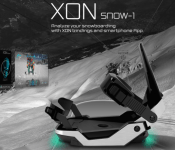
CES 2015: Cerevo Debuts XON SNOW-1 Smart Snowboard Bindings, Providing Real-Time Data Analysis [iOS Blog]
2015’s Consumer Electronics Show has seen the unveiling of Cerevo‘s XON SNOW-1, a “smart” snowboard binding system that syncs via Bluetooth with a downloadable iOS or Android app to provide a slew of real-time analysis on a user’s current run and a detailed overview of everything once at the bottom of the mountain.

The snowboard system tracks movement, speed, and technique, and can even monitor weight distribution on the fly. Thanks to four load sensors at the bottom of each foot, riders can visualize their balance and adjust their weight accordingly. Among other things, the app shows off: weight balance of each foot, center of gravity, board bend of the top and tail-side, and acceleration.
The data accrues for each run, allowing its users to delve deep into the app’s functionality at the end of each run or while waiting on the ski lift for the next one. The board also has four bright LED lights installed in each toe and heel side, simultaneously allowing an easy riding position check and providing a safety feature for dusk and nighttime riders.

Customers interested in the XON SNOW-1 can go to the official website and sign up to receive the latest information on the bindings. Little else is known at this time, but Cerevo states the bindings will be available “within year 2015″ and will cost around $500.
Let’s talk about Samsung’s CES 2015 press event: disappointment is spelt S-A-M-S-U-N-G
It appears to be a growing trend that Android’s biggest companies have started to announce less and less at the Consumer Electronics Show over the years, but today’s performance by Samsung seemed to take the cake for futility, from an Android perspective at least. Samsung’s CES 2015 press event introduced exactly zero devices that we’ll be […]
The post Let’s talk about Samsung’s CES 2015 press event: disappointment is spelt S-A-M-S-U-N-G appeared first on AndroidSPIN.
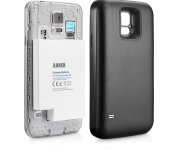
Accessory of the Day: Galaxy S5 extended battery + cover, $39.99

If you’ve found yourself hoping to squeeze a bit more juice out of that Galaxy S5, consider yourself in luck. This extended battery pack and back cover adds roughly 56 hours of talk-time to your battery life! The only thing better than the incredible reviews, increased efficiency and super-charged output is the price: just $39.99 (Prime eligible)!
Join Prime and get this deal with FREE two-day shipping!
Also worth checking out:
The post Accessory of the Day: Galaxy S5 extended battery + cover, $39.99 appeared first on AndroidGuys.
 AIVAnet