


CES 2015: BRAVEN announces the BRAVEN BRV-PRO, an “ultra-rugged” Bluetooth speaker for outdoors
BRAVEN‘s BRV line of devices is targeted towards active people who want a Bluetooth speaker that can last through everything that they can, and in the interests of making their speakers even more tough and handy, BRAVEN has just announced the BRAVEN BRV-PRO at CES 2015. While it has the ruggedness of previous BRV speakers, what the BRV-PRO […]
The post CES 2015: BRAVEN announces the BRAVEN BRV-PRO, an “ultra-rugged” Bluetooth speaker for outdoors appeared first on AndroidSPIN.
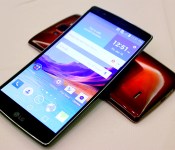
Meet the G Flex 2, LG’s next attempt at making the perfect curved smartphone

Let’s face it: With its curvaceous body, low-res screen, self-healing tendencies and lousy camera, the original LG G Flex was a mixed bag if there ever was one. When it came time to craft the inevitable sequel, though, the Korean tech giant agonized over customer feedback for months to figure out what went awry and what was really important to people. The end result of all that brainstorming is the LG G Flex 2, and it shows — it’s dramatically better than the original in just about every way that matters.
#fivemin-widget-blogsmith-image-340616display:none; .cke_show_borders #fivemin-widget-blogsmith-image-340616, #postcontentcontainer #fivemin-widget-blogsmith-image-340616width:630px;display:block;
 trydocument.getElementById(“fivemin-widget-blogsmith-image-340616″).style.display=”none”;catch(e)
Physical design is one thing, but what’s probably most impressive is what’s thrumming away inside. The G Flex 2 is one of the first devices we’ve seen to come with one of Qualcomm’s octa-core Snapdragon 810 chipsets. Those 2.0GHz processor cores are partnered up with 2GB of RAM and support carrier-aggregated LTE Category 6 to boot — the G Flex 2 is meant to be a speed demon, no doubt about it. You’ll be able to choose from either 16 or 32GB of internal storage, and charging the thing shouldn’t take too long either; the included high-speed charger will get you from 0 to 50 percent in about 40 minutes. Oh, and remember the camera on the original G Flex? You probably don’t, because it sucked. Rather than reinvent the wheel this time, LG basically just plopped the G3’s 13-megapixel rear camera (complete with super-fast laser autofocus) into a new body.

So yes, on paper, the G Flex 2 seems like a more-than-worthy upgrade. But what’s it like to actually use? As far as first impressions go, the Flex 2 leaves a strong one — I find that the pictures I’ve taken just don’t do this flexible body justice. It’s just… lovely. The G Flex 2 is tremendously comfortable to press up against your face too (you know, when you actually need to use your phone as a phone), and the curve is meant to put the microphone much closer to your mouth than a regular candy bar design would. And as you might expect, I couldn’t get the G Flex 2 to so much as stutter during my brief time playing with it — it’s a little too early to make sweeping judgments, but it seems clear that the octa-core Snapdragon chipset is a potent one. Overall performance is helped by the fact that LG usually doesn’t futz with stock Android too much, and that still seems to be the case here. That means we’ve got a version of Android 5.0 Lollipop that isn’t overly encumbered by bloatware and visual cruft. Other than the upgrade to Lollipop, though, there isn’t a ton in the way of new software — the most notable addition is a peek feature that lets you pull down from the top of the display to catch a glimpse at the time and your notifications. Alas, it didn’t work terribly well on our (admittedly non-final) tester unit, but LG still has time to work out the kinks.
I’ll be honest: It was a little hard to leave that conference room. If the original G Flex was a test balloon meant to see how regular people would react to the notion of a weirdo, curved smartphone, the G Flex 2 seems like a supersonic jet, a leap forward in evolution that makes its predecessor seem like a chump. There’s still no firm word on when it’ll be released or how much it’ll cost when it does, but stay tuned — we’ll certainly bring you more as we get it.
Filed under: Mobile
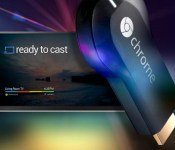
Google Cast now available for audio, available Spring 2015

Google is taking advantage of their popular Chromecast capabilities by first incorporating cast into the new Nexus Player, but now also extending that capability to audio in the form of Google Cast.
At CES, LG announced that they will have new speakers with a new capability that “Google will announce today.” Google did so on their Chrome Blog, saying that speakers, sound bars, and A/V receivers with Google Cast capabilities will be available this spring from companies like LG, Samsung, and more. And it seems it won’t stop there.
These products will join a growing Google Cast ecosystem, which includes more Android TVs, game consoles and set-top boxes.
Be on the lookout for news from us on Google Cast information, and other things announced at CES 2015!
source: Google Chrome Blog

The post Google Cast now available for audio, available Spring 2015 appeared first on AndroidGuys.
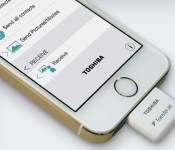
CES 2015: Toshiba Announces TransferJet Wireless File Transfer Dongle for iOS Devices [iOS Blog]
Toshiba today at CES 2015 announced the launch of the company’s first TransferJet file transfer dongle with support for the iPhone, iPad, and iPod touch. The new TJM35420LT dongle includes a Lightning adapter for iOS devices and allows for the transfer of files between compatible devices using Sony’s TransferJet close proximity wireless transfer technology.

The low-power TransferJet dongle works over very short distances (3 cm or less) and supports data transfer speed of up 375 Mbps, which is fast enough to send a 100 MB file in just three seconds.
Users only need to attach the 24 millimeter-square adapter to their iOS devices and open the TranferJet iOS app in order to initiate file transfers. Files can be transferred via the TransferJet dongle to another iOS device or other TransferJet-compatible devices such as CyberShot digital cameras, VAIO computers, and more.
Toshiba’s new TransferJet for iOS with Lightning adapter will be available this spring starting first in Japan and followed by Europe, the Americas, and Asia. A Toshiba spokesman tells Macworld the dongle is planned to retail for the equivalent of $33-$41.
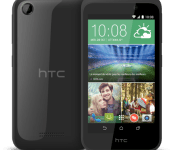
HTC Desire 320 announced for the United Kingdom and Germany

The low-end market in the United Kingdom and Germany will have another player at the end of this month. The Desire 320, manufactured by HTC, is heading to those two markets. The handset has a 4.5-inch display with 854×480 resolution. Inside is a MediaTek MT6582M processor clocked at 1.3GHz and a 2100mAh battery keeps things going through the day. The 8GB of internal storage is met with a microSD card slot for an additional 32GB.
The software running on the Desire 320 is Android 4.4 KitKat with some of HTC’s software features (BlinkFeed, Video Highlights) included.
The most disappointing part of the Desire 320 is the lack of an LTE connection. While specific availability in the United Kingdom is unknown, we do know that 02 in Germany will carry it.
Hit the break for the full press release.
HTC COMBINES AMAZING VALUE AND ALL-ROUND PERFORMANCE WITH THE HTC DESIRE 320
HTC packs all the smartphone essentials into one entry-level phone, with super-fast processing power, HTC BlinkFeed and Video Highlights
LONDON, 5th JANUARY – HTC Corporation (“HTC”), a global leader in mobile innovation and design, has today announced the HTC Desire 320. As the successor to the HTC Desire 310, it is packed with all your everyday essentials and delivers a smooth browsing experience, seamless multi-tasking and the ability to create quick, personalised videos. The latest addition to the HTC Desire family has been designed for the entry-level market and delivers a quality user experience in an affordable handset, offering real value for money.
“Marrying super-fast processing with premium HTC features in a compact form, the HTC Desire 320 delivers a quality experience for the budget conscious well beyond its entry-level model status” said Peter Frølund, UK and Nordics General Manager, HTC. “Following on from the success of the HTC Desire 310, it boasts enhanced power and memory to enable more people to benefit from a quality smartphone experience that delivers the perfect balance between smart essentials and value.”
Seamless experience
Behind the slick operation of the HTC Desire 320, which runs on Android™ 4.4, is a fast Quad-core 1.3 GHz quad-core processor capable of handling an array of tasks, from watching videos, playing the latest games to juggling your favourite apps, delivering a smooth experience every time.
Packed with features
For an entry-level handset, the HTC Desire 320 is packed with features. Whatever your pace of life, the 5MP camera ensures you’re able to capture every key moment as it happens, in still or video format, brought to life on its stunning 4.5″ screen. Furthermore, the HTC Desire 320 allows you to get creative with mini movies using HTC’s Video Highlights functionality. Simply take your favourite photos and videos, select a sequence and a favourite track, to create an impressive show reel in seconds, ready to share with friends and family.
The HTC Desire 320 also brings you the renowned HTC BlinkFeed for up to the minute news, perfect for those who like to stay connected and keep up with the latest action as it happens. Combining content from your favourite news and social media sites into an easily digestible feed on your home screen, personalised updates are brought straight to you at a glance. Wherever you are, you can catch-up on the latest articles with Offline Reading mode. Simply download and add articles to your reading list when connected to Wi-Fi to access and enjoy at a later date, perfect for those who enjoy reading on the move.
Availability
The HTC Desire 320 comes in Vanilla White and Dark Gray. UK availability will be announced in the near future.
Come comment on this article: HTC Desire 320 announced for the United Kingdom and Germany

Opera enables Sony and TCL to develop TVs with Blink-based HTML5 rendering engine

Opera Software has been working with Sony and TCL to enable them to incorporate the industry’s first Blink-based TV rendering engine in their latest Smart TVs and entertainment devices.
By using the Opera Devices SDK (Software Development Kit) these SmartTV makers have been able to add the Blink-based TV rendering engine to their Android L based TVs.
If you are not familiar with Blink, it is the fork of WebKit that Google started back in April 2013. Blink and WebKit are responsible for formatting the HTML5 buried in web pages and displaying it in a readable form on our web browsers, and in this case on TVs.
But the real power behind Opera’s announcement is that it is offering SmartTV makers a Blink-based alternative to Android TV, Google’s vision for Android based entertainment devices as seen on the Nexus Player.
Manufacturers seek a certain degree of freedom on the OS layer, to differentiate the user experience.
SmartTV makers don’t necessarily want to become manufacturers of commodity TVs that run vanilla Android TV. If they do then they lose out (as there is no differentiation between one TV and another) and Google wins.
Aneesh Rajaram, Opera’s Senior Vice-President for TV & Devices, put it like this, “manufacturers seek a certain degree of freedom on the OS layer, to differentiate the user experience. But, as we’ve experienced, content owners are keen to re-use their investments in HTML5 apps for TV, and this is precisely where we can add value to manufacturers launching Android TV.”
The problem with all this talk of Android on televisions is that sometimes people will refer to Android TVs as meaning the latest Smart TVs and entertainment devices based on Android L. While sometimes Android TV means the specific version of Android as released by Google called “Android TV.” It can all get a bit confusing!

However it is clear (I think) that Opera is talking about SmartTVs based on Android, but not necessarily running Google’s Android TV, although that seems to also be an option. In Opera’s view of the world, TV manufacturers add support for HTML5-based TV apps that are available through the Opera TV Store. At the same time the TV makers also add the Opera TV Blink-based browser so that viewers browse the full web via a standard remote control and use familiar features, such as tabbed browsing and bookmarks.
Opera Software will be at CES 2015 to showcase the latest version of the Opera Devices SDK, which includes new features that manufacturers need to meet YouTube’s 2015 certification requirements.
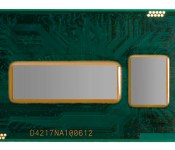
Intel unveils ‘Broadwell’ processors, starting with dual-core chips only

CES is happening this week, and as far as Intel goes, that can only mean one thing. The chip maker has just unveiled its next generation of processors, the ones that will power most mainstream PCs for the next 12 months. We’ve known for some time that these CPUs were codenamed “Broadwell” and that they would use a 14nm process, down from 22nm on last year’s Haswell chips, allowing for even thinner and lighter designs. Indeed, we’ve already gotten a bit of a preview with Intel’s 14nm Core M series, which have made possible some very skinny machines indeed. But whereas Core M is all about mobility, Intel’s fifth-generation Core processors are geared toward performance.
And that’s exactly what Intel wants to talk about here at CES. The company just unveiled 14 different Broadwell-series chips for laptops and desktops, including 13 15-watt processors with basic Intel HD graphics, and four 28-watt models with more powerful Intel Iris graphics. More than half of these include Core i5 and i7 CPUs, though Intel also unveiled a few mid-range i3 variants, along with a handful of lower-end Pentium- and Celeron-series chips geared toward budget devices. That’s obviously a wide assortment of silicon right there, though these CPUs do share an important trait: They’re all dual-core chips. That’s right, no quad-core processors just yet, and no high-end Iris Pro graphics, either — those aren’t coming to Broadwell PCs until the middle of this year, an Intel spokesperson told us.
But about that performance. Those of you following along at home are no doubt aware of Intel’s “tick-tock” cycle for designing new processors: A “tock” represents the introduction of a new chip architecture, while a “tick” refers to a reduction in die size — in this case, from a 22nm process to 14nm. Since this is a tick, not a tock, the performance improvements will be fairly modest in some use cases. For instance, Intel is touting just a 4 percent boost in productivity-oriented tasks, as measured by the test SysMark.

You might not also see a tremendous increase in battery life: Intel says Broadwell chips can deliver up to an hour and half more runtime than last year’s Haswell’s processors, but again, that’s a best-case scenario. The problem is, while Intel has continued to reduce power consumption from the microprocessor itself, the screen still accounts for the bulk of battery-drain on most machines. If anything, you should see the biggest gains in visually intensive tasks — not surprising, considering about two-thirds of the die area is dedicated to graphics. All told, Intel is promising up to a 22 percent improvement in 3D graphics benchmarks, and up to 50 percent faster video-conversion time.
So far, then, we know the PCs of tomorrow are going to be thinner and lighter, with beefier graphics and slightly longer battery life. The other piece of the story is one Intel has already hinted at: These machines will have fewer wires. As promised, Broadwell chips will support a variety of technologies that obviate the need for cables and ports, including Intel Wireless Gigabit Docking and the next generation of Intel’s Wireless Display technology, which can now support display resolutions as high as 4K (so long as the processor is part of the fifth-generation Core family). Broadwell also supports Intel’s RealSense depth-sensing camera setup, which allows users to do things like tweak the focus after a photo’s been taken. Finally, like previous generations of Intel chips, Broadwell supports Intel’s voice assistant, which it developed with Nuance. The main news there is that starting this month, the software will be available in four additional languages, bringing the total to 10.
We expect to test some Broadwell systems soon — maybe even shortly after we get back from CES — but for now, here’s a rundown of all the processors you can expect to find in that first wave of machines:

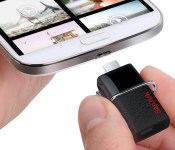
SanDisk’s new flash drive can connect directly to Android smartphones and tablets


As part of its CES 2015 announcements, SanDisk has revealed its new Ultra Dual USB Drive 3.0, which can not only connect to Windows and Mac PCs but can also connect directly to Android smartphones and tablets via a micro-USB port.

CES 2015: Griffin Introduces New Cable Organizers for Home, Office and Car [iOS Blog]
In addition to its new charging accessories, Griffin at CES 2015 also introduced a new line of cable organizers for the home, office or in-car use. The launch lineup includes the Guide, Sleeve, Hanger and Clip with additional products planned for 2015.

Designed for desktop usage, the Guide features three magnetic cable holders that attach to a steel base. The three cable holders allow you to organize different sized cables in orientations suitable for your desktop needs. The $29.99 Guide will be available in a variety of material options starting in Q2 2015.

The Sleeve is another desktop accessory designed to hide the clutter of multiple cables and prevent them from tangling. As its name implies, the Sleeve is a braided, abrasion resistant sleeve that fits over your cables and self-closes to keep them together. The Sleeve will be available starting in February 2015 in three length options, including 1-foot, 1.5-foot and 2-foot lengths. Pricing starts at $7.99.

For the car, Griffin is pairing its Premium Flat AUX Cable and PowerJolt SE charger with its new Clip holder. The Clip is a flexible silicone holder with slot for both a Lightning connector charge cable and an AUX audio cable. The Clip is designed to hold the pair in an orientation that allows you to plug both cables into your iPhone simultaneously. Compatible with the iPhone 6 and 6 Plus, the new Car Connections Pack featuring Clip ($39.99) will be available in February 2015.

Lastly, Griffin also introduced the new Hanger, a car mount designed to hold audio and charging cables that are not in use, keeping them off the floor and making them easily accessible. The mount attaches to the car’s heating vent and features three molded slots for cables. The $4.99 Hanger will be available starting February 2015. 

Verizon bringing the Galaxy Note Edge on Jan 8, Nexus 6 launching mid-Feb

The uniquely designed Galaxy Note Edge will make its way to Verizon Wireless on the 8th of January, according to a new leak. Big Red will also bring the Motorola Nexus 6 to its retail outlets, but not until mid-February, the leak says.
Pricing for the Galaxy Note Edge has been set at $799.99 off contract or $33.32 per month via Verizon Edge. You can also get it with a two year contract agreement for $399.99, which is quite a lot to pay for a contract device.
There’s no word on the pricing of the Nexus 6 yet, but it should be on par with what we’ve seen from the likes of Sprint and AT&T, which is somewhere around the $299.99 mark. It is important to note that there’s no real incentive to get the Nexus 6 from Verizon considering that activated SIM cards already work with the device.
But if you’re planning to activate a new account with the Nexus 6 and don’t mind relying on Verizon for future software updates, getting it from the carrier shouldn’t be a big concern.
We’ll keep a close eye on Verizon for more details on the arrival of the Nexus 6. But if you’re in the market for a phablet and don’t mind experimenting with the form factor, you might want to check out the Samsung Galaxy Note Edge which will be available starting Thursday.
Via: Phandroid
Come comment on this article: Verizon bringing the Galaxy Note Edge on Jan 8, Nexus 6 launching mid-Feb
 AIVAnet