



Nanotech replaces your torn knee ligament without further pain

As Tom Brady and other athletes can attest, you really, really want to avoid tearing your knee’s anterior cruciate ligament (ACL). It can’t heal up, and the tendon graft used to reconstruct it will likely leave you with permanent pain. Victims may have a much easier time of things if Northwestern University’s nanotechnology-infused ligament becomes a practical reality, though. Their remedy combines calcium nanocrystals (like those in your bones), a porous biomaterial and strong polyester fibers to replace your ACL without having to perform grafts and leave you in continued agony. Both the artificial implant and the bone integrate with each other, stabilizing the knee in a way that both lets you move more naturally and spares you from losing some muscle.
Scientists have only tested the procedure with lab animals so far, and it’ll require more studies before it’s safe to use with humans. Should everything work well, however, it could do a lot for ACL injury victims. Sports stars would be less likely to miss whole seasons or end their careers, and you could get back to work without frequent, wince-inducing reminders of your accident. The nanotech probably won’t make you feel as good as new, but it should let you focus on resuming your life.
[Image credit: AP Photo/Will DiTullio]
Filed under: Science
Via: Gizmag
Source: Northwestern University, Wiley


Omate adds two new circular smartwatches to its affordable collection

Omate’s well-known for bringing stylish smartwatches to the mass market, as we’ve seen with last year’s $129 X (pictured left) and $169 Lutetia (second from left). To kick off 2015, the company is leveraging the same MediaTek Aster chipset (MT2502) plus the Lutetia’s near-circular, always-on color transflective touchscreen to bring out two new designs: the Panerai-inspired Roma (second from right), and the Racer which is the “sport-oriented alter ego” of its round siblings. As before, the two new models will function mainly as notification watches with basic activity tracking plus customizable watch face, so they should offer the same week-long battery life.
For those who want to give the rugged Racer a spin (we have a 360-degree view of it after the break), Omate’s website will be taking pre-orders for just $99 per unit between January 5th and 15th, and after that it’ll be bumped up to $129 until January 31st, with shipments expected in as early as end of February. There’s no info regarding the metallic Roma just yet, but Omate’s new partnership with the Richline Group will be offering these watches in US and UK retailers — including jewelry stores — this March.
#fivemin-widget-blogsmith-image-32056display:none; .cke_show_borders #fivemin-widget-blogsmith-image-32056, #postcontentcontainer #fivemin-widget-blogsmith-image-32056width:629px;display:block;

Filed under: Wearables

Mother welcomes developers into her creepy connected world

It’s often said that “mother knows best,” but sometimes, even mothers need council. Alright, so perhaps that’s not true for tough, human matriarchs, but it does apply to Mother: the creepy-looking, internet-connected hub that’s intended to make your dumb home smarter. You see, Mother communicates with small, multipurpose sensors called “Cookies,” and instructs them to monitor one thing or another and report back, so it in turn can relay data and notifications back to you. Sense, the company behind Mother, has come up with various uses for Cookies, such as monitoring steps or sleep, but now it’s seeking external inspiration. That’s why, next month, it’s launching a public API so developers can start dreaming up all kinds of new applications for the sensors; they’ll also be able to plug data from Cookies into other apps and platforms — your step count from a pedometer Cookie could be fed into a third-party fitness app, for example.
In addition to the public API, Sense is cracking open the Mother platform as a whole, so its hardware can start communicating with other connected devices in your home, like a smart thermostat or power outlet. And to make exploring ideas as simple as possible, a Sense channel will be added to the IFTTT web-based automation service. Sense hasn’t just decided to sit back and let everyone else do the work, though. The company plans to release a few more Cookie “apps” of its own over the next few months. They aren’t revolutionary, mind, with the consumer having to make the final, imaginative connection between basic programmed instruction and real-world use case. Time for you devs to start cooking up something more exciting.

Vector 72: Is this the show?

Vector is a news and analysis show focusing on the biggest stories, hottest trends, and most important issues in technology and popular culture. On this week’s show, it’s a Vector New Year’s spectacular — Guy English has gone missing, Rene Ritchie’s off at a fundraiser, and so Georgia Dow and Dave Wiskus call in Joe Cieplinski to help them discuss all the controversial social technology stories of 2014.
Panel
Feedback
Question, comment, recommendation, or something you want us to follow up on for the next show?
- Email vector@mobilenations.com or leave a comment below.
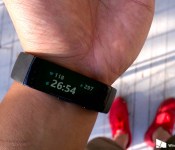
Microsoft Band officially on sale again in Microsoft Store US retail locations

As we previously reported, US Microsoft Store retail locations are now selling a new shipment of Microsoft Band units. There’s no word on how many units of the $199.99 wearable device are available for sale in each store location.

The Smithsonian now lets you see 40,000 pieces of art online

The Smithsonian vowed that it would open up its digital collection by early 2015, and it’s clearly not wasting time as it delivers on that promise. Both the instutition’s Freer and Sackler galleries have posted over 40,000 pieces of global art online, all of which can be used for non-commercial purposes for free. If you want an Egyptian relic for a class project or a fine Japanese painting for your phone wallpaper, you’re welcome to it. It’s relatively easy to sort the offerings, too, so you can look just for art from a given period or browse everything from a particular culture. The size of the digital collection is a bit daunting, but that’s a worthwhile tradeoff if it means that you can see classics that would otherwise stay locked up in a museum warehouse.
[Image credit: Ito Sozan, Freer Gallery of Art and Arthur M. Sackler Gallery]
Filed under: Internet
Via: The Verge
Source: Smithsonian

Archos announces two new LTE devices ahead of CES unveiling
 Archos has announced two new devices that the company will be showing off at CES this year, and both devices offer a ton of value for the price. Archos is weighing heavily on the LTE aspect of its new phone and tablet duo, which seems to be a trend for budget phones this year.
First up is the Archos Diamond, an incredibly affordable smartphone at a very low price. The Diamond features an octa-core CPU, 16 GB of internal storage with 2 GB of RAM, plus a full HD 5-inch display. The smartphone features 4G LTE radios, so the network won’t be the bottleneck here. Archos plans on releasing the Diamond with a price tag below $200.
The second device announced is the 80b Helium 4G tablet. The company didn’t specify much in the way of specs, but did clarify that it would be a sub-$150 tab with a 1.5 GHz processor. They’ll likely reveal a little more about it at CES in a few days.
In addition to these two new devices, Archos announced that they will be refreshing some of their other models of smartphones and tablets to include 4G LTE radios. Definitely a step in the right direction in the extremely competitive budget market.
ARCHOS Strengthens its 4G range during CES 2015
Complete selection of 4G devices on display at CES 2015 at Sands Expo Hall A-C Booth 70437
Paris – January 2, 2015 – ARCHOS, a pioneer in Android™ devices, unveils its new 4G tablets and smartphones ranges at CES 2015. With the evolution of mobile technology and the advancements 4G offers, ARCHOS continues to innovate answering consumer demand for high performance smartphone and tablet technology with an affordable price tag
The latest offering from ARCHOS provides a range of high quality and great performance 4G smartphones and tablets starting at under $80.
ARCHOS Diamond, the best 4G smartphone ever under $200
Announced at the “Paris CES Unveiled”, the ARCHOS Diamond boasts both sleek design and 4G compatibility. The Diamond is fully loaded with an octa-core processor, 16 GB of internal storage and 2 GB of RAM, a 16 MP camera, and a 5 inch full HD IPS allowing users to fully enjoy games or movies without delays thanks to 4G speeds.
Previously dominated by entry-level handsets with basic functionality, the sub-£200 smartphones segment is now more competitive than ever, thanks to ARCHOS offering handsets with an unprecedented set of features and outstanding performance in this category.
“In 2014, consumers don’t have access to high performance handsets from traditional smartphone vendors below $500″ says Loïc Poirier, General Director of ARCHOS. “With the ARCHOS 50 Diamond, we are pushing forward the same advanced technology but we make it accessible to all consumers.”
The 80b Helium, an over-equipped 4G tablet for less than $150
Downloading an HD movie (2 GB) and watching it on your tablet, in less than 3 minutes is now possible with 4G technology!
With the resolution of the ARCHOS 80b Helium 4G, consumers can not only enjoy various multimedia content but also enjoy all the games available on Google Play Store, thanks to its 1.5GHz Quad Core processor.
A full range of 4G smartphones and tablets
ARCHOS does not stop there because the brand will also announce a full range of 4G smartphones, including the renewal of the range Helium, with 45b, 50b and 50c Helium and new tablets, the 70 and 101 Helium all offered at affordable prices.
For more information about ARCHOS and its entire selection of Connected Devices, visit us during CES 2015 at Sands Expo Hall A-C, Booth 70437 or at http://www.ARCHOS.com
Come comment on this article: Archos announces two new LTE devices ahead of CES unveiling

Death Board, a simple yet agonizing Windows Phone game

Death Board is a Windows Phone game that has the potential to drive you nuts. It is a game that challenges you to quickly find a matching number before the game clock strikes zero.
While the game concept sounds simple, you only have a few seconds on the clock and it’s surprising how long it takes to have four digit numbers register in your brain. I’m not sure how much staying power Death Board will have but for occasional gaming or as a conversation piece, the game should do well.
Available for low-memory Windows Phones, don’t be shocked if your score stays in the single digits with Death Board.
Spotted at CES 2015: LG G Flex 2 poster says it is “redefining the curve”
CES is a beautiful time of the year where we find out all about the products we should expect in the year to come. CES 2015 should be no different, though it appears the press on the ground in Las Vegas already have spotted some interesting promotion material. The LG G Flex 2 poster shown below […]
The post Spotted at CES 2015: LG G Flex 2 poster says it is “redefining the curve” appeared first on AndroidSPIN.
 AIVAnet