



You can now play Flappy Bird on your Android Wear smartwatch, if you want! [APK Download]

I’m sure there’s an audience out there who crave to play that annoying Flappy Bird game on a tiny smartwatch screen, so this one’s for you. Android dev Corbin Davenport, the same guy that ported Minecraft and Doom to Android Wear, has achieved the same feat with Flappy Bird – the incredibly addictive, incredibly frustrating… Read more »
The post You can now play Flappy Bird on your Android Wear smartwatch, if you want! [APK Download] appeared first on SmarterWatching.

Read the rest at SmarterWatching.com!
The post You can now play Flappy Bird on your Android Wear smartwatch, if you want! [APK Download] appeared first on AndroidGuys.
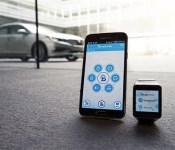
Soon you can start Hyundais with an Android Wear watch

Oh, you use an app on your phone to start your car? How passé. Hyundai’s gearing up for CES by talking up an Android Wear app that’ll let you remotely unlock, locate and start your car with a tap on the wrist. Naturally, if you just can’t muster the energy to swipe on your smartwatch, you’ll be able to issue voice commands to get the job done, too. Isn’t the future grand?
While we’re not exactly surprised to see a major player like Hyundai embracing the ballooning wearables market, it’s definitely not the first company whose cars have bent to the whims of your watch. Android developer Matthew Patience whipped up a little Wear app of his own back in July that lets Tesla S owners fiddle with the sunroof remotely secure their rides… albeit without Tesla’s express permission. While that clever hack only worked for one car, Hyundai’s Wear app should play nice with several — any of the company’s BlueLink-enabled cars should listen to your commands, even ones as long in the tooth as the 2012 Sonata. For now companies like Hyundai are in the wearable-friendly minority, but somehow we don’t think it’ll be long before others start to see the light (especially since the Droidification of the automotive industry is already well underway).
Via: The Verge
Source: Hyundai News
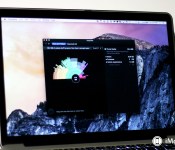
Resolve to take better care of your Mac in 2015 – here’s how!

New year, new resolutions. If “take better care of my Mac” was on your list of things to do, here are some practical tips to make that happen. I’ve split this list up into three topics: Back up your Mac, batten down the hatches and improve your security, and clean up the crud (get rid of data you don’t need).
Back up your Mac

First thing first: Back up your Mac right away.
Assuming you don’t already have a backup, it’s time to make one and save what’s important to you. There are some great ways to do it that don’t involve too much work on your part: Using Apple’s built-in, free Time Machine software is the best place to start, and you can pair it with an inexpensive external hard drive or Apple’s own Time Capsule. If you’re on an even tighter budget, you can back up your essential files by copying them to a USB thumb drive.
I strongly advocate a second line of defense for backups, too. After all, the data on your Mac is your digital life, and you shouldn’t take any chances: a single point of failure at home could wipe out your entire system. That’s why I recommend looking at a second backup plan that’s off-site — services like BackBlaze, Carbonite, and CrashPlan are often recommended, and for good reason. They cost an additional fee each month, but they can provide peace of mind if something happens to your primary backup system.
Batten down the hatches
Managing passwords on the Mac is easier than it has been in the past, thanks to Apple’s own iCloud Keychain. It provides system-level password protection for frequently-used websites that syncs across your devices using iCloud. If you need more than that, I’d recommend one of the following two options: They’re excellent at helping you manage passwords.
1Password

The first is AgileBits’s 1Password, a master password utility that keeps all your Web passwords under a single password that you control. Mac and iOS apps are available, and it can also be used to store other vital info like software license keys, credit cards, and other important information.
- $49.99, Mac – Download now
- Free, iOS – Download now
LastPass

If you’re on a tight budget, look to LastPass: The service is similar to 1Password, keeping your passwords under lock and key, but it does so from the Web. As an Internet service, you’ll need a browser extension to get it working — and Internet access to view your vault. It also has the virtue of being free to start with — though you’ll need to become a Premium subscriber to get things like iOS syncing.
- Free – Download now
For more, check out Ally Kazmucha’s writeup:
Clean up the crud
Over time, your Mac amasses a great deal of data you likely have no use for — data caches, downloads, and other files that have outlived their usefulness. You probably have apps you’re not using, too.
It’s easy to drag stuff like that into the Trash and empty it, but sometimes you’re bound to miss things — extraneous files those apps used; system kernel extensions (known as “kexts”); and other content that not only occupies space, but left to its own devices, can create problems and conflicts with other software on your Mac. Luckily, you can clean up your Mac with any of these useful utilities.
AppCleaner

FreeMacSoft’s AppCleaner is, as the developer’s name implies, free to download. It finds those pesky supporting files that apps use and deletes them, along with any extraneous apps themselves. You simply drag and drop the app you want to remove onto the AppCleaner window, and it scans your drive to find whatever’s “attached” to that app — preference files and the like. AppCleaner doesn’t have some of the more thorough disk-cleaning capabilities as the other apps on this list, but the price is right.
- Free – Download now
DaisyDisk

DaisyDisk is one popular way to get rid of the junk on your Mac. It provides you with an interactive map that shows what’s taking up space on your Mac’s drive and helps you recover disk space quickly and easily. It integrates QuickLook support so you can preview file content, and if you have more than one disk to check, it runs those scans in parallel to do it faster.
- $9.99 – Download now
DiskDiag

DiskDiag is yet another tool you can use to check the status of your hard drive and to clean up space. It shows you a “smart gauge” that tells you how much space different types of data are taking up on your drive, and helps you manage app caches, downloads, mail attachments, and other frequent disk hogs.
- $0.99 – Download now
Your suggestions?
Hopefully this list will get you on your way to a safer, more secure and more reliable Mac. I’m sure you have some other ideas for apps or tools you’d like people to know about, so share ‘em in the comments!
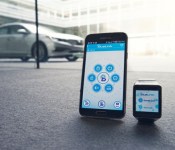
Hyundai set to launch Blue Link app at CES 2015

One of the big technology trends we expect to see at CES 2015 is increased convergence between mobile devices and automobiles. Today Hyundai announced that they will be releasing the next generation of their Blue Link System on 2016 Elantra GT and Veloster models. Along with the announcement about the next generation of the system, Hyundai also announced they will be releasing a new Blue Link smartwatch app to make it even easier for car owners to interact with their vehicles.
The new smartwatch app will give users the ability to access features like door unlocking, remote starting or even access service information via their smartwatch devices. Hyundai’s executive director Barry Ratzlaff says the new features in Blue Link,
“expands Hyundai’s exploration into how wearable technology and Blue Link fit into a customer’s lifestyle. Connecting to your car through a smartwatch and voice recognition was previously something seen only in science fiction movies. Now, we can provide this capability to owners of Hyundai vehicles equipped with Blue Link.”
Along with tapping their smartwatch to access features, Hyundai owners will also be able to use voice activated commands through their smartwatch or smartphone, to perform actions like:
- Remote Engine Start
- Remote Engine Stop (Only available when vehicle is in remote engine start mode)
- Remote Door Lock / Unlock
- Remote Flash Lights / Honk Horn
- Car Finder
- Call Roadside
- Call Blue Link
On top of these, with the next generation of the Blue Link app, Hyundai says users will be able to access functions like a destination search and receive maintenance alerts when new vehicles are released that support these features.
Hyundai says they will be on hand at CES 2015 to demonstrate the Blue Link smartwatch app on Samsung, Motorola, Sony and LG smartwatches. They also indicate Android Wear users will be able to download the app from Google Play during the first quarter of 2015.
Be sure to check back here next week for our coverage of CES 2015 and see if we are able to get some hands on time with the Hyundai Blue Link system.

source: Hyundai
Come comment on this article: Hyundai set to launch Blue Link app at CES 2015
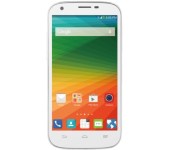
The ZTE Imperial II is a super cheap Android device on U.S. Cellular

U.S. Cellular hasn’t always been the most price-friendly carrier out there, but they’re about to get one more inexpensive option. ZTE’s Imperial II is now being sold on the carrier for only $149.99.
This handset isn’t the most high end device we’ve ever seen, but it’s still a viable option for anyone looking for an inexpensive off-contract option. The phone comes with a 5-inch qHD display, a 1.2GHz quad-core Snapdragon processor, 1GB of RAM and 8GB of on-board storage. The device is also 4G LTE compatible and brings a 5MP rear-facing camera, a 2300mAh battery and is running Android 4.4.2 KitKat. A recent ZTE survey stated that 83% of respondents wanted a bigger screen, while only 22% were willing to pay a higher price. Hence, the improvements in the Imperial II up from the first generation.
Just to be clear, the press release launched earlier states that the phone will be sold on U.S. Cellular off-contract for only $100, though the U.S. Cellular website total reads $149.99. We checked with a representative from the carrier, and the phone will in fact be sold for $149.99.
“The Imperial II is a result of listening to what customers want and applying our expertise to produce an affordable premium device. Not only does the phone have one of the biggest and brightest screens in its price class, it also has a better user experience with features such as LTE and a quad-core processor you won’t find in similar devices,” said Lixin Cheng, chairman and CEO of ZTE USA. “Our affordable premium device strategy is shifting the U.S. smartphone landscape*, especially in prepaid. We’re extremely confident that the Imperial II will further propel our growth and the growth of such a great partner like U.S. Cellular.”
The budget-friendly Android smartphone was updated with a stunning 5-inch qHD capacitive multi-touch screen, improved camera sensors, SRS TruMedia, quad-core Qualcomm Snapdragon processor, Android KitKat 4.4.2 and 8 GB of internal memory, while sporting microSDHC™ for expanding device storage memory up to 32 GB.
The Imperial II is the latest in a line of no-contract devices launched by ZTE in 2014, following on the heels of the very successful sales of the Grand XMAX and Warp Sync. The Imperial II allows ZTE to continue its leadership in the no-contract market and pioneering the standards of feature-rich smartphones that are affordably priced.
ZTE Imperial II Specs:
- Android 4.4.2 (KitKat)
- Qualcomm Snapdragon 1.2 GHz Quad-Core
- 5-inch qHD capacitive 5-point multi-tough screen
- Internal: 8 GB eMMC and 1 GB DDR3 RAM
- 4G LTE: B2/B4/B5/B12/B17
- Bluetooth® 4.0
- 2,300 mAh Battery
- 5 MP rear-facing camera
The Imperial II allows users to stay remarkably connected and entertained, whether the consumer is downloading one of the million apps on Google PlayTM or simply calling a friend. Coupled with U.S. Cellular’s advanced wireless network, the Imperial II puts users in the driver’s seat of their wireless life.
About ZTE USA
ZTE USA (http://www.zteusa.com/), a subsidiary of ZTE Corporation is a leading global provider of mobile handsets, telecommunications equipment and network solutions. Operating since 1998, ZTE USA is dedicated to making cost-efficient, quality communications technology accessible to all. The company provides a magnitude of devices to every major US-based carrier, generates over $17.4 billion dollars’ worth of business for US-based companies and devotes more than 10 percent of its revenue to R&D. ZTE USA is headquartered in Richardson, Texas and operates 17 sales offices, customer service centers, R&D and distribution facilities across the US. ZTE is ranked as the country’s fourth-largest supplier of mobile devices overall, and second-largest supplier of prepaid devices, by independent analysts. ZTE is the Official Smartphone of the New York Knicks, Golden State Warriors, and Houston Rockets.
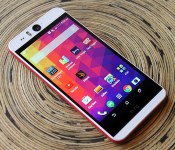
HTC Desire Eye review: in search of the ultimate selfie machine

2014 was the year that the word “selfie” finally — and maybe unfortunately — found its way into honest-to-goodness dictionaries. Is it really any surprise, then, that smartphone makers are finally starting to upgrade their front-facing cameras? With the Desire Eye, HTC took a step back and wondered why a phone’s rear camera always had to be better than the one up front. Don’t our lovely mugs deserve the same sort of technical attention and affection as, say, our lunches? HTC (along with others like Oppo) has decided that yes, yes they do. When you look at things that way, the Desire Eye and its twin 13-megapixel cameras seems to be just the perfect compromise for wannabe mobile photographers and the truly vain. But is it really?
Hardware

I’ve got a tendency to be a little long-winded when it comes to device design, so here’s the TL;DR if you’ve got more pressing things to do: The Desire Eye’s got personality. It looks like an ice cream sandwich. I love it. Mostly.
Still with me? Right. That ice cream sandwich aesthetic is the first thing you’ll notice about the Desire Eye; our review unit is a two-toned affair, with a thick red stripe bisecting the rest of the phone’s snow-white body along its edges. Persnickety style mavens might disagree, but I adore the look (in your reviewer’s humble opinion, the alternate blue-and-teal version just doesn’t stick the landing). The second thing you’ll notice is that you’ve got two identical 13-megapixel camera pods sticking out of the phone’s face and rear, each flanked by a two-tone LED flash.
The next thing you’ll pick up on: how cumbersome the thing can be. My hands aren’t gigantic, but they’re not exactly small either, and the Desire Eye seemed thick — just wide enough to feel awkward whenever I picked it up. In fact, it’s not even about how chunky the thing is; with an 8.5mm waistline, it’s technically not even as plump as the 2014 Moto X at its widest point. Really, it all boils down to a design issue: Plenty of other well-received phones have similar thicknesses, but their sides and backs curve dramatically to nestle neatly into your hands and imbue the package with an overall sleeker feel. The end result is a phone that feels substantial in spite of its apparent slightness. The Desire Eye is not that phone.

What it is, though, is solid. HTC’s crafted a body out of polycarbonate, and the shell that forms the backplate sweeps up over the sides to give it a sturdy — if relatively light — feel. On the plus side, the material is sleek enough that you can easily slide the phone out of your tightest jeans pockets, though you might occasionally lose your grip on it like I did. We might not forgive these sins on a flagship, but HTC’s Desire line has always been aimed at a more modest market and those flaws seem just a little more forgivable with that in mind. The whole shebang is IPX7-certified too, so it’ll withstand dips in up to a meter of water for a half-hour before things really start to get dire. Curiously, though, the micro-SIM and memory card aren’t tucked under a battery you pry open with a thumbnail. This is one of those little cost concessions that actually works really well; you’ll never have to pry off a flimsy battery cover or scramble for a paper clip to access those all-important bits of plastic. Sorry, lefties: The placement of these slots means the volume rocker, the power button and the dedicated two-stage shutter button all sit on the Eye’s right side. We sympathize with your struggle.
Display and sound

Let’s not mince words: The Desire Eye is definitely meant to be a mid-range phone, and plenty of nerds will stop reading after they see someone invoke the “m” word. With all that said, the 5.2-inch 1080p IPS display we’ve got here (which, remember, is a touch larger than the HTC One M8’s) is surprisingly easy on the eyes. It’s big and spacious. Color reproduction seems vivid without being outright inaccurate and the viewing angles are accommodating even to people sitting at nearly oblique angles. And the kicker? The screen can be terribly bright if you want it to be (eat that, sunlight). With levels cranked up to the maximum, the Desire Eye easily outshines the more premium One M8 and its fancier Super LCD 3 panel. If I had to pick nits, there’s the very faint light that bleeds into the picture from the edges of the display, but it’s only really apparent if you’re looking at dark images in dim spaces. Don’t worry about it too much.
As usual, the speakers don’t quite live up to the high bar set by the Eye’s display. At first glance, there’s a decent shot you’d miss the speakers altogether since they’re dark and nestled right up against the edges of the screen. They’re subtle and well-hidden, but they’ll get the job done (and then some) when it comes time to binge on YouTube videos. That’s not to say they’re nearly as good as the speakers you’ll hear on other devices, though: They lack the oomph and depth you’ll get out of a One M8, and the sound issuing forth from the stereo pair isn’t as downright loud as the iPhone 6’s single speaker. Still, the fact that we’re getting some separation between channels means most things you’ll listen to will still probably draw you in deeper, even if the overall experience isn’t as loud or bass-heavy. Plug in some headphones, though, and we’re off to the races — HTC’s BoomSound audio tech does a commendable job livening up most things you’ll listen to on a regular basis.
Software

HTC fans — and even people who just casually read this site — could probably spot the company’s Sense interface from a mile away. It’s distinctive in its subtlety, a tough act to nail when it comes to laying extra bits on top of beautiful, beautiful stock Android. Anyway, the Desire Eye ships with a Sense-ified version of Android 4.4.4 KitKat, a flavor combination we’ve run into a few times already. (HTC has said that all of its current phones would get Android 5.0 Lollipop within 90 days as part of its Advantage program, so hopefully the wait won’t be too much longer.)
The laundry list of Sense’s software niceties include a Do Not Disturb mode that lets you define certain times you want to disable notifications and an Extreme Power Saving Mode that automatically shuts off all but the phone’s most vital functions when the battery dips below a certain level. BlinkFeed is still here, and it’s still really good at what it does. The elevator pitch, if you haven’t already heard it: BlinkFeed lets you customize your own personal news feed, culling content from websites and news sources and pulling pertinent data like calendar entries into a single spot. It’s still the most visually different element of HTC’s Sense experience, not to mention one of the most useful — a quick swipe right from the home screen takes you straight into your customized news feed, perfect for when you’re standing around with a few moments to kill.

The rest of the interface is as familiar and as unobtrusive as it’s always been… for the most part, anyway. AT&T being AT&T, of course, your eyes will get blasted by a full suite of preloaded carrier apps and shortcuts that can easily be deleted or disabled during a quick trip into the device’s settings. Don’t feel like traipsing into the depths of your device? You won’t have to, technically — HTC’s app launcher lets you completely hide certain apps from view, though for the sake of the relatively paltry 16GB of storage, you’re better off axing them completely.
Camera

There aren’t any UltraPixels here, folks. When it came time to cobble together the Desire Eye, HTC didn’t go nuts trying to reinvent the sensor — instead, it picked a pair of almost identical 13-megapixel cameras and plopped ‘em right in there (more on that later). You’d think that a phone so clearly keen on photography would pack a barnburner of a sensor (or in this case, two barnburners). Alas, while the cameras here definitely aren’t bad, anyone looking for truly excellent performance is going to walk away a little disappointed.
Let’s start with that rear shooter, shall we? Resolution aside, it’s got an f/2.0 aperture to suck in as many photons as possible, and a 28mm lens perched in front of the sensor. Just like every other smartphone camera out there, the photos I captured using the Desire Eye’s rear-facer were mostly well-saturated when the sun or a room’s lighting were playing nice, but the situation quickly gets hairy as things get dim. Typical, no? It doesn’t help that most of the pictures I took outdoors seemed a little dimmer and less vivid than reality by default — it took a few trips into the HTC Camera app’s settings to fire up HDR mode or tweak the exposure and ISO to my liking. It never felt like the Desire Eye took too long to adjust focus as I bounded from subject to subject; on average it took just under two seconds to figure out what it was looking at. That’ll seem downright glacial if you’re used to the sub-second focus times of the One M8 and the LG G3, but in practice it’s less of an issue than you might think. If this camera has committed any great sin, it’s that it doesn’t excite; it’s not great, but it’s not bad either. Most of the time I wouldn’t even get worked up about it, but when a company tries to play up a camera when it tries to sell a phone, I can’t help but expect more than just the status quo.
Front-facing cameras are always crap compared to the bigger, beefier sensor sitting on the other side of the phone, but not here. Well, mostly. It’s important to note that this shooter is configured just a bit differently to better suit the selfie experience: The slightly narrower f/2.2 aperture is offset by a wider-angle lens to help squeeze more of your friends into every shot. Other than that, the cameras should behave the same… but they don’t. I noticed a bit of extra fuzziness, a lack of clarity in photos taken with the front camera, even after I disabled the mildly hilarious Live Makeup feature. (Got blemishes? Not anymore!). Those shots also seemed a little warmer than the ones taken with the rear camera, a move that seems tailor-made to liven up your face even when you haven’t seen the sun in a while. I can live with that. Thankfully, the dual-tone LED flash does a respectable job brightening up your mug, and doing so without making you downright ghastly in the process.
That’s all great, but what of the software? HTC has gone to town with the shooting modes baked into the Eye, and some of them are funny or absurd enough to keep you from getting too upset at your soft photos. The best of them has you transplanting faces from one person to another, and the results are surprisingly natural — equal parts hilarity and absurdity with hardly any work involved at all. If your overriding concern is less about impeccable picture quality and more about owning a phone that’s fun to take pictures with, the Desire Eye shouldn’t leave you hanging.
Performance and battery life

So the Desire Eye’s eyes leave quite a bit to be desired, but what about the rest of the package? The brain of the operation in this case is one of Qualcomm’s quad-core Snapdragon 801 chips clocked at 2.3GHz — the very same one that you’ll find in its big brother the One M8 and Samsung’s Galaxy S5. Pair that processing power with 2GB of RAM and you’ve got an admittedly mid-range phone that sure doesn’t run like one. HTC might’ve played it too safe with those lackluster cameras, but at least the Desire Eye has more than enough horsepower to keep it relevant. During my time using it as my daily driver, the combination of the silicon thrumming away inside the Eye and HTC’s relatively light touch with the software made for a mostly smooth experience while poking around the phone. Swiping through long webpages? Switching between apps like a crazy person? All just peachy. It occasionally took a more pronounced swipe on the screen to switch between home screens, but now I’m just being nitpicky.
But let’s be real here: The first thing I did when I got my hands on the thing was to take it for few laps through Asphalt 8. Shooting a Dodge Dart down beautifully rendered winding roads was as smooth and polished as ever, and only rarely did any sort of minor visual hiccup catch my eye. Things didn’t change much once I jumped out of the car and switched into a couple rounds of automatically killing zombies in Dead Trigger 2. I’m probably in the minority who doesn’t find the game too meaty or fulfilling, but hey, it provided plenty of on-screen action and cutscenes for the Desire Eye to handle with ease.
| HTC Desire Eye |
Samsung Galaxy S5
|
HTC One M8 | Samsung Note 4 | |
|---|---|---|---|---|
| Quadrant 2.0 | 23,800 | 24,714 | 25,548 | 24,425 |
| Vellamo 3.0 | 3,119 | 2,715 | 2,878 | 1,808 |
| SunSpider 1.0.2* (ms) | 903 | 820 | 782 | 793 |
| 3DMark IS Unlimited | 17,260 | 17,954 | 20,612 | 20,692 |
| GFXBench 3.0 Manhattan Offscreen (fps) | 10.3 | 11.5 | 11.2 | 18.8 |
| CF-Bench | 35,626 | 33,351 | 40,223 | 43,234 |
|
*SunSpider: Lower scores are better. |
||||
Now that we’ve established all that, here’s how the Eye stacked up to the competition. As you’d expect out of a very well-traveled chipset, there’s very little variance between what you can squeeze out of the Desire Eye and some relatively recent flagships. It still gets pretty thoroughly trounced by the Galaxy Note 4 (obviously), but the subjective truth of the matter is that most times you’ll probably struggle to tell the difference. I still wish it came with more internal storage out of the gate since about 5GB of the preinstalled 16 is consumed by Android itself, but the easily accessible memory card slot makes that reality much less troubling.
The Desire Eye draws its juice from a 2,400mAh cell that you can’t ever access, putting it right alongside devices like the 2014 Moto X in terms of battery size. In our standard battery-rundown test (for the umpteenth time: Screen brightness is set to 50 percent while the phone loops a 720p video and sucks down all the social notifications it can), the Desire Eye managed just under 10 hours before it finally succumbed to exhaustion. The One M8 can usually last for over an hour longer thanks to its slightly bigger battery, but at least the Eye can stick it out for a full workday and then some. With even more sparing use (say, over a quiet holiday weekend) you can expect the Eye to hang in there for about three days before it needs another stop at a wall outlet, and that’s without the Extreme Power Saver mode kicking in.
The competition

The Desire Eye’s biggest selling point — the twin cameras forever peering in two directions — means there isn’t really a direct competitor to this thing. Sure, you could shell out for a rather lovely Oppo N3 ($649) with its single, swiveling sensor, but that assumes you’re strictly looking for an unlocked device you’ve got to buy online. With its bigger 5.5-inch screen, 16-megapixel sensor and the included O-Click remote, though, it’s arguably even better-suited to mobile photography than the Eye is. Meanwhile, if you dig the Desire aesthetic and you’re operating on a budget, there’s always the Desire 610 to consider. It’s smaller and only packs an FWVGA (854 x 480) screen and a quad-core 1.2GHz Snapdragon 400 processor, but at $170 without a contract, it’s still worth paying attention to. On the other end of AT&T’s device spectrum are heavyweights like the LG G3, with its gorgeous Quad HD screen. Spec-wise, it’s right up there with the Desire Eye and the rest of the world’s current spate of flagship phones, but the combination of a great display and a more robust rear camera make it worth your time (especially since it’s just a hair pricier than the Eye).
And then there’s the obvious alternative: The upmarket HTC One M8. While it’s not a game changer in the way that its predecessor was, it’s still a lovely device thanks to that comfortable, curvaceous metal body and its reassuring heft. Yes, you’re giving up the ability to liven up your selfies with a front-facing flash, but, really, not everyone needs their selfies to look pristine. In fact, I’d go as far as saying you’re almost always much better off picking up an HTC One M8 instead, considering the usually teensy price difference between the two.
Wrap-up

In many ways, the Desire Eye is a wolf in sheep’s clothing — that is, it packs much of the same power as full-on flagship smartphones all in a package designed to keep prices down. More importantly, it’s very much a niche device, an offshoot of HTC’s evolutionary line that caters to folks who can’t bear the thought of a day without selfies. If anything, that’s why the cameras are so disappointing in their mediocrity. While it’s still sort of out there, the very concept of the Desire Eye could’ve absolutely shined if HTC fitted the thing with some more robust, capable shooters. As it stands, though, it’s a mostly great phone that stands up well to the rest of the pack, even if it doesn’t live up to its potential.
Filed under: Mobile
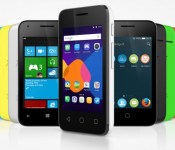
Alcatel Pixi 3 series runs Android, Windows or FireFox OS

Alcatel’s latest line of smartphones, the Pixi 3, can do something that no other handset can: run Android, Windows or FireFox OS. Indeed, the new series of devices is available in a variety of display sizes ranging from 3.5-inches to 5-inches. (3.5″, 4″, 4.5″, 5″). The smallest version will be 3G capable while the larger three offer 4G LTE connectivity.
Sadly, the triple-OS not as cool as it sounds on the surface; it’s not a matter of toggling from one OS to another. From the the sounds of it, carriers will be able to choose which OS to flavor the phones.
The full set of specs is not clear yet they are reported to be “affordable”. In other words, look for lesser hardware for these OS-agnostic models.

In addition to the new family of phones, Alcatel will debut the Alcatel WATCH. Reportedly more affordable than the current crop of smartwatches, it’s said to be compatible with Android handsets.
Alcatel is expected to show off the Pixi 3 at CES next week. We’ll be on the ground and will get some images, feedback, and more.
The post Alcatel Pixi 3 series runs Android, Windows or FireFox OS appeared first on AndroidGuys.
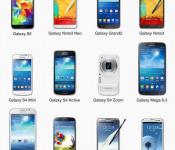
Galaxy S6 Rumored to Feature Curved Display, new Designs
 According to a recent post on Reddit by a confirmed Samsung employee, the Galaxy S6 may be a surprise to us all.Whereas Samsung has been making modest improvements each year in its ‘S’ line for about five years, supposedly the Korean tech company will be “starting from scratch” with the design of the sixth iteration of the ‘S’ line.
Specs for the new device are standard for an upcoming phone in 2015: 3/4 GB RAM, a better smartphone, a Snapdragon 810, and other mild to moderate improvements. Design is where the real improvements will come from. Tech lovers have long lamented Samsung’s getting lost in the design doldrums and keeping the look of their devices static for the past few years. This year, to show just how ready it is to reconsider its ideas pertaining to design, the S6 project has been named “Project Zero.”
According to SamsungRep2015, the original poster in the thread, there are at least two different prototypes, one with a design like the Note Edge, and another with dual curved edges. He went on to say, “Samsung prototypes a lot and things change extremely rapidly.”
It seems that these are exciting times for Samsung and the tech world. What do you thing about some long-awaited design changes? LEave a comment below and let us know what you think!
Via: BGR
Come comment on this article: Galaxy S6 Rumored to Feature Curved Display, new Designs
 AIVAnet