


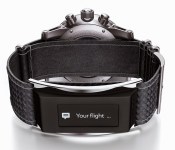
Montblanc Unveils ‘e-Strap’ Band Accessory With iOS Integration for Analog Luxury Watches
With luxury watchmakers turning their attention to the smartwatch market ahead of the Apple Watch launch later this year, Montblanc is one of the first to announce specific plans. As noted by aBlogtoWatch, Montblanc’s initial foray is an “e-Strap” accessory band for traditional watches that connects wirelessly to a smartphone.

The Montblanc e-Strap incorporates a small 0.9-inch wide screen into a high-quality leather band that attaches to a traditional analog watch. The screen lays flat against the underside of the wrist, allowing users to receive notifications, count steps, and control music playback on a connected smartphone. The band connects to an iPhone or iPad via Bluetooth and offers up to five days of battery life.
How impressive as a connected wearable device will the e-Strap’s electronic module be? It will have a 0.9 inch monochromatic OLED touchscreen display with a 128×36 pixel resolution. That isn’t exactly industry changing, but this is more than just a mere notification device. Montblanc has made it clear that in addition to basic calls, texts, e-mails, calendars, social media, and reminder notifications, the e-Strap will function as an activity monitor/tracker with a pedometer and accelerometer to measure data that feeds into an included iPhone or Android phone app.
The e-Strap will reportedly sell separately for 250 Euros and will also be available initially as an option with select Timewalker Urban Speed watches. The band will, however, apparently be compatible with all 42-mm or 43-mm wide Timewalker watches.
Montblanc is one of several luxury watchmakers adding smartwatch-inspired products to their 2015 portfolios. Timex and Fossil reportedly are partnering with Qualcomm and Intel, respectively, on upcoming smartwatches, while Swiss watchmaker TAG Heuer is exploring partnerships and acquisitions in order to jumpstart its own smartwatch projects.

Alcatel OneTouch unveils a trio of new OS-agnostic smartphones

Alcatel OneTouch has just announced a trio of affordable Android-powered PIXI smartphones it will showcase at the annual Consumer Electronics Show in Las Vegas, Nevada, between Tuesday, January 6, and Friday, January 9, 2015.
Sadly, Alcatel didn’t provide too much information with regards to the upcoming handsets. All it volunteered is that the new PIXI smartphones will come in four different sizes – 3.5”, 4”, 4.5”, and 5″, and will be OS agnostic, meaning that they will be compatible with three different operating systems — Android, Firefox and Windows Phone.
The manufacturer claims that its new range of PIXI smartphones will be priced competitively, thus putting “4G LTE connectivity within everyone’s reach.”
Be sure to check out the full press release below:
CES – Las Vegas, January 2, 2015 – With a series of announcements at the International CES, ALCATEL ONETOUCH, one of the world’s largest smartphone brands, makes good on its commitment to offer the latest technological innovations to all.
The brand’s new PIXI smartphones make mobile Internet available to everyone, while offering another innovative feature of OS-agnostic. It is available with Firefox, Windows or Android, providing the flexibility to all consumers.
4G LTE at an affordable price
First among ALCATEL ONETOUCH’s announcements at CES, the smartphone brand is launching its affordable PIXI 3 series, ranging from a pocket-friendly 3.5-inch display to a larger 5-inch display. Offering both 3G and 4G LTE connectivity for the PIXI 3 (4″), (4.5″) and (5″) and 3G for the PIXI 3 (3.5″), the PIXI 3 series further features easy customization and the most popular applications pre-loaded.
OS-agnostic – Firefox, Windows or Android
Besides being the first among the PIXIs to offer 4G, the PIXI 3 series is also first to be compatible with three major operating systems: Firefox, Windows and Android. “Our users do not want complicated systems — they want something familiar from their work environment in the office, but also on a smartphone,” said ALCATEL ONETOUCH Chief Marketing Officer Dan Dery.
Cross-device integration, from smartphones through to PCs. PIXI 3 series offers consumers simplicity of use and the reassurance of having the same system at home, at the office and on the go. With its OS-agnostic PIXI 3 series, ALCATEL ONETOUCH presents operating-system choices to its customers. This continues the efforts begun last year, when the brand teamed with Mozilla to launch the Firefox OS on its FIRE series of smartphones.
Come comment on this article: Alcatel OneTouch unveils a trio of new OS-agnostic smartphones
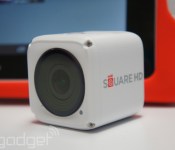
The new Nabi Square HD is a 4K action camera for kids

There are a lot of durable, high-resolution action cameras on the market, but how many would you feel comfortable giving to your kids? Probably not many: Most such cameras won’t tolerate absentminded abuse without a protective case — and they’re expensive to boot. An attentive parent could lend a GoPro or a Sony Action Cam to their offspring, but it could become an expensive proposition. Instead, Fuhu wants to call your attention to its new Nabi Square HD: a “kid-proof” 4K action cam that costs $170.
The Square HD isn’t the company’s first take on a child-friendly action camera. In fact, it’s not even the company’s first product to bear the name, but the Square HD we see here is more than an iterative update — it’s a complete redesign. To start, the new Square trumps the original model by actually matching its name: This camera is an actual square, tossing out the follies of the original’s rectangular design for a sleek, white cube that measures 44mm on every side. It’s also more powerful, and supports 4K video recording at 15 fps, 2.7k recording at 30 fps, 1080p at 60 fps and high-speed, 120 fps capture at 720p.
The best part about the upgrade, however, is its advertised durability. Sure, 4K recording is great (and its 60 fps at 1080p looks pretty snazzy too), but as a cam designed for kids, it has to be durable. Fuhu, the product’s creator, assured me it is: The Square HD can survive under 30 feet of water without a case and is generally shockproof and dustproof, too. As strong as it is, though, the company says it’s not built to compete with mainstream action cams — it’s designed for capturing “family-first moments through the eyes of a child,” a company representative told me.

Officially, the company says children should be 13 or older (due to the size of certain components), but the development team has given it to children as young as four, with proper supervision. Naturally, the Square HD integrates well with Fuhu’s line of kid-friendly Nabi tablets — which feature apps that allow kids to share automatically cloud-edited videos to (prenatally approved) friends and family. A less robust camera-control app will be available to regular iOS and Android users as well.
In all, the Nabi Square HD seems like a pretty easy-to-use action cam. It’s not the best camera on the market, but it’s durable, small and capable of recording in 4K. At $170, can you ask for much more?
Filed under: Misc

ASUS to unveil three wearables in 2015, releases Morse-code CES teaser video

The ASUS Zenwatch is one of the best smartwatches available right now and ASUS looks to be building on this success with three new wearables throughout 2015.
First up, ASUS CEO Jerry Shen let slip that a second generation ZenWatch is set to launch in the third quarter of 2015. The revised smartwatch is designed with greater independence from a smartphone in mind, allowing the user to place voice calls without the need to pair up a handset. In other words, expect a SIM card compatible ZenWatch later this year.
ASUS’ other two wearables are expected to come in the form of two low-cost wristband devices, aimed at the health and fitness markets. Shen has stated that the wearables will be able to measure footsteps, heartbeat, pulse and blood sugar levels, although a time frame for release has not been given.
Moving on to ASUS’ upcoming smartphone products, the company has released another teaser for its CES announcement, this time in Morse code. The brief video, embedded below, spells out the word “optical zoom”, which certainly sheds some light on the mysterious camera teasers posted by ASUS last month.
We are still a little unsure how ASUS’ optical zoom technology might work. Last year, ASUS demoed a dual-lens sensor that captured and combined near and distant photos to create a zoomed in image, although it is difficult to see whether or not the teased smartphone features a dual-camera setup from the short videos. Fortunately, all should be revealed next week.
ASUS certainly looks to have an interesting product line-up going into 2015.

BLU launches new 4G capable devices

4G is taking over the existing network bands due to the speed and flexibility it provides above 3G. But the problem is our old devices are not capable enough to run a 4G network and truth to be told, phone manufacturers include 4G capabilities mostly on their high-end flagship devices.
Drilling a hole in our pockets just for LTE is not very wise and contract phones are sometimes hard to bear with. BLU comes to rescue for such individuals. With their new Studio LTE series, they offer devices ranging from lowest to biggest in terms of hardware for every category of consumers all embedded with 4G chips.
They currently offer only three devices namely, Studio 6.0 LTE, Studio 5.0 HD LTE, Studio Mini LTE. All these devices have Snapdragon chipsets at the core and they have a pretty decent hardware. Not to mention they are all unlocked too. All I can say is that their highest end device that is the Studio 6.0 LTE offers specs a little superior to the HTC Desire 816 at a price little less than it ($279 to be precise).
You can find full specifications in the source link given below. Here is a little price sheet for you to follow.
Studio 6.0 LTE – $279
Studio 5.0 HD LTE – $199
Studio Mini LTE – $119
Source: PRNewswire

The post BLU launches new 4G capable devices appeared first on AndroidGuys.
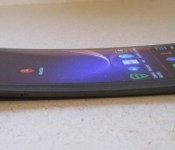
LG G Flex 2 coming next week at CES

The LG G Flex (pictured above) wasn’t a bad phone, but it was just a little too big (6-inch display) in my humble opinion. I remember saying in my review that if it were in the 5-inch range, I might have been all over it. It looks like I might just get to see that next week at CES.
Word is that LG will unveil the G Flex 2 next week, which will most likely be at their press event on January 5th. The G Flex 2 is expected to be around 5.5-inches, just like the G3. It’s also expected to sport the new Snapdragon 810 chip, which is not only 64-bit, but it’s also octa-core.
What’s strange is that Qualcomm hinted via a Tweet that a phone would launch at CES with the 800 chip and the image was clearly an LG phone. Putting the pieces together means that it has to be the G Flex 2, but an 800 chip? I am assuming they meant an 800 “series” chip because I’m not sure why anyone needs to get excited about the 800 since we already have devices with the 801 and 805.
Does the G Flex 2 excite you at all?
source: Naver
via: Cult Of Android
Come comment on this article: LG G Flex 2 coming next week at CES
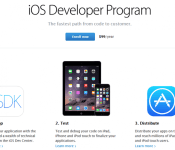
Apple Raises Product and Developer Program Prices in Some Countries
With the new year, Apple has made a few price adjustments to its products and services, led by an increased yearly fee for the company’s developer programs in a number of European countries, as first noticed by German blog Apfelpage [Google Translate].
The Apple-focused blog reports that German developers are now facing a €99 ($119) per year subscription charge for Apple’s various developer programs, up from a previous €80 ($96) subscription fee. The price changes presumably affect all EU markets, as Apple typically has consistent pricing across member countries except for occasional differences due to variations in tax rates. Apple’s developer programs are priced at $99 per year in the United States.

The price increase is also in effect for the UK, where the price has been adjusted from £60 ($92) a year to £79 ($121) as noted by 9to5Mac. Across the board, the European developer program has been about on par with or slightly above the cost in the U.S. when adjusted for currency rates. Following the weakening of many world currencies compared to the U.S. dollar in recent months, however, Apple’s price increases in those countries will help reset the company’s desired pricing matrix but increase costs somewhat for developers overseas.
Elsewhere, the prices of Apple physical products are seeing slight hikes in a few countries. Apple Toolbox reports Apple has increased the price of products like the Mac, iPhone, and iPod in Turkey, a country where the company’s products are already among the highest priced in the world. And the increase in prices may not stop there, as the Turkish Minister of Economy recently announced a plan to gain favor for products made in Turkey by introducing taxes on imported smartphones, computers, and tablets.
A MacRumors reader has also pointed out that the Norwegian people will be facing higher prices for Apple products, with the new iMac with Retina 5K Display and iPhone 6 seeing 8.3 and 12 percent increases respectively. The MacBook Pro with Retina Display received the biggest price jump, going from 10,790 kr to 12,590 kr, roughly a 14 percent increase in the cost of the device.
Apple has been known to adjust the price of its products alongside fluctuating currency values, most drastically just last month when the Russian ruble saw a sharp drop in value, causing the company to temporarily shut down its Russian online store and return with significant price hikes days later.
Though far less dramatic, these price inflations seen in other parts of the world appear due to the weakening of the Turkish lira and Norwegian krone in recent months. Even so, it’s not entirely clear why the company instituted the price change to these select few foreign markets, and whether or not other countries could see a similar price hike in the future, as many other currencies have also been weakening against the U.S. dollar.
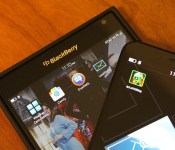
BlackBerry App Roundup for January 2, 2015
A weekly look at new, exciting, and cool apps to try

Howdy CrackBerry nation! Happy New Year everyone. Hope you all enjoyed the holiday with your loved ones and getting ready for the weekend. This is going to be an exciting year I can just feel it. How can it not be, we have our #CESlive 2015 coverage kicking things off next week from the Las Vegas Convention Center! Be sure to tune in to our coverage of the event including interviews, events, and everything else direct from the floor.
Now it is time to bring you this week’s picks for all your passionate BlackBerry addicts out there. You can find each app and game I’ve rustled up for you by clicking through the gallery below. If your favorite did not make the cut this week, remember you can help by offering your suggestions at the end.
LaterSend by Baran


Streams and vinyl sales double while music downloads dwindle

Need even more proof that vinyl is more than just a passing fad for the Pabst Blue Ribbon crowd? Here goes: While digital album and song sales continued their downward spiral, record sales have more than doubled since last year. All this is according to Nielsen Soundscan, which reports that the 9.2 million wax tally is the highest since it started tracking sales in 1991. For context, however, digital sales still bested physical by a massive margin (CDs weren’t broken out, according to The Wall Street Journal), with 106.5 million albums downloaded in 2014. Meanwhile, individual song sales dipped 12 percent compared to 2013.
Streaming services, on the other hand, vaulted with 164 billion songs streamed last year, a 54 percent increase over 2013. As WSJ notes, though, the music industry will likely need to see even bigger gains if it continues to lean on streaming to make up for lost album sales — especially considering Pharell’s measly payout for one of 2014’s biggest songs. That, or more artists could follow Taylor Swift’s lead and pull their music from streaming services entirely: 1989 topped the charts with 3.66 million copies sold.
[Image credit: Acid Pix / Flickr]
Filed under: Home Entertainment, Internet, HD
Source: The Wall Street Journal

Google posts Windows 8.1 vulnerability before Microsoft can patch it

Google’s Project Zero tracks vulnerabilities in software systems and reports them to vendors “in as close to real-time as possible” — a noble cause, no? But what happens if said vendor then fails to push a fix within the 90-day window? Microsoft just found out: Google will go ahead and publish the bug anyway, complete with code that can be used to exploit it. A researcher found a Windows 8.1 security hole that allows lower-level users to become administrators, giving them access to sensitive server functions they’d normally have no right to. Though it remains unpatched by Microsoft, the Zero team published it several days ago — right on schedule.
Microsoft was quick to point out that attackers would “need to have valid logon credentials and be able to log on locally to a targeted machine.” While that should limit the damage, it doesn’t mean the flaw is harmless — a disgruntled mid-level employee with some programming skills could wreak serious harm, for instance. Mountain View told us “just to make this absolutely clear, the (bug) was reported to Microsoft on September 30 (along with) the 90-day disclosure deadline statement… which in this instance has passed.”
Still, some observers have raised questions about whether Project Zero does more harm than good if Google isn’t flexible with its publishing deadline. Others argued that Microsoft had plenty of time to fix the bug, and Google was firm about its policy. “Project Zero’s disclosure deadline… allows software vendors a fair and reasonable length of time to exercise their vulnerability management process, while also respecting the rights of users to learn and understand the risks they face.” But it also added that “we’re going to be monitoring the affects (sic) of this policy very closely.”
Meanwhile, Microsoft said that it’s currently “working to release a security update to address an Elevation of Privilege issue.” For full statements from both companies, see below.
Microsoft:
We are working to release a security update to address an Elevation of Privilege issue. It is important to note that for a would-be attacker to potentially exploit a system, they would first need to have valid logon credentials and be able to log on locally to a targeted machine. We encourage customers to keep their anti-virus software up to date, install all available Security Updates and enable the firewall on their computer.
Google:
There was some confusion yesterday about whether we had contacted Msft about this issue, so we posted an update (below).
Firstly, just to make this absolutely clear, the ahcache.sys/NtApphelpCacheControl issue was reported to Microsoft on September 30. You can see this in the “Reported” label on the left hand panel of this bug. This initial report also included the 90-day disclosure deadline statement that you can see above, which in this instance has passed.
Project Zero’s disclosure deadline policy has been in place since the formation of our team earlier in 2014. It’s the result of many years of careful consideration and industry-wide discussions about vulnerability remediation. Security researchers have been using roughly the same disclosure principles for the past 13 years (since the introduction of “Responsible Disclosure” in 2001), and we think that our disclosure principles need to evolve with the changing infosec ecosystem. In other words, as threats change, so should our disclosure policy.
On balance, Project Zero believes that disclosure deadlines are currently the optimal approach for user security – it allows software vendors a fair and reasonable length of time to exercise their vulnerability management process, while also respecting the rights of users to learn and understand the risks they face. By removing the ability of a vendor to withhold the details of security issues indefinitely, we give users the opportunity to react to vulnerabilities in a timely manner, and to exercise their power as a customer to request an expedited vendor response.
With that said, we’re going to be monitoring the affects of this policy very closely – we want our decisions here to be data driven, and we’re constantly seeking improvements that will benefit user security. We’re happy to say that initial results have shown that the majority of the bugs that we have reported under the disclosure deadline get fixed under deadline, which is a testament to the hard work of the vendors.
Filed under: Software, Microsoft, Google
Via: Slashdot
Source: Google
 AIVAnet