


Apple Rejecting ‘Flappy’ Titled Games From App Store
Apple has begun rejecting games attempting to take advantage of the popularity of the now-defunct Flappy Bird, a hit game that developer Dong Nguyen removed from the App Store earlier in February.
Shortly after Flappy Bird was pulled from the App Store, several clones of the original game soared up through the App Store charts, including a game called Flappy Bee, which stole artwork from a different app.
 Two Flappy Bird clones
According to TechCrunch, Apple began cracking down on Flappy-titled games over the weekend. One developer, who tried to release an app called “Flappy Dragon” into the App Store, had his app rejected by Apple for attempting to “leverage a popular app,” thus violating App Store Review Guideline 22.2, which references apps that contain “false, fraudulent, or misleading representations.”
22.2: Apps that contain false, fraudulent or misleading representations will be rejected.
We found that your app, and/or its metadata, contains content that could be misleading to users, which is not in compliance with the App Store Review Guidelines.
We found your app name attempts to leverage a popular app.
Several additional Twitter comments revealed that other developers were facing the same rejections on games attempting to use the Flappy moniker, though multiple “Flappy” apps remain in the App Store, including Flappy Fish, Flappy Plane, Flappy Pig, and Flappy Puppy, having presumably made it though the review process before Apple began cracking down on Flappy apps.
Flappy Bee, the aforementioned app that used stolen artwork and managed to make its way to the top of the App Store charts, has, however, had its name changed to Jumpy Bee, suggesting that Apple may also be asking some existing clone apps to change their names to put an end to the Flappy frenzy. At the height of its popularity, Flappy Bird was reportedly earning $50,000 per day from advertising, so it is unsurprising that developers have rushed to fill the Flappy Bird void.
Though Apple has begun cracking down on the Flappy phenomenon, two popular Flappy Bird clones, Splashy Fish and City Bird – Flappy Flyer remain the number one and number two free iPhone apps some eight days after the original Flappy Bird game was pulled from the App Store.
     |

Motion-controlled Battroborg Warriors deliver armed robot combat

Last year’s Battroborgs were a blast, but not without their quirks. Accuracy was not one of the tiny bot’s strong points, and moving or turning was an exercise in frustration. This year, TOMY decided to simplify things a bit, while adding armed combat to the mix. The resulting Battroborg Warriors wield swords and scythes, and ditch the dual-fisted controls for a more streamlined system that uses only a single accelerometer-based remote. Obviously, we had to swing by the company’s booth at Toy Fair to try our hand in a one-on-one battle against the reigning champion, Senior Brand Manager Tom Zahorsky.
The first thing we learned is that you’re no longer simply trying to make repeated contact with your opponents face. Instead, battles are won by toppling your foe, which is easier said than done thanks to their broader base and lower center of gravity. The improved stability does make it easier to turn your warrior, which is accomplished by flicking the controller in the same direction over and over again. It’s the same premise as the previous version, but it’s a little less fickle and instead of throwing a full punch, the bot nudges itself gently in one direction or another. Fuller swings with the controller, which is shaped like the hilt of a katana, launches your warrior’s attack. Our red cyber samurai took brutal two-handed swings with his blade, turning his whole torso into the blow. While Zahorsky’s purple and black ninja wielded dual weapons that he used to pummel us into submission… repeatedly. When a “g-sensor” inside the combatant detects that it’s been toppled, it turns a light in the chest from green to red, to indicate its demise (though, that feature wasn’t working just yet in the early prototypes we played with).
The single-handed controller simplifies the act of dueling, and even pumps out sound effects as you swing your weapon. Instead of 2.4GHz wireless, TOMY decided to rely on IR for controlling the Battroborg Warriors, though that doesn’t net you any additional play time — you’re still looking at 20 minutes of combat before needing to recharge. There is less of a chance of interference from cordless phones or WiFi, but you also have to maintain line-of-sight with your plastic avatar and only two bots can battle simultaneously. That means you can’t have a 20-person battle royale anymore, but the new arena packaged with the warriors isn’t exactly conducive to such an epic clash anyway. The smaller ring (with fewer options for customization) is designed to force confrontation, though it also had a tendency to trap our samurai in a corner with his back facing our opponent. One welcome addition is a pair of trap doors. If you strike a lever on either side of the board, it opens up a pit under your foe, leaving them vulnerable to a mortal blow.
Battroborg Warriors should hit shelves in June across the US. A package of two bots, two remotes and the arena will cost $70; while individual combatants will set you back $30.
Edgar Alvarez and Daniel Orren contributed to this report.
[OP-ED] Smartphone Focus 2014: The race for the best camera on Android Begins

Original image courtesy of Android3DVideos
With the biggest week of the smartphone calendar still to come at MWC 2014 in just a week’s time, we’ve already had a taste of things to come this year with the launch of the LG G Pro 2 with its 4K capable camera. It’s clear that in the early going in 2014, manufacturers are going to be trying to keep up with each other in the video recording domain, aiming for that elusive 4K status. However, I don’t think this is where the real battle will be waged, nor will this necessarily win over us consumers either. While it will be influenced by video recording capabilities, I think the real battle between smartphones in 2014 will be determined by who can produce the best quality photos.
 This was especially telling at the end of 2013 with the release of two of the best budget devices we’ve ever seen. The LG-manufactured, Google-mandated Nexus 5 was fantastic value for flagship level performance with none of the premium cost, and Motorola’s last hurrah under Google, the Moto G, brought surprising performance and a very impressive screen in a package that may as well have costed pocket change. However, one resounding criticism of both these phones is that the camera performance was less than stellar. To be sure, other flagship devices like the Galaxy Note 3 and Xperia Z1 have much better cameras, but despite even the Xperia Z1 having a monstrous 20.7MP camera, there hasn’t quite been an outpouring of love for its abilities.
Across the figurative pond, we have the Apple iPhone 5S and the Nokia 1020, both with their share of toys. The iPhone of course has its 8MP camera, but perhaps crucially, that camera has an aperture of 2.2 which gives it some incredible light sensitivity, and is the source of many determined photographers to show off exactly how special the iPhone’s camera is.

Courtesy of Austin Mann
There is, of course, also the Nokia 1020 with its insanely impressive 41MP PureView camera which gives it unprecedented quality and zoom capabilities that aren’t available in any other phone. Likewise, the Nokia 1020 has its staunch supporters who continually show their approval of the phone through projects which highlight exactly how brilliant the camera is.

Courtesy of ArtPhotoFeature
Several professional photographers have asserted that they would replace their secondary cameras, normally of the point-and-shoot variety, with either of these phones, some even going as far to say replacing their DSLR as a primary photography device. While certainly, some photographers may prefer Android devices for their cameras as well, they are far and few between and from what I’ve seen, produce far less impressive results. Perhaps it does not matter to the average joe, but the fact that it is widely understood that despite the fact the iPhone has “less megapixels”, but still results in superior photo quality should be most telling. Android manufacturers take note: those ever-inflating camera numbers are fooling no one.
 There are, of course, examples of Android manufacturers making an effort to subvert this fruitless pursuit of ever-increasing megapixel count: HTC is of course the prime exponent of this with their UltraPixel technology which in my opinion took canyon-sized steps to narrowing the divide between Android and its platform competitors. HTC is rumoured to be taking their improvements to the next level in their next flagship device, the ethereal HTC M8, which allegedly utilizes a dual-sensor camera configuration to give it unprecedented photo quality capabilities; for exactly why this dual-sensor camera is going to rock, check out our explanation here.
I think that Android manufacturers need to follow HTC’s lead and really invest in developing new and innovative ways to improve camera quality because I think that we’ve already seen what we’ve needed to see performance-wise in 2014. Of course, we’re going to see new processors that push the limits of what should be possible from a device that fits in your hand, and batteries will continue to increase in capacity despite staying the same size, but through all these advancements, the progression of camera and photo quality has stagnated. However, with the increasing popularity of image based social networks like Instagram, Snapchat, and Pinterest, Android can’t just concede all these users to Apple and Nokia while they bicker within the Android market; they need to compete in a meaningful way.
Furthermore, I predict that by mid-2014, or even the end of 2014, pretty well all Android flagship smartphones will be rocking a Qualcomm Snapdragon 800 or 805, 3GB RAM, and a 2K display; so what will the differentiating factor be then? I say it will be the camera, and not some novel ability to film 4K videos that you aren’t able to output to its full potential on your non-4K TV or device; it will be the ability to take pictures that rival the abilities of the iPhone, Nokia 1020, maybe commercial cameras, and definitely its Android competitors. That will, and should be, the race that Android manufacturers strive to win in 2014.
Source: Austin Mann, ArtPhotoFeature

New Nokia X Press Render has Us Seeing Green

The Nokia X shall be upon us by the end of the month, and today we get a fancy little press render which you can see above. Evleaks just posted this press render of the Nokia X, and it definitely screams Android. The name, Nokia X, shows up in that Android green, and even the device itself shows its Android colors.
A lot of you are probably over hearing about this phone, simply because the specs did not impress. Obviously this will be a budget-friendly phone, which we are still wondering what they plan on pricing it. It better be around the Moto G’s price, but we will have to wait a couple weeks to find that out.
Source: evleaks
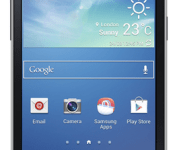
Samsung Announces Another Device, The Galaxy Core LTE

Samsung has ‘another’ new device headed to various parts of Europe, Russia and Asia. The Samsung Galaxy Core LTE, or the Galaxy Core 4G, is another low-end to mid-ranged offering for consumers who crave data speeds, but need the premium price tags associated to the higher-end flagship devices with powerful processors and HD screens.
The Galaxy Core will offer up a 1.2GHz dual-core processor, 1GB of RAM, 8GB internal storage with MicroSD card support, a 4.5-inch PLS TFT screen at 960 x 540 along with a 5MP rear camera and 0.3 front facer. Powering this little guy is a 2,100 mAh batter. You will end up with NFC and Bluetooth 4.0 right along with Android 4.2.2. Don’t forget, you will also end up with some of the special Samsung apps like S Voice, S Translate and S Travel.
It won’t be a Note 3 or S4, but it will certainly appeal to those that need a little bit more without the premium price tag. Pricing details and launch dates are still under wraps.
Source: Pocket-Lint

HTC Desire 8 to be Unveiled February 24th According to New Images

The HTC Desire 8 will be HTC’s jump back into mid-ranged devices. If you don’t remember, HTC stated last year that they were going to strictly concentrate on premium devices, like the HTC One, instead of multiple devices that included mid to low-range products. The quietly brilliant company then realized how dumb that was, and promised that focus would go into mid-ranged devices as well the premium ones.
The image above was spotted making the HTC Desire 8 official. The render of the phone itself was actually leaked out last week, but not much else came along with that leak. The only specs we know so far is the phone with have a 5.5-inch display and a 13 MP camera. It obviously will have a plastic casing, which gives it more of an HTC One X kind of look to it.

This screenshot apparently has the date February 24th written on it, indicating that HTC will be unveiling the new phone at MWC next week. Any further information we get on the HTC Desire 8, we will let you know.
Source: Talk Android

Samsung Reportedly Drops Out of Apple’s A8 Chip Production Over Low Yields
 Apple may rely on Taiwan Semiconductor Manufacturing (TSMC) for the entirety of its A8 processor production in 2014, claims a report from TechNews Taiwan [Google Translate] (via G 4 Games). Samsung allegedly was dropped as a manufacturer because of low yields in its 20 nm manufacturing process for the A-series processor, while TSMC was able to meet Apple’s demands.
The Wall Street Journal reported back in June 2013 that TSMC may provide some A-series chips for the Apple’s iOS devices in a manufacturing agreement starting in 2014. TSMC was expected to handle up to 70 percent of the manufacturing load, while Samsung would pick up the rest. Production problems may, however, have resulted in Samsung being removed completely from the A8 supply chain.
According to the report, this shift away from Samsung for the A8 processor is not expected to affect production of the A9 processor in 2015. An earlier report suggested Samsung and TSMC may share the production of the A9, with Samsung supplying approximately 40% of Apple’s 14-nm A9 chip family in 2015. This latest report claims Apple may start A9 production with TSMC and its 16 nm process and then shift to Samsung and its 14 nm process when the Korean company can meet demand.
Apple’s A8 chip is expected to make its public appearance later this year in new iPhone and iPad models.
| |

Rock Band and Guitar Hero creator’s next game is Chroma, a free-to-play rhythm-based shooter (yes, really)

Harmonix is charting new territory yet again. The studio that birthed both Guitar Hero and Rock Band, and the only third-party game-development house that created a successful Kinect franchise (Dance Central), announced a new game today: Chroma. Unlike the studio’s last several games, Chroma is headed exclusively to the PC (via Steam) as a free-to-play title. Also unlike Harmonix’s last several games, Chroma is wildly experimental, blending first-person shooting with pulsing electronic beats and garish visuals. The music game studio is even working with an outside team, Hidden Path Entertainment: the same folks behind critically acclaimed shooter Counter-Strike: Global Offensive.
If you’re still wondering what type of game Chroma is at this point, that’s understandable: There’s no such thing as a music-based first-person shooter. That is not a thing that exists (well, unless you wanna count Midway’s terribly amazing Revolution X). So let’s break it down: In Chroma, you play one of five classes (standard FPS fare, from basic assault to heavy “tank”), with weapons and abilities varying based on the class you choose. In the two game modes we played at DICE 2014, we were on a team with other writers battling for control of various points within a level or battling for control of a cart being pushed one way or another (think: Team Fortress 2). Pretty normal shooter stuff so far, right?
The musical wrinkle comes into play whenever you shoot or jump. Fire a sniper rifle shot on the downbeat and connect? That’s a one-hit kill. Jump on the downbeat? You’ll go a little higher. Better yet, jump on a downbeat on a jump pad and chain your button presses to the beat to continuously jump from pad to pad (this all makes more sense in Chroma‘s stylized future-world setting, promise). You can fire most guns whenever you want, and jump at any time, but timing actions to the beat makes a world of difference. That is Chroma‘s bizarre, fascinating premise.
Though we’re sold on Chroma‘s ambition, playing it — at least right now in Alpha form — is a mess. Not just because it’s early, but also because there’s a tremendously steep learning curve. Playing as any of the more advanced classes (engineer, tank) is nigh impossible, as even basic shooting is governed by matching trigger pulls to the beat (we played with an Xbox 360 gamepad, but a mouse/keyboard combo works as well). A visual indicator on-screen helps the rhythmically handicapped with upcoming beats, but even veteran beat masters will have a hard time juggling character control, map navigation, aiming and shooting while at the same time trying to match shots to the beat (not to mention lining up the timing of hitting an enemy with the rhythm of the in-game music).
Beyond being an incredibly risky blend of two totally different game genres, Chroma will live and die by providing a lag-free experience. The game’s dependence on rhythm while also being an online-only shooter means that any lag results in an extremely off-balance game. And all it takes for players to walk away from a free-to-play game is, well, anything. It’s free, right?

As a veteran of FPS games and a longtime Guitar Hero/Rock Band/Dance Central player, Chroma simply threw too much at me at once. It’s hard enough to learn a new level, parse a game type and master basic shooting mechanics without having to also figure out how rhythm fits into that. Frankly put, rhythm is too complex an input to add to a genre (FPS), which is already packed full of inputs. At least that’s how it felt after playing a few rounds of Chroma last week. For what it’s worth, the reps from Harmonix were all keenly aware of the barrier to entry and assured us that a rigorous training program is being created.
Thankfully for Harmonix, enough good will was built up by past work to give us pause before outright writing this off. We’ll give Chroma another shot when it becomes available in closed Alpha this month (sign up right here). Harmonix isn’t giving its new game a hard release date just yet, but says to expect wide availability by “this fall.”

LG intros trio of L Series III smartphones
LG on Monday introduced its third generation of mid-range L Series smartphones. Powered by Android 4.4 Kitkat (with custom LG UI touches), the three devices offer HSPA+ connectivity, Bluetooth , GPS, Wi-Fi, and should be offered in markets with 3G networks.
L Series III smartphone features:
- L90: Includes a 4.7-inch qHD display, quad-core 1.2GHz processor, 1GB RAM, 8GB internal storage, 2,540mAh battery, an 8-megapixel rear camera, and 1.3-megapixel camera.
- L70: Includes a 4.5 inch (800 x 400) display, dual-core 1.2GHz processor, 1GB RAM, 4GB internal storage, 2,100mAh battery, and either an 8-megapixel/VGA or 5-megapixel/VGA camera combo.
- L40: Features a 3.5-inch (480 x 320) display, dual-core 1.2GHz processor 512MB RAM, 4GB internal storage, a 1,700mAh battery, and a 3-megapixel camera.
LG did not make pricing or availability clear; we might learn more at Mobile World Congress.
The post LG intros trio of L Series III smartphones appeared first on AndroidGuys.

Apple’s New Brazilian Retail Store Opens Its Doors [iOS Blog]
Apple’s first retail store in Brazil opened in Rio de Janeiro this weekend, with approximately 1,700 customers waiting in line for the grand opening (via The Globe]. Customers started queueing up on Thursday night for the Saturday morning debut, with groups waiting both inside and outside the Village Mall.

The opening of the Rio de Janeiro store was announced last week on the company’s website and is Apple’s first store in Latin America. The store has a fairly unique single floor, pavilion-style design with a curved glass exterior. Unlike most other Apple retail stores, the Rio de Janeiro location features a split-concept layout where one half of the store is dedicated to product demonstrations while the other half is focused on accessory sales and services.
Speaking to Brazilian news site The Globe, Apple CFO Peter Oppenheimer confirmed that Brazil was an increasingly important market for Apple. The Rio de Janeiro store is part of a larger plan to tap into the Latin American market, which traditionally has been a weak market for Apple due to the high import taxes levied on electronic devices.
Apple will be selling its full product lineup in the Rio store, including the iPhone 5S starting at the equivalent of $1,174, with high taxes making it the most expensive Apple retail store for iPhone purchases (via Bloomberg).
| |
 AIVAnet