



Bitcoin and other cryptocurrencies compromised by Pony botnet

It looks like the Pony botnet that stole two million passwords in December has an even more egregious sibling galloping around. According to security firm Trustwave, this more advanced botnet has compromised 700,000 various online accounts up to date (it’s been active since September), including 85 Bitcoin and other cryptocurrency wallets mostly from Europe. In the months since the equine-loving hackers got the wallets’ private keys, a total of $220,000 have been transferred into and out of the accounts.
Because anyone can take over a wallet with the appropriate private key (and cryptocurrencies’ transactions go through anonymously), it’s unclear whether that much money was actually stolen. Some of those transactions could very well be performed by the original owners themselves. Still, add this incident on top of the $1.2 million Input.io Bitcoin heist in 2013, and it’s clear users need to start using (strong) transaction passwords and store their wallets offline. Those who’ve sadly been negligent in the security department can use Trustwave’s Bitcoin tool to check if they own one of the 85 accounts. Considering popular Bitcoin exchange website Mt. Gox just went dark, as well, we hope nobody’s retirement funds got wiped out.
Filed under: Misc
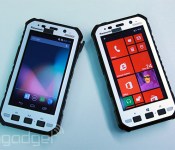
Panasonic’s latest Toughpad has the strength of ten smartphones, and the thickness (hands-on)

Panasonic may have bowed out of the consumer smartphone game, but gadgets for businesses are a completely different story. That’s why the Japanese company came to Mobile World Congress with a new pair of rugged Toughpad smartphones in tow. You can’t mistake them, despite their identical looks, because one runs Android 4.2.2 and the other has Windows Embedded 8 Handheld — and we just got a chance to see what they’re made of.
The Toughpads are well over an inch thick, but the heft is valuable since it helps the duo resist dust, drops, and liquid. Sadly, we didn’t have a bucket of water to hurl the things into, and drops on the carpeted floor of Panasonic’s press room weren’t as satisfying as we’d hoped. These Toughpads are modular (if not as stylish as other concepts we’ve seen). Some of the components lodged in the Toughpads’ backs can be unscrewed and swapped out completely, so folks who can’t think of anything to do with a barcode scanner can kiss it goodbye.
The company may bristle at our use of the dreaded s-word, preferring instead to call them tablets, but come now: if it looks like a smartphone, and makes calls like a smartphone, you’re not fooling anyone. That said, both Toughpads sport the same slew of rubberized buttons, port flaps and 8-megapixel rear cameras. The internals aren’t the same, though: The Windows Embedded version features a 2.3 GHz quad-core Qualcomm Snapdragon 800 chip while the Android model got stuck with a pokier 1.7GHz Snapdragon S4. Both devices felt snappy and responsive, and the 5-inch, 720p screens were better than you’d expect considering these things are meant to take a beating.
The thing to remember here is that you’re not going to waltz into a big box store and see one of these on the shelf. These Toughpads are designed for being tossed around warehouses and construction sites, not in and out of your skinny jeans. The prospective price tag just drives that point home: they’ll run you about 130,000 yen ($1,300) when they officially launch later this year.
Matt Brian contributed to this report.
Filed under: Cellphones, Tablets, Mobile
If you’ve got the SADs, this sunlight tracking wearable could help cure it

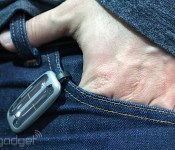
There are wearables to track your exercise activity, food consumption and sleep habits. There are even wearables that want to be smartphones-lite. But never before has there been a portable tracker for daily sunlight exposure. That’s a niche GoodLux is looking to fill with its SunSprite, a solar-powered, Bluetooth 4.0 wireless device with a Harvard Medical pedigree that’s launching today on Indiegogo. And it’s gone everywhere with me this past week in Barcelona as I’ve raced in and out of conference halls to cover Mobile World Congress.
The SunSprite itself is quite small, about the size of a stick of gum, and requires no charger or USB connection as it’s fully reliant on solar power. It simply records user’s daily sunlight exposure and makes that progress available, via a series of LEDs in its center, with the press of one side-mounted button. There’s also an in-development companion app for iOS to gather this data and relay it back to users in a coherent manner, so they can view how different levels of exposure have affected activity and sleep cycles over time.
It seems odd that GoodLux would devote time and resources to creating a wearable with a single, limited purpose — the category isn’t exactly vacant at the moment. A fact further reinforced by Samsung’s recent unveiling of its new family of Gear smartwatches. Despite all that, the SunSprite’s creators believe it has a place in this increasingly crowded market, specifically for users that suffer from SADs (seasonal affective disorder) or depression. Dr. Jacqueline Olds, a Harvard Medical researcher and one of the SunSprite’s co-creators, points to over 30 years of sunlight exposure research as justification for her tiny gadget’s health merits. Armed with that backlog of data, the company’s confident it can provide users with meaningful insight into how they should be living their lives for the better. Translation: they need to get outside more.
Because the SunSprite requires an unobstructed view of direct sunlight, it has to face the same direction as the wearer’s eyes. It’s a requirement that led the company to include a strong, rubberized magnetic clasp on back for securely fastening the SunSprite to any article of clothing — be it a bulky winter jacket, loose T-shirt or jeans. The downside to this, however, is that the magnet’s just a little too strong for its own good and, in my experience, that made for a very uncomfortable experience. No matter where I placed the SunSprite, I could feel the magnet’s nauseating pull on my body and, consequently, thought only of stowing it back in my bag. That’s the exact opposite impression you’d want from a wearable, but thankfully, GoodLux is aware of this unfortunate quirk and plans to address it in final production units.
So did I see a marked improvement in my mood and energy levels during my limited time with the SunSprite? That’s hard to say since I’ve only been using it for about a week. According to Dr. Olds, slight improvements in mood and sleep can be experienced in just three to four days tracking sunlight exposure with the device. But most users will likely need a full three weeks of monitoring to witness any significant changes in overall health. I will say, though, that on the days the meter indicated I’d received my full blast of sunshine, I had spent my working hours feeling relatively calm, upbeat and energetic.
That was when I remembered to check the SunSprite. Since it doesn’t offer any meaningful information at a glance outside of sunlight exposure, I actually found myself forgetting its existence entirely. That’s hardly ideal for a wearable device. And it’s all the more reason why the company’s exploring ways to integrate its tracking tech into other devices and clothing, or build out its functionality with the addition of Vitamin D monitoring.
For now, though, GoodLux is simply focused on getting this version one product out to market and into the hands of its target demographic: quantified selfers. You know, the types that love to log their habits and set goals for healthier lifestyles. It’s this group of people GoodLux is hoping will contribute to its Indiegogo campaign. Early backers that manage to snag one of the first 100 devices will have the honor of paying only $90 for the SunSprite, while those that follow will have to shell out $100. When it eventually makes it way to retail, expect to see the SunSprite go for an MSRP of around $150.
Filed under: Wearables
Source: Indiegogo
Yahoo launches UK edition of its News Digest iOS app

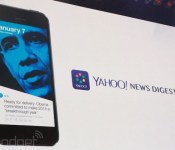
With MWC in full swing, CES seems but a distant memory. It was at last month’s trade show that Yahoo debuted its News Digest app for iOS, which serves up twice-daily dumps of important news bites. It launched with a US audience in mind, but as of yesterday, Brits can now download their very own UK edition of News Digest. In principle, it delivers exactly the same kind of curated content — quick-to-read news nuggets that summarize the takeaway using various types of media — just with a greater focus on UK-centric stories and, we assume, with everything spelt correctly.
Filed under: Cellphones, Tablets, Software, Mobile
AT&T offering free global texting, drastic calling discounts
AT&T on Tuesday announced new additions to its Mobile Share and Mobile Share Value plans. Effective Friday, February 28, customers on either of these plans will be able to send unlimited text, picture, and video messages to nearly 200 countries around the world.
AT&T will also offer international calling at a rate of one-cent-per-minute to approximately three dozen countries. Called the World Connect Value plan, it is offered to all postpaid customers who add the $5/month feature to their rate plan.
Countries expected to offer the penny-per-minute deal include:
Anguilla, Antigua and Barbuda, Aruba, Bahamas, Barbados, Belize, Bermuda, Bonaire, British Virgin Islands, Cayman Islands, Colombia, Costa Rica, Curacao, Dominica, Dominican Republic, El Salvador, Grenada, Guadeloupe, Guatemala, Haiti, Honduras, Jamaica, Martinique, Montserrat, Nicaragua, Panama, Saba, St. Barthelemy, St. Eustatius, St. Kitts and Nevis, St. Lucia, St. Maarten, St. Martin, St. Pierre and Miquelon, St. Vincent and the Grenadines, Trinidad and Tobago, Turks and Caicos Islands, and Venezuela.
The post AT&T offering free global texting, drastic calling discounts appeared first on AndroidGuys.

Disney Launches ‘Disney Movies Anywhere’ App With iTunes Integration [iOS Blog]
Walt Disney Studios launched Disney Movies Anywhere, a new online service and companion iOS app that allows you to buy Disney, Pixar, and Marvel movies and watch them across multiple devices. The service has a catalog of over 420 films, with individual movies costing $19.99 each.

Powered by Disney’s Keychest video-on-demand service, the Disney Movies Anywhere app lets customers browse or search through Disney’s vast mobile library and then purchase titles for playback from within the app. The app streams the movie to an iOS device, with an option to download content for offline viewing.
Disney Movies Anywhere will be popular among families, and Disney has added parental controls to the app. Parents using the app on multiple devices can restrict viewing on a per device basis, allowing a parent to access the full catalog on their personal iPad and only G-rated movies on a child’s iPod touch.
Apple users can link their iTunes account to the Disney Movies Anywhere app and sync eligible films with their iTunes library. In a launch promotion, Disney is offering Pixar’s The Incredibles for free to customers who enable this iTunes integration.
Disney Movies Anywhere is available for free from the iOS App Store. [Direct Link]

     |
How will the Blackphone protect you in a world where privacy is for sale?

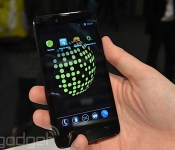
Privacy is a currency. For every company selling your details for profit, there’s another selling you the promise of more security. Recognizing that consumers are running a gauntlet every time they pick up their smartphone, the group of different companies have partnered up to offer something different. Announced earlier this year, the Blackphone is an Android smartphone that prioritizes privacy and security, shielding your data from from carriers, advertisers and malicious third parties who could trade your details for the purposes of profit or oppression — and it’s on sale today for $629.
How does it work? The idea is pretty simple: You start out with a nicely designed and well-specced Android-based phone, and then package it with some tried-and-tested apps and services that will work out of the box. The first layer is a customized skin called “PrivatOS” which gives the phone a different look and feel, but also works as a platform (soon to be open-source) that encrypts locally stored information. Next, you add in services like Silent Circle and Disconnect.me to enable anonymous phone calls, texts and browsing too. Finally, Blackphone comes with utilities that give the user better control over what third-party software does on their phone. We tried out a dashboard that makes it extremely easy to set the degree of access each app has to cellular networks, WiFi and locally stored info. The video below shows you just how easy Blackphone makes it to take yourself off the grid.
Sharif Sakr contributed to this report.
Filed under: Cellphones, Mobile

Xbox One gets gameplay broadcasting in March update (update)

Xbox One owners eagerly awaiting Titanfall should be glad to hear that the Xbox One’s gameplay broadcasting functionality will light up ahead of the game’s March 11th launch. Included in the second half of the first big Xbox One update is Twitch gameplay broadcasting, enabling users to share gameplay via Twitch.tv (similar functionality already exists in Sony’s PlayStation 4). That update is expected just ahead of March 11th (and Twitch functionality is listed as coming directly on March 11th itself).
Gameplay broadcasting on Xbox One was one of the tentpole features touted at the console’s unveil event last year — the service was delayed ahead of launch, with Xbox lead Marc Whitten telling us at CES to expect it before gaming’s big trade show in June. No real reason is given for the delay; Xbox marketing lead Yusuf Mehdi told the AP that Sony’s version of gameplay broadcasting is, “too limiting,” and Microsoft wanted to take its time to get it right. It’s not clear what that actually means in practice just yet, but rest assured we’re asking Microsoft for more info.
Update: Microsoft detailed the service a bit more this morning. Twitch on Xbox One has at least one feature unavailable on PlayStation 4: the ability to archive streams right from the console. There’s also a video showing the service in action (that we’ve dropped below the break).
Filed under: Gaming, Software, HD, Microsoft
Source: AP

T-Mobile’s UnCarrier plans are working, adds 4.4 million new customers in 2013

When John Legere jointed T-Mobile, the company had lost two million customers and was eating some substantial losses. The party-crashing CEO, however, seems to have turned things around with the UnCarrier, Jump and Simple Choice programs. In the company’s annual report, T-Mobile has announced that 2013 saw the network add a whopping 4.4 million customers across the year. For Q4, while the company added 1.6 million customers, it also marked a loss of $20 million — so perhaps some of the money spent baiting rival networks should have stayed in the bank.
Source: T-Mobile

Disney Movies Anywhere service launches with an unprecedented link to iTunes

Last year Apple introduced store sheet, a feature that allows developers to offer sell things like music and movies inside their apps without making you leave and head to iTunes. Now a new app from Disney is taking the feature a step further, allowing you to play iTunes purchases in-app as well. The first of its kind, Disney’s new Movies Anywhere app not only allows you to purchase and play new Disney movies within the app, it also allows you to stream Disney content you’ve already purchased from iTunes without downloading it again onto your device.
As long as the app knows you’ve purchased the movie before, you’ll be able stream it for free on your favorite iOS device or on your home computer. As you might expect, movies purchased within the app will also be available through your iTunes library to play on your iPhone or iPad without the Disney app, and can be played on your TV via Airplay. To use the app you’ll need to first sign in with both your Disney and iTunes account information. Once you’re logged in, it automatically brings in any Disney flicks you’ve purchased through iTunes previously, as well as any Disney Movie Rewards digital copies you might have redeemed from Blu-ray or DVD purchases.
The app is built using Disney’s proprietary digital rights locker, KeyChest. A technology we’ve been hearing about for years — and part of the reason Disney/Apple haven’t joined in with Ultraviolet digital copies — it could help Movies Anywhere stretch beyond iOS to other platforms in the future. As originally designed, it can work with any studio, DRM system or digital video store that wishes to participate, and unlock copies purchased via one storefront on any other automatically. That could include Ultraviolet shops like Vudu and Redbox Instant, or those going it alone like Amazon, Google Play and Comcast video on-demand — not to mention other hardware platforms like Android and Roku. Of course, Disney has talked up the buy-once play-anywhere tech since 2009 and it’s only now arriving on a single platform and store, so patience may be required.
The app includes over 400 Disney, Pixar and Marvel flicks. Each title also has a bit of extra content — such as behind-the-scenes videos and director interviews — associated with it, with some content exclusive to Disney Movies Anywhere users. Another exclusive for app users: the ability to collect Disney movie rewards points for purchases, something previously unavailable for digital purchases. The iTunes version of the store is available today, and Disney plans to expand the service to other platforms in the future. For a limited time Disney is also offering an incredible perk for downloading the app: a free digital copy of The Incredibles.
Richard Lawler also contributed to this post.
Filed under: Home Entertainment, Tablets, Wireless, HD, Mobile, Apple
Source: Disney (iTunes), Disney Movies Anywhere
 AIVAnet