



Max Mathews’ one-man electronic orchestra
Welcome to Time Machines, where we offer up a selection of mechanical oddities, milestone gadgets and unique inventions to test out your tech-history skills.

Conduct an electronic orchestra, right from your living room!
It may seem like a fever dream headline from the 1950s, but the physical results of Max Mathews’ years of work in computer music wouldn’t fully materialize until the ’80s. His Radio Drum (aka Radio Baton) — although a continual work-in-progress — was a groundbreaking method of controlling computer-synthesized sound through a predominantly wireless three-dimensional interface. Many of its unique abilities were courtesy of technological visionary Bob Boie’s capacitance research, creating “a much more participatory way of enjoying music,” as Mathews described in Stanford University’s Brainstorm. The Radio Drum could track surface hits and even hovering positions, and use that data to control a multitude of audio parameters. It was one of many projects that Mathews worked on during his lifetime and played a part in earning him the honorary title of “Father of Computer Music.”
The Radio Drum / Radio Baton
It was 1955 and Mathews was fresh out of MIT with his Ph.D. in electrical engineering when he signed on at Bell Labs. He was tasked with converting speech to electronic signals and back again as a tool for digitally testing new phone products. Around 1957, he began exploring the possibilities of generating music using computers, which led him to begin coding the first in a series of pioneering programs for synthesis and composition: Music I. In an interview with Curtis Roads in The Music Machine, Mathews described the program’s characteristics at the time: “[Music I] generated one waveform, an equilateral triangular waveform, with the same rise as decay characteristics. You could specify a pitch, an amplitude and a duration for each note and that was it.”
Mathews understood the limitations and was eager to develop it further. As head of Bell Labs’ Acoustical and Behavioral Research Division from 1962 through 1985, Mathews continued to focus on synthesizing music with computers, and that research culminated in his seminal 1969 book The Technology of Computer Music. Following the introduction of the integrated circuit in the ’70s, more powerful and affordable computers began to appear on the market, opening up new opportunities for the field. Mathews stated in an interview with Wired, that “it would take an hour just to record 18 seconds of music” back in the ’50s, but with new developments, machines could finally produce music faster than humans could play it. This led Mathews to develop his GROOVE software and RTSKED algorithm, both of which were focused on enabling real-time musical performance.

During a stint in the ’70s as science advisor at IRCAM (Institute for Research and Coordination of Acoustics/Music) in Paris, Mathews developed the idea for the Sequential Drum. Professor and composer Andrew Schloss, a longtime associate of Mathews, recognizes this device as a conceptual ancestor to video games like Guitar Hero. He saw the Sequential Drum as one of the earliest examples of storing music on a computer for on-demand playback using a control interface. The hardware involved in the Sequential Drum concept was the first incarnation of what would eventually become the Radio Drum. It consisted of a drum head with two subdermal wire grids that were connected to a computer, and could translate hits into triggers for computer-synthesized sounds or sequences. The surface hits also generated an amplitude signal, based on the velocity of the strike (for loudness) and the X and Y location for each hit was used to indicate timbre. It was a major step forward for computer-controlled music, but still had a degree of limitations.
Enter Bob Boie, robotics engineer, capacitive-sensing expert and associate of Mathews from Bell Labs. Around 1985, Boie developed a radio technology that could track the position of an object in three dimensions and initially considered using it as some type of mouse-like device. Mathews saw the project and it seemed obvious to him that they should redirect its development into a music controller. The use of Boie’s capacitive sensor for 3D tracking was a breakthrough at the time, pre-dating devices like the Kinect and Leap Motion by several decades. With the Radio Drum’s surface now wired with receiving antennas and two batons (or drumsticks) outfitted with transmitting antennas, location data for the batons could be registered in X (right-to-left), Y (top-to-bottom) and Z (position above the drum surface) coordinates. You could use the Radio Drum like an instrument, playing notes and controlling variables such as pitch, envelope and volume, or you could use it to trigger and control pre-recorded sequences of music rather than notes, as Mathews had envisioned. He developed his own Conductor Program software just for this purpose and when used in this manner, the device is commonly referred to as the Radio Baton.
The Radio Drum/Baton went through many iterative developments over the years with the help of synth designer Tom Oberheim, who produced the subsequent hardware. A limited number of devices was produced and sold, but musicians and academics continued to be intrigued by the technology and its unique potential as a performance tool. Its original RS232 serial interface was updated to MIDI in the early ’90s and continued adjustments were made to the antenna and sensitivity settings. Schloss, who often received updated versions of the Radio Drum from Mathews and Oberheim as they were developed, continued to compose for the device — primarily for percussive pieces — and even made his own changes to the hardware. During the mid-’90s, Schloss paid a visit to Boie (then retired) and showed him this latest version of the Radio Drum he’d been working on. Immediately, Boie offered to make some “necessary” changes to the device and soon presented him with, what Schloss now calls, the “radiodrum,” a percussive-focused version that he continues to use for performances today.
 Other modern musicians have sought wireless ways to enhance their live performances, including MIT’s Elly Jessop. Her musical glove project inspired Imogen Heap to experiment further with gesture control interfaces as well, manipulating effects, volumes and sound triggers with a sweep of her wire-enmeshed hands. When comparing the functionality of the Radio Drum to more modern developments, Schloss notes that while these newer devices are ideal for exploring the range within three dimensions, Boie’s capacitance technology for the Radio Drum still stands the test of time, outperforming many similar control devices in tracking high-speed motions at close quarters, especially in percussion. As for Mathews’ Radio Baton and Conductor Program finding a place in the homes of casual music fans, it’s still a possibility. And while the concept may be ahead of its time, one thing’s for certain: That Bieber kid could probably do with some lessons in conducting
 himself.
[Image credits: Patte Wood CCRMA (Lead image of Max Mathews); Boie, Mathews, Schloss (Radio Drum drawing); Andrew Schloss (Radiodrum performance – mid-90s)]

Tim Cook Visits United Arab Emirates Amid Rumors of Apple Retail Store Plans
Following his visit to Ireland on Friday, Apple CEO Tim Cook has been spotted in the United Arab Emirates this weekend, as highlighted by tbreak media. Cook posed for photos at Apple reseller Virgin Megastore at the Al Wahdi Mall in Abu Dhabi yesterday, while several photos from today place him in Dubai at the massive Dubai Mall.

The reason for Cook’s visit is unknown, but Apple users in the region are unsurprisingly speculating that he may be meeting with relevant parties about the possibility of an Apple retail store. MacRumors received an unconfirmed tip last year claiming that Apple was making plans to open a major store at The Galleria in Sowwah Square in Abu Dhabi, a luxury mall that opened late last year, but no additional reports of such a project have yet surfaced. The source claimed that the store would not open for several years and that it could arrive as the world’s largest Apple retail store.
Alternatively and much less interestingly, Cook may simply be visiting to check up on the company’s existing reseller network and maintain relationships with government officials in the region.
     |
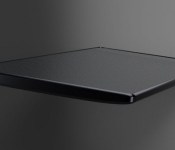
Too soon for a Lenovo Nexus 6 concept? Not so says Jermaine Smit
 One of the most intriguing, if sensationalist, theories to come out of the Lenovo deal to acquire Motorola Mobility from Google is that the Chinese-based manufacturer will be producing the next and last Nexus device, a rumour which originated with Eldar Murtazin. Murtazin has gotten quite a few things right over the years, so his words likely won’t be taken lightly, but considering how past rumours about Nexus devices have been very wrong before (even catching out the great evleaks) we can’t help me take this news with more than just a grain of salt. Nevertheless, that hasn’t stopped one designer from coming up with his take on a Lenovo Nexus 6 concept.
 This concept design comes to us courtesy of Jermaine Smit, who’s given us a very minimalistic, though very elegant, concept of a potential Lenovo Nexus 6. It’s interesting to ponder, even though we have no idea what Lenovo has in mind for the U.S., both design-wise and strategically, or if Google would even work with Lenovo considering they didn’t even really work with Motorola when Google owned them.
This definitely won’t be the last Lenovo Nexus 6, or even just Nexus 6, concept that we’ll see before a tangible device is released by Google, but it’s always nice to dream. What do you think about Smit’s design? Do you believe Lenovo will be making the next Nexus device? Let us know in the comments.
Source: Concept Phones via PocketNow

[LEAK] Evleaks leaks the existence of the HTC M8 Mini
 Prolific leaker, evleaks, is often quite straightforward in his Twitter leaks, and although his latest tweet is decidedly cryptic, it seems to nevertheless confirm the existence of a HTC M8 Mini:
0P6B:HTC M8::0P8B:M8 mini
— @evleaks (@evleaks) January 31, 2014
I think it’s safe to assume that the first four charaters before the device names are some kind of internal model number reference, but it’s definitely the first time that we’ve heard of a smaller HTC M8 device been mentioned. HTC attempted a similar feat last year with the HTC One Mini, but with disappointing hardware and an inflated price-tag, the One Mini failed to capitalize on the same hype created by its bigger brother, the HTC One.
One popular theory is that the HTC M8 Mini will be released alongside the full-sized iteration of the HTC M8, which is expected to be soon, if not at MWC 2014 this month, while other suggest that the M8 Mini will be released shortly after the M8′s announcement. What do you think HTC is planning to do with the HTC M8 Mini? Do you think they should do something differently compared to last year’s strategy with the HTC One Mini? Let us know your 2 cents in the comments below.
Source: Twitter

Scentee’s smelly smartphone notifications are now available worldwide

If you were crestfallen when you heard that Scentee’s fragrance-emitting smartphone add-on would be hard to get outside of Japan, you can relax — it’s now available worldwide through the company’s site. The perfume plug-in sells for $35 by itself (plus a whopping $30 in shipping), while scent packs for coffee, lavender, rose, rosemary and strawberry will cost you $5 each. That’s quite a lot to pay for smell-based notifications on your Android device or iPhone, but Scentee is at least more practical than some of the other novelty imports that we’ve seen as of late.
Filed under: Cellphones, Peripherals, Mobile
Via: Electronista
Source: Scentee

AT&T Launches Lower-Cost Mobile Share Value Plans for Families [iOS Blog]
 AT&T has announced that it will be introducing new Mobile Share Value Plans for families starting February 2, bringing reduced costs for both new and existing customers with monthly data plans of 10GB or more. Under the new terms, a family plan including two lines, 10GB of data, and unlimited talk and text starts at $130 and increases $15 for each additional line thereafter.
The updated pricing applies to new customers who buy a phone under the AT&T Next early upgrade program and sign up for an eligible data plan, as well as existing customers that switch to or already have the required data limit. New customers who also bring their own smartphone or purchase one at full price can also receive the new plan.
Furthermore, AT&T’s new plans can also be combined with an existing promotion that offers a $100 bill credit to new and existing customers who add a new line of service. Last December, the carrier originally launched Mobile Share Value Plans offering a $15 monthly discount to shared data customers that met one of four requirements, along with a new 18-month option for AT&T Next.
The move comes in the midst of a marketing war between U.S. cellular carriers, particularly between T-Mobile and AT&T. Recently, AT&T also began a new promotion to offer up to $450 in credits to customers that switch to it from T-Mobile, while T-Mobile launched a similar program offering up to $350 in credits to customers that switch to its network.
| |

Lockheed Martin’s autonomous convoy tests bring Skynet one step closer to reality

Drones delivering your latest George R.R Martin instalment? Cute. But the real work of autonomous vehicles is being pioneered in the military. Lockheed Martin has recently completed testing of full autonomous convoys in Fort Hood, Texas. The test is part of the Army and Marine Corps’ Autonomous Mobility Appliqué System (AMAS) program, and saw vehicles successfully navigate an urban-style route, complete with obstacles a real-world convoy might encounter (humans, junctions etc). While regular military vehicles have always been designed to keep their human cargo as safe as possible, the new technology could remove the need for putting soldiers at risk altogether. We’re a way out from seeing this deployed in active service, but for now the results bolster the US Army’s efforts to introduce more robotic systems into real warfare.
Filed under: Alt
Via: SlashGear
Source: Lockheed Martin

Revised Renderings of Apple’s New Flagship San Francisco Store Surface
Revised plans for Apple’s proposed flagship retail store in San Francisco’s Union Square has revealed new renderings, reports SocketSite. The prospective store is now pictured to feature two full-height sliding glass panels standing 44 feet tall and 23 feet wide, allowing the building to be opened up to the street. The store will also include regular glass doors that would act as a primary point of entry when the larger doors are closed.
 Apple’s revised design for new San Francisco flagship store
Apple originally filed plans last May to move its existing Stockton Street flagship store three blocks north, giving the store a larger footprint and prime location in the Union Square shopping district. However, the plans quickly ran into opposition as critics panned multiple aspects of the proposal, such as the idea to remove a sculptural fountain created by late sculpture artist Ruth Asawa and the installation of a 80-foot-long windowless wall along a key pedestrian and transit corridor. Soon after, city officials made clear that significant changes would be needed for the project if it was to receive approval.
Apple then filed revised plans in August to address some of the proposal’s biggest criticisms, stating that it would keep the fountain, add an eight-foot wide window along the Stockton Street frontage, and move to pull the proposed glass wall of the store back by four feet to add a greater sense of depth and more shadows for visual interest.
 Apple’s original design for new San Francisco flagship store
City officials were reportedly pleased by Apple’s proposed changes, although the project must still pass through full review before it can be approved. A part of that review will take place on Wednesday, February 5, as the San Francisco Historic Preservation Commission will meet to discuss Apple’s request for a permit to construct the store. Apple has not announced when it plans to open the new store, and any internal targets may yet be affected by San Francisco’s review and permitting processes.
Thanks, Cody!
| |

Acer’s WQHD S7 Ultrabook finally hits the US next week

While we found the S7 a “near perfect” machine, one of our gripes was that Acer didn’t offer any versions with a 2,560 x 1,440 high-res display in the US. Now the company is dropping off Wide Quad High-definition (WQHD) S7 laptops in the states, and has already specced out two samples packing a 256GB SSD and 8GB of RAM. The S7-392-6425 will be $1499 and use Intel’s i5-4200U processor, while the S7-392-9439 is priced at $1,799.99 with an i7-4500U. You can snag both next week at a variety of online and retail outlets including Frys and Amazon.

HTC One for Sprint gets its KitKat update a little early

HTC must feel that it’s best to underpromise and overdeliver. While the company told American One owners that they wouldn’t get KitKat on time, the 535MB Android upgrade is already available on Sprint; eager subscribers just have to check for an update to start downloading. More patient types can wait until February 11th, when the carrier will begin pushing the OS to all users. There’s no word of an accelerated launch on other US networks, so Sprint customers may be sitting pretty for the next couple of weeks.
[Thanks, Mike]

HTC One Owners – Happy to share that Sprint is the 1st US carrier to launch #Android 4.4 on HTC One! Update available soon! #SprintRocks!
– Mo (@moversi) February 1, 2014
Filed under: Cellphones, Mobile, HTC, Sprint
Via: Android Central
Source: Sprint, Mo Versi (Twitter)
 AIVAnet