



Initial Phase of Apple’s Expanded Austin Operations Center Ready for Occupancy [Mac Blog]
The first two buildings in Apple’s new Austin, Texas campus are ready for occupancy, with the company having been issued temporary occupancy permits for two office buildings that span 290,000 square feet, according to a report in the Austin Business Journal. Photos published last year showed the buildings under construction along with a landscaped pond, fences and sidewalks, while new photos accompanying today’s report show the initial phase of the campus appearing essentially complete.
The Cupertino, Calif.-based technology company has been issued temporary certificates of occupancy for two buildings totaling 290,000 square feet. Another four buildings are in early stages of permitting review, totaling 513,000 square feet. Two parking garages are in the city’s planning review process and two other buildings are planned, according to city officials.
 Apple’s two new buildings on Austin campus (Nick Simonite/Austin Business Journal)
The plans for the expanded campus were announced in March 2012 and include two major phases of development with an expected completion date of 2021. Apple agreed to invest $56.5 million to build the new facility in the first phase of the project, while the second phase includes a $226 million expansion. Apple is expected to finish the entire first phase of construction before December 31, 2015.
Apple committed to spend approximately $304 million on the project and will hire 3,600 employees for the 38-acre operations center when completed. The city of Austin and Texas’s Enterprise Fund have agreed to contribute $30 million in incentives to the project. Apple, thus far, has invested $27.1 million in the design and construction of these first two buildings, which are adjacent to Apple’s original operations campus in the city.
     |
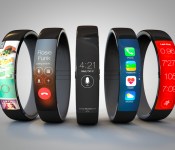
Apple Fuels iWatch Rumors by Seeking Exercise Physiologist to Lead Fitness Tests
Apple is looking to hire an Exercise Physiologist to oversee cardiovascular fitness and energy expenditure tests at its main headquarters campus. The new position was posted to the company’s job board today (via 9to5Mac).
Design and run user studies related to cardiovascular fitness & energy expenditure, including calories burned, metabolic rate, aerobic fitness level measurement/tracking and other key physiological measurements.
Candidate will be knowledgeable about the physiological effects being measured and how to avoid potential inaccuracy and experimental error due DOE flaws and/or reference monitor (i.e. metabolic cart, etc.) usage issues.
The role will need to apply relevant knowledge to the design of products and their testing/validation through user studies.

The requirements of this position suggest the employee will be working on Apple’s rumored fitness-focused wearable. The company has been making a strong push into the medical and fitness field with recent hires like sleep expert Roy J.E.M Raymann from Philips Research and Michael O’Reilly, M.D., former Chief Medical Officer of pulse oximetry company Masimo.
This elite team of medical researchers is presumably designing Apple’s iWatch along with fashion experts like Former Yves Saint Laurent CEO Paul Deneve, who was hired last year to work under Tim Cook on a “special project”. Apple’s fitness band may connect to the iPhone via Healthbook, a fitness app expected to be released alongside iOS 8.
| |

Apple Picks Up Numerous ‘.Camera’ and ‘.Photography’ Domain Names
 Last week, we noted that Apple has registered several new “.guru” domains, part of an initial batch of new generic top-level domains (gTLDs) being launched over the coming weeks and months.
That rollout is continuing this week, and Apple has wasted no time securing a number of additional domains in the new .camera and .photography families. Among the new domains registered by Apple:
– aperture.camera and aperture.photography
– apple.camera and apple.photography
– facetime.camera and facetime.photography
– imovie.camera and imovie.photography
– iphoto.camera and iphoto.photography
– isight.camera and isight.photography
– photobooth.camera and photobooth.photography
– retina.camera and retina.photography
Other new gTLDs opening for registration this week include .equipment, .estate, .gallery, .graphics, and .lighting. While Apple has apparently placed blocks to prevent registration of its own trademarks under these new gTLDs, such as apple.estate and macbook.lighting, the company so far appears to have only pursued active registrations in the .camera and .photography families.
As with the new .guru domains registered by Apple last week, the company’s new .camera and .photography domains are not yet active, and it is unclear whether Apple has plans to actively use them in the future.
| |
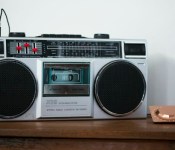
‘Beep’ works like a Chromecast for your old speakers

If you want to make your favorite speakers wireless, you have a few options. Nothing on the market, however, is quite like Beep. Launching today, the tiny dial works like a Chromecast for your speakers, and lets you cast tunes from your mobile device over Wi-Fi. The creation of two ex-Android engineers, the project has financial backing from big names like David Dolby and Alexis Ohanian.
Beep can be connected to any speaker in your home that has a 3mm, optical or aux-in connection. Wi-Fi setup is done in a few minutes using an accompanying mobile app, and once connected you’re able to pump out the jams in any room of your home directly from your Android or iOS device. Each speaker you want wireless will need its own Beep, and for the time being speakers can’t be paired together to create stereo setups like you can with Sonos. You can name each setup by location with things like ‘Bedroom’ or ‘Kitchen’ to keep them straight, and everyone on your wireless network is free to connect and rock out.
We had the opportunity to play around with a prototype of Beep this week in San Francisco, read on for our first impressions of the device after the break.
While it appears to be made metal, the prototype we tried out has a body and dial made of plastic that feels a bit of the cheap side. Beep co-founder Daniel Conrad tells us more metal parts will be added in the final product however, to make it heavier and add an old school audio-dial feel.
One standout feature of Beep is the lights on the front of the device. While in use, the lights around the dial blink in a starry fashion. Tapping the center of the dial will start or stop your tunes. When you tap to adjust what’s playing, the lights burn constant and indicate volume, which is controlled by turning the dial. It’s a beautiful-looking display, and something you’ll want to show off rather than hide in the back of your entertainment center.

In a nutshell, playing music is as easy as it looks. Beep works by selecting the cast button within an app and picking your speaker of choice. A URL is then tossed to Beep with audio caching and decoding handled inside the dial. Much like Chromecast, with Beep you’re limited in what you can play by the apps the device supports. For now, that means you can only use Pandora’s mobile app, but Conrad says they’re already in talks with a number of other major players in the space, with plans to support them all. Unlike Chromecast, Beep will also let you play music stored on your phone. At launch, the app will support MP3 and AAC files, with plans to add more based on user feedback.
You can get your hands on Beep this fall for $149. If you’re ready to buy now, the company is offering preorders for $99, with a $10 discount for every friend you convince through Facebook or Twitter to buy as well. Ultimately the company hopes to also license its Wi-Fi technology to speaker companies to build into units, so in the future you might buy a set of speakers with “Beep inside” out of the box.
Filed under: Wireless
Source: Beep
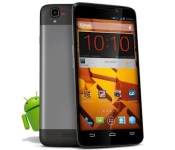
Boost Mobile has a limited-time deal on unlimited LTE data for $35

Remember when you had the option to get unlimited data for $30 on most carriers? Yeah, us too, and we won’t hide our envy for those who are grandfathered in. To alleviate some of these troubles, Boost Mobile is kicking off a temporary offer on an all-you-can-have plan, giving folks who sign up for service by March 31st a chance to have unlimited access to voice, text and LTE data for $35 per month. There are a few caveats, however: The deal will only be valid for the the first six months of service, after which you’ll have to pay the regular monthly fee of $50, and data is set to be throttled once you reach the 2.5GB threshold. If that still sounds good, then head over to Boost’s site (or a brick-and-mortar store) to take advantage of the promo before it’s too late.
Filed under: Cellphones, Wireless, Mobile
Source: Boost Mobile

Dayframe adds Chromecast support
Now that Google opened up the Chromecast SDK to the public, more apps are gaining support for the tiny wifi-connected dongle.
One of the newest is Cloud TV’s Dayframe that was recently updated to version 2.0.
In the slideshow app Dayframe 2.0, besides have a new user experience and interface, it allows you to play photos, albums, photostreams and playlists of albums and photostreams on your big screen.

Once casting to your Chromecast, you can easily flip through photos by swiping through them on your device, plus you can “zoom to fit or fill,” pause, shuffle and “like” your own photos.
Besides being able to cast your locally stored photos, Dayframe will also cast photos from Instagram, Dropbox, Facebook, Google+, Flickr, Twitter and 500px.
Dayframe 2.0 is free, to be able to use the Chromecast functionality, you need to complete a $2.99 in-app purchase to update the app to “Prime,” which also adds shuffle mode and custom playlists. If you previously purchased Dayframe Prime, before the app utilized IAP, it will still work with Chromecast.
If you’ve been looking for a beautifully designed app to view your photos on a larger screen, be sure to check out Dayframe.
The post Dayframe adds Chromecast support appeared first on AndroidGuys.

Twitter’s opening up your timeline data… for science!

There’s a veritable wealth of data to be gleaned from the world’s tweets, but apparently it’s not so easy for researchers to get a hold of. To that end, Twitter has announced that it will start granting certain research institutions no-cost access to the globe’s (public) 140-character musings as part of its Data Grants program. If you’re thinking that this sounds a bit familiar, it’s because Foursquare recently did something similar and even used the same company — Gnip — to do the legwork. This could possibly give scientists valuable insights about where diseases originated or even a snapshot of slang patterns and global events, for example. The deadline for the first wave of applicants is this March 15th should you want to be among the first to put Earth’s tweets under the microscope.
Twitter Data Grants: A pilot program to give researchers access to public and historical data. Learn more https://t.co/kj0QqZGqqg
– Twitter Engineering (@TwitterEng) February 5, 2014
Filed under: Science, Internet
Source: Twitter Engineering
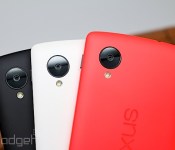
This is the red Nexus 5 (hands-on)

Valentine’s Day is coming up, and ’tis the season for special red versions of well-established phones to magically pop out of the woodwork. It seems to happen at least once or twice this time of year, and the first one to make an appearance this year is the Nexus 5. Just like its black and white counterparts, the collaboration between Google and LG is now available in the Play Store for $350 (16GB) and $400 (32GB) and comes with all of the same specs.
The red Nexus 5 showed up at the door, so we wanted to take the opportunity to snap a bunch of shots for those of you who may be on the fence about whether or not to buy one. Is it any better than the other colors? Not really, but it all comes down to personal preference. The red version has the same smooth matte finish as the white model (in contrast to the black model, which has a soft-touch plastic feel). As you can see, LG and Google opted for red sides and edges, as well as a red-earpiece to go along with it. As there is more to look at than to actually say about the new hue, head straight down to our gallery below, which offers a perspective from nearly every angle.
Filed under: Cellphones, Wireless, Mobile, Google, LG
Motorola holding press event on February 25
Motorola has sent out invitations to an event for press and executives which takes place on February 25. Coinciding with Mobile World Congress, the soiree also happens to be held in Barcelona, Spain.
Normally, this would indicate a potential device launch or introduction of a new line of products but that may not be the case this year. Most likely this will be Motorola and Lenovo’s time to address concerns, talk road map and strategies, and speak about the new acquisition.
Motorola indicates that more details will come to light in the next few weeks leading into the event.
via CNET
The post Motorola holding press event on February 25 appeared first on AndroidGuys.
HTC promises wearable device by year end
The struggling hardware maker believes this is a turnaround year
HTC has confirmed that they, too, will release a wearable device later this year and join a quickly crowding market. Speaking with Bloomberg recently, HTC Chairman Cher Wang said that one will be available by the Christmas shopping season.
Lest you think HTC happens to just be jumping on a bandwagon, the company advises that they’ve been working on smartwatches and wearable devices for “many years”. But, with problems such as LCD light and battery, it has not been easy bringing something to market.
Regardless of whether HTC was already developing this stuff, they will be perceived as late to the game by the end of the year. Samsung will likely have two generations of their product in the market and there’s stiff competition from the likes of Qualcomm, Pebble, and a host of others.
HTC feels good about this year, however, and thinks 2014 will treat them much better than last year. We’ll see how things get going when HTC’s investor conference kicks off on February 10.
The post HTC promises wearable device by year end appeared first on AndroidGuys.
 AIVAnet