


Qualcomm Toq review
Announced back in September the Qualcomm Toq is a unique smartwatch experience first targeted at developers. Paired to Android phones via Bluetooth, one of its key features is its Mirasol display helps set it aside from other wearable devices.
As someone who has not spent time with other smartwatches, I was curious to see how a general consumer would find the developer-centric device. After spending roughly a week with the Qualcomm Toq I am really liking a few things and loving a few others. This is not to say, however, that it’s a perfect device; a few items downright frustrate me.
First Impressions
Starting with the outside of the box and its artwork and details I felt as if Qualcomm had targeted this to a wider audience than just early adopters and developers. This thing looks as if it could be found on the shelves of a retail store or electronics outlet.

Cracking the box open you find the watch nestled in a foam holder, a handful of pamphlets and papers, and a strange mystery box. What it is? Simply put, it’s the unit you’ll need to use to charge the watch. There are two empty spots inside the box; these are are reserved for the wireless earbuds due later. Pushing the little button on the left hand side of the now-open box a piece of plastic rises up to sit perpendicular to the unit. This is the specific component that charges your Qualcomm Toq.

I searched the watch over, looking for a microUSB port and a mild sense of panic/agitation set it. How am I going to charge this and will I need to do it every morning or evening? Thankfully, the battery life on this smartwatch is very generous. The idea of putting my watch back on this block each night or having to get back to the office desk was not something I looked forward to doing.
You’ll want to put the charging unit on your desk, night stand, or somewhere you find yourself every few days. Sure, you could do the car, but this rectangular thing is designed for longer term placement. Hey, at least we’re not talking about some proprietary cable. To me, carrying a separate cable around is more frustrating than this type of scenario.
One gripe I have with the Toq is that you must use this unit to power on the device. You can directly power off the smartwatch but are forced to return it to the base to turn back on. On a positive note, there’s no real reason to have to turn off the watch and this problem is not as bad as it sounds.
The model I reviewed featured a white, limited edition Toq. I found the band to be rather fashionable and the whole thing looked generally futuristic. There’s a “quilt” pattern imprinted ever so slightly on the bands which provide a nice touch.
Speaking of the bands, you have to cut the watch strap to fit. Qualcomm provides a number of spring-loaded pins to put the somewhat flexible band into place; only one is needed as the others are extras. A word of caution: you can always go shorter and tighten the band up. Cut too much off the band and you’re done. Period. You cannot buy new bands. Not to worry, Qualcomm does have some instructions and a handy video to help guide you through the process. Just don’t put on a bunch of weight after you set yours up.
The Display
The display itself is rather big (1.55-inches diagonally) and the whole experience feels clunky at first. Clasping the watch is nice and solid and everything feels like it’s locked in tightly. As a guy who stopped wearing a watch right around the time he started carrying smartphones, it felt foreign to have something so big on my wrist.

Because Qualcomm’s Toq employs a Mirasol display it’s an always-on screen with time, weather, or calendar appointments. Indeed, this is a color display that provides some depth and character. Do note, however, that it is nowhere as vibrant or rich as the press photos lead you to believe. Heck, even the stuff shown inside the Toq app (later) aren’t represented accurately. And, when sitting next to a sharp, bright smartphone, the image looks even worse. My advice: lower your expectations here and you’ll be alright.
There are no visible buttons on the watch however there are two that can be actuated in the bands. On the one closest to the user you have a home button. On the opposite band is a place to double tap which brings up the front lighting. There’s no backlight to Mirasol displays so Qualcomm lets you shine a light on your image from the front. You’ll become quite familiar with the light as there’s literally no way to see the screen in the dark.
All in all, the display is very crisp and looks sharp from any angle. You don’t see any sort of pixelation or fuzziness to the image and in most lighting conditions it’s gorgeous. It’s just not as bright as what’s advertised.
Android App
To set up the watch and personalize the experience you will need to first download the Android application. I was really impressed with the app, its layout, and associated options. It’s here that you pair the Toq to your phone and then adjust things such as the clock and icons. You can choose from any combination of 17 different clock styles and 6 icon styles. Down the road I would love to see more options offered up, be it from Qualcomm or from other developers.
The app also lets you configure which music player you want as default, which apps you want notifications from, and other things such as light timeout.
General Usage
To me, I find the Qualcomm Toq is most easily described as an enhanced notification system with minor functionality. It’s great for letting you know who is texting you, the basic details of an email, or who might have liked that latest Instagram photo. You can easily toggle which apps you care about so that only the important stuff gets through. Don’t want to be notified of every Facebook like or social media update? Leave it off the list.
The Toq is connected via Bluetooth and provides for some basic interaction between the watch and your smartphone. It’s easy to accept or reject a phone call, play music through your favorite media player, and read incoming text messages. On the other hand, you can’t help but feel handcuffed by the inability to do a little more. You do have some automatic replies, though to shoot of as text messages. Can’t take a call because you’re in a meeting? Presto. Sadly, there’s not much beyond as it pertains to actions.

I would really like to see some added functionality for emails and other apps. Nothing too crazy, of course, but just stuff we can do from our notification bar from smartphones. I found myself wanting to delete or archive emails, delete texts, and like and favorite things from select apps. I get that the screen size limits much of this but it feels like there’s room for improvement.
Along the lines of notifications, the Toq works well if you are only receiving them one at a time. Get a handful of emails or texts at once and things get hard to discern. And, because you cannot dismiss or delete them, it’s tough to do much from the watch.
Navigating from feature to feature is a breeze; everything feels intuitive. Swiping from side to side will lead you back home or into “applets”. These applets can be set as shortcuts to features like calendar, music player, settings, weather, etc. It’s not necessary, though, and you can quickly get to each of these from the home screen. With only a handful of applets to choose from, it’s not a feature I used much.
Battery Life
If there’s one true standout feature in the Qualcomm Toq it’s the battery life. Tucked inside the clasp of the watch band, it’s impressive to say the least. Thanks to the Mirasol display and its special powers I’ve been getting 4-5 days of usage out of the watch without charging up. Do note, however, that if you take your phone out of range from the Toq the battery will deplete pretty quickly. Twice I left the Toq on the kitchen counter overnight and took my phone to the bedroom to charge. Twice I woke up to messages that the battery was critically low.
Price
At $350, the Qualcomm Toq does not come cheap. It’s priced higher than the Samsung Galaxy Gear and more than double the Pebble. On one hand I get that it’s a developer device like Google Glass. Early tech is unfortunately more costly than second generation and general consumer wares. On the other hand I felt like there could have been more for the money. I am not an expert on pricing stuff like this but I’d like to see it at least $50 lower, perhaps more.
After spending the first few days with the Toq on my wrist I took it off for a day then repeated the cycle. I was looking to see how much I missed it when it was not there. The first day I was without it I did not care all that much. The second time around I missed having it much more. I had grown accustomed to managing music in the car without fussing with the phone; I felt a slight nuisance in having to grab my phone to see who was texting or emailing.
Conclusion
The Qualcomm Toq is not for everyone. Then again, “smartwatches” didn’t even exist two years ago. We’ve lived without them for ages and many people will never think twice about owning one. You really need to convince yourself that you need one today but that is going to change a year from.
As competitors come to market with cheaper and/or more powerful experiences the space will become fun if not crowded. Qualcomm is in a good position with its first go at things and I like to think they’re always looking for ways to improve in mobile. For something first designed with developers in mind it’s quite a great starting point. I’m confident that pricing will come down over time and features can be baked into future models.
If you’re a developer or someone who likes to be on the fringe of new technology, the Qualcomm Toq is a no-brainer. For everyone else, however, I suggest using a little bit of the brain first.
The post Qualcomm Toq review appeared first on AndroidGuys.

Renault prototype is a self-driving massage parlour

Renault wants to make your commute as chill as possible. Assuming your route is “protected” (free of pedestrians, cyclists or lane changes), the French automaker has a few tricks up its sleeve to make gridlocked traffic less of a hassle. Once you engage automated driving mode, the Next Two prototype releases scents to calm you down, adjusts cabin lighting, kicks the seat back and activates massage motors to melt away the day’s stresses. The company purposely designed these features to activate at below 19MPH (30KPH) — about half of Audi’s cap — to take the frustration out of bumper-to-bumper traffic. With the push of a button though, the reigns are back in your hands and everyone’s safety is up to you.
As SlashGear has noticed, the Next-Two prototype can also take care of parking, with an automated valet feature that finds a spot, and returns on demand to the driver — all controlled via smartphone app. There’s a video demo after the break laying out possible features, but it could be years before we find out if these compromises satisfy the safety authorities. If Renault has its way though, the Next Two will debut by 2020.

Filed under: Transportation
Via: SlashGear
Source: Renault
Joy of joys: Android 4.4 is coming to multiple Samsung Galaxy Devices
 For Samsung owners who don’t own a Galaxy S4 or a Galaxy Note 3, the big question remains: which of Samsung‘s remaining devices will they bother updating to Android 4.4? Well, according to Phandroid’s sources, they’re actually bothering with quite a few as they are reporting that Android 4.4 is coming to multiple Samsung Galaxy devices. The devices included in this report were:
- Samsung Galaxy S4 SGH-i337
- Samsung Galaxy Note 3
- Samsung Galaxy Note 2
- Samsung Galaxy S3
- Samsung Galaxy Tab 3 7.0
- Samsung Galaxy S4 Active
- Samsung Galaxy Mega
- Samsung Galaxy S4 Zoom
- Samsung Galaxy Note 8.0
- Samsung Galaxy S3 Mini
Of which, we know the Galaxy S4 and Note 3 have already started their updates. This report does strengthen the case for Android 4.4 KitKat coming to some of Samsung’s other devices, which was first suggested by several leaked Samsung documents (see here and here) which appeared to suggest that Samsung was contemplating KitKat updates for devices as far down its hierarchy as the Galaxy Core and Galaxy Ace 2. I do find it interesting that the Galaxy S4 Mini isn’t included in Phandroid’s list though, but judging by these multiple corroborated stories, it’s probable that the actually list of device updates is much longer.
What do you think of this news: do you think Samsung is actually going to make good and release Android 4.4 to all of these devices and potentially more? Let us know what you think in the comments.
Source: Phandroid via Phone Arena

Google will own a 6% stake in Lenovo after completing Motorola Deal
 Oh Google, you are a sly dog. Apparently as part of the deal that sees the majority of Motorola Mobility get taken over by Lenovo (which, by the way, isn’t quite finalized yet), Google will own a 6% stake in Lenovo after completing Motorola deal. In financial speak, when the deal is done and dusted, Google will own 618.3 million shares in Lenovo worth $1.213 USD each, bringing Google’s stake in Lenovo to a grand total of $750 million.
Whether this is more a token of goodwill or a symbol of solidarity that Google still believes in Motorola, it interesting to see Google still trying to keep one eye on what’s happening with its former acquisition, but whether it will actually have any pull over the operations at Lenovo, and by extension Motorola, remains to be seen.
What do you think about Google taking out a stake in Lenovo? Do you think it means anything on Google’s part? Let us know what you think of the deal in the comments.
Source: Reuters via Phone Arena
Yet another Galaxy S5 concept, this time sizes up against its Predecessors
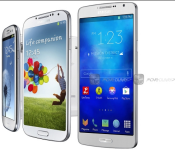
 By now, you’d think we’d had enough of Galaxy S5 concept art, but MovePlayer has defiantly said “not yet”. They’ve come up with their own take on the Samsung Galaxy S5 and as an added bonus, put it in the same picture next to its predecessors, the Galaxy S4 and Galaxy S3, to see the progression that the handsets have made. MovePlayer has made the assumptions that the device will be 144mm tall and 72mm wide to accommodate for a potential 5.25-inch screen.
The more squarish design of this Galaxy S5 concept appears to agree with previous listings we’ve seen for Trident cases meant for the Galaxy S5. While we can’t be sure exactly what the Galaxy S5 will look like before the official unveiling, this does look like a pretty good bet for a similar fit. The Galaxy S5 is naturally shaping up to be the device to beat at this year’s MWC 2014 with plenty of suspected hardware, like a Exynos 6 or Snapdragon 805 processor, 3GB RAM and 3,200mAh battery, though none of these rumours are particularly solid, especially seeing as yesterday the rumour that the Galaxy S5 was getting a 2K resolution display was allegedly debunked.
Personally, I think this Galaxy S5 concept looks pretty darn good; I’ve never been a fan of the Galaxy devices and their super-rounded corners, but it will be interesting to see what the device will end up looking like. What do you think of this latest concept? Let us know in the comments below.
Source: MovePlayer via Phone Arena

Amazon Prime snags ‘Archer’ and 5 more Fox series, launches ten free pilots

The content arms race between streaming video providers Netflix, Amazon and Hulu (and YouTube/Google Play and Crackle and Redbox and… you get the picture) shows no signs of slowing down, and here’s Amazon’s latest assault. The Prime Instant Video service is pushing new, exclusive, original content at the same time it gains access to popular TV shows from a new deal with Fox. The latter arrangement brings FX series The Americans as a streaming exclusive to Amazon (Engadget HD favorite Justified became an exclusive last year), plus archived episodes of The League, Louie, How I Met Your Mother, It’s Always Sunny in Philadelphia and Archer on a non-exclusive basis next month. The Americans returns for season two on February 26th, and we’re sure the network is hoping viewers will binge on the well-reviewed series in time to start watching then.
Of course, Netflix has shown that exclusive original content is key to growth, and Amazon is repeating its “pilot season” judged by the public to pick new shows. Last time around the process resulted in Alpha House and Betas, and now ten hopefuls — split among five “primetime” adult options and five kids shows — are streaming for free. Among them are two hour-long dramas with The After, a show from X-Files creator Chris Carter, and Bosch, a murder-mystery based on the popular detective novels by Michael Connelly that’s co-written by The Wire’s Eric Overmyer. There are previews after the break, but the full pilots are streaming on the web or devices with Amazon Instant Video/Lovefilm apps. Amazon’s old-school pilot strategy is in sharp contrast to Netflix’s “find some of the best talent and throw money at them” approach, so if there’s a House of Cards or Orange is the New Black in the bunch there’s only one way to find out.
Filed under: Home Entertainment, HD, Amazon
Source: Amazon Pilot Season

[RUMOUR] Nexus 8 launch coming at the end of April due to poor Nexus 7 sales
 The Nexus 8 is quickly becoming the definitive ‘Bigfoot’ of the Android world; rumours of its existence have run rife since the above picture was spotted on Google‘s own website, however in classic Google style, the tech company has revealed absolutely nothing about its plans or even hinted at where it’s going with its tablet line. Today, we get yet another rumour that is saying that the Nexus 8 launch will be happening at the end of April, and will be manufactured in conjunction with ASUS, as the previous Nexus 7 models have been.
This is the second such rumour we have heard that has pinpointed the partnership of Google and ASUS to continue through the manufacturing of the elusive Nexus 8 (both times were reported by DigiTimes). The tip this time apparently comes from a source involved in Taiwan-based supply chains, but again cites to the poor performance of the 2013 Nexus 7 as the cause of the move to the 8-inch form factor. As with all rumours, though, it’s best to take any rumour news with a grain of salt.
If I’m honest, I’m not sure which device I’m less convinced exists, the Nexus 8 or the Nexus 10. Both have had multiple rumour trails yet both of them, as with all rumours Google-related, have amounted to nothing. But that might just be me getting weary: what do you think about this rumour? Do you think that Google and ASUS are teaming up to bring us a Nexus 8 this April? Let us know your opinion.
Note: There is a poll embedded within this post, please visit the site to participate in this post’s poll.
Source: DigiTimes via Phone Arena

1976 Apple Marketing Proposal Included Plans for Retail Locations [Mac Blog]
The first Apple retail location could have opened in the late 70s, according to a new account from distinguished Silicon Valley marketer Regis McKenna (via CNET). During a fireside chat held Thursday at the Computer History Museum, McKenna recalled a 1976 meeting in which he turned down an offer from Apple founders Steve Jobs and Steve Wozniak to market the Apple II.
However, McKenna stated that he eventually decided to assist Apple after a dinner with Jobs where both discussed the future of the company:
Jobs and McKenna had dinner and talked about what the future of Apple could look like, and McKenna signed on. Eventually McKenna drafted an eight-page marketing plan in December 1976. Lo and behold, what was written under “Distribution Channels”? Apple stores.
“I had actually presented this to Apple a couple of times,” he said. “I had talked about putting them in different parts of the country.
 Apple Retail Store located at the Royal Hawaiian Center in Honolulu, Hawaii
McKenna went on to state that his plan for Apple’s retail locations were to have them placed in office parks, and to cater the stores toward high-profile customers. McKenna also added that the locations would have served as centers for corporate sales and training, and that the eventual goal was to shift toward more traditional retail stores for the company, similar to Apple Stores today.
Apple opened its first two retail stores on May 19, 2001 and currently has 420 stores total, with 166 of those located outside of the U.S. During its financial results conference call covering the 2013 holiday quarter, the company reported $7 billion in revenue generated from its stores with 21,000 visitors per store per week, and an average revenue per store of $16.7 million.
     |

Google refuses to pay French privacy fine in a battle of company versus country

France and Google are playing a delicate game of brinkmanship in the courts of Europe, and it still isn’t clear who’ll come off worse. France fined the search company €150,000 ($200,000) last month as a penalty for failing to tell French citizens exactly what happens to their personal data. Google could have coughed up the trivial sum and drowned its sorrows in a bottle of beaujolais, but instead it has decided to fight — not because of the money, but because accepting the fine would have also involved making a public admission of guilt (published below the search button in a size 13 font, no less) and the company feels this would have “irreparably damaged” its reputation.
Google’s legal appeal against the fine appears to rest on creating a rift between France and the European Union, because it claims its privacy policy meets EU requirements and shouldn’t have to be amended to suit one European country. (Although, to be fair, many other European countries have also complained about it.) So, here’s the risk: What is currently a dispute over fines and typefaces could theoretically — in the worst case scenario — escalate into another international court case that runs on for years, or it could even become a question of sovereignty that risks causing France to lose face. Some of this is doomsday-ish speculation on our part admittedly, but Google’s well-funded legal department doesn’t look ready to quit any time soon.
[Image Credit: cplapied, Flickr]
Source: MarketingLand, WSJ

California law could end grand theft mobile with kill-switches in all smartphones

Lawmakers in California are so intent on curbing record levels of smartphone theft, they’re ready to fine phone makers if anti-theft measures aren’t available on their devices. The New York Times reports that the order will come from State Senator Mark Leno, who is set to introduce a new law requiring all smartphones and tablets sold in the state to include a “kill switch” solution. Ignore the ruling and device makers could face a $2,500 fine for each device sold.
San Francisco and New York prosecutors George Gascón and Eric Schneiderman set the ball rolling when they met with representatives from Apple, Google, Samsung and Microsoft last year. Apple then won praise for including its Activation Lock feature by default in iOS 7, requiring device owners to set a passcode that stopped thieves reactivating a stolen phone. While it would only officially cover California, the new law could force phone makers into a full US rollout, likely upsetting the carriers. The CTIA, which represents the likes of AT&T, Verizon, T-Mobile and Sprint, believes its stolen phone database is a better solution and will fight the ruling. If it is signed into law, phone makers will have until January 1st, 2015 to implement a solution or they will not pass Go and will be forced to hand out more than $200.
Filed under: Cellphones, Tablets, Wireless, Internet, Software, Mobile, Apple, Samsung
Source: New York Times
 AIVAnet