


Apple Updates Enterprise Tools for Large iOS Device Deployments [iOS Blog]
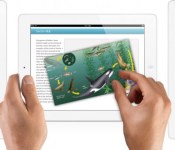
Apple has updated the software used by large companies and educational institutions to deploy thousands of iPads and iPhones to employees and students. The changes to Apple’s Device Enrollment Program, its Volume Purchase Program, and the Apple ID for Students services are detailed in a report at TechCrunch and in an overview document [PDF] posted to Apple’s IT Deployment site.
Among other changes, Apple now allows IT administrators to set up devices without physically plugging each one into a computer to install a profile, potentially saving significant amounts of time when setting up thousands of devices. Also, profiles can be locked to devices, preventing employees or students from removing any restrictions simply by revoking an IT department profile — something that derailed the Los Angeles Unified School District’s rollout of iPads to thousands of students.

I’ve had conversations with IT pros and people who roll out large iPad installs in the past and they’ve mentioned that one of the things that has continued to cause Windows devices to hold some appeal is their better remote installation and configuration support. To that end, Apple has made some updates to improve that situation.
Both the enterprise and education programs now have support for Mobile Device Management hands free configuration. This ‘zero touch’ setup has been a long-requested feature for many pros, as it eliminates the need to cable up every deployed device and install a profile via Apple’s Configurator utility.
Apple has expanded the Volume Purchase Program to more countries and now allows VPP purchases to be made via purchase order, important to large companies. Finally, Apple has also set up a new type of COPPA-compliant Apple ID for students under the age of 13.
Apple executives routinely tout adoption numbers of iOS devices by large companies in its quarterly earnings calls, and these updates should help assuage concerns in IT departments about rolling out large iOS device deployments. Much more information about deploying iOS devices is available on Apple’s website.
     |

A new version of the Moto X is coming this summer

After Lenovo’s recent purchase, questions immediately arose surrounding Motorola’s planned device launches for 2014. In a Twitter Q&A surrounding the events at Mobile World Congress, the handset maker revealed that the next version of its popular Moto X is coming in “late summer.” Unfortunately, that’s about all the outfit was willing to spill for now, but we’ll be curious to see how things like manufacturing play out in the coming months.
Q from twitter: When is next version of Moto X? A: Keep posted – hint – late summer. #MotoMWC
– Motorola Mobility (@Motorola) February 25, 2014
Filed under: Cellphones, Mobile
Via: Android and Me
Q from twitter: When is next version of Moto X? A: Keep posted – hint – late summer. #MotoMWC
— Motorola Mobility (@Motorola) February 25, 2014
” target=”_blank”>Motorola (Twitter)

US Senator asks for a Bitcoin ban, but don’t hold your breath

Many will tell you that Bitcoin stands on shaky legal ground. Senator Joe Manchin, however, believes it’s outright dangerous — to the point that he has sent a letter to regulators asking them to ban the digital currency. There’s no regulation, he says, and Bitcoin’s mix of anonymity and irreversibility is appealing to a shady crowd; the Senator believes that black markets and thieves operate with relative freedom. Manchin also points out that the digital cash is prone to both deflation and surprises that risk creating chaos, such as the recent shutdown of the Mt. Gox exchange.
Don’t cash out any virtual savings just yet, though. The letter doesn’t pay much attention to legitimate commercial uses or those countries where Bitcoin is legal. It also plays up the “disruptive” effect on the economy; as Business Insider notes, the currency’s worldwide market cap has never ventured beyond a comparatively small $14.5 billion. Whether or not you believe the new currency is safe, we’d add that the letter doesn’t automatically translate to new regulations. Even if officials agree to Manchin’s request, it could still be a long while before any Bitcoin ban takes effect.
[Image credit: Third Way Think Tank, Flickr]
Filed under: Internet
Via: Business Insider
Source: Senator Joe Manchin

Tesla’s raising $1.6 billion to build its battery ‘Gigafactory’ and mass-market $35k car

If you’ve been dreaming of a Tesla but can’t afford a Model S and its $70k+ sticker price (before tax credits), the company is announcing a major step towards building an electric vehicle in your price range. CEO Elon Musk has targeted 2017 for building a vehicle that costs half that, and has released details (PDF) of the “Gigafactory” he expects to have building batteries by then. The company predicts that by 2020, it will pump out more batteries alone than the world manufactured in 2013, keeping prices down while Tesla ramps up production on the unnamed “Gen III” vehicle.
To do that, it’s raising $1.6 billion from a group of investors — rumors suggest Model S battery provider Panasonic could be in for as much as $1 billion — in a pair of bond offerings, with an option for an extra $240 million. The plant isn’t built yet of course, but Tesla has pointed out four southwestern states (Arizona, New Mexico, Nevada or Texas) as possible locations, ideal for its solar and wind renewable energy plans. The plant will lower costs by working on the raw materials, cells, modules and battery pack enclosures all in one place, employing as many as 6,500 people.
Check out some details about what the Gigafactory will look like: http://t.co/L90AIYv8R8 pic.twitter.com/i5mEwMjFKA
– Tesla Motors (@TeslaMotors) February 26, 2014
Filed under: Transportation
Source: Gigafactory (PDF), Tesla Motors Blog, Tesla 8-K Filing
Touch ID and A7 Secure Enclave Detailed in Updated Apple Security Document
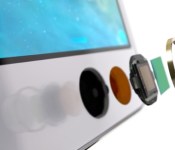
Apple today posted an updated security document [PDF] on its iPhone in Business site, offering details on the inner workings of both Touch ID and the “Secure Enclave” built into Apple’s A7 processor (via TechCrunch).
Since its 2013 release, Touch ID has faced scrutiny over privacy concerns from both users and government officials, and while Apple has previously offered few details on how Secure Enclave works, it has assured users that the system stores only fingerprint data rather than images.

According to the updated security document, Secure Enclave is a coprocessor within the A7 chip that uses a secure boot process to ensure that its separate software is both verified and signed by Apple. All Secure Enclaves can function independently even if a kernel is compromised and each one contains a unique ID inaccessible to other parts of the system and unknown to Apple, preventing the company or any other third parties from accessing data contained within.
Each Secure Enclave is provisioned during fabrication with its own UID (Unique ID) that is not accessible to other parts of the system and is not known to Apple. When the device starts up, an ephemeral key is created, tangled with its UID, and used to encrypt the Secure Enclave’s portion of the device’s memory space.
Additionally, data that is saved to the file system by the Secure Enclave is encrypted with a key tangled with the UID and an anti-replay counter.
Fingerprint data collected from Touch ID is stored within the Secure Enclave, which is used to determine a match and then enable a purchase. While the A7 processor collects data from the Touch ID sensor, it is unable to read it because it is encrypted and authenticated with a session key built into Touch ID and the Secure Enclave.
It’s encrypted and authenticated with a session key that is negotiated using the device’s shared key that is built into the Touch ID sensor and the Secure Enclave. The session key exchange uses AES key wrap- ping with both sides providing a random key that establishes the session key and uses AES-CCM transport encryption.
Along with details on the function and security of the Secure Enclave, the document contains details on Touch ID, most of which have been previously published by Apple in other documents and literature on the feature. It also offers some specifics on the security of fingerprint capturing and a reminder that fingerprint data is accessible only to the Secure Enclave and never sent to Apple or backed up to iTunes or iCloud.
The document’s section on Touch ID and the Secure Enclave ends with a detailed description of how both Secure Enclave and Touch ID work together to unlock an iPhone 5s, which is well worth a read for users interested in how the technology functions.
Apple’s updated security document has been added as part of a larger redesign of the IT section of its iPhone in Business site, which now features a cleaner design with navigation icons at the top of the page.
| |

Teaser confirms simplified branding for ‘all new’ HTC One (video)

We’ve seen reports that HTC would be keeping the name from 2013′s popular handset for its 2014 flagship, and today the outfit posted a BoomSound video teaser that seems to confirm the moniker. Taking a page out of Apple’s playbook, the “all new HTC One” is referenced several times in the latter half of the promo. Of course, what we’re led to believe in the upcoming device remains cloaked in blurred pixels and spoken details are bleeped out. It’s worth noting that the company’s PR has LOL’d at the notion of name consistency on Twitter, but we’ll know for sure next month when the new model is expected to be announced.
@evleaks LOL
– Jeff Gordon (@urbanstrata) February 19, 2014
Filed under: Cellphones, Mobile
Source: HTC (YouTube)
Google’s Project Ara modular smartphone gets a trio of dev conferences

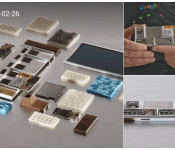
Google’s got plenty of moonshots brewing in its Advanced Technology and Projects (ATAP), but one of the most intriguing is its modular smartphone design, called Project Ara. Because Ara’s a platform designed to lets users swap out hardware (processors, cameras, or sensors) on the phone, it presents unique opportunities for developers to build different kinds of modules and the software needed to make them all work. That’s why ATAP’s going to be doing three developers’ conferences this year, with the first one set to happen April 15-16 at the Computer History Museum in Mountain View, California.
Folks that want to attend, but are outside striking distance of the Bay Area need not fret, however, as there will be a live webcast and interactive Q&A sessions of the conference, too. This initial event will focus on building the modules themselves, as Google will be making an alpha version of its Module Developers’ Kit available at the beginning of April. We don’t know what the other two conferences will be about (though software development for Ara seems a good bet), but more info and the conference agenda can be found at projectara.com in the coming weeks.
Filed under: Cellphones, Mobile, Google
Source: Google ATAP (Google+), Project Ara
Automatic Link driving assistant can now auto-post to Facebook, other apps

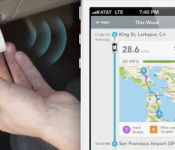
One of the greatest benefits of Automatic’s Link driving assistant dongle is that it finally made it possible to hook your car’s metadata to the web. You could then use your smartphone to do things like track your trips, note your parking spot and even figure out your Check Engine light problem without going to a mechanic. Well today, it’s about to go one step further thanks to a partnership with IFTTT. IFTTT, if you’re unaware, is a service that hooks up a variety of apps and services together with a series of “If This, Then That” formulas. Now with Automatic, you can create recipes that’ll prompt an action once it detects certain information from your car.
For example, you can set it so that you get a text message every time the car starts up, or send a push notification to your spouse whenever you’re running late. You can automatically post trip summaries to Facebook, tweet if you’re ever in an accident or keep track of your mileage in a dedicated Google Spreadsheet. It even works with other Internet connected hardware — a possible recipe is to turn on all your Philips Hue lights as soon as you get home.
IFTTT’s Automatic channel already has a pretty healthy set of triggers, but Ljuba Miljkovic, Automatic’s chief product officer, tells us they’re hoping to build more around activities like speeding or braking hard. “We see this as a step toward Automatic really being connected to the wider world,” says Miljkovic. “For example, we announced that the Link now has iBeacon thanks to a software update. We really see third party integration as a big thing in our future […] We’re making it possible to add your car to the Internet of Things.” If that sounds like an exciting proposition to you, head on over to the source to find out more about the Automatic Link, IFTTT and its plans for an even more connected car.

NASA discovers 715 alien planets by looking for them in groups

We know that it’s no longer rare to discover alien worlds, but NASA just made it downright commonplace. The space agency has confirmed the existence of 715 exoplanets discovered using the Kepler space telescope, ballooning the number of verified planets to nearly 1,700. Scientists validated the huge number of celestial bodies by looking for targets in batches — the more objects were clustered together, the more likely it was that there would be multiple exoplanet candidates. The bonanza helps illustrate the frequency of planets among the stars, and it has also uncovered four more potentially habitable worlds. Researchers might not but much closer to finding the Holy Grail of a life-bearing planet, but they’ll at least know where to focus their attention.
Via: Space.com
Source: NASA
Skype now lets you sign up with a Microsoft account, updates its Windows Phone app

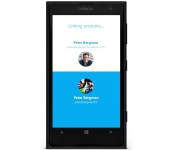
It’s been a long time coming, but Skype’s revealed that folks can finally sign up for service using a Microsoft account. Skype believes this feature is perfect for users who perhaps want the least amount of logins possible, and it also points to Microsoft’s two-step verification as a benefit for having such an account. Meanwhile, the Windows Phone app has been updated with a number of security improvements, plus an indicator which lets you know when the person on the other side is typing. As part of the integration with its parent company, Skype will now require a Microsoft account (like the one used to set up your WP device) when registering for a new account through the application. This new version is only available for Windows Phone 8, however — as you might recall, support for the app on earlier versions of the OS was cut off months ago.
Filed under: Internet, Software, Mobile, Microsoft
Via: The Next Web
 AIVAnet