


FCC Speed Test app for iOS lets the government track your iPhone’s network performance

Downloading an app from the federal government might not top your list of priorities at the moment, but if you’re looking to tick that public service box without a need to worry about measly pay, background checks and furloughs, the FCC could sure use your help. That org’s latest venture, the FCC Speed Test app for iOS, delivers yet another connectivity benchmark tool to iPhone and iPad users. This free download also benefits the government’s Measuring Broadband America program, however, enabling the FCC to build out a public database of network performance across the country. Unlike its Android counterpart, this iOS app doesn’t test performance in the background, so you’ll need to fire it up to see how well your cellular or WiFi connection is doing. It’s available from the App Store today.
Source: FCC

Vodafone’s network in a backpack connects people after natural disasters

Vodafone Foundation (the carrier’s philantrophic arm) has launched a 24-pound mobile network in a backpack to help folks contact family and friends in the wake of a disaster. The device called the Instant Network Mini may be relatively small, but it provides a 2G GSM connection capable of handling thousands of text messages and five calls made at once to people within a 328-foot radius. It’s equipped with a GSM base transceiver that uses satellite connection to link up to a host network.
Vodafone developed the Mini as a smaller version of its 220-pound “portable” network with help from its Spanish division, Huawei and non-government org Télécoms Sans Frontières. The Foundation’s been lugging the much bigger device to relief operations in the name of its Instant Network Programme. In fact, during Vodafone’s mission to the Philippines following Typhoon Haiyan, two 220-pound kits handled a total of 1.4 million text messages and 443,288 calls within 29 days. Obviously, the larger machine has a wider operating radius (3 miles), but the Mini has its own set of pros. Since it can be deployed within minutes and be carried on planes, it can potentially help more people — and more quickly, too.
Filed under: Cellphones, Wireless
Via: Wall Street Journal
Source: Vodafone

Oral-B Shows Off iPhone-Compatible Smart Toothbrush at Mobile World Congress [iOS Blog]
Proctor and Gamble first introduced its smartphone-connected Oral-B toothbrush earlier this month, but the company is on hand at the Mobile World Congress conference in Spain to give attendees a look at the upcoming device.

The Oral-B SmartSeries 7000 connects to the Oral Blue iPhone app using Bluetooth 4.0, allowing the app to provide real-time guidance on brushing habits. It records brushing activity on a chart that can be shared with dental professionals to create personalized brushing routines and because the Bluetooth connectivity works both ways, the app can also be used to program the toothbrush.
Engadget went hands-on with the Oral-B SmartSeries 7000 to show off how the app interacts with the brush itself. While brushing, the iPhone app runs a timer in real-time to keep track of how long a user has brushed and it also includes a stream of news articles to keep users entertained while brushing.
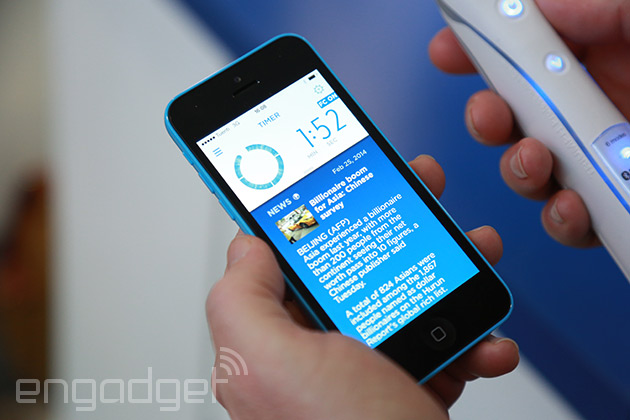
In case the sheer boredom of brushing your teeth for that long is too much to bear, you can also thumb through a stream of news articles or local weather reports (no, really) to help you hang in there. Turns out, just furiously mashing those bristles into your teeth isn’t great either, so the timer will blink red if you’re pressing too hard.
In addition to Bluetooth connectivity, the SmartSeries 7000 features oscillating-rotating-pulsating technology, six different cleaning modes (Daily Cleaning, Deep Clean, Whitening, Gum Care, Sensitive, and Tongue Cleaning), a pressure sensor to prevent users from brushing too hard, and several different travel accessories.
Oral B’s Bluetooth 4.0 smart toothbrush technology will be available in several of its toothbrushes, beginning with the Oral B SmartSeries 7000, which is expected to launch later this year for $220.
     |

‘The Bureau: XCOM Declassified’ for Mac Gains Three New DLC Packs [Mac Blog]
Three new downloadable content packs are now available for the Mac version of The Bureau: XCOM Declassified, including Hangar 6 R&D, CodeBreakers, and Light Plasma Pistol.
First released for Mac in November by Transgaming, The Bureau: XCOM Declassified is a third-person tactical shooter set in late 1962, at the height of the Cold War between the United States and the Soviet Union. Players take control of special agent William Carter and his two squad members to defend humanity, with a focus on shooting and squad-based tactics. Each downloadable content pack includes new missions, weapons, and more.
The Bureau: XCOM Declassified – Hangar 6 R&D
In the days leading up to the events of The Bureau: XCOM Declassified, Agent Nico DaSilva volunteers for a series of secret psycho-medical experiments to identify and treat a terrifying new pathogen. Maximize your combat skills and push your team to its limits to protect them from terrifying hallucinations as the experiments turn dangerous.The Bureau: XCOM Declassified – CodeBreakers
A top secret government communications facility responsible for intercepting and decoding enemy transmissions has gone radio-silent. In a desperate attempt to turn the tides of the secret war, Special Agent Carter and his squad must investigate the incident, eliminate any threats, and make contact with personnel in order to bring the facility back online and crack the mysterious code.The Bureau: XCOM Declassified – Light Plasma Pistol
Early research into the Outsiders’ weapon technology has yielded promising results in the form of a prototype light plasma pistol. Not as bulky as its predecessor, this compact weapon fires condensed bolts of plasma and boasts a vastly improved rate-of-fire, giving players an early edge in the secret war for humanity’s survival.
The Bureau: XCOM Declassified can be purchased from the Mac App Store for $19.99. DLC is available at an additional cost within the app. [Direct Link]
| |
Sony kills off pre-installed anti-shatter films on Xperia Z2 and Z2 Tablet
When I picked up my Sony Xperia Z at T-Mobile a number of months ago the very first thing I noticed was the pre-installed screen protector. In the beginning it wasn’t such a big deal, then it started to scratch up and the clarity of the screen started to dip. Oddly enough, the Xperia Z used Gorilla Glass, so the anti-shatter film, while a nice idea, wasn’t really all that important. It took me all of a minute to peel it off slowly, both on the front and the back. The only difference afterwards was the front lost the SONY logo. Why on earth that was stuck under the film is beyond me as none of the T-Mobile branding on the Xperia branding on the back was.
Regardless, the anti-shatter film isn’t the greatest and slowly, but surely, starts to make the phone look less spectacular. Once removed though, it was like a whole new device again. Even though the glass underneath had been hidden from the real world since its construction and had a funny feeling. Simple solution was an install of a tempered glass screen protector. More so for the smooth feel of its face than protection.
Sony has been pre-installing these anit-shatter films in the factory during manufacturing and plenty of people don’t even know they are there. Sony seems to be listening, and sub-sequentially, watching, all the people peeling them off and have changed their tune. In a meeting at MWC today, Sony confirmed to AndroidCentral that the anti-shatter films will NOT be pre-installed on the Xperia Z2 or Tablet Z2.
Anyone looking to get the next iteration of Xperia device won’t have to worry about voiding the warranty peeling off the film. Of course if you root and hack and ROM, that is a different story. Any current Xperia owners out there also peel that film off nearly immediately?
Source: AndroidCentral

Belkin Announces New Samsung Galaxy S5 Accessories

The Samsung Galaxy S5 was announced yesterday and despite what comments you’ve read on the internet it is a new flagship phone and with that title comes accessories. Bring in Belkin. The company announced their new line of accessories made specifically for the Samsung Galaxy S5 and boy are there plenty to choose from. As always cases play a major role as the first accessories made for any flagship so Belkin came out with two different types. We have the Wallet Folio Case and the Air Protect Grip Extreme Case.


The wallet folio case is the general flip cover case that doubles as a credit/debit card holder on the inside and comes in a variety of colors for only $39.99. As an added bonus you can also use this case a stand for movie watching.


The second case (Air Protect Grip Extreme) is made more for complete protection. Using their patented Shocwave technology in the corners of the Air Protect case allows you to more easily deal with the bumps and bruises of day to day life for a modest price ($34.99).


Then finally there are the chargers, you know those things that keep your phone alive when your battery is running low ;). Hopefully it doesn’t come down to this but let’s say you lose the charger for that new S5 of yours, or if you’re like me, your puppy chews through it on day one, Belkin has you covered. They have launched some great wall chargers that will put out the 2.1 Amps that you need to charge your devices should that fate befall you, if not well they still come in handy for your other mobile devices.
So if you’re planning to get your hands on the Samsung Galaxy S5 Belkin would be a great place to look for some accessories. I have provided the links below to their products, so click and search, who knows you might end up buying a case for your next flagship phone from Samsung.
Deal Alert: The new SanDisk 128GB MicroSDXC Card on Sale Now
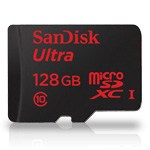
 Yesterday we showed you guys the latest offering from SandDisk. The new SanDisk 128GB microSDXC memory card. The card is the same size as any micro SD card, but packs in an insane amount of memory. It comes with a 10 year warranty, is Water-proof, temperature proof, X-ray proof, magnet proof and shock proof and offers transfer speeds up to 30MBs.
The press release pegged the new card to launch with a hefty price tag attached, $199.99. Like all things on the internet, that didn’t stick. Right now the new 128GB microSDXC cards are coming in at $119.99. That is less than a $1 a GB. Considering its size, and that it is the first of its kind, that is pretty good.
If you have $120 sitting around for a rainy day, or the day that a card this size becomes available, now is your time to buy it. Hit the Amazon link below.
P.S. make sure your device can support it though. The new Galaxy S5 will be fine. If what you have now doesn’t, maybe an OTG cable and card reader, or you could just use it in your camera for the time being.
// <![CDATA[
amzn_assoc_ad_type = "product_link"; amzn_assoc_tracking_id = "wwwandcom-20"; amzn_assoc_marketplace = "amazon"; amzn_assoc_region = "US"; amzn_assoc_placement = "B00IIJ6W4S"; amzn_assoc_asins = "B00IIJ6W4S"; amzn_assoc_show_border = true; amzn_assoc_link_opens_in_new_window = true;
// ]]>
// <![CDATA[
// ]]>
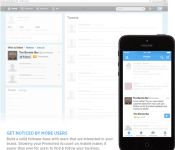
Twitter search results get advertising via ‘Promoted’ users

There you are, leisurely perusing Twitter (as one does), when the stinking funk of marketing speak smacks your cerebellum like a Mack truck: “Want to grow your presence on Twitter? Reach more people with your Tweets using Promoted Accounts. Learn more today!” It has begun.
Too serious? Perhaps, but today’s news that Twitter’s “Promoted Tweets” (read: adverts) are now also part of Twitter’s search results is unfortunate at very least. For one, it takes the point of search and adds confusion — why would Pizza Hut’s new, hand-tossed pizza show up in results for, say, unrest in Ukraine? Here’s hoping the algorithms are smart enough to avoid messy situations like that.
It’s long been the case that (contextual) ads show up in Google search results, but in the case of Twitter search we’ve come to expect an ad-free experience. As Twitter product manager Nipoon Malhotra says in the announcement, “One of the best ways for users to discover what’s happening on Twitter is through search, giving users the ability to instantly connect to conversations and topics of interest.” That the logic following such a statement goes directly to advertising is, again, unfortunate. We’ve yet to see any promoted tweets in our search results just yet, but please let us know what you’re seeing (good and bad alike).
Filed under: Internet, Software, Mobile
Source: Twitter
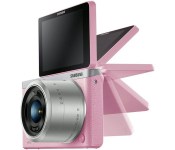
Samsung NX mini leak hints at a very thin and tiny mirrorless camera

Samsung’s mirrorless cameras have so far been on the large side due to their DSLR-sized sensors, but the company may be ready to go small… very small. NXRumors claims to have leaked imagery for the NX mini, a tiny shooter that would use a 1-inch, 20-megapixel sensor like that in Sony’s RX100 Mark II. The technology shift would lead to a body under 1.4 inches thick, and removable lenses that are borderline cute; the initial lineup would include both a 9mm fixed distance lens and a 9-27mm standard zoom. Despite the compact frame, there would be room for a 3-inch flip-up LCD, a built-in flash and the horsepower to shoot at a continuous 22 frames per second. Rumors have the NX mini launching within a month’s time. Pricing is still up in the air, although the sensor choice suggests that the mini would be at the low end of Samsung’s camera spectrum.
Via: Mirrorless Rumors
Source: NXRumors (translated)

Apple formalizes iBeacon Bluetooth spec in the hopes of wider adoption

Several companies and organizations have already come forward to test out iOS7′s Bluetooth-based iBeacon technology for tasks like shopping and navigation, but it could become a lot more commonplace in the near future. That’s because the Cupertino company has quietly released the iBeacon specification for its Made for iPhone program, signifying a stronger push to make the technology more widespread. In essence, it ensures that any future product that bears the iBeacon logo will be fully compliant with Apple’s standards.
What does this mean for you? Well, as a brief reminder, iBeacon is a location-based technology that allows iOS products to talk to each other using low-power Bluetooth signals. This means that whenever you see something with that iBeacon logo, you know it should work seamlessly with your iDevice. If we dare speculate, this could pave the way for a potential iWatch — it makes obvious sense for it to communicate with the iPhone using iBeacon. Indeed, now that Apple is showing signs it’s pushing the standard forward, we wonder if this is a not-so-subtle hint to developers to start incorporating iBeacon into their apps. As rumors of an Apple wearable heats up, we think that’s certainly more likely than not.
 AIVAnet