


House passes bill that legalizes phone unlocking, with a frustrating caveat

Still unsure where unlocking your mobile device falls under the eyes of the law? Legislation just passed through the US House of Representatives that might clear things up, but there’s a catch. The Unlocking Consumer Choice and Wireless Competition act would allow users to unlock devices for use on a new carrier after their subsidized contract expires — but a late change to the bill tacked on an exclusion for “bulk unlocking.” This last minute change spoils the legislation for companies that purchase, unlock and resell devices to consumers, and casts a shadow over a bill that could have helped free your mobile from the convoluted mire of US copyright law.
Proponents of the change argue that it won’t prevent the bulk sale of locked or previous unlocked phones – and it passed with a strong majority – but the change was significant enough to dissuade several previously supportive representatives from voting for the bill. “There needs to be a market in unlocked phones,” Democratic Representative Jared Polis said, describing the late change as a “poison pill” for consumer advocates. Hopefully, the bill will see more positive tweaks on the floor of the Senate.
Filed under: Cellphones, Mobile

Square’s Pickup app streamlines ordering take-out in San Francisco

If you thought ordering a new shirt from Uniqlo and grabbing it from the store 20 minutes later was rad, Square has something similar cooked up for your favorite restaurants. The outfit is demoing a new Android and iOS application called Pickup at a handful of San Francisco eateries, according to Priceonomics. With the app, Square is streamlining the food ordering process to a few taps on your smartphone: you choose an item from the menu, pay for it and then, well, pick it up. Given Square’s popularity with small businesses (especially with competition from GoPago, GrubHub and OrderAhead), hopefully it isn’t long before the outfit releases Pickup outside of NorCal.
Filed under: Cellphones, Software, Mobile
Source: Priceonomics, Square Pickup

Apple Files Formal Appeal in E-Books Antitrust Case [iOS Blog]
 Apple filed a formal appeal on Tuesday asking the U.S. Circuit Court of Appeals to overturn the ruling of its e-books antitrust case or to be awarded a new trial on the matter, reports the Associated Press.
In its filing, Apple stated that U.S. District Judge Denise Cote’s original decision to find the company guilty of conspiring to fix e-book prices was a “radical departure” compared to modern antitrust law, adding that the decision would harm consumers and negate competition if not overturned.
Apple’s papers filed Tuesday refuted the antitrust finding, and said its entrance into the e-book market “kick-started competition in a highly concentrated market, delivering higher output, lower price levels, and accelerated innovation.”
Apple also requested that the appeals court suspend the work of external antitrust compliance monitor Michael Bromwich until it makes a decision as to whether he was correctly appointed. Apple filed a formal complaint against Bromwich in November claiming that the monitor was overcharging them for his services, and requested that he be removed from his position in January.
While Apple managed to win a brief emergency reprieve from monitoring, the Appeals court ruled earlier this month that Bromwich could continue his work with new boundaries, as he is no longer able to demand access to any document or interview Apple executives with respect to any subject.
     |

Sprint Pairs Up With Harmon Kardon For The Onyx Studio

Well we all know what Sprint is, a regular carrier giving us consumers cellular services for our mobile devices. That’s usually were all carriers stop but Sprint want’s to go one step further. Enter Harmon Kardon. Sprint has partnered up with the high-end audio company to bring their own line of portable Bluetooth speakers for the masses. The speaker in question is called the Onyx Studio, a small and rechargeable speaker that will bring you up to 5 hours of audio on a single charge.
Other specs include 4 speakers and dual passive radiators which are supposed to give you “..deep bass for authentic sound quality”. Now as we all know these are just words, each of us have our own unique set of standards when it comes to our tech. Luckily the Onyx Studio will be carried exclusively at Sprint stores so you can go in and try it out yourself, see if it will meet your portable audio needs. The Onyx Studio is currently retailing for $399.99 on Sprint.com (link below), quite a pretty penny for a speaker so I suggest you visit your local Sprint store and try it out before you buy. All in all this looks to be an interesting move from the mobile carrier and I look forward to seeing what else they venture into.
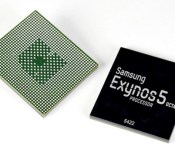
Samsung details the Exynos processors inside the Galaxy S5 and Note 3 Neo

Samsung has been hinting at new Exynos processors for both a Galaxy S5 variant and the Galaxy Note 3 Neo, and today it’s detailing the two CPUs in earnest. The GS5′s expected chip, the Exynos 5422, is primarily a speed bump of the eight-core Exynos 5 Octa we saw last July; it boosts the clock speeds of the Cortex-A15 and Cortex-A7 cores to 2.1GHz and 1.5GHz respectively. The processor also delivers support for running all eight cores at once, and can handle both 2,560 x 1,600 displays as well as 4K video recording.
The Exynos 5260 (aka Exynos 5 Hexa) destined for the Note 3 Neo isn’t quite so glamorous, dropping to two 1.7GHz Cortex-A15 cores and four 1.3GHz Cortex-A7 cores. However, it still has many of the features of its bigger sibling — it can run all six cores at once and use the same screen resolutions. Not surprisingly, it doesn’t have the horsepower to record 4K video. Both of the new Exynos designs are either in production or will be by the end of the first quarter, so you can expect to see them in shipping smartphones relatively soon.

Filed under: Cellphones, Mobile, Samsung
Source: Samsung Tomorrow

LINE messenger isn’t selling to anyone, instead it’s going to let you sell your own stickers

Rumors of yet another messaging app being sold pinned Naver’s LINE app to Japanese phone carrier, SoftBank. The app maker denied the claim yesterday, and today (instead) announced that it’s adding several new features, including LINE Creator Market, set to launch (at least in Japan) this April. Creator will allow artistic types to sell their own sticker creations on a dedicated market — and split the earnings 50:50. LINE’s messaging app has avoided ads, instead offering corporate accounts and paid-for sticker sets. The host site isn’t live just yet, but we’ll keep you updated when we hear more.
[Image credit: Satoru Masuda, TechCrunch JP]
Filed under: Cellphones, Software, Mobile

LINE takes on Skype and Hangouts with new, cheap, Call service

It’s all about stickers, really. LINE means stickers, but as the company keeps telling us, its apps do so much more than that — and even more starting next month. The Japanese messaging service is launching a new data-based call service that attempts to undercut the voice-call pricing on typical land-lines and mobile carriers. With a pay-as-you-go and 30-day plan both outlined at the company’s showcase event, it’s scheduled to launch this March in Japan, US, Mexico, Spain, Thailand and the Philippines. For its native country, the 30-day plan (priced at one minute for 6.5 yen, roughly 6.4 cents), will offer up to a maximum of 60 minutes maximum, encompassing both mobile and landline calls. A separate call credit plan will cost 14 yen per minute to mobile phones (including overseas) and three yen to landlines.
The company is aiming to expand who LINE users can contact within its app service. An interesting feature is that on smartphones, it will appear as if it’s simply a normal phone call — we saw a demonstration of how incoming calls would appear on an iPhone and (as you’ll see after the break), it looks identical. To drum up support, Naver plans to offer the service to 1,300,000 businesses and stores across Japan, as well as 100,000 free 100-yen LINE Call samples to existing users too.

Filed under: Cellphones, Internet, Software, Mobile

Twitter and Vine: coming soon to a theater near you

Silence is golden, reads your local theater’s pre-film PSA: please turn off your mobile device. It’s a courtesy to other moviegoers, of course, but a deal between Twitter and theater advertising firm National CineMedia could tweak this gold standard. According to Variety, the pair are working on a one-minute weekly pre-roll show that culls movie-focused content from Twitter and Vine, featuring a stream of hashtagged tweets from viewers. The initiative is set to launch this summer, giving viewers what NCM reps are calling “an original look inside the world of movies.” It’s no marquee billing, but if you’re dying to put yourself up on the silver screen, you’ll soon have an official, easy route. Seriously though, turn your phone off. The movie’s starting.
Filed under: Home Entertainment, Mobile
Source: Variety
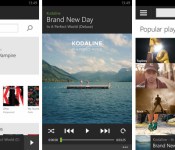
Spotify revamp for Windows Phone will bring radio and a brand new look

Spotify’s Windows Phone app has typically lagged its Android and iOS counterparts, but it’s about to catch up in a big, big way. The streaming music provider has revealed a makeover of the app that will roll in the discovery, playlist browsing and radio features that we’ve seen elsewhere. It will also have a fresh interface that’s in sync with Spotify’s more recent apps while remaining true to the style of Microsoft’s smartphone OS. Premium subscribers will be the first to get the Windows Phone update when it arrives this spring, but Spotify has promised that its free mobile listening option will be coming to the platform later on.
Filed under: Cellphones, Internet, Software, Mobile
Source: Spotify

Plex’s new Chromecast features let you watch more content, better than ever before

Plex launched support for Chromecast a few months ago, and now its offering is getting even better. Starting today, Android users (sorry, iPhones!) can not only cast any music, videos or photos from their Plex library onto their TVs using Chromecast, they can also play content in file formats previously unsupported by the dongle. With the feature, Plex transcodes the content into a new format, allowing it to be played just as if it was natively supported. The app also now supports content mirroring. A first for the Chromecast, with mirroring you can cast a movie synopsis to the big screen while you’re browsing your library to help the group make a movie night decision. If you pick a high-bitrate 1080p flick from your library, Plex tweaked how content is cast to eliminate “expensive transcoding” and make the process more reliable and efficient than ever before.
The updated version of the Plex app is available now for Android, and an iPhone version is on the way. If you’re thinking of giving the app a try, be forewarned: for now use of the Chromecast feature currently requires you pony up for a PlexPass subscription — which start at $3.99 a month. The company says the feature will be free for everyone after its (undefined) preview period ends.
Filed under: Cellphones, Household, Wireless, HD, Mobile
Source: Plex
 AIVAnet