


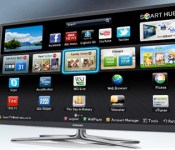
Digital TV – Dealing with Reception Problems

Digital TV is now available across the UK, although reception is better in some areas than others. From time to time poor reception can also be a problem for any household, so what do you do when digital TV reception problems occur and how do you avoid an unplanned interruption to your viewing schedule?
Schedule and Unscheduled Maintenance
Occasionally, planned engineering work to transmitters will interrupt digital TV signals; this is unavoidable but it’s normally well publicised and you can double check if your lack of signal is caused by engineering by checking the Digital UK website here. If engineering is at the bottom of the problem your TV reception should return to normal once the work is completed. If engineering work is not the cause of the poor reception then the next simple checks should completed. Firstly check that cables and connections are in good working order, unplug any connections and plug them back in ensuring that they are not loose. Check cables for damage or wear and tear, if the cables are in poor condition consider replacing them. Once everything has been checked, if you are still experiencing difficulties with the reception, try a retune (see below). Regular retunes should be performed (experts recommend every three to six months as a good schedule) as channel information changes relatively frequently. If you continue to experience difficulties after retuning try the oldest IT trick known to geeks everywhere – turning everything off and switching back on again!
Fine Tuning and Retuning
As mentioned above, retuning your digital TV every few months is a good idea to ensure that you are receiving all the channels available in your area. Retuning is straightforward, requires limited technical abilities and can normally be done using only your remote control.
- Switch on your digital TV and set top box (if you have one) and press ‘menu’ on your remote control.
- Next select the ‘installation’ option, this is sometimes displayed as ‘set up’; if you are prompted for a security code (and didn’t set your own when you first installed the set) it will normally be 0000 or 1234.
- A full retune or factory/default reset should be shown in this menu and you should select this option. Often the menu will ask if you wish to delete all channels – don’t panic, this is part of the retune process – and you should select yes.
- The set will now run a full retune and should correctly install all channels automatically – the process normally only takes a couple of minutes.
If your menu options are not as above and you are having difficulties finding the correct options to retune your digital TV, check with the manufacturer’s instructions. If these have been stored in a ‘safe place’ try an internet search for the correct model.
Common Problems after a Retune
In some areas you may receive a digital TV signal from transmitters in different TV regions – this can mean that after a retune you receive a different regional news broadcast to your own area. If this happens after retuning your set you’ll need to do another retune, using the ‘manual retune’ option; this allows you to select your preferred region. If, after a retune you are still not receiving all the channels that should be available in your area, try switching off your digital set top box or (if you have a digital TV without a box) switching to analogue TV. Perform a full channel scan (no digital channels will be found during this scan) and then switch back to digital and retune as above.
Aerial Issues
In some cases reception problems with digital TV can develop over time as your aerial deteriorates; most TV aerials have a lifespan of 10-15 years, depending on their position. External aerials are often exposed to poor weather conditions and can gradually become less effective. If you have checked coverage in your area, checked all internal connections and cables, retuned your TV and your signal is still poor, then consider contacting a local digital TV aerial engineer to check and replace (if necessary) your aerial. In poor reception areas an aerial installer can also offer advice on how to boost the signal that you receive. If your current TV aerial is an internal one (in the loft in many houses) you may find that replacing with an external aerial will improve the reception. Again, an engineer should be able to offer advice on external/internal aerials and find the most appropriate solution for your property.
About the author:
Freelance writer, blogger and TV addict Eric Compton takes a look at how to deal with digital TV reception problems.

Nikon’s new D4S DSLR improves speed and focusing, adds ISO settings up to 409,600

The Nikon D4S has been teased, displayed in a plastic case and now, it’s official — and we even got to play with it. There’s a substantial list of what hasn’t changed (the same 16.2-megapixel image size, to begin with), but if you’re a high-level photographer already in possession of a D4 (or perhaps even a D3S), you’ll be more interested in those differences. Firstly, while the sensor will offer the same sized images, but it’s a newly developed piece of hardware, with a focus on better noise reduction. ISO now ranges from 100 – 25600, with its Hi4 setting cranking that up to a mind-boggling 409600. If you’re currently handling a D4, you can also expect to see substantial noise reduction: the D4S’ ISO 1600 will be comparable to the D4‘s ISO 800 setting.
Nikon’s new DSLR also delivers changes to to the auto-focus system for both photos and video. Behind the lens, there’s improvements to both the tracking system and the algorithms that govern how the D4S focuses. A new Group AF mode tracks five separate points, meaning that a moving subject (and even a moving photographer) should pose less of a threat to crisp imaging. On video, (where you can now capture uncompressed 1080p resolution at 60 frames) tracking has been bumped up to 11 frames per second on full auto-focus and exposure.
Hopefully fixing one of our major issues with the D4, the new model also comes with a more substantial battery pack, up from 2,000mAh to 2,500mAh. The new unit actually weighs more, but reductions on the D4S’ body means it adds just seven ounces, total, over 2012′s D4. Expect the camera to land on March 6th, and prepare your bank account for the hit: it’s expected to retail for $6,500. We’ve got some early impressions and details on some minor hardware changes, including more substantial grips, right after the jump.

It’s still no small thing. As a pro-level camera (it’s undeniably for them), the D4S is just as squarish as the models that came before it. However, this also affords plenty of space for buttons, controls and dials: something that it takes full advantage of. Button placement is largely identical to its predecessor, although there are several minor changes aimed at making shooting with the 42-ounce DSLR at least a little more comfortable. Grips for both typical landscape holding, as well as vertical, have been widened and increased in depth. To pull this off without making the camera larger than the D4, Nikon slimmed the body between the main grip and the camera lens, meaning your fingers can dig in deeper and hold on more resolutely — no-one wants to drop a D4S. On the rear, the sub-selector button has changed from rubber into plastic, a concession made because users felt the rubberized version was slow to respond.
The raised grip here has also been fortified and made more comfortable for bigger hands. Connectivity-wise, there’s still an ethernet port (upgraded to 1000 Mbps), audio-out and -in, mini-USB, HDMI and slots for both CF and XQD cards. The D4S can also capture in different RAW file formats (something that rival Canon added to its DSLR camera series several years ago), offering the tweaking benefits of RAW images in a smaller file size. The small RAW option captures at 4MP, compared to the base RAW setting at 16MP, shooting 12-bit uncompressed Nikon NEF files that are roughly half the size of typical RAW shots. Alas, during our time, we weren’t able to collect together any early sample images, but the company is apparently putting a lot more effort into how it tackles video on its top DSLRs — we’re now itching to see how it all fares in the field.
Zach Honig contributed to this report.

We now spend more time using smartphones than surfing the web on PCs

It’s no secret that mobile devices outsell PCs these days. However, we now know that they’re taking up more of our free time, too. A new Nielsen study finds that Americans, Brits and Italians spend more hours using their smartphones in a given month than they do surfing the web from computers. The gap is particularly wide in Italy, where locals spend 37 hours per month on their phones versus a mere 18 hours browsing from their PCs. Not surprisingly, social networking is the biggest lure — users spend roughly a quarter of their phone time using Facebook, Twitter and other social apps. While it’s doubtful that every country will be quite so eager to ditch the desktop, it’s clear that companies will have to focus more of their efforts on mobile if they really want our attention.

Filed under: Cellphones, Internet, Mobile
Source: Nielsen

Microsoft’s hardware leader steps aside ahead of Stephen Elop’s arrival

Microsoft said that Stephen Elop would run its hardware division as soon as it finished acquiring Nokia’s device business, and the company has just taken a big step toward making that leadership change a reality. Current Devices & Studios lead Julie Larson-Green has told her staff that she’s leaving her position to become the Chief Experience Officer at the Applications and Services group, which oversees Bing, Office and Skype. The move sees her report to Qi Lu, the app section’s Executive VP. Larson-Green will manage devices until Elop arrives, but the announcement effectively marks the end to her brief 7-month tenure of the crucial organization. She was certainly busy during that time — she oversaw the launches of the Xbox One, new Surface tablets and Xbox Music, among other projects. However, we may not know the full extent of her legacy until sometime after she has changed roles.
Filed under: Gaming, Tablets, Software, Microsoft, Nokia
Source: GeekWire

Netflix’s deal with Comcast won’t destroy the internet

Sure Netflix and Comcast have jointly announced a connection deal, but what does that mean exactly? The internet’s backbone, peering agreements and content delivery network’s aren’t things users spend most of their time talking about, but they play a huge part in whether you get House of Cards in 4K or spend the night staring at a loading screen. Internet service providers, including Comcast, have talked about extracting cash from services like Netflix, and after this news others like Verizon and AT&T wasted no time in announcing they expect similar treatment.
Still, the picture of who’s winning and losing may be a bit fuzzier than it seems. While the two companies didn’t publicly go into specifics for their deals, sources have indicated that it includes Netflix paying Comcast. What Netflix gets, is direct access between their networks at a number of regionally located third-party network centers and — hopefully for its customers — consistently smooth streaming video service. As Dan Rayburn points out on his Streaming Media blog, the change here is that instead of paying another company to connect to Comcast, the company is going direct. While it sounds like a simple change, consumer advocacy groups like Free Press and Public Knowledge have quickly voiced their issues with the move, and even before this weekend end users have shown a negative opinion about reported throttling by ISPs. We’ll take a look at the news and rumors to see what all sides can expect going forward.

Customers of Netflix’s increasingly popular streaming service, somewhat surprisingly, may not see much change in the end (other than the advertised improved connection — all the better to eat up your bandwidth cap). While we don’t know what Netflix is paying Comcast for access, multiple industry insiders (Matthew Prince, Martin Geddes) and analysts believe it’s less than what the company would pay carriers like Cogent, Akamai or Level 3 for the same thing. That should mean better service, without this type of change resulting in a higher bill. Will that be the case years from now, when Netflix requires more throughput for more customers streaming higher res video, and companies like Comcast control even more of the end users? It’s hard to say, but investor response to the news is telling.

Today Netflix’s stock touched an all-time high price of over $449 per share, as Cogent’s dropped six percent to $37.50. Netflix’s OpenConnect proposal to ISPs has included either free peering at private or public exchange points, or colocating one of its servers full of cached content inside the provider’s network. They haven’t been successful in pushing either method on large ISPs, analysts suggest Comcast’s hand was forced by the aforementioned public perception issue and its desire to pass regulatory approval to purchase Time Warner Cable. While we know the two sides negotiated over this very issue for years, that last point may have forced Comcast’s hand enough to provide Netflix significant savings over its current bandwidth costs. That gives us the “mutually beneficial” reference in yesterday’s announcement, and keeps a smile on the face of Netflix and its investors going forward — even if its negotiations with other ISPs follow a similar path.

Comcast is obviously pleased, with cash in-hand, a potentially annoying obstacle to its big acquisition removed, and an example to point out if any other video services start to eat up similar amounts of traffic. This doesn’t necessarily mean the companies are best friends now, and the sources we talked to indicated the deal only applies to this interconnection — we shouldn’t immediately expect a Netflix app to appear on Comcast’s X1 boxes. Still, that they’ve reached an agreement on this seems like a good sign going forward, and despite media reports focusing on the competition between streamers and old media, Netflix’s stated desires have always leaned towards working together.

The impact on net neutrality is also smaller than many might think. Despite the judge’s ruling last month, Comcast specifically is tied to upholding the FCC’s Open Internet principles as a result of its purchase of NBC. The changes made here are not covered by what is commonly referred to as “net neutrality,” which talks about the treatment of traffic once it reaches a particular network. The gateways between networks have so far been self-governed, although some think the FCC should step in. The deal itself is also not particularly odd other than the publicity and the names involved. Other companies like Google, Facebook and Microsoft have reportedly made similar agreements for direct access, and for the same reasons Netflix finally did. Charging by volume is not a new concept, however discriminating based on the type of traffic or source would be a different issue.

So what’s not to like? Many believe that this deal could actually increase Netflix’s costs for a service ISP customers already pay for, and that it sets a precedent that could hinder any potential competition. Free Press has issued a response to the deal indicating that customers should worry for a number of reasons, not the least of which that ISPs like Comcast and Verizon are willing to let their service degrade as a negotiating tactic, instead of making “minimal investments” to upgrade. It sees a chilling effect in potential startups avoiding competition with Comcast, and points out that the potential merger with Time Warner Cable only makes things worse. John Bergmayer of Public Knowledge points out that the “opaque nature” of these transactions makes things worse, since customers are left wondering what’s there to hide. He insists on putting the needs of customers first, and making it clear that “residential ISPs should be in the business of charging their users for access the Internet, not of charging the rest of the Internet for access to their users.”

The true impact of this deal should be felt in stages. We’re looking at a few weeks before the new connections are available nationwide, while Netflix and Comcast are months away from their next quarterly reports to investors. We’ll expect more details about the financial impact of the deal at that time, and of course Comcast’s attempt to acquire Time Warner Cable could stretch over a large part of this year. What is the proper response? As internet pioneer and venture capitalist Marc Andreesen suggests, it’s not entirely clear that more regulation is the answer. At the same time, a lack of information about how these connections work, where they’re made and who is responsible when clogs develop doesn’t seem to help anyone. Unless that changes at a regulatory level, it appears pings, traceroutes and cluttered graphs will give us the best look at how and where the data is flowing.
Filed under: Home Entertainment, HD

Blackphone offers a mostly secure Android-based smartphone for $629

In a perfect world, everybody’s sure their right to privacy is honored. Since that’s not the case, people tend to whip up special tools for protection, like the Blackphone — a privacy-focused device whose thick veil of mystery has now been lifted at Mobile World Congress. Its creators (SGP Technologies, made up of Silent Circle and Geeksphone) said very little when the shadowy phone was announced in January, but we now know that it’ll retail at $629 unlocked and has similar specs to comparably-priced Android devices. While its final components might be altered later, right now the developers are aiming to equip the device with a 2GHz quad-core processor, 4.7-inch HD IPS display, LTE connectivity, 2GB of RAM, 16GB of storage (no microSD card slot in sight), 8-megapixel rear and 1.3-megapixel front cameras.
The Blackphone will come loaded with a derivative version of Android called PrivatOS that’s supposedly more secure, and it’ll be bundled with two-year subscriptions to a few privacy tools. These include Silent Circle’s encrypted app suite (for messages, calls and contacts), a VPN, anonymous search and browsing tools, and secure cloud storage. You’ll also get a free Wi-Fi analyzer and a remote wipe and recovery tool. Plus, if you place very little faith in carriers — the Blackphone will work with any GSM carrier, though it’s partnered with KPN Mobile in Europe for launch — you’ll be happy that the creators will issue software updates directly.
Now, if you’re looking for a foolproof device to shield you from stalkers, hackers or, you know, government agencies, it may best to wait for more info before shelling out your cash. We still don’t know whether the phone touts secure hardware, and you can only text or call people through Silent Circle’s apps if they’re users, as well. Sure, the device comes with one-year subscriptions to the app suite for three friends and family, but that certainly won’t cover all your contacts. Also, the security only lasts as long as you use those apps — which will cost you and your friends after the first twelve months. Blackphone general manager Toby Weir-Jones even said: “We’ve never made the claim we’re offering an NSA-proof device, but we are offering a tool that makes a huge difference to someone who’s using no privacy tools at all.” With that ringing endorsement, who wouldn’t want one? Good thing you can pre-order one right now and get your paws on it sometime in June.
Filed under: Cellphones, Mobile
Via: TechCrunch, Geek
Source: Blackphone

Broadcom’s new 5G WiFi chip promises up to twice the real-world speed

It’s great to have speedy 802.11ac WiFi in a smartphone, but the technology doesn’t always live up to the promise; busy hotspots and walls often slow it down. They may not be as much of a problem once Broadcom’s new BCM4354 system-on-chip reaches handsets, though. It’s the first mobile part to combine 802.11ac with 2×2 MIMO (Multiple Input Multiple Output) antennas, giving the wireless signal a more reliable path when there’s a lot of interference. In other words, you’re more likely to get close to the chip’s 867Mbps peak speed — Broadcom reckons that the hardware is up to twice as fast as a 1×1 MIMO design. Whether or not the BCM4354 is that quick in practice, you may not have to wait very long to try it out when the chip is already in production. Just who’s using it isn’t clear, but Samsung is boasting that the Galaxy S5 is the first smartphone to support 802.11ac with MIMO. We’ve reached out to Broadcom to check whether or not the 4354 is inside Samsung’s latest flagship, and we’ll let you know if it can confirm anything.
Filed under: Cellphones, Networking, Mobile
Via: VentureBeat
Source: Broadcom (1), (2)

Get the Samsung Galaxy S5 wallpaper here now!
 The Samsung Galaxy S5 was finally announced earlier today, and despite what you feel about its appearance, it’s definitely the phone for all Android manufacturers to beat in 2014. While the back cover of the Galaxy S5 appears to have drawn the most ire from critics, it’s the front of the device that has caught some people’s eye, in particular, the Samsung Galaxy S5 wallpaper.
Luckily for us, the wallpaper has been making the rounds on the internet, and to save you the trouble of searching for it, we’ve put it here in this article. If you want the full-sized version, make sure you click the embedded picture below:

I don’t think this is quite the real deal as the resolution of the picture only comes out to a resolution of 838×1482; we know the Galaxy S5 is going to be a 1080p device. However, it sure looks the part, and if you’re wanting to get the Galaxy S5 look before you get a hold of the device, throw that wallpaper on your phone, then profit.
What do you think of the Samsung Galaxy S5? Let us know what you like or don’t like about Samsung‘s newest flagship device in the comments.
Source: Google+

US Attorney General wants law requiring notifications after data breaches

Large-scale data breaches have become all too common as of late, and US Attorney General Eric Holder wants to do more than just catch the thieves. He has asked Congress to create a federal law requiring that companies notify their customers after detecting serious intrusions. Holder’s proposal would exempt firms from reporting low-risk breaches, but it would also punish companies that either don’t send a quick alert or haven’t been doing enough to protect data in the first place. The would-be law isn’t strictly necessary when 45 states have notification requirements in place, but it would hold corporations to a similar standard across the country.
Filed under: Internet
Via: PCWorld
Source: Department of Justice

Bing Maps Preview now lets you explore more cities in 3D

Microsoft’s been hard at work on enhancing the Bing Maps experience within Windows 8.1, and it all started with the release of a preview application last year. With one of the focus areas being 3D exploring, Bing has announced that Maps Preview can now provide a 360-degree view of 15 more cities, both from the US and abroad. Here in the States, this includes Montgomery, Alabama; San Francisco, California; Tallahassee, Florida; and Seattle, Washington, to mention a few. Meanwhile, in Europe, Bing has added 3D mapping access to Duisburg and Dresden in Germany, as well as Marbella and Murcia in Spain. The Redmond-based outfit says we can expect the list to keep growing, too, as it is always working to support additional places.
Filed under: Internet, Software, Microsoft
Source: Bing
 AIVAnet