



Mad Catz Debuts ‘C.T.R.L.i’ Wireless iOS 7 Game Controller
Gaming peripheral company Mad Catz has debuted its C.T.R.L.i iOS 7 gaming controller at Mobile World Congress 2014, reports Engadget. The offering from Mad Catz brings yet another choice to the iOS gaming controller market that saw the release of the SteelSeries Stratus last month and the Logitech PowerShell and MOGA Ace Power last year.

Similar to the Stratus, the C.T.R.L.i can connect to any iOS 7 device through Bluetooth instead of using a Lightning port, and includes a spring-loaded mount that can be used with the iPhone 5, iPhone 5s, and iPhone 5c. The controller itself is based on Mad Catz’s popular MLG Pro Circuit Controller for the Xbox 360, and features console-style controls such as a directional pad, two analog sticks, four face buttons, shoulder bumpers, and left and right triggers. The C.T.R.L.i’s Bluetooth capabilities also allows connectivity for up to four controllers.

At the current point in time, multiple games offer iOS 7 controller support, including titles like Rayman Fiesta Run, Dead Trigger 2, and Asphalt 8: Airborne. Additional developers have also pledged to build controller support into their apps now that hardware is available to consumers, as more iOS games appear to be receiving updates that enable game controller support.
The Mad Catz C.T.R.L.i iOS 7 gaming controller will be available for $80 in April, and will come in colors of black, white, red, blue, and orange.
     |
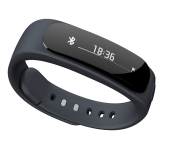
[MWC 2014] Huawei announces its first smartwatch, the Huawei TalkBand B1
 And we’re off! Mobile World Congress (MWC) 2014 has officially started and Huawei is one of the first cabs off the rank in announcing their newest products. One of these new products was its heavily rumoured smartwatch, officially announced as the Huawei TalkBand B1. Huawei says the TalkBand B1 is supposed to be the “perfect hybrid ‘talk and track’ mobile companion”, utilizing a Bluetooth 4.1 earpiece to help you communicate on the go as well as tracking steps taken, calories burned and distance moved.
The TalkBand B1 also possesses a 1.4-inch OLED display, a 90mAh battery and weighs only 26g. It can be wirelessly paired with devices via NFC and is compatible with devices with Android 2.3 and higher. That tiny battery is able to power the TalkBand B1 for 7 hours of continuous talk time, and around 6 days with normal use. Probably the neatest bit of the TalkBand B1 is its earpiece which is able to be removed for use and easily placed back into the wristband.
 It’s definitely an interesting route that Huawei has taken, mixing calling ability with fitness, and we’re excited to see where it will go. The Huawei TalkBand B1 will be available in true black, graphite grey, snow white, lemon yellow, curacao blue and raspberry red, and is expected to launch first in China in March 2014, followed by Japan, the Middle East, Russia and Western Europe in Q2 2014 for the price of €99, or around $135 USD.
Are you interested in getting a Huawei TalkBand B1, and do you think Huawei has gone the correct route with its first smartwatch? Let us know what you think in the comments.

[MWC 2014] Huawei launches a tablet and a phablet, the Huawei MediaPad X1 and MediaPad M1
 Continuing Huawei‘s announcements at MWC 2014 in Barcelona, the Chinese manufacturer has announced two mid-sized tablets, the Huawei MediaPad X1 and MediaPad M1. Starting with the MediaPad X1, pictured above, which was actually leaked in a picture a few days ago, but now we get a much better look at its 7-inch, 7.18mm thick, fully aluminium body.
On the inside, the MediaPad X1 rocks a quad-core Kirin 910 processor clocked at 1.6GHz, with 2GB and 16GB storage, as well as a 13MP rear camera and 5MP front camera. Technically a phablet, the MediaPad X1 will also be capable of making calls as teased in its leak. The 7-inch display is a 1920×1200 Full HD IPS display which makes for 323 pixels-per-inch. Perhaps most impressive about the MediaPad X1 is the 5,000mAh battery which Huawei says will power the MediaPad X1 for 21 days on standby and 5 days of continuous video playback. Much like the Huawei Ascend Mate 2 announced at CES 2014, the Media Pad X1 will also be capable of reverse charging, allowing you to charge your other devices in cases of emergency.
 We’ve actually seen the Huawei MediaPad M1 before, though we didn’t know it at the time; in a leaked picture yesterday, we saw a mystery device that looked very similar to a much larger HTC One. We now know that the 8-inch tablet in that photo was the MediaPad M1, and while it appears to take some design cues from the soon-to-be superseded HTC flagship, that’s where the similarities end.
The MediaPad M1 will possess a quad-core Kirin 910 1.6GHz processor, with 1GB RAM and 8GB storage as well as a 5MP rear camera and 1MP front camera. While the MediaPad M1 is more of a mid-range tablet, it still gets a slim aluminium body with a 4,800mAh battery which Huawei says is capable of staying in standby for 500 hours of standby or watching 8 hours of video on its 8-inch, 1280×800 resolution IPS display.
Both the Huawei MediaPad X1 and MediaPad M1 will ship with Android 4.2 and Huawei’s Emotion UI 2.0. The MediaPad X1 will become available in China, Russia, Western Europe, Middle East, Japan and Latin America in March for the price of €399 (~550 USD) and comes in black, white, champagne and light pink; the €399 price tag also includes the smart cover that was seen in an earlier leak (see the smart cover here). The MediaPad M1′s launch is slightly more ambiguous, targeting a price of €299 (~$410 USD) and aiming for a Q1 launch in Europe, Russia, the Middle East, China, Japan, Asia Pacific, Australia and Latin America, with further roll out to happen after that.
Are you tempted by the Huawei MediaPad X1 and MediaPad M1? Let us know what you think in the comments below.
[LEAK] One last leak before the Samsung Galaxy S5 is officially Announced
 Earlier today we saw what is likely going to be the Samsung Galaxy S5 photobombing behind its newly announced companion smartwatch, the Samsung Gear 2 Neo, and just hours before its expected to be officially announced, we get yet another leak of the flagship device, albeit in a much blurrier photo.
Given to Phone Arena by an anonymous tipster, it appears to show the back of a very blurry Samsung device, though we’re able to tell that it is most likely the Galaxy S5 from the camera shape which matches the leak from earlier today and the unusual look of the LED flash. That weird spot was suspected to be a fingerprint scanner though rumours unanimously suggest that any fingerprint scanner will actually be on the front of the device, probably embedded in the home button. Whatever it is, we only have a little while longer to wait until all is unveiled at the Unpacked 5 event at MWC 2014, where the flagship is expected to be unveiled along with the new Galaxy Tab 4 tablets.
What do you think is on the back of the Samsung Galaxy S5? And are you planning to get one based on what we know of it? Let us know in the comments below.
Source: Phone Arena
Hands-on with Nokia’s X family of Android smartphones (video)

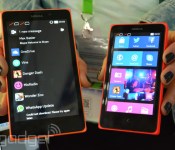
A couple of years ago, we would’ve said that the day Nokia announced an Android device was the day Hades froze over. The hour has come, however, and it’s only slightly chilly this morning. The Nokia X is the company’s inaugural Android-based devices — three of them, in fact — although it’s been tweaked a little bit to fit Microsoft’s and Nokia’s preferences. The devices are known as the X, X+ (pictured above) and XL (pictured after the break), each of which differed by only a small number of factors; and at a cost of 89 euros ($122) for the X, 99 euros for the X+ and 109 euros for the XL, the family fits roughly in-between the Asha and Lumia series in terms of pricing and functionality. The X will be available immediately in growth markets (sorry, enthusiasts in the US, Korea and Japan, it won’t be heading to your neck of the woods through official channels), while the X+ and XL will come later in the second quarter and will come in white, black, cyan, green, red and yellow.
On the outside, the X and X+ both look a lot like a 4-inch version of the Asha 503, with the same matte polycarbonate chassis but without the transparent crystallic case surrounding it. It’s not too tiny that it disappears in your hands, but it’s also not too big to be overwhelming (unless you love larger devices, that is). At 10.4mm thick, it’s not an incredibly thin device but its smaller size helps ensure that it’s still a comfortable fit. (The XL is 10.8mm thick and offers a 5-inch display with the same resolution and 5MP rear camera along with a 2MP front-facing camera; we’ll have more impressions of the XL shortly.)
The phone itself is certainly a basic device, and it shows on the hardware side: the X sports a 4-inch IPS LCD WVGA (800 x 480) display, 3MP fixed-focus camera, a 1GHz dual-core Snapdragon processor, 1,500mAh removable battery, 4GB of internal storage, a microSD expansion up to 32GB and 512MB of RAM; the X+, we’re told, tacks on another 256MB of RAM and comes preloaded with a 4GB microSD card. For an inexpensive pair of devices destined for emerging markets, however, we doubt anyone will complain about the lack of premium specs. We’ve got a gallery of pics below, along with more of our impressions of the Android interface.
Of course, the most intriguing part of the device is the user interface itself. The X family uses a forked version of Android 4.1.2 that uses the standard AOSP but doesn’t have access to Google’s suite of services (such as the official Play Store, Gmail or other core apps). Nokia wants to ensure that the device is focused on Microsoft Cloud services such as Skype (the X will come with a free month of unlimited international calls), OneDrive and Outlook, and it also throws in features like Here Maps, MixRadio and so on. We imagine that putting the focus on these services was the only reason Microsoft would greenlight the project — since this is destined for developing countries and emerging markets, it makes sense that Microsoft wants to get its foot into as many doors as possible.

So what does a Nokia Android UX actually look like in real life? Not surprisingly, it’s a lot like Windows Phone. The X launcher consists of a series of neatly lined-up tiles, although it’s possible to add folders if you’re overwhelmed by apps. Nokia claims that the X reflects the company’s design heritage, and we have to agree — despite its Android framework, it looks and feels very much like a Nokia device. The X also features a menu off to the side called Fastlane (which will be a familiar term for N9 and Asha users), which is the X’s version of a notification menu and logs your favorite/most-used apps, nearly all of your activities, open apps and background processes on the same page. It sounds like a cluster of madness, but the company fortunately kept it looking pretty clean.
Since Nokia’s running the show for all of the core apps, none of them actually look like the way Google has intended. One of our favorite touches was the clock, which Nokia basically copy-and-pasted from the N9. It also includes a Nokia-designed keyboard which even includes swiping gestures (a la Swype or SwiftKey). Third-party app stores and a file manager are also pre-installed. And although it doesn’t use the official Play Store, the X will come with the Nokia Store preloaded. This Store is supposed to feature plenty of Android apps, but they’re specially curated by the company. When asked how particular they are, reps just told us that it’s made things easy for devs: it’ll be a matter of slapping in a few lines of new code into the same APK as they use for the standard Android build, submitting it to Nokia and then finally getting certified by the company. But if the app you’re looking for is nowhere to be found in the Store, a screen pops up with suggestions for other third-party app stores which should feature that particular title. Or, if that doesn’t work, nobody will be able to stop you from sideloading APKs into the phone for your personal use. Since the Nokia UX is simply built on top of AOSP, reps tell us that anything that’s possible within the AOSP is technically possible to do on the X (think launchers, ROMs, widgets and so on).

Will this version of Android get updated, though? It’s never easy to say even for standard Android phones, much less one forked by Nokia. We’re told that it will indeed be updateable (based on consumer need), and individual services can be updated as well; we’d like to give the company the benefit of the doubt, but the reality is that if it’s not successful, there’s nothing preventing Nokia from pulling the support plug.
Color us completely intrigued by the X. As long as you don’t mind the user experience being kept under Nokia’s control, it’s definitely a fun phone to play with. We’ll have to wait until our official review to offer a final judgment, but Nokia’s new smartphone is fun, modern and colorful. We’re still marveling that this kind of discussion is even taking place right now, but it’s fantastic to see the “adventurous” side of both Microsoft and Nokia.
Filed under: Cellphones, Wireless, Mobile, Microsoft, Nokia, Google
Intel promotes its latest smartphone chips with some carefully chosen benchmarks

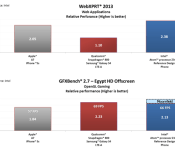
It’s now two years since we first clapped eyes on an Intel-based smartphone, and yet we’re still waiting to see something compelling. If we’re able to trust Intel’s in-house benchmarks, however, then the wait could be over. The publicity slides copied below suggest that the company’s latest dual-core Merrifield Atom smartphone processor (which we last saw at Computex 2013) can match or even beat the current top dogs of the mobile silicon world, namely Apple’s A7 and Qualcomm’s Snapdragon 800. To some degree this isn’t totally implausible: After all, Merrifield (and its newly announced quad-core big brother, Moorefield) have the benefit of the same ultra-efficient 22nm silicon that has benefitted Bay Trail tablets, alongside a cutting-edge Rogue GPU from Imagination Technologies. On the other hand, Intel is comparing Merrifield and Moorefield to rival chips that are already well into their life cycles, and that needs to be taken into account. Moreover, from our own efforts at comparing Android gaming performance across devices, we suspect that raw, benchmark-able performance isn’t everything — Intel also has to contend with a lack of optimization among current Android games and apps. The only reliable test will therefore be a real-world one, and so we’re currently digging around at MWC to find out long it’ll be before we can get hold of a new Atom-based handset that we can actually use.
Filed under: Cellphones, Mobile, Intel
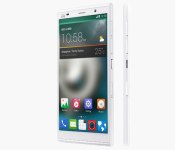
ZTE’s 6-inch Grand Memo II LTE arrives with bigger display, slimmer body

ZTE, like fellow Chinese ODM Huawei, is hoping to become more famous for the hardware that it makes under its own flag, instead of the gear it makes for other people. A year after the Galaxy Note-troubling Grand Memo, the follow-up has made its public debut here in Barcelona. Beneath the 6-inch HD display, you’ll find a Qualcomm Snapdragon 400, paired with 2GB RAM, 16GB storage, LTE radios and a 13-megapixel f/2.2 primary camera. Selfie enthusiasts, meanwhile, will be pleased to see their faces are captured in five glorious megapixels with the forward-facing lens. Android 4.4 (KitKat) has been squeezed into the handset’s 7.2mm frame, coated in a thick skin of the company’s MiFavor 2.3 user interface. ZTE is promising that you’l get a few days of normal use out of the phone’s 3,200mAh battery, and that it’ll last for a full 16 hours playing HD video. It’ll start out in China at some point during April, with Europe, North America and Asia Pacific to follow, and while the company hasn’t talked pricing, we assume it’ll undercut its rivals in the 6-inch market.
Filed under: Cellphones, Tablets, Mobile
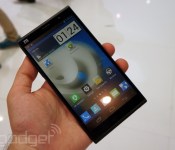
The Grand Memo II LTE is ZTE’s phablet sequel (hands-on)

ZTE’s back with yet another take on the phablet it introduced at Mobile World Congress last year, except this time, the device isn’t touting a world’s first with its Qualcomm CPU. The Grand Memo II LTE marks the company’s second attempt at the smartphone category created by the Galaxy Note and G Pros of the world with a 6-inch 720p display, 13-megapixel rear camera and 7.2mm thickness. To ZTE’s credit, it’s whipped up quite a sleek and attractive design. Not only is the handset ultra slim, but its curved edges and thin bezels somehow conspire to make the device appear slighter than its massive size.
Developing…
Inside, the Grand Memo II LTE sports a Snapdragon 400 processor buffered by 2GB RAM, a 3,200mAh cell to power all the pixels on that 6-inch display, as well as radios for Bluetooth 4.0, WiFi a/b/g/n and GPS. It’s also only available with 16GB of internal storage, which is surprising given its otherwise outsized reputation. You’ll be glad to know the Grand Memo II LTE currently runs Android KitKat 4.4, although that OS is hidden beneath ZTE’s MiFavor 2.3 UI.
In truth, ZTE’s particular Android skin isn’t that offensive, though we were warned by reps on the showfloor it also wasn’t a final build and that features could change. What’s curious is that the Grand Memo II LTE’s two major software additions are exact clones of the ones we saw LG debut on the G Pro 2 just yesterday. For ZTE, that would be SmartShare and miniview. By enabling the SmartShare button from within the app, users will have access to an onscreen shortcut that’s triggered with a longpress of the back button. This floating icon, when selected, brings up an app window that’s geared towards multitasking. So users need only drag and drop their desired apps to the two halves of the screen. Those windows can then also be adjusted according to user preference.
Filed under: Cellphones, Wireless, Mobile
Buy Out Of Print DVDs For Cheapest Prices Possible
Do you think unreleased movies cost you more because of the lack of enough supply? Such rare movies circulated, rented and sold at exorbitant prices by some greedy dealers can now be avoided completely. Imagine the kind of satisfaction you are bound to experience in case you get to find the ultimate movies with premium DVD features included in the respective formats will prove to be most effective to you. Exhaustive collection of such movies in digital form will remain permanently no matter how many times you view them. Relying upon RareDVDs for this exact purpose is something what you need to consider as per the requirement.
Watch premium quality DVDs with the inclusion of special features such as laser artwork at no additional prices. Improved version of each movie to a maximum extent will help you in exploring the ultimate concepts in accordance with the valuable needs you got. All these aspects become a reality only when you get in touch with a reputed dealer who specializes in the collection of rare DVDs for your absolute comfort. Instant sales of such movies as soon as you order will help you in exploring the perfect options available in precisely the same way as you anticipate.
DVD Creation From Original Movies With Perfect Quality
Watching movies of flawless quality matching the original ones is best possible with the inclusion of various aspects. Laser artwork on demand is provided in an exceptional manner ensuring that you maintain premium quality standards throughout. Seasoned DVD movie dealers are well aware of creating extra copies based upon the extra demand. Circulating or renting them for the absolute comfort of the customers on the whole too is possible without having to forego upon the quality prospects in a timely manner. Online booking of DVDs for the cheapest price possible guarantees you best results that you anticipate the most.
Rare movie titles with the option of recording with DVD+R too are provided to you due to which exploring much better features is possible to you easily. Those movies that have been long forgotten even after enjoying cult status can be obtained instantly with secure ordering online. Dedicated creation of DVDs with the inclusion of special features will help you in realizing more benefits without ever having to go through any digitization issues. Perfect clarity with advanced digital effects included will prove to be most effective to you on the whole. Searching for such DVDs in an uncompromising fashion is possible for you with positive results obtained with ease.
Order DVDs For Unofficial Movies Of Ultimate Quality
Classic movies available in digital version explore the best quality effects because of which experiencing optimum effects is easily possible to you. Tracking down movies of your requirement by going through the regularly updated dealer collections of must watch DVDs will prove to be most effective for sure. Generating the ultimate results with the availability of videos offering more convenience of watching to you will ensure premium quality prospects representing your preferred movie viewing needs in an exciting fashion.
RareDVDs with enhanced quality will ensure that you organize your priorities without ever having to go through any major issues as well. Securing your DVD transfers with the collection of best video selections picked up on popular public demand too benefits you in an extensive fashion. With the availability of clear titles and detailed specifications, it is possible to ensure that you are about to purchase only those DVDs that you expect. Special discounts offered upon certain DVD packs increase the quality prospects without affecting the quality standards in any manner. All these features ensure you flexibly explore best digital video standards with the recording facility on an additional basis.
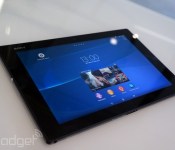
Sony claims the Xperia Z2 Tablet is the world’s thinnest and lightest waterproof slate

With its VAIO PC business all but gone, Sony’s betting big on smartphones and tablets. Three post-PC products are weighing surprisingly light in its pockets at this year’s Mobile World Congress, the largest of which is the new Xperia Z2 tablet. It’s a lighter, thinner version of the year-old Xperia Tablet Z, which has been given a thorough upgrade in order to help it take on the iPad Air and Samsung larger slates. Like its predecessor, the 10.1-inch tablet features the same design language as Sony’s latest flagship Z2 smartphone, complete with “OmniBalance” look, uniform thickness and straight edges. Cosmetic similarities aside, the Z2 Tablet has runs a lightly-skinned build of Android 4.4 KitKat and is powered by a 2.3GHz quad-core Snapdragon 801 with 3GB RAM to get things really moving. Is an internal overhaul enough to capture your eye? Follow us and find out.
This time last year, Sony told us that the Xperia Tablet Z was the world’s thinnest and lightest tablet. At 6.9mm, the year-old slate still comes in thinner than Apple’s newer iPad Air. That obviously wasn’t thin enough, because Sony has shaved a few extra points of a millimeter and 70 grams off the Z2 Tablet, allowing it to make the same claim again. The form factor is far from unique, but its depth and weight reductions make up for Sony’s use of enormous bezels.
That brings us onto perhaps the most important part of Sony’s tablet experience: entertainment. The company debuted a suite of TV apps and services with the Tablet Z, and for the Z2 Tablet it’s leaning on its movie studio arm to bundle six “blockbuster” movies. Further cementing its “one” approach, Sony’s including enhanced gaming controls on both the Xperia Z2 and Z2 Tablet by way of support for the DualShock 3 PlayStation controller. Lack of controller support made many of the swipe-intensive games installed on the tablet very hard to play.

Users who like their media loud will profit from Sony’s decision to act on user feedback and move the side-facing speakers (where they were easily covered by fingers) to the front. It certainly made for a far better stereo experience when we played The Amazing Spiderman 2 trailer back on the Z2 Tablet’s improved 1,920 x 1,200 pixel Triluminos display. Sony has used its BRAVIA TV technology to generate brighter and more consistent colors, by using a mix of red and green phosphor and blue LEDs.
Along with its familiar design, the Z2 Tablet comes a similar (though somewhat lesser) focus on enhanced imaging. It’s included very latest Exmor RS sensor for this slate’s 8.1-megapixel rear-facer, while the 2.2-megapixel front camera retains the same Exmor R sensor as its predecessor. Sony retains its older suite of camera apps, giving you automatic scene recognition, HDR stills and better noise reduction.
The Xperia Z2 Tablet has certainly been given a thorough tuning, but a lot of Sony’s older hardware and software features still remain. Luckily, the company isn’t waiting long to get its new slate onto shelves, as it’s looking to ship globally in March. You’ll be able to grab a black or white model, although Sony hasn’t yet told us how much they’ll cost.
 AIVAnet