


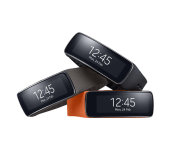
[MWC 2014] Samsung Announces the Gear Fit

To add to the wearable technology world, Samsung has announced the Gear Fit for you fitness bugs out there. According to Samsung, the Gear Fit is ”the most comprehensive fitness tools available,” so it is not like the slew of other fitness wearables out there apparently, and it certainly doesn’t look like it. You can also receive your notifications, so pretty much you got your choice on three different wearable devices to receive notifications. The Gear Fit is probably the better looking of the three.
The Gear Fit rocks a 1.84 inch 432×128 curved Super AMOLED display, IP67 dust and water resistance, accelerometer, gyroscope, heart monitor, Bluetooth 4.0, an interchangeable strap, and 210mAh battery.


No cost has been announced for the Gear Fit, but as soon as wee get that information we will let you know.
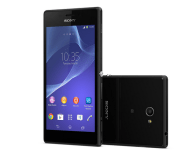
Sony Announces the Xperia M2 Phone and SmartBand LifeLogging Wearable
Keeping things going, and a bit separate, another set of devices were also announced by Sony today. One being another phone, a more mid-ranged device and the other the SmartWare LifeLogging wearable.
Sony Xperia M2
 The Sony Xperia M2 uses a Qualcomm Snapdragon quad-core 400 processor at 1.2GHz with a Adreno 305 graphics chip. It only offers 1Gb of RAM and offers 8GB internal memory with an expandable card slot for support for another 32GB. Screen size is a 4.8-inch 540 x 960 resolution. You will find a 8MP rear camera with a 4X digital zoom. The internal battery is a 2300 mAh which has suggested times of 14 hours and 14 minutes of talk time. Software wise the Xperia M2 is coming with Android 4.33 Jelly Bean. For size you are looking at 139.6 x 71.1 x 8.6 mm and it weighs in at 148 grams.
Sony SmartWear

“At CES 2014, I introduced SmartWear Experience as representing emotion as well as motion – moving, and being moved” said Kunimasa Suzuki, President and CEO, Sony Mobile Communications. “Now we can reveal exactly what this means, as we bring our first products to market this spring – SmartBand and its innovative core extend beyond fitness tracking, to add colourful, fun entertainment experiences to users’ lives. Entertainment is a part of Sony’s ethos – it’s our culture.”
The new SmartWear Experience device from Sony is a new wearable device that connects to your smartphone via Bluetooth (4.0 BLE) and NFC through a new Lifelog application. The SmartBand and accompanying app track your entire life. Hence the term “Lifelogging”. It keeps tabs on the places you have been, the music you have been listening tom the games you have played, the books you have read and more. It also knows the difference between you walking, riding a bike, swimming.or sleeping.
As you can see in the videos, if you watched them, it also alerts you to new notifications and will let you control your media. Yes, it is also waterproof. The SmartBand charges through a typical micro USB port, but Sony didn’t seem to list the battery life or size on the devices spec page.
The SmartBand will be available globally in March.
SmartBand Press Release
Sony Xperia M2 Press Release

WWE Network wrestling is now streaming on virtually every device you own

WWE promised that Americans would be watching body slams and piledrivers on a myriad of devices toward the end of this month, and that moment is finally at hand. WWE Network apps are now available in the US for almost every major platform under the sun, including Android, Apple TV, iOS, PlayStation 3, PlayStation 4, Roku players, Xbox 360 and Xbox One. In all cases, you’ll pay $10 per month to stream live wrestling events as well as beyond-the-ring content like documentaries and classic matches. The app also serves as a second screen companion when you’re watching live TV shows. International grappling fans will have to remain patient, however — WWE Network won’t reach other countries until late 2014 or early 2015.
Filed under: Gaming, Home Entertainment, HD
Source: WWE, PlayStation Blog, Roku
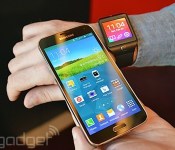
Samsung Galaxy S5 preview

Once a year, Samsung takes some of its best material and slaps it together into a premium flagship model called the Galaxy S. While 2014′s version — the S5 — came a bit earlier in the year than some earlier iterations, we’re no less excited to see it become the star of the show at Mobile World Congress. The new device will ship in April, although exact pricing and availability are still unknown. It features a refreshed design language, yet anyone who has used a GS phone recently will immediately recognize it as a Samsung flagship.
Despite its familiar design, the GS5 has a few new useful hardware features, including a fingerprint scanner, heart rate sensor, and a toned-down TouchWiz UI on top of Android 4.4 KitKat. Perhaps the biggest surprise of all, however, was that Samsung didn’t overload its prized new smartphone with a heaping dose of new S-branded features. This is a marked departure from the company’s previous strategy of cramming in every software feature under the sun, which leads us to wonder if this is related to Samsung’s recent agreement to dial back the customization it does on Android devices. So what else is new here? Read on for a deeper dive.
The new Galaxy retains the same 1080p Super AMOLED panel as the GS4; it’s just slightly larger, at 5.1 inches. With this in mind, it shouldn’t come as a surprise that the viewing experience is pretty much the same as its predecessor. Additionally, the GS5 comes with a swappable back cover, microSD slot and removable 2,800mAh battery, which has a higher capacity than last year’s model. It’s also IP67-certified, which adds an element of water and dust resistance never before enjoyed by Galaxy S users (unless you count the GS4 Active, that is). As a result, the micro-USB 3.0 port at the bottom is protected by a tab that keeps water from getting inside.
Samsung says the back of the GS5 is “leather-like,” which basically means it’s a fancy-looking polycarbonate build. While the company already uses similar design language for the Galaxy Note 3 and Note 10.1 2014 edition, the look and feel is slightly different; it’s not quite as soft as the new Notes, and its small divots actually remind us of the original Nexus 7. Though the sides have a metallic finish, company reps confirmed they’re actually made from a blend of polycarbonate and glass fiber. Still, we’re more confident of the durability here than we were with many of Samsung’s previous Galaxy phones.
One of the biggest talking points for the GS5 is that new fingerprint scanner. It’s easy to see this as a response to Apple’s Touch ID implementation in the iPhone 5s, and while it’s hard to say if that was the primary motivation for the new feature, Apple’s not the only manufacturer to have integrated a fingerprint scanner, and we’re sure it won’t be the last. In this case, Samsung’s scanner, which works by swiping your finger down over the home button, has a few handy use cases. In addition to the obligatory phone unlock option, it also lets you fingerprint-protect a private data locker on your phone, in case you have confidential information you don’t want getting out there. Samsung also announced a partnership with PayPal which allows you to make online payments using the fingerprint method. Unfortunately, we’re still waiting to hear back on exactly how Samsung will implement security and privacy concerns with the scanner, so we’ll update you as soon as we know more details.

The other major new hardware feature is the heart rate sensor, which is built into the same rear module as the LED flash. It works in conjunction with S-Health 3.0, which acts as a personal life coach of sorts. To monitor your pulse, hold your finger up to the sensor and leave it there while the phone does the rest of the work. As you continue to do this more often, S-Health remembers your history and even goes through the effort of graphing it and offering up other relevant information. It also acts as a pedometer and food monitor. Samsung plans to offer an open SDK for developers to incorporate the tech into their own apps.
Of course, Samsung also put some emphasis on the camera as well. In this case, the GS5 comes with a 16-megapixel sensor that features UHD recording capability and real-time HDR (both photos and video) and a couple new modes that we’re excited to review. First, Samsung is introducing a selective focus feature that’s much like Nokia’s Refocus Lens, in which you can change the depth of field on an image after it’s taken. Additionally, it also has “Shot & More,” which is essentially your standard suite of best photo, eraser and drama; the GS4 had the ability to do these modes, but the difficulty was in the fact that you had to know exactly which mode you wanted to use before taking the shot, whereas now you’ll be able to sort those details out after the shot is taken so you’re not wasting extra time. Lastly, there’s also a 2.1-megapixel camera on the front.

The design philosophy behind this version of the Galaxy S involves a modern, glam look, and it even shows in the user interface. It’s still very much a TouchWiz device, but it has a much different appearance than previous versions. It seems to be less in-your-face (again, a likely consequence of Google’s intervention) with fewer tabs and menus. My Magazine is still around, but it’s now accessible by swiping from left to right, not down to up.
The rest of the phone’s stats won’t come as any shock. The GS5 offers a top-of-the-line 2.5GHz Snapdragon 800 processor with 2GB of RAM, an IR remote, NFC, Bluetooth 4.0 BLE/ANT+, Cat 4 LTE (up to 150Mbps down/50Mbps up) and your choice of 16GB or 32GB of internal storage; oddly, 64GB doesn’t appear to be an option, though you can add up to 64GB via a microSD card if needed. All told, it’s very much a run-of-the-mill Galaxy S flagship, but there are enough new hardware features and software tweaks to make it feel fresh.
Sharif Sakr contributed to this report.
Filed under: Cellphones, Mobile
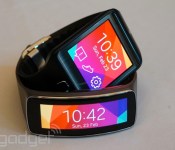
Meet Samsung’s new smartwatch family: the Gear 2, Neo and Fit

Samsung’s new crop of Gear smartwatches are no longer card-carrying members of its Android Galaxy. That’s because Tizen, the company’s open-sourced OS, has taken over the reins for the line begot by the barely five-month-old Galaxy Gear. And, in typical Samsung fashion, the company hasn’t released just one new Gear, but three with very specific areas of focus: the fashionable Gear 2, the functional Gear Neo and fitness-focused Gear Fit. The newly announced trio was on display here at Mobile World Congress in Barcelona, giving us a chance to get acquainted with their particular quirks and let you know whether or not to free up some space on your wrist.
Based on looks alone, it’s obvious the Gear 2 is Samsung’s new smartwatch flagship. The device not only surpasses its stripped down sibling, the Neo, with the inclusion of a camera just above its 1.63-inch watchface, but it also boasts an all-metal enclosure and removable leather strap. This is in contrast to the Neo’s all-over colorful, plastic design — though it, too, features a swappable strap and even designer support from the likes of Moschino and Nicholas Kirkwood. Their spec differences aside, both the Gear 2 and Neo feature 4GB of internal storage, 300mAh battery, an inbuilt IR blaster (paired with Samsung’s WatchOn app) for controlling your TV, IP67 rating for water-resistance, Bluetooth 4.0 for connecting to a portable media player and heart rate monitor (located under the watch face) to aid with fitness-tracking. That latter health-focused bit even goes as far as “coaching” users, via haptic feedback, to increase or decrease their exercise rate.
So how do these two new Gears differ cosmetically from the original Galaxy Gear that inspired them? For starters, Samsung’s done away with the exposed metal screws of the Galaxy Gear’s front face in favor of a sleeker, seamless finish that gently blends into the band. The home button has been moved to a prominent position just at the base of the touchscreen, while the camera and/or IR blaster (depending on the Gear model) reside just above the top edge. The Gear 2 and Neo also sport a bit of user customization, as both now offer a multitude of wallpaper and font options. As for their charging cradle, Samsung didn’t have any on-hand to show off, but we’ve been told they’ll be different than that of the OG Galaxy Gear’s.

Then there’s the Gear Fit. In this trio of Samsung smartwatch amigos, it’s kind of the oddball, what with its 1.84-inch curved Super AMOLED display (432 x 128) and narrow focus on health and wellness. The Fit, like its Gear siblings, also features a swappable strap, Bluetooth 4.0 and an IP67 rating for water-resistance, except its battery is rated for longer use at up to four days. Of the bunch, it’s definitely the most physically attractive Gear option and the one we could really see users embracing.
There’ll be no shortage of apps for consumers that plunk down for any of these new Gears. Samsung has stated that it now counts over 100 dedicated apps for its Gear line and with the availability of its open SDK, that number is poised to expand even further. Of course, Samsung’s offering a means of getting to these third-party Gear apps easily via its own curated app store. As for its own pre-loaded selection, Samsung’s made it so that users will have access to the same stable of apps on Samsung’s Gear 2 and Neo: Notifications, Logs, Dialler, Contacts, Pedometer, Exercise, Heart Rate, S Voice, Media Controller, WatchOn Remote, Apps and Settings. While the Fit ditches the IR blaster- and phone-focused apps for the more narrow suite of Notifications, Media Controller, Pedometer, Exercise, Heart Rate, Timer, Stopwatch and Settings.
You’re probably wondering when we can expect to see these new Gears hit retail and just how much each is going to cost. Those are both good questions we, unfortunately, don’t have the answer to right now. Samsung would only go on record to say that the Gear 2, Neo and Fit would be available sometime in April, but that still leaves a giant question mark hovering over their respective prices. While that essential bit’s currently an unknown, we’d bet that, given the breadth of this new Gear line, you can expect there’ll be a range of affordability.
Sharif Sakr contributed to this report.

Live from Samsung’s ‘Unpacked 5’ MWC event!

Slow your roll there, eager beaver. We know you’re excited to Meet the next Galaxy S5, but the big ‘Unpacked 5′ event hasn’t started yet. If you’re worried about missing any of the news as it’s unveiled, just be sure to check back here at 2PM EST/ 8PM CET when Samsung’s Mobile World Congress festivities kick off. We’ll be reporting on all the action (and potentially amusing stage presentation) as it happens live. Until then, be nice to your Galaxy S 4, and say hi to your mother for us.


Filed under: Cellphones, Wearables, Wireless, Mobile, Samsung
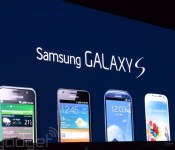
Samsung has sold more than 200 million Galaxy S smartphones
Want to know how big a player Samsung is in the smartphone market? The company now says that it’s sold over 200 million Galaxy S phones since the line first went on the market in 2010. For reference, the Korean tech giant had notched up sales of 100 million Galaxy S devices as of slightly more than a year ago. Samsung isn’t breaking down the sales by model, although it had sold over 40 million Galaxy S 4s as of last fall — much of that 200 million clearly came from more recent customers. It’s difficult to compare the data against other manufacturers, since few of them break out sales by range. Apple, for example, said that it shipped 700 million iOS devices of all kinds as of October. However, it’s safe to say that Samsung remains a heavyweight at the high end of the smartphone market.
Filed under: Cellphones, Mobile, Samsung
Sony demos new SmartEyeglass concept
Fresh off the stage at MWC having shown off their range of new Xperia devices, Sony have revealed their new SmartEyeglass concept. In what only can be seen as a response to Google Glass, Sony has elaborated on their concept that was originally shown off at CES 2014.
Imagine that you walk into an airport and instantly get directions to your check-in desk, or that you get scores and names of players displayed while watching a football game in real life.
The concept works pretty similarly to Google Glass, in that notifications are sent to you right in front of your eyes. There is also, however, a wired hand-held controller that can be used to navigate the user interface and control the camera. Sony’s SmartEyeglass also features something they are calling Binocular see-through eyewear display which presents information at a distant from your eyes in normal view.
Here are the tech specs and main features of the SmartEyeglass:
- Binocular see-trough eyewear display.
- Monochrome green colour.
- Maximum display brightness: 1000cd/m2.
- Embedded camera.
- Accelerometer, gyro, compass and brightness sensors.
- Microphone.
- Bluetooth v3.0.
- WiFi – 802.11b/g/n.
- Separate controller with touchpad along with power, navigation and camera buttons.
And of course, a video of the concept in action.
[Via Sony]
The post Sony demos new SmartEyeglass concept appeared first on AndroidGuys.
Samsung rolls out Galaxy S5 at Mobile World Congress
After what seems like more than a year’s worth of rumors and leaks, the Samsung Galaxy S5 is a reality. Arriving in April, the handset is more than a minor step up from its predecessor.
The Samsung Galaxy S5 is powered by Android 4.4.2 KitKat with Samsung’s custom UI.
Hardware specifications include 2GB RAM, and 16GB/32GB internal storage capacity. Cameras include a rear 16-megapixel and front-facing 2.0-megapixel duo. Rounding things out are the 2800mAh battery, 802.11 b/g/n/ac, NFC, LTE Cat 4 (150/50Mbps), and IR Remote.
That rear camera is not just your average 16-megapixel experience, mind you, but one with a number of new and fantastic features.
- Phase Detection Auto Focus: Advanced auto focus speeds for capturing a shot quickly – first smartphone with phase detection auto focus, a feature usually found in DSLR cameras
- Real-Time HDR: High Dynamic Range (HDR) preview mode makes it easier to choose when to use HDR – like trying to photograph a beautiful sunset. It also enables users to capture HDR photos or videos with no shutter lag or post-processing.
- Selective Focus Mode: Blur images near or far for a creative, one-of-a-kind shot
- Shot and More Mode: The camera chooses and recommends Drama Shot, Best Photo, Best Face or Eraser shot after the picture is taken to create the best photo
- Studio: Add effects to photos and edit movies with a complete suite of editing tools within the Gallery
In terms of processor, the Galaxy S5 employs a 2.5GHz quad-core mobile CPU. The 5.1-inch screen features a 1920×1080 Full HD Super AMOLED display.
Rather than going with the faux-leather that’s been Samsung’s choice for rear cases, the Galaxy S5 comes with a perforated pattern on the back cover. Color options in charcoal Black, shimmery White, electric Blue and copper Gold.
As far as software is concerned, the Galaxy S5 comes with a host of features and apps: Ultra Power Saving Mode, Download Booster, S Health 3.0, Quick Connect, Private Mode, Kids Mode.
Also worth pointing out, the Galaxy S5 is dust and water resistant. Oh, and yes, there’s a fingerprint scanner built into the home button however Samsung has downplayed it more than we expected. Its primary feature is for unlocking the phone with a swipe however it could also be used to authenticate PayPal.
Pricing and exact carrier availability is not yet known but we’ll be following up in short order. Look for your wireless provider of choice to issue press statements right away.
Developing…
The post Samsung rolls out Galaxy S5 at Mobile World Congress appeared first on AndroidGuys.
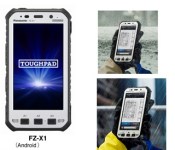
Panasonic introduces Toughpad FZ-X1 smartphone at MWC
Last year, Panasonic introduced a Toughpad and after few months they decided to decline on smartphones, but then they changed their mind. At Mobile World Congress 2014, Panasonic unveiled the Toughpad FZ-X1, a rugged smartphone running on Android, and the features are good enough as well.
 Have a look on the specs:
- 5-inch (1280 x 720 pixels ) touch screen with 500 cd/m2 brightness to avoid sunlight reflection
- 1.7 GHz Qualcomm S4 Pro (APQ8064T) processor.
- Android 4.2 (Jelly Bean)
- Water and Dust proof, IP65/IP58 certified
- 8MP camera with flash
- 1.3MP front-facing camera
- 2GB RAM, 32GB Internal memory
- Dedicated Security core – FIPS 140-2 Level 2 compliant
- Drop resistant from a height of 3 meters, MIL-STD 810G compliant
- 4G LTE/ 3G (HSPA+ 21 Mbps), WiFi 802.11 a/b / g/n/ac Bluetooth 4.0, Satellite GPS, micro HDMI
- 6,200mAh hot-swappable with up to 14 hours talk time and up to 1000 hours standby
It will go on sale in Japan by the end of August with a price tag of 130,000 yen ($1,300), and then sooner or later, it will land in Europe and US region as well.
Are you planning to grab one? Tell us about it in the comment box below.
Source: BusinessInsider
The post Panasonic introduces Toughpad FZ-X1 smartphone at MWC appeared first on AndroidGuys.
 AIVAnet