


[LEAK] Could this wearable be the rumoured Huawei smartwatch?
 At MWC 2014, we’re expecting a whole number of devices to be announced, in particular a large number of wearable devices from smartphone manufacturers. One of these wearables is rumoured to be Huawei’s very first smartwatch, and if this picture from one of its executives is anything to go by, they might not be adopting the standard route for smartwatches. The picture of the Huawei smartwatch was posted on Chinese social media site Weibo by the Huawei executive and accompanied by a message “My new toy. Do you like this colour?”.
 If this is the real deal, Huawei looks like it has taken a more fitness approach to its first smartwatch, and while it’s not exactly a looker, we can’t be certain this will be what the final device will look like; prior to the Samsung Galaxy Gear‘s launch, a less-than-flattering picture leaked out of the device, though this was later proven to be an early prototype by Samsung officials and sure enough, the actual announced device thankfully looked completely different (check the leaked photo out here). While that’s not to say this isn’t what Huawei’s first wearable is going to look like either, but it’s best to be wary about these leaks prior to MWC.
What do you think about this leaked photo: would you consider this Huawei smartwatch if this is what it turned out looking like? Let us know what you think in the comments.

Rogers lets Canadians upgrade phones with no money down, plus a few catches

Where American carriers go, so goeth their Canadian counterparts. Rogers has revealed an upcoming Next program that, like its AT&T parallel, will let early adopters get new phones every 12 months for less cash than it would take using the standard upgrade path. As long as the contract price for a phone is $250 or less, you won’t have to pay anything for it up front; you’ll just shell out a flat $25 per month ($30 with insurance) and trade in your older Rogers hardware. The math potentially makes sense if you just have to get a new device every year. However, there are some big caveats you’ll want to consider. You’ll still be signing a two-year agreement when starting out, and you’ll have to subscribe to “select” plans. We’ll learn more about Next’s true value when it’s available in the near future, but those who despise contracts (or prefer their grandfathered plans) aren’t likely to change their minds.
Filed under: Cellphones, Wireless, Mobile
Source: Rogers RedBoard

Oculus is running short on dev kits due to nearly-extinct components

The last Oculus developer (DK1) units will be sold in the following countries:
- United States
- Canada
- Countries in the European Union
- Japan
- South Korea
- Australia
- Switzerland
- Norway
Filed under: Gaming
Via: Road to VR
Source: Reddit

Opera’s Sponsored Web Pass gives you free mobile internet if you watch an ad

Did you know that people like free stuff? Opera knows, which is why it’s now launching an ad-supported version of its Web Pass platform. Mobile operators can now easily take advantage of this tool to not only sell duration-based passes (like unlimited browsing for a day or just Twitter for a week), but to also offer them for free. The catch? You just have to watch an ad before each session begins, which doesn’t sound too painful. Users also have to stick with the Opera Mini browser, in order to leverage its cloud-assisted web compression technology. We’re talking about saving up to 80 percent of data traffic here, hence the cheap or even free web passes — like Malaysia’s DiGi offering unlimited browsing via Opera Mini for just $0.60 per day.
Of course, you can still use Opera Mini to save money in other scenarios, especially when data roaming. With the upcoming Opera Max service, smartphone users can save even more by having their app and video traffic compressed. If you’re based in the US or Western Europe, you can now go ahead and pre-register for the Opera Max’s open beta.
Filed under: Networking, Mobile

Huawei’s Media Pad X1 leaks with calling capabilities and smart cover

A few cats have escaped from Huawei’s bag ahead of Mobile World Conference, namely images of its 7-inch MediaPad X1 and mid-range Ascend G6 handset. A Chinese Weibo site nabbed live pics of the MediaPad X1, and thanks to a previous visit through China’s FAA, we know its specs: quad-core 1.6GHz HiSilicon 910 CPU, 2GB of RAM, 16 GB memory, a 1,920 x 1,200 display and a 6,000 mAh battery. It’s also reported to have telephonic capabilities for those with headsets (or no shame), and optional LTE. Interestingly, the pics also show a faux-stitched smart cover with a secondary display, à la Samsung’s S View. All that puts it on the high-end side, and the coup de grace would be a rumored price tag of around 1,200 Yuan (about $200), which we imagine would be sans LTE or the cover.
Meanwhile, rumor-monger @evleaks has outed pics of Huawei’s Ascend G6 smartphone (after the break), a 4.5-inch model said to have a quad-core 1.3GHz MediaTek chip, 1GB of RAM, Android 4.2 Jelly Bean and an 8-megapixel front / 5-megapixel rear camera. Its standout feature is a slim 7.5mm profile, but it otherwise seems destined for bargain shoppers. We know nothing else about pricing and availability, of course, but we imagine we’ll find out soon at MWC 2014 — which is shaping up to be rather epic.


Filed under: Cellphones
Via: Phone Arena
Source: 1Pad.cn (translated), @evleaks

Lovefilm Instant becomes Amazon Prime Instant Video in the UK

Lovefilm Instant subscribers, prepare yourself for a welcome change. After three years flying under its own flag, the UK movie streaming service will become part of Amazon’s Prime subscription on February 26th, rebranding as Prime Instant Video in the process. That name might sound familiar because it’s the exact same package Amazon has been offering US Prime subscribers for the past 36 months. Before Amazon’s changes begin kicking in next week, a full year of Prime will cost just £49 up until launch day (the original cost of Prime’s one-day delivery service), rising to £79 thereafter. If you’re an existing subscriber, however, you won’t need to pay a penny until your yearly subscription expires. Amazon expects some won’t be impressed by Prime, so it’ll allow customers to stay on their existing monthly subscriptions. They won’t receive the wider benefits of speedy shipping and access to the Kindle Owners’ Lending Library if they do.
In an effort to rival iTunes and provide a local service that Netflix doesn’t, the retail giant will also let customers buy and rent movies, some of which won’t be available on Prime Instant Video. It will be accessible to all Amazon customers and carry Amazon’s Instant Video branding. Offering both on-demand services as part of one yearly payment may tempt UK consumers to consider Prime over Netflix and Sky’s Now TV, and you can bet Amazon will promote its low-cost subscription wherever it can. The company tells us that it is already in the process of rebranding its suite of mobile, console and Smart TV apps. They’ll retain all of their original features but expect the familiar white, red and black branding to disappear. Not everything is set to change, however, Lovefilm will continue to run its DVD rental business, ensuring streaming luddites can still get their their entertainment fix via Her Majesty’s postal service.
Filed under: Home Entertainment, Internet, HD, Amazon
Source: Amazon, Amazon Prime Instant Video UK

Volkswagen’s Golf GTE is the fast plug-in hybrid you might actually buy

There aren’t many quick plug-in hybrids with reasonable price tags, but Volkswagen may just lower the cost of eco-friendly performance with its newly unveiled Golf GTE. The hot hatchback mates a 148HP gas engine with a 101HP electric motor, giving the Golf enough combined power to reach 62MPH in 7.6 seconds — pretty brisk for a plug-in that should still be affordable and practical. If you’re not always in such a rush, you can run purely on electric power for 31 miles. The big catch? At present, VW has no plans to release the GTE in the US. Americans will likely have to book European vacations if they want to see the sporty hybrid in person.
Filed under: Transportation
Via: Autoblog
Source: Volkswagen

Google offers its help to monitor deforestation in near-real-time (video)

Google is no stranger to humanitarian work, and its latest effort is helping keep an unflinching eye on the world’s trees. For its part in the Global Forest Watch, the search giant is providing tech (namely, Earth and Maps) that allows virtually anyone to monitor deforestation on a massive scale. Let’s say you want to peek at how much of Brazil’s rain forest has been clear-cut in since 2008. You can do that. Even better, you can look at how much has been replanted — sadly, not a lot — if the mood strikes. The website’s interactive map also allows users to see just which industries are doing the damage, the extent of tree-top cover and a whole lot more. No, Google making data visible isn’t exactly new, but this application might be the first to have a lasting impact on the environment.
NEW: Powered by Google, Global Forest Watch monitors the world’s forests in near-real-time.http://t.co/081Oqnpem9 #gfwlaunch @worldresources
– GoogleEarth Outreach (@earthoutreach) February 20, 2014
Filed under: Science, Internet, Alt, Google
Source: Google Maps, Global Forest Watch

[Discussion] What’s Wrong With Plastic Smartphones, And Is Metal Really Better?
 The debate of whether plastic or metal is a better material for smartphones has raged as long as anyone cares to remember, of course reaching its climax in 2013 with the release of the aluminium-encased HTC One and the plastic all-rounder, the Samsung Galaxy S4. That argument has yet to come to a logical conclusion (whether or not logic is generally used in these discussions is a different matter completely) and with the imminent release of the Samsung Galaxy S5 and The All New HTC One, the battle of metal vs plastic has again been brought to the fore. In that light, let’s take a look at what’s wrong with plastic smartphones, or at least, the perception of this, and why people believe metal to be better.

Courtesy of digital trends
There are plenty of rumours about what the Galaxy S5 is going to be made of: there is talk of the Galaxy S5 adopting a metal construction while other reports say that it will end up adopting the faux-leather back cover seen on the Galaxy Note 3. Both of these rumours could be true in their own right, but then there’s also the rumour of two variants, a premium and standard edition. It’s possible that Samsung will give the premium version the more ‘premium’ treatment with metal whereas resorting to the ‘cheaper’ plastic for the standard edition, but I guess what the issue at hand is, what exactly makes metal a better choice for a smartphone.

Courtesy of Real Madrid Football Blog
While at the heart of the discussion is obviously personal preference, we’ll deal with that a little later; I’d like to first address the practical and physical aspect of the debate. Metal is a material that humanity has now dealt with for many years and we’re all very familiar with its properties; from a smartphone perspective, it provides a very protective shell with high tensile strength, something that is rarely replicated with other materials. Converse to this, plastic’s strength can never really be compared to metal’s, in a general sense, as metal’s method of preparation ensures that it will inevitably be harder and much stronger, from a materials perspective. Applied to a smartphone, however, I think plastic comes into its own.
The ‘strength’ of a phone’s construction, I feel, has been given a fairly arbitrary interpretation in today’s media; we are generally quite quick to assume that metal is more premium feeling and we know it is a stronger material, therefore it should be better for our smartphones. If, however, you take a look at all the hyper-protective cases available on the market, you will notice they all have one particular characteristic in common: they all incorporate an absorption system that usually relies on give. More specifically, this is quite similar to the idea of crumple-zones on vehicles where the impact of a crash is absorbed by the car’s chassis rather than transferred in its entirety to its occupants. In the same way, these cases distribute destructive forces away from your device when it hits the ground.

Courtesy of Android Authority
In a similar way then, in the absence of a case, the construction of your phone has a similar mandate; to direct damaging forces away from the phone’s internal electronics. Perhaps most telling about metal devices is the fact that they have no give; metal does not warp or bounce, therefore if a HTC One is dropped, the exterior of the One is likely to dent, as is often documented. Conversely, a plastic device that is dropped is unlikely to suffer the same kind of permanent defect, though in extreme cases, the cover itself may snap. As you can see then, plastic is in no way less appropriate for a smartphone than metal; they simply have different abilities, both with their own advantages in specific scenarios.
Now, moving on to the question of whether one material or the other feels ‘premium’, this can only ever be a personal preference. It can be said that a brushed aluminium object may be one of the nicest objects to hold in the world, but plastic can be just as smooth, if not smoother (on a molecular level). It’s an impossible argument to win as everyone prefers something different in their own personal device, and it’s worthwhile to remember that before you question somebody for liking something “they shouldn’t”.
 The purpose of my discussion here is not to paint the picture that either plastic or metal is superior as a material for a smartphone, as both have their pros and cons, and at the end of the day, it is down to a person’s personal preference. Rather, the point of this article is to perhaps encourage more intellectual discussion between opposing parties in this debate and try to discourage blind ‘fanboyism’, which unfortunately many conversations tend to boil down to; it’s often one thing to say you prefer something, but entirely another to accept the disadvantages and consequences of your choice.
But enough about what I think: what’s your opinion on metal or plastic, and why do you prefer it?
Note: There is a poll embedded within this post, please visit the site to participate in this post’s poll.
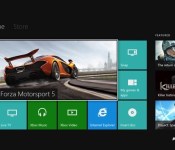
Microsoft is hand-picking users to test Xbox One’s next software update

Ahead of Xbox One’s second spring update Microsoft is inviting a handful of gamers to test the patch’s mutiplayer features. As Major Nelson tells it, the invite process starts today and if picked, you’ll be first in line to try future updates as well. Lucky users will be notified via a Live message containing a download token within the next week (or maybe later); all Redmond asks in return is that you offer feedback about the new bells and whistles on a private forum. Microsoft has a storied history of letting users test its firmware updates, but, given the social focus of this one, we wish the Titanfall beta was still running.
Keep an eye on your Xbox Live messages – You may be getting an invite to preview the next #XboxOne update http://t.co/skcIOmzLSN
– Larry Hryb (@majornelson) February 20, 2014
Filed under: Gaming, Home Entertainment, HD, Microsoft
Source: Xbox Wire
 AIVAnet