


The week’s best Android rumors: Nexus 8, Galaxy S5, Android 4.5, Xperia Tablet Z2, and more
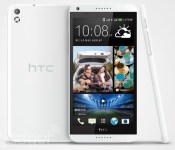
 HTC Desire 8
Some last minute specifications for the upcoming Desire 8 fill in some of the blanks from before. Assuming they’re accurate, we should see a 5.5-inch 720p HD display, 8GB storage, 1.5GB RAM, a 13-megapixel rear camera, 5-megapixel front-facing camera, and microSD expansion. Powered by Android 4.4.2 KitKat, the phone is alleged to feature a 1.2GHz quad-core Snapdragon 400 processor.
Samsung Galaxy S5
With only a couple days left to go before it’s announced, the Galaxy S5 is again rumored with a fingerprint sensor. This time, however, we’re hearing that the sensor will be built into the display, making it available anywhere it’s touched. What’s more, the Galaxy S5 will purportedly show your real-time fingerprint on the display as you swipe about.

HTC M8 Mini
HTC’s smaller take on the flagship HTC One experience might be a shiny one, if not a small one. New images hitting the web this week have the device as offering a nice, metallic-like finish. The phone is set to provide a 4.5-inch display. Remember when that was considered huge?
Nexus 8 and Android 4.5
Google could wait until July to introduce the next build of Android, which is assumed to be 4.5. According to an unnamed Google Dublin source, the Nexus 8 will debut in July with latest version of the platform. As for the Nexus 7, the tipster says it’s being replaced by the 8-inch device.
 NVIDIA Tegra Note with K1

NVIDIA looks to be testing a new Tegra K1 version of its Tegra Note tablet, should newly discovered benchmarks prove correct. Shown having a 1920×1200 resolution display, the device was running Android 4.4.2 at speeds of 2.1GHz. Other specs outed here include 2GB RAM and 16GB internal storage.
Amazon Android-powered set-top box
Amazon could introduce its Android-powered set-top box as soon as March, according to a new Re/code report. Details are expected to include watching of TV and Amazon content as well as access to apps and other service providers.
Sony Xperia Z2 Tablet
Sony’s flagship tablet experience for 2014 could debut as soon as Mobile World Congress. Specifications tipped by evleaks include a 10.1-inch (1920 x 1200) Triluminos display, a 2.3GHz quad-core processor, 3GB RAM, 16GB storage, microSD slot, 8-megapixel rear camera, 2-megapixel front-facing camera, and 6,000mAh battery. Powered by Android 4.4 KitKat, it’s purported to be 6.4mm thick and waterproof.

Huawei smartwatch
Huawei’s first crack at the smartwatch space is less than a week away so it makes sense that it would leak online. A photo posted to Weibo shows the device as having more of a wrist-band appearance than that of a watch; it’s not unlike LG’s Lifeband Touch, Fitband Flex, or Jawbone Up.
The post The week’s best Android rumors: Nexus 8, Galaxy S5, Android 4.5, Xperia Tablet Z2, and more appeared first on AndroidGuys.

The Engadget Podcast is live at 12PM ET!

Another week, another several billion dollars changes hands. Between Facebook’s huge buy-in on WhatsApp, and Candy Crush creator King’s plans to go public, it’s a big week for the one percent. How that affects the rest of us, however? That’s what we’re here to hash out. Terrence O’Brien and Ben Gilbert are in the studio this week — while Joseph Volpe is busy galavanting in Barcelona/covering Mobile World Congress — ready to talk all of the above and more: what is Google’s “Project Tango?” what happened to Doom 4? is BioShock finished? Tune in live at noon ET and join the ‘cast live!
Filed under: Podcasts
Smartwatches are dumb, but they don’t have to be

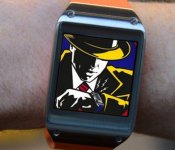
If recent trends are any indication, there are two roads that lie ahead for smartwatches and the companies foisting them upon us: the all-you-can-eat, tracker + smartphone approach and the single-minded focus on health and wellness bands. One meanders off to a fuzzy horizon laden with disregarded Dead End signs, a jumble of features and an overload of quantified-self data. And the other… well, that narrowly focused path to wellness simply falls off a cliff. It’s not because dedicated health and wellness devices have no place in the wearables market — right now, they do. It’s because that area of lifestyle tracking will inevitably be consumed by the smartwatch borg as a subset of ancillary features. And yet, here we are — about to enter into the irrevocable phase of mobile technologies as wrist-worn wearables with questionable (for now) benefits. A future we’ll preview more intensely at this year’s Mobile World Congress in Barcelona as some big-name manufacturers unveil their in-development takes on what can currently be described as redundant lifestyle tech.
Am I being dismissive of a new technology? Not quite. It’s more realism than pessimism at this point; a perspective made that much stronger by the faults of existing smartwatches. I own and gave what I consider a fair shake to Sony’s SmartWatch 2. The end result being yet another device left to whiten under an accumulation of dust somewhere in my apartment. There’s just no room in my everyday life for another product to charge, let alone one that offers mere previews of the fully fledged functions on my smartphone. I don’t need a smaller, second window into my connected life, nor do you. That already exists and you’re probably holding it in your hand right now. The four to five inches of which allow us a greater range of motion, input and screen real estate for actual, meaningful productivity. You see, efficiency should be the hallmark of smartwatches, not the clumsy duplication the category currently engenders.
I don’t need a smaller, second window into my connected life, nor do you.
It doesn’t have to be this way, though. Manufacturers just need to train their focus on three key areas to turn the smartwatch into a viable fourth pillar of lifestyle tech: design, display and battery life. Namely, we need wider, “always on” displays that offer high pixel density and look good doing it — the latter of which Pebble’s already addressing with Steel. Think your smartphone in landscape mode (but blessedly thinner thanks to advances in flexible display tech) strapped to your wrist and with a two-week charge. Sounds a lot more appealing than the two inches-or-less window to a preview that Pebble, Samsung and Sony have cobbled together, doesn’t it? It’s not that far-fetched a concept either, especially now that flexible displays (exhibit A: LG’s G Flex) and energy-sipping screen tech like Qualcomm’s Mirasol are making their way to market. That extra horizontal space wouldn’t just enable a more natural reading experience for texts, emails and social communications; it’d also make way for a less-cluttered app layout and the use of QWERTY software keyboards. Wouldn’t you like more room to read your messages and reply from your wrist? More space to precisely select icons and input text? Maybe even the ability to watch videos in 16:9 format?
It seems like I’m asking a lot, but really that’s the very least we should expect from a smartwatch. And, admittedly, none of it is revolutionary. For that, we’ll have to look to HTC and Apple, both of which are rumored to be hard at work on smartwatches that surpass the gimmick factor with an emphasis on lifestyle integration. HTC chief Peter Chou’s even gone on record to say these devices have “to meet a need, otherwise … it’s not for people’s day-to-day lives.” So what is it then about smartwatches that’s meaningful, and where’s this hole in our everyday mobile lives we didn’t know needed filling? The answer to that lies largely with contextual data.
Imagine a stylish smartwatch that blends the best of Jawbone’s Up24 with HTC’s One, or any other combination of high-end fitness tracker with flagship smartphone. By marrying the sensor-heavy wellness technology we see exploding within the industry right now with a first-class mobile experience on our wrists, companies could create the perfect digital assistant to slot seamlessly into our lifestyles. A device that could even control the connected homes of the future. It’d keep tabs on our movements, eating and communication habits, exposure to sunlight, temperature, sleep cycles, calendar and media consumption. Not to mention that it’d make and receive voice calls, record and display video and photos and function as a web browser, as well as a messaging hub.
Imagine a stylish smartwatch that blends the best of Jawbone’s Up24 with HTC’s One, or any other combination of high-end fitness tracker with flagship smartphone.
Best of all, by its very nature as a watch, it’d be constantly attached to our body — in large part thanks to waterproofing, power management and wireless charging — offering the most accurate overview of how we actually live. And it’d be able to quantify all of that data in a neat, assistive manner to encourage us to be that much healthier and that much wiser about maximizing our time. We’d be emboldened, not hampered, by our reliance on technology and we’d possibly be even thinner, too. We’d be more efficient soft machines.
That’s the dream, anyway.
The reality right now is that manufacturers are in a rat-race scramble for your dollars, eager to oversell the empty promises of their commercially available, yet stunted prototypes. Because, let’s face it: Two revenue streams — i.e., smartphones and their codependent smartwatch counterparts — pad a company’s bottom line better than a single well-executed product. And, quite frankly, if present-day smartwatches really could handle all of our communication needs well enough to be daily drivers, there’d be no real need for smartphones in our lives. So while Samsung, Sony and Pebble are busy kicking up as much dirt as possible to get consumers to notice their respective half-baked smartwatch takes, others, like Apple, LG, Microsoft and HTC, are working quietly behind the scenes to deliver something with actual purpose and value. Or, at least, that’s the presumption based on their collective silence.
And what about Google? Surely, a Nexus smartwatch must be in the works over in Mountain View. It’s an inevitability, really, made all the more possible by the company’s purchase of WIMM Labs and Nest; acquisitions that brought smartwatch and connected-home tech in-house for Google. Besides, do you really expect those overachieving Googlers to pass up a chance to show the industry how it’s done? Until then, I’ll find some other, much more reasonable way to set fire to $300.
Filed under: Cellphones, Wearables, Mobile, Apple, Samsung, Sony, HTC, Google

Nokia Here Maps coming to all Windows 8.1 devices

Have you looked on with envy as friends with Lumia 2520 tablets use Here Maps to navigate around city streets? You won’t have to for much longer. Nokia has revealed that it’s bringing the mapping software to all Windows 8.1 PCs, including RT-based systems. The wider availability will come alongside a host of upgrades, too. In addition to the necessary additions of mouse and keyboard support, you’ll also get a search history, higher-resolution satellite images and faster map loading. Nokia will offer the app for free, beginning with those in North America and Europe; everyone should have access within a few days.
Filed under: GPS, Software, Nokia
Source: Here Three Sixty

Accounting Software for Farms – Increase Profitability
 Farmers have a lot to think about. While some things are out of a farmer’s control, such as the weather, one important aspect of a farmer’s business is fully within their control. It’s their finances. Using accounting software made specifically for farms can help farmers gain control of their finances and profitability (Source: http://www.redwingsoftware.com/rwssn/home.aspx?page=308).
Production analysis
Production analysis can be measured by predefined quantities such as per bushel, per head, per box, per acre, or any unit tracked. Expenses can then be applied to multiple account levels, such as a fertilizer account with segments for blend, lime and nitrogen. Knowing your operation’s profitability by production center helps you understand what needs to be improved. You can then use this information to help make smart decisions for your operation.
Ratio Analysis
Using ratio analysis helps you pinpoint areas of strength and weakness within your farming operation, so you can make changes accordingly and increase your profits. Ratio analysis takes data that is already within your accounting system, and allows you to see the data behind the indicators (Source: http://www1.agric.gov.ab.ca/$department/deptdocs.nsf/all/econ2198). Trend information can then be graphed and analyzed for the time frame of your choice.
Budgeting
Setting up and following a budget is another way to make a difference in the profitability of your farm. A budget helps you gain control of your finances and gives you the tools needed to project future cash flow, and helps you manage your assets and liabilities. Using a budget allows you to help answer “what-if” scenarios, such as expanding a crop, purchasing new equipment, buying more land, etc. Simply put, implementing a budget for your farm can provide smart decision making for your operation, which can lead to increased profits.
Take control of the things you can as a farmer. Financial management should not be left to chance. Use financial tools made specifically for farms, and you will be on your way to increased profitability.
Google offers up public beta channel for Google Cast extension
Like to get in on the ground floor and help shape the future of things to come? Maybe you’re the kind of person who wants to test out new software or hardware ahead of final, public release. Do you own a Chromecast? Great, here’s a bit of news you’re sure to enjoy.
Google has released a public beta channel for its Google Cast extension for Chrome browsers. Available immediately in the Chrome Web Store, it automatically stays updated with patches and features.
What’s the endgame with the public beta? Google wants to make sure developers and users are able to test things out before rolling them out in a wide release.
According to Shawn Shen, a Chromecast Developer Advocate:
- Input & Feedback: Developer input on the preview SDKs helped greatly in shaping the APIs and user experience of our public SDK launch. We want to make sure that developers and passionate users can stay involved as things evolve.
- Early Access: New SDK features don’t help users until they’re adopted by developers, so the sooner we can get capabilities to developers, the better. We also want to make sure that changes never come as a surprise.
- Stability: We want to make sure that new versions of the Google Cast extension don’t inadvertently break sites that integrate with the SDK. Providing pre-release versions to the community is the best way to ensure we detect and address any issues prior to a public rollout.
The post Google offers up public beta channel for Google Cast extension appeared first on AndroidGuys.
uNu Enerpak Tube 5,000mAh Backup Battery review

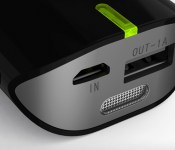
The Enerpak Tube by uNu features a bulit in 5,000mAh battery and flashlight. This charger is just what you need to give it an extra boost, but served with a side of practicality.
uNu’s Enerpak Tube is just the jump-start you need when your device is dead. In fact, it will provide 1-2+ extra charges to your cell phone, depending on its battery.
Design
The Enerpak Tube is sleek and classy but note that the exterior is almost slippery. Not to worry, though, the size makes up for the silkiness.
The design was really thought through, feels great in hand, and easily fits into almost any pocket.
 Power & Functionality
This battery is powered by a 5,000mAh rechargeable battery to charge your favorite electronics. This is a great item to keep in your car for a possible emergency. When depleted the Enerpak Tube charges withing a few hours.
The device is very responsive and works with a wide assortment of devices. Cell phones are charged anywhere between 1-3 additional full charges. The flashlight isn’t too bright but works well when needed in low light situations. Personally, I’d still stick with my smartphone’s flashlight, but we can knock this for having a spare.
Overview
If you need a quick go to charger for emergencies, and/or to give your phone an extra boost of battery life, this is just what you need. The uNu Enerpak Tube is available now for $59.95 in a variety of colors.
The post uNu Enerpak Tube 5,000mAh Backup Battery review appeared first on AndroidGuys.

Sprint launches WiFi calling, but only on two Samsung phones for now

We heard rumors that Sprint was going to take a cue from T-Mobile and launch its own WiFi calling service. Well, it looks like those earlier reports were spot-on: Sprint today announced WiFi calling for select Android phones, allowing customers to call and text over a local wireless network as a way of avoiding overage charges. The only catch: when we say “select Android phones” we really do mean select. For now, the service will only work on the Samsung Galaxy Mega and the Galaxy S4 Mini. If you’re lucky enough to own one of those devices, you’ll be able to use the service for free following an over-the-air update, which should arrive sometime in the coming weeks. (Note: domestic calls and texts are free, but there’s still a fee for international calls.) And if you don’t own one of those phones? There may be hope yet: Sprint says it will expand the service to additional devices throughout 2014.
NVIDIA debuts Tegra Note 7 LTE
NVIDIA on Friday announced that a 4G LTE ready version of its Tegra Note 7 will soon be available. Arriving in the second quarter, the 7-inch tablet will connect to both LTE and HSPA+ networks in various countries around the world. Indeed, the Tegra Note 7 features NVIDIA’s i500 processor with cellular connectivity.
Specifications remain the same; details include a Tegra 4 processor, Android 4.4.2 KitKat, 16GB internal storage (with microSD expansion), a 5-megapixel rear camera, HDMI output, and support for the accompanying stylus.
The Tegra Note 7 LTE will retail starting at $299 from partners around the world.
The post NVIDIA debuts Tegra Note 7 LTE appeared first on AndroidGuys.

Samsung teaser video suggests Galaxy S5 to be waterproof, powerful, and stylish
As if you had any lingering doubts that Samsung was set to debut the Galaxy S5 next week, a new teaser video has surfaced online. Short (37-seconds), sweet, a shy of hard details, it suggests the “next Galaxy” will be all sorts of wonderful things.
Among other adjectives, Samsung tells us the handset will be fun, smart, speedy, stylish, and even wet. The Samsung Galaxy S4 was offered in a waterproof “Active” variant; we heard the same might be in order for the Galaxy S5. Of course, all one has to do is some checking around and you can pull up the general specs. Unless Samsung has some serious surprises up its sleeve.
Perhaps Samsung will go the route of Sony and make the flagship device waterproof. Perhaps Samsung will introduce the variants of the Galaxy S5 at the same time as the standard model. We’ll find out in a few days time when Samsung takes the stage at its Unpacked event.
The post Samsung teaser video suggests Galaxy S5 to be waterproof, powerful, and stylish appeared first on AndroidGuys.
 AIVAnet