



Apple Seeds Sixth Beta of OS X Mavericks 10.9.2 to Developers [Mac Blog]
 Apple today seeded build 13C59 of OS X 10.9.2 to developers, marking the sixth beta iteration of 10.9.2.
The release comes roughly a week after the fifth OS X 10.9.2 beta, build 13C53, and nearly two months after the first OS X 10.9.2 beta.
The update is available to registered developers through the Software Update mechanism in the Mac App Store as well as through the Mac Dev Center.
Apple continues to ask developers to focus on mail, messages, graphics drivers, VoiceOver, VPN, and SMB2. Earlier betas of OS X 10.9.2 began allowing Mac users to block people on iMessage and FaceTime, as can be done in iOS 7, and also introduced FaceTime Audio.
     |

Rovio Teases New Angry Birds ‘Adventure’ Game With New Bird Characters [iOS Blog]
Rovio today tweeted a teaser image of an upcoming Angry Birds game, which it calls “a big adventure with new birds.” Many of the games in Rovio’s ultra popular Angry Birds series have utilized the same group of birds introduced in the original game, each of which has its own special ability.
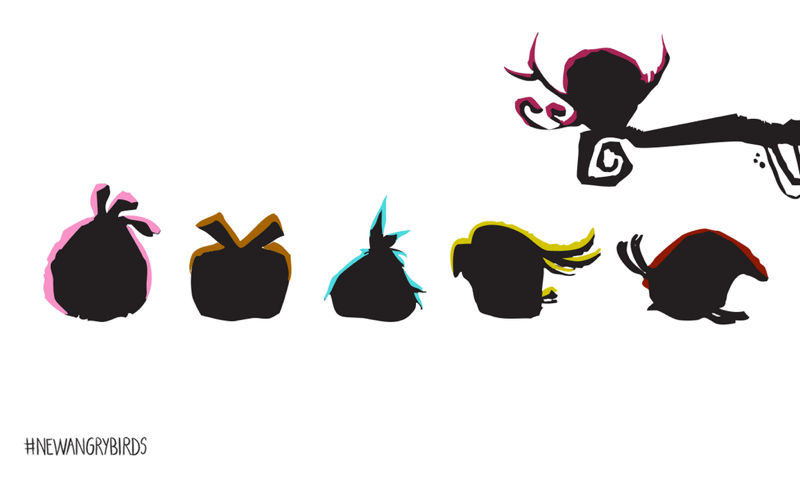
While the company has added some new birds and modified existing birds for select games like Angry Birds Star Wars, today’s tweet hints at some all new birds for the next Angry Birds game.
Aside from revealing new birds, Rovio’s teaser is short on information. It is not clear when the company plans to release its newest game, except for a vague “coming soon” announcement.
Big adventure with new birds coming soon! #NewAngryBirds pic.twitter.com/DWdZ7fBrXq
— Angry Birds (@AngryBirds) February 12, 2014
Rovio’s Angry Birds series has been wildly successful, garnering tens of millions of downloads and spawning an entire line of merchandise. The company has thus far released eight variations of the original Angry Birds game that debuted in 2009.
| |

NASA’s building a satellite refueling robot platform that works… in space

Currently, every satellite put into orbit will become interstellar refuse, destined to be tracked (and perhaps dismantled) by DARPA or eventually disposed of by gigantic lasers (maybe). Naturally, NASA’s not so keen on such waste, and it knows that many satellites’ shelf lives can be extended with the addition of more fuel. Enter the Remote Robotic Oxidizer Transfer Test (RROxiTT), a project aimed at building a robot platform capable of refilling satellite fuel tanks both on earth and in space.
To make it happen, scientists are working out a method for delivering highly combustible oxidizer (aka a chemical used to ignite rocket fuel) to satellites that were not designed to be serviced. Oh, and they need to be able to do it remotely and safely, of course. And that latter bit is a particular sticking point, as oxidizers are “toxic, extremely corrosive and compressed” according to NASA, which is why the system is being developed for use both on land and in orbit — why put a human in harm’s way when a robot can do the job, right?
Image Credit: NASA
The technology needed is being jointly developed by teams from Goddard Space Flight Center in Maryland, which specializes in building the robotic arms and control systems, and a team from Kennedy Space Center. That team has developed a unique oxidizer and fuel delivery and monitoring system that can safely transfer the propellent. Tests of RROxiTT are ongoing, as its creators are working out the kinks of the system here on earth before they try their luck in space.
Source: NASA

Netflix report suggests Comcast and Verizon FiOS speeds are slipping

Netflix’s latest ISP speed report is out and compared to what we’ve seen before, there are a few surprises. Comcast and Verizon FiOS have dropped quite a bit in the last four months, while Google Fiber is once again at the top of the heap. Neither Comcast nor Verizon have slumped to DSL speeds, but given Comcast’s history with net neutrality and Big Red’s stake in Redbox, some might call their decreased data rates into question. A J.P. Morgan analyst tells Recode that Netflix’s top executives don’t think that the telcos are throttling their users — reinforcing the fine print at the bottom of the report. As The Consumerist points out, last October the streaming juggernaut altered how it measures downloads, which could explain why all of the measured speeds started shifting around then.
If those speeds don’t match your in-home measurements, Netflix explains that the averages are well below peak speeds due to the different encodes used to pump movies and shows to your display, and can vary based on the networking gear in your house. So while the numbers may look discouraging, House of Cards will likely still look fine right where you are.

Filed under: Home Entertainment, Internet, HD, Verizon
Via: The Consumerist

Google Play Music updated, gets offline SD storage

Google has been busy lately updating it’s Android App lineup; Google Play Music is next up on the list with features which will add to the functionality of Google Now.
Google has added the ability to shuffle all songs from an artist in All Access which mimics the Shuffle Play or Radio feature found in other music streaming services such as Spotify or Rdio.
In addition, Google now allows up to ten authorized devices on your account to access your music collection, meaning no more having to de-authorize your allocated devices if you have multiple Android handsets you want to access Google Play Music.
Further functionality, and something I’ve personally been waiting for, is the ability to store offline music on a device’s SD storage card. This is currently only on KitKat and Google mentions it has included ‘experimental’ support for older devices.
The update also brings a few UI updates which makes it easier to share what you’re listening to, together with new controls for adding tracks to playlists. Of course, there’s the usual bug fixes too, but overall a minor update but some important features nonetheless.
The post Google Play Music updated, gets offline SD storage appeared first on AndroidGuys.
On Candy and Kings
Hey guys, just wanted to publish a note to clear the air on a particular topic that’s getting traction this evening. We ran a post earlier today as part of our Developers We Love series which is aimed at giving new Android users a place to start. The idea is simple: we highlight a developer who has a number of games in the Google Play Store or Amazon Appstore that are fun, high quality, and worth checking out. Seasoned users may already know about many of these developers, but those transitioning away from feature phones will not be so familiar.
What happened today that was so bad? The developer we showcased was King.com
Yes, I am well aware of the ongoing stuff about trademarks. In fact, I find that particular aspect really crappy. I did not know about the CandySwipe open letter today until after our post had gone live. The whole thing sucks to be honest and it flies in the face of what we set out to do with Developers We Love. Why? Because we say in our preface paragraph that we will show love to indie developers as well as big name studios. Heck, we’ve intentionally stayed away from adding EA to the pool if only because of the perceived nickle-and-dime agenda. Sadly, one big company looks to be taking advantage of a very indie developer. And that sucks.
In hindsight, no, we should not have listed King.com as a Developer We Love. There’s too much drama around them right now and our timing for the article was simply unfortunate. While we do ready some of these evergreen articles to go on a day’s notice, it falls at my feet in the end. Some are drafted weeks in advance and set aside. Rather than greenlight the article and send it through, I should have pulled it back – which is what has happened now.
To be clear we did not take any payment from King.com nor did we receive anything from them. We have a pool of developers we’re going to cover here and today was their turn, so to speak. We do not take payment from any developers whatsoever. We don’t do text links. At best we will sometimes do a guest blog post where we will still check the links and verbiage so as not to appear overtly favorable.
Our intentions with AndroidGuys as a whole is to speak to the average reader and Android/smartphone user. We don’t care about chasing down every single rumor nor do we cover every single software update. Suffice it to say, our main focus is on helping Android users get more out of their devices.
I’m deeply sorry if we’ve turned you away over this; we hate to lose any readers or give them the wrong impression. I failed you guys and that’s the unfortunate truth.
Scott
The post On Candy and Kings appeared first on AndroidGuys.
HTC Introduces Double Dip Cases for the HTC One

Still think Moto X wasn’t a game changer? After the Moto Maker was introduced to pick out what color you wanted for your Moto X, other OEMs started thinking about doing the same thing. They started adding multiple color options for their phones, and now HTC wants a piece of that action for their beloved HTC One.
HTC has introduced Double Dip cases that you can color coordinate yourself. If you head over to HTC, you can go pick yourself a case with 3 different colors on it for the price of $30. Not a bad idea honestly, so if you have an HTC One, and you want a colorful new case, hit the link provided below to go grab yourself one Let us know if you did.
Check them out here: HTC.com

Supposed iPhone 6 parts surface on Twitter, hint at a larger screen on the way

Lately it’s seemed like Apple can’t build anything without a few prototype shells and cases leaking into public view, and now we’re seeing pictures of what could be the next iPhone. Posted by a Twitter user earlier today and addressed to several Apple-focused websites, the empty iPhone 6 shells look very close to current models, but appear to have space for a larger edge to edge-style display, which has been rumored before. Sonny Dickson, who has previously obtained iPhone and iPad parts prior to the launch of new devices, has also apparently received the same pictures and tells MacRumors they came from a source in China. Are these pics the real thing, and if they are, do they represent what we’ll likely see from Apple later this year? Without any details to back them up we can’t be sure, but you can check out a few more pictures for yourself after the break.
iphone 6 #apple pic.twitter.com/T7URVS8O6f
– mornray886 (@mornray886) February 12, 2014
iphone 6 #apple pic.twitter.com/GW6jKLG9FP
– mornray886 (@mornray886) February 12, 2014
Filed under: Cellphones, Mobile, Apple
Alleged iPhone 6 Prototype Depicted in New Images
A set of images depicting what is said to be the shell of the next-generation were shared with MacRumors by an anonymous Twitter user earlier today. Australian writer Sonny Dickson, who shared several of the same images, claims that they were initially shared by someone in China.

It is entirely unclear whether the device in the images is a legitimate iPhone 6 part or a fake. Early prototypes of the iPhone 5s and the iPhone 5c exhibited a blank rear shell while the iPhone 6 shell in the picture clearly shows FCC text that is generally added to the phone at a later date.

The device depicted in the images has a width of 2.6 inches, while the existing 4-inch iPhone 5s has a width of 2.31 inches.
Even if these images are fake, they give a good idea of what a larger screened iPhone 6 could look like.
| |
iPad Air Battery Life Bests Other Tablets [iOS Blog]
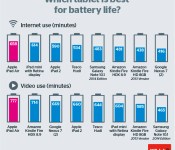
Apple’s iPad Air outperforms competing tablets by a significant margin when it comes to battery life, according to a new test conducted by Which? Test Lab, a consumer test organization in the United Kingdom.
In a battery usage test that covered both Internet and video use, the iPad Air bested both the iPad 2 and the Retina iPad Mini, as well as tablets from competing companies like Amazon, Google, and Samsung.

With the Internet (web browsing) test, the iPad Air saw 658 minutes of battery life, or nearly 11 hours. The Retina iPad mini came in second place with 614 minutes of battery life, while the Samsung Galaxy Note 10.1 and the Amazon Kindle Fire HDX 8.9 lasted just 483 minutes and 481 minutes (eight hours), respectively. Apple’s iPad 2 also performed well, lasting 590 minutes.
In the video test, the iPad Air lasted quite a bit longer than its competitors at 777 minutes (almost 13 hours). The Kindle Fire HDX 8.9 and the Nexus 7 from Google came in second and third, at 714 minutes and 669 minutes, respectively. The Retina iPad mini and the iPad 2 fared decently at 660 and 604 minutes, respectively, while the Samsung Galaxy Note 10.1 came in dead last with 465 minutes of battery life (7.75 hours).
For the tests, Which? set all of the tablets at a brightness of 200 nits (what it calls a reasonable daytime brightness level) and checked battery life while web browsing over wi-fi (with 3G enabled) and during video playback. The tests may not be entirely reflective of real world usage given variations in browsing and video watching habits, but the experiment does give a clear overall view of the battery life of the iPad Air compared to its competitors.
| |
 AIVAnet