



Bolt offers free voice calls and replaces your Android dialer

When it comes to making free VoIP calls using your Android phone, you have a bunch of options. Services like Skype or Fring let you call other users for free, but you’ve got to remember to fire them up before you start dialing. Instead of using one app for regular calls and another for VoIP, newcomer Bolt replaces your phone’s dialer with a one-stop solution for both. Unlike other services that require you to buy credits to make regular calls, the app connects to traditional phones the old-fashioned way — over your wireless carrier’s network. Calls made to other Bolt users are routed over the web for free, and sip a meager 60KB per minute. That means even with FreedomPop’s free deal (which includes a paltry 500MB of data), you’d be able to chat with mom for more than 142 hours before getting hammered with overages.
The company hopes to ultimately become a fully formed communication platform, and offer messaging services as well. Long-term that could mean users could pare down on mobile minutes and messaging packages, and instead spring for a slightly larger data package on their mobile bill. Android users can snag the app now from Google Play, and an iOS version is already in the works.
Filed under: Cellphones, Wireless, Mobile
Via: The Verge
Source: Bolt

Rdio for iOS delivers playlist editing and on-the-go review composition

For those using Rdio on iOS devices, today’s update adds two new functions to the software for Apple’s mobile gadgets. First, users can edit playlists from the app on an iPhone or iPod touch without having to log in on the desktop in order to do so. The curation feature allows for the usual addition, removal and rearranging of tracks while also including custom artwork, visibility and collaboration settings. Fancy typing out those music critiques while they’re fresh in your mind? Well, the latest version allows for composing on that mobile device with the ability to peruse reviews from the pros and fellow Rdio listeners. It’s time to stop procrastinating and start compiling that Yacht Rock playlist, you guys.
Filed under: Software
Source: Rdio
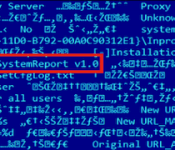
Sophisticated malware finally discovered after 7 years, likely created by a nation-state

Security firm Kaspersky Labs recently released a research paper that uncovers the existence of a piece of highly complex malware that’s been in circulation for almost seven years. It’s called “The Mask,” which is a rough English translation of Careto, a Spanish word for “ugly face” that was found in the malware’s code. Aimed at high-level targets such as government institutions, embassies and large energy corporations, Kaspersky says “The Mask” has already claimed nearly 380 unique victims (with more than 1,000 IPs) in 31 countries that include China, France, Germany, the UK and the US. Kaspersky first spotted it in a spear phishing email campaign that entices the recipient over to malicious websites disguised as news sites like The Guardian and the Washington Post.
Kaspersky reports that the malware is extremely sophisticated, with a set of tools that include a rootkit, a bootkit, versions that’ll affect 32- and 64-bit Windows, Mac OS X, Linux and possibly even mobile operating systems like Android and iOS. Once it gets its hooks into your system, it can be used to hijack all your communication channels and snatch everything from Skype conversations to sensitive encryption keys. It’s also very difficult to detect. Due to the level of finesse found in the malware, Kaspersky concludes that “The Mask” was very likely created by a nation-state, much like Stuxnet and Duqu. As to which nation-state that is, the security firm doesn’t know, but says it’s probably one that is Spanish-speaking based on the code’s language. Intrigued? Go on and hit the PDF link here to get the full rundown of what Kaspersky discovered.
Via: Vice
Source: Kaspersky Labs, (PDF)

Abandoning Olympus: Mega Man’s creator on going indie

Keiji Inafune’s been making games for nearly 30 years. He’s the man behind one of gaming’s most iconic characters (Mega Man) and several huge franchises (Dead Rising, Onimusha). After 23 years working at Capcom, one of Japan’s largest game publishers, he suddenly quit back in 2010. “Settling down means death for a creator. As long as you are a creator, you cannot settle down,” he announced on his blog. Just six months after being appointed Capcom’s Global Head of Production (overseeing the company’s entire gaming catalog, from Resident Evil to Street Fighter), he quit.
With that, he set off on his own and created two new companies: Comcept and Intercept. When we talked with Inafune last week at DICE 2014, he spoke of his plans for Comcept in detail. “I was a publisher for 20 years, so you’d be right in thinking I brought some ideas from there into Comcept,” he said. That means, first and foremost, retaining ownership of IP. That’s a major component of going with Kickstarter for the latest Comcept game, a Mega Man-esque action game titled Mighty No. 9.
The project sailed past its target goal of $900K and took in $3.8 million. Without a publisher, of course.
For the game industry, such freedom for mid-level studios is unprecedented in recent years. Comcept’s last major project, Soul Sacrifice on the PlayStation Vita, is an original work by Comcept that is wholly owned by Sony Computer Entertainment. That isn’t meant to demonize Sony — it’s standard business for game publishing, and more than likely that Sony shared non-financial resources in the process — but to contextualize the importance of self-publishing. Inafune puts it best himself:
“At Capcom, makers didn’t have rights for the game. But now independent, we’re able to make what we want…which makes us into a publisher. It’s more to be a games maker, you become a publisher. You need to think as both a developer and a publisher.”
He even said it’s harder now for studios than it was just 10 years ago. “More than publishers giving out money, they’re looking for hits (like Call of Duty), for investing into definitive things.”
Of course, even with his years of experience and current projects, he can’t speak for the entirety of Japanese game development. He’s been asked to do as much many times in the past. Part of that is assuredly due to his outspoken nature — a rarity among Japanese game devs — and another part is due to his own speeches/rallying cries for innovation in Japanese game development. Inafune sees another factor as well: “I think it’s the press that made me into this ‘representative.’” Touché.

As Comcept grows in the coming years, Inafune’s got high but reasonable hopes: “a company that creates games where we hold onto the rights…not a games maker that’s ordered to make a type of game.” His studio and games may be labeled “indie” for now, but Inafune’s goal remains the constant it’s been his entire career: to have the freedom to make great games.
Kensington AbsolutePower USB AC Adapter review
The Kensington AbsolutePower 2.1 with PowerWhiz AC Adapter is a great travel adapter to charge your gear. Handy, compact, and lightweight, it’s a must-have for those who travel regularly.
Use & Charging Speeds
The Kensington AbsolutePower 2.1 is a great USB AC Wall Adapter to charge your compatible tablet and cell phone the way it should charge — as quickly as it can. Gadgets that can take a 2.1amp work just as nicely as those which require the more standard standard 1amp charger.
This means that popular devices such as Samsung Galaxy Note 3, and Apple iPhone 5/5S/5C are capable of charging at the faster rate.
Design & Style
Rather than familiar rectangular shape, this one is more of a rounded cube design. It’s as stylish as one could make such a device; the foldaway prongs ensure ulta-portability. Instead of having little prongs poking in your bag you’ve got a tiny unit that can fit in your pocket.
Overview/Pricing
You can purchase the Kensington AbsolutePower 2.1amp with PowerWhiz USB AC Adapter at $24.99.
Also, be sure checkout more of Kensington’s Mobile Accessory Lineup.
The post Kensington AbsolutePower USB AC Adapter review appeared first on AndroidGuys.
 AIVAnet