


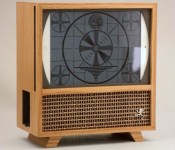
Wooden iPad mini case creates the 1950s TV that never was

Jeffrey Stephenson has long had a knack for giving PCs an elegant retro look, and he’s now bringing his crafting skills to the mobile realm. His recently completed DuMont project turns an iPad mini, a Jawbone Jambox and a heap of wood into a tiny 1950s TV set, complete with a woven speaker grille; the owner just has to slot devices into the enclosure’s side to indulge in some nostalgic viewing. Stephenson isn’t officially selling the box, but he is taking inquiries from those who want a tablet TV of their own. If you’re wondering how he did it, you can visit Bit-Tech‘s forums to check out the project work log.
Filed under: Peripherals, Tablets, Apple
Source: Jeffrey Stephenson, Bit-Tech Forums
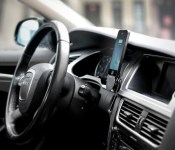
Versatile TogoDock Turns Any Surface Into Portable iPhone Dock and Charger [iOS Blog]
Fuse Chicken, the company behind the multi-function Une Bobine iPhone stand, today launched a new product on crowd-funding site Indiegogo. Called the TogoDock, Fuse Chicken’s newest iPhone accessory combines a magnet-laden mount with an integrated charging cable, allowing users to turn any surface into a dedicated charging station.
The TogoDock can be mounted on any surface, from a wall to a car dash to a refrigerator. A built-in cable connects to the Lightning port of an iPhone on one end while the USB end can plug into a computer, a charger, or a car port.

“Our goal is to make everyday interaction with technology simple,” said Jon Fawcett, CEO of Fuse Chicken. “Our newest device lets you mount and charge your iPhone anywhere – in the car as a GPS, in the kitchen to follow recipes, next to the bed as an alarm clock; togoDock is simple, cool and useful, and it fits right into your pocket.”
The TogoDock can be mounted directly onto a magnetic surface using its embedded magnets, but may also stick to non-magnetic surfaces with an included self-adhesive disc mount. The product includes a built-in backstop for support along with a cable cord wrap and a car adapter.

Customers can purchase a TogoDock with a $30 pledge on Indiegogo and the first 200 backers will also receive a 3D printed PLUGdock designed to convert a standard iPhone charging cord into an outlet-mounted dock.
     |

New FAA Rule Prohibits Non-Essential Use of Electronics in Airplane Cockpits [iOS Blog]
At the same time the U.S. Federal Aviation Administration is easing restrictions on the in-flight use of electronics for passengers, it is tightening its rules on electronics usage by pilots. A new FAA rule (PDF) published on Tuesday prohibits the personal use of electronic devices by flight crew members while an aircraft is being operated. It is an addendum to the FAA’s 1981 “Sterile Cockpit” rule that requires pilots to refrain from non-essential activities during critical phases of flight.
This final rule will prohibit flightcrew members in operations under part 121 from using a personal wireless communications device or laptop computer for personal use while at their duty station on the flight deck while the aircraft is being operated. This rule, which conforms FAA regulations with legislation, is intended to ensure that certain non-essential activities do not contribute to the challenge of task management on the flight deck or a loss of situational awareness due to attention to non-essential tasks.

This FAA rule is a response to earlier instances of distracted flying by commercial airline pilots. In one 2009 incident, two pilots for Northwest, now Delta Air Lines, overshot their destination airport by 150 miles because they were using their personal laptops. During a 78-minute period, neither pilot noticed communications sent by company dispatchers and air traffic control. They only corrected course after a flight attendant called the cockpit to check on the flight’s estimated time of arrival.
Though the personal use of electronic devices is banned, the FAA rule does permit the essential use of electronic flightbooks in the cockpit. Several US airlines, including JetBlue, American Airlines and United, have adopted iPads to replace heavy flight bags. These iPads are equipped with key flight charts, reference documents and checklists necessary for the operation of the aircraft.
While pilots must pay attention while flying, a recent FCC proposal would allow passengers to make phone and data calls while flying. In response to consumer opposition to in-flight calling, lawmakers are drafting a bill that would ban in-flight phone calls, says the Associated Press.
“Most passengers would like their flights to go by as quickly and quietly as possible,” Rep. Bill Shuster, R-Pa., the committee’s chairman and sponsor of the bill, said. “When it comes to cellphones on planes, tap don’t talk.”
The bill requires the Department of Transportation to issue regulations that would prohibit phone calls during flight. The bill has passed the House Transportation and Infrastructure Committee and will move to the floor for discussion.
| |
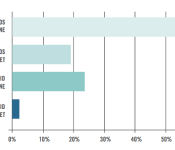
iOS Dominates Enterprise Market with 73% of Mobile Device Activations [iOS Blog]
iOS devices accounted for 73 percent of all enterprise mobile device activations and grabbed the top ten spots for most popular devices in the fourth quarter of 2013, reports Good Technology in its Mobility Index Report for Q4 2013.
From a device perspective, we continued to see an increase in iOS activations this quarter, which we can attribute to two new iPhone models coming to market just before the start of the quarter. The overall number of device activations has increased 34 percent from Q1 to Q4 of this year, indicating strong, continued growth and adoption of the Good Secure Mobility Solution. As many organizations are migrating away from BlackBerry to meet end user demand and embrace newer platforms like iOS and Android, they are deploying Good’s cross-platform solution to secure both their data and devices.
Good obtains this data from its customers that use the company’s Good Dynamics Secure Mobility Platform. Its customer base includes many Fortune 500 companies in commercial banking, insurance, healthcare, retail, and government. The device usage report from these enterprise users shows that the iPhone made up 54 percent of total device activations, while Android smartphones followed with just over 20 percent.

The iPad maintains a strong hold on tablet activations, claiming 91.4 percent of enterprise tablet activations in Q4 2013, while Android accounted for the remaining 8.6 percent. The iPad was most popular in Financial Services and in Business and Professional Services, with the two sectors accounting for 60 percent of all Q4 iPad activations.

Apple routinely highlights corporate adoption of iOS devices during press events and earning conference calls. During Apple’s recent quarterly earnings conference call, CEO Tim Cook confirmed “the enterprise area has huge potential” and said he expects Apple “would have more and more payback in the future” due to the company’s investment in this area.
| |

Popular no-contract smartphones on sale for Virgin Mobile

If you are in the market for a new, no-contract smartphone, you may want to swing by Amazon and check out some of their currents deals. Whether it’s for you, a family member, or a loved one, there’s quite a selection of devices — at great prices. Here’s a handful of Android-powered smartphones that do not require a contract or long term agreement. Prices start as low as $29.99 and discounts cut as deep as 69% OFF!
- Samsung Galaxy Victory LTE $76.99 (Save 69%)
- LG Optimus F3 $79.88 (Save 56%)
- Samsung Galaxy S III $302.96 (Save 24%)
- Kyocera Rise $36.99 (Save 54%)
- Kyocera Event $29.99 (Save 50%)
- Samsung Galaxy Ring $59.88 (Save 67%)
The post Popular no-contract smartphones on sale for Virgin Mobile appeared first on AndroidGuys.

SanDisk’s U3 SDXC card supports 250MB/s write speeds, 4K video

With affordable 4K cameras from Panasonic and Sony set to ship soon, it’s time for flash memory manufacturers to begin readying stockpiles of high-speed SD cards. Today, SanDisk is announcing its latest flagship, the Extreme Pro SDHC/SDXC UHS-II. It exceeds the new UHS Speed Class (U3) spec, supporting continuous write speeds of up to 250MB/s. While the card is most appropriate for folks shooting 4K video, it’ll also come in handy when you’re snapping continuous RAW stills at high frame rates, letting you unload the camera’s buffer just as quickly as you can fill it. The new cards will ship in April in 16GB to 64GB capacities, with prices ranging from $120 to $300. There’s also a new U3 card reader that’s designed to let you take full advantage of the SDXC card’s 280MB/s transfer speeds. That device will also be available in April, with a $50 MSRP.
Filed under: Storage

LG is also shrinking its flagship phone: G2 Mini to launch later this month

Blazing a trail set by the likes of Samsung, HTC and Sony, LG is set to become the latest phone maker to release a smaller version of its flagship smartphone. In a image shared on its Facebook page, LG has given us a first look the new G2 Mini, which is set to make its big debut on February 24th at this year’s Mobile World Congress. While LG isn’t disclosing any specs right now, the teaser image does show that the Mini will retain the same unique backside as the G2, placing the volume rocker and power button just below the rear camera. Beyond that though, it’s hard to tell what other features the G2 Mini will retain. But with Mobile World Congress less than two weeks away, we’ll get the full lowdown soon enough — that is unless LG decides it wants to share more details before then.
Filed under: Cellphones, Mobile, LG
Source: LG Mobile (Facebook)
Programming on the Curriculum
As the number of computer science graduates decreases and our reliance on computers in the workplace increases there is a very real need for people to gain and develop skills in programming, coding and other IT essentials. One possible way of plugging this gap is by teaching coding and programming languages as part of the school curriculum.
Replacing French?
Over in the USA some states are beginning to realise that these are skills that we need to develop early. Some states are allowing these courses to count towards scores in Mathematics and Science, but with only 1 in 10 schools offering the courses at the moment, across the nation, it seems there’s still some way to go before it becomes part of a curriculum generally accepted as necessary for students entering the work place. Interestingly enough some schools may, it’s thought, start offering programming languages instead of a foreign language. Will this create problems in itself in an international market?
Thinking outside the computer
Here, too, the National Curriculum in England and Wales is introducing coding in its 2014 changes, recognising these needs. Children as young as five will be taught the basics and introduced to the ideas. At Key Stage One they will hopefully be taught to understand algorithms and reason out how simple programmes will work. According to the curriculum changes, by the age of 14 students will be adept at coding, as well as using some key transferable skills such as critical thinking, logic and creativity.
Scotland, too, is developing its students’ computing skills far beyond the basic word processing and MS Paint prowess the last generation was familiar with. A range of computer science skills are taught as part of the Curriculum for Excellence, including app development and coding, and like their counterparts in England, Scottish children are taught familiarity from a very early age. 3 year olds in the nurseries are adept at using computers and understanding the basics. The future workplace should, theoretically, be populated with people with at least basic skills in these key areas and it seems likely that the environment will encourage those with talent to develop it much further than was possible before.
Here and now
Where does that leave us now, before the curriculum can benefit those in the workplace already? How will we, as a business nation, handle the inevitable changes and updates in the industry? Learning coding early will help young minds to be able to adapt to changes, rather than learning from scratch. Luckily there are courses around that can help companies and individuals to fill the gaps they have in their IT knowledge, for instance, you can see here for IT training from Microsoft product training to CISCO labs. It is possible to outsource the problems, but it’s rarely cost effective to do so in the long term, especially when some of these skills are now considered ‘basic’.
It seems clear that the way we handle early coding experience will directly affect our ability to compete as a nation over the next generation. Familiarity with the concepts behind coding and programming will make it easier for students to translate those skills in the workplace into working with a variety of platforms and to learn further programming languages.

Nest is now officially a Google-owned company, ready to produce all sorts of who-knows-what

Prepare for a world of Google-controlled thermostats, smoke alarms and no doubt other mysterious projects we don’t know about yet. Shortly after receiving the green light from the FTC, the search giant announced that its $3.2 billion acquisition of home automation company Nest is now a done deal. Google’s already touting Nest as the perfect partner to”enhance its suite of products and services,” and is allowing founders Tony Fadell and Matt Rogers (both ex-members of the original iPod team) to continue operating the company under its own brand. Google’s involvement brings its fair share of privacy concerns, but Fadell says there aren’t currently any plans to change the company’s current privacy policy, and that any future changes will be both transparent and opt-in. While we don’t fully know what Google has planned, now that it has swapped smartphones for smart homes, we guess it could make a good start simply by making Nest’s existing products available in more countries, as they’re barely known outside of the US.
Filed under: Household, Internet, Google
Via: Recode
Source: Google SEC

Apple Reportedly Launching Two New iPhones with Larger Flat Sapphire Displays in September
 Apple will reportedly release two versions of its next-generation iPhone featuring 4.7 and 5.5-inch sapphire screens in September, reports the South China Morning Post. Citing industry insiders who have “seen the prototypes,” the publication also states that both phones will feature a pixel density of 441 pixels per inch (PPI) compared to the 326 PPI currently found on the displays of the iPhone 5s and iPhone 5c.
Furthermore, the Chinese newspaper adds that the new devices will feature a flat screen instead of a curved screen as suggested by prior reports, and that Apple will be discontinuing the iPhone 5c in favor of an iPhone 5s made of lower-cost materials.
Apple has been experimenting with a range of screen sizes for the next-generation iPhone since early 2013, with size rumors varying from 4.7 to 5.7 inches. The Korea Herald reported yesterday that the iPhone 6 would adopt a “bezel-free” display.
It was also reported last week that GT Advanced, the company that has partnered with Apple to open a plant in Mesa, Arizona, was gearing up to mass produce sapphire displays meant for the iPhone 6. While another report yesterday said that Apple’s initial sapphire production would target the iWatch instead of the next-generation iPhone, the volume of raw material and equipment the company is purchasing would suggest plans to manufacture approximately 200 million 5-inch sapphire displays to meet iPhone demand.
| |
 AIVAnet