


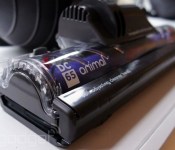
Dyson invests over $8 million into robot research lab (and it’s not just for vacuums)

Dyson has announced that it’ll invest £5 million into a robotics labs at Imperial College London, aimed at developing vision systems to help robots “understand and adapt to the world around them.” The company had in fact planned to launch a robotic vacuum cleaner way back in 2001, but Sir Dyson said the prototype was too heavy and expensive… and it never hit stores. This time, research won’t only concern itself with automated vacuums but other domestic robots, according to the BBC. Dyson has apparently been working on robotics with Imperial College since 2005: the university’s Professor Andrew Davison is set to head up the new lab.
“We now have the mechanical and electronic capabilities, but robots still lack understanding”
James Dyson says there’s still a lot of work to be done: “My generation believed the world would be overrun by robots by the year 2014. We now have the mechanical and electronic capabilities, but robots still lack understanding… mastering this will make our lives easier and lead to previously unthinkable technologies.” — and probably some new Dyson hardware that’s harder to imitate.
Filed under: Household, Robots
Source: BBC
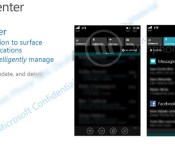
Leak reportedly shows Windows Phone 8.1’s new notification center

Wondering what Windows Phone 8.1′s rumored notification hub would look like? You may be looking at it right now. Winphollowers claims to have a leaked Microsoft presentation outlining the feature, which might be called Action Center. While Windows Phone’s approach to notifications would share much in common with what we’ve seen for a while in Android and iOS, it would have a few tricks up its sleeve. A driving mode shortcut would be available to (presumably) keep distractions to a minimum while on the road. Apps may also have more control over their notifications than you’ve seen on some other platforms. Alerts would silently appear, update or vanish, making it easy to deliver constantly changing information (think sports scores) or to clear out time-sensitive notices when they’re no longer relevant. There’s no guarantee that we’ll see Action Center in 8.1, but the historically reliable WPCentral vouches for its existence — we won’t be surprised if it’s part of the final OS release.
Filed under: Cellphones, Mobile, Microsoft
Via: WPCentral
Source: Winphollowers (translated)

Edward Snowden used automated web search tools to collect NSA data

It’s tempting to imagine that Edward Snowden obtained NSA data through a daring Mission Impossible-style raid, but it now appears that he didn’t have to put in much effort. Intelligence officials speaking to the New York Times say that Snowden used a standard web crawler, a tool that typically indexes websites for search engines, to automatically collect the info he wanted. He only needed the right logins to bypass what internal defenses were in place. Since the NSA wasn’t walling off content to prevent theft by insiders, the crawler could collect seemingly anything — and Snowden’s Hawaii bureau didn’t have activity monitors that would have caught his bot in the act. Whether or not you believe the NSA’s intelligence gathering policies justified a leak, it’s clear that the agency was partly to blame for its own misfortune.
Filed under: Networking, Internet
Source: New York Times

[OP-ED] Why I think the Sony Xperia Z1 Compact is a Winner

Image courtesy of Sony Mobile
We haven’t covered the Sony Xperia Z1 Compact much on AndroidSPIN, however, I have kept an eye on it ever since it was inadvertantly spotted in a NTT DoCoMo brochure bearing the name “Sony Xperia Z1 f“. It doesn’t appeal to me personally, but I can see why the smaller form factor appeals to many people and I can definitely see why it’s going to do well, and I’m going to tell you why I think the Sony Xperia Z1 Compact is a winner.
For those who don’t know, the Z1 Compact is essentially a scaled down version of Sony’s latest flagship smartphone, the Sony Xperia Z1. The original Z1 had and impressive list of specifications including a Qualcomm Snapdragon 800 processor, 2GB RAM, a 5-inch 1080p Triluminos display, 3,000mAh battery and perhaps most impressively, a 20.7MP rear camera. What’s probably most impressive about the Z1 Compact is that it takes pretty well all the above specifications and crams it into a device with only a 4.3-inch device. Naturally, the display resolution takes a hit, reducing it to 720p but still keeping it a Triluminos display and, given the overall size of the device, the battery is also smaller at 2,300mAh. As you might have guessed, the remaining hardware in the Z1 Compact is exactly the same, even the Snapdragon 800 processor.

Image courtesy of Android Central
Now compare that to the two most popular ‘mini’ devices on the smartphone market at the moment, the HTC One Mini and the Samsung Galaxy S4 Mini; the only thing either of these devices have in common with their full-sized compatriots is the fact that they are also phones, have partly the same name and you could make one look like the other with a photocopier. If we take the HTC One Mini as an example, the original HTC One had a Snapdragon 600 processor, 2GB RAM and 1080p display whereas the One Mini instead has a Snapdragon 400 processor, 1GB RAM and a 720p display. Granted the display has to be a lower resolution, the One Mini is still a significant step down from the HTC One. Perhaps that is why Sony opted to adopt the nomenclature “Compact” as opposed to “Mini” since Mini apparently implies that your device will in no part resemble the device that it was derived from.
As you’re probably beginning to see, the Z1 Compact is a unique beast among Android smartphones, finally combining bleeding-edge hardware with a small form factor device that ‘normal’ people have been wishing for since smartphones graduated to the 5-inch size. There isn’t yet another 4.3-inch device on the Android market that even comes close to what the Z1 Compact is capable of, and I specifically said ‘Android market’ to highlight something about what the Z1 Compact represents for smartphones as a whole; the Z1 Compact is the first legitimate Android alternative to the iPhone since the Samsung Galaxy S2.
 When the Galaxy S2 arrived all ambitious and bright-faced in the smartphone market, we couldn’t have known how popular it would end up being. While it never displayed the same wildfire effect as the Galaxy S3 or Galaxy S4 in later years, the 4.3-inch Galaxy S2 still proved itself to be a legitimate challenge to the then 4.0-inch iPhone selling a very respectable 20 million handsets in 10 months. Soon after that though, the Galaxy S3 ‘upgraded’ to a 4.8-inch screen and while sales of Samsung phones have been increasing every year since then, it has arguably not been competing with Apple in the same market since that move to the larger screen size.
Which brings us back to the Z1 Compact. While Samsung and HTC made only token efforts to appeal to the market which has been craving a 4.3-inch device, Sony’s foray into the 4.3-inch market looks like a genuine one. Early reports about the device say as much with Sony improving on some of the issues the Z1 was criticized for like the viewing angles on its Triluminos screen. Some things have even worked out better for the Z1 Compact given its smaller size; it’s being reported that the battery life of the Z1 Compact exceeds even that of the full-sized device which is a huge plus and of course, the Z1 Compact still inherits the Xperia lines’ waterproofing.
While it’s all well and good to talk about what the Z1 Compact should do theoretically, it’s entirely another thing to actually do it. I can’t see the Z1 Compact selling as well as the iPhone, or even as well as the Galaxy S5 which is due for announcement in a few weeks time. It might not even sell as well as its full-sized brother, the Xperia Z1. What is important though is that the Sony Xperia Z1 Compact is a properly good device that is every bit as good as a flagship device crammed into a tiny frame and if you have been waiting for a decent 4.3-inch Android device, you’d be missing out if you didn’t see for yourself just how good it can be.
What do you think about the Sony Xperia Z1 Compact? Are you convinced that it’s a good device? Let us know what your opinion is in the comments.

Court tells AT&T’s Aio to put down the magenta in T-Mobile trademark case

Any interior decorator will tell you, there’s a fine line between blush and bashful. Unfortunately for Aio Wireless, the same can’t be said of plum and magenta — at least not in a court of law. T-Mobile announced today that a Federal Court in Texas has ordered the AT&T subsidiary to stop using a “plum color as a central part of its trade dress,” as it is “confusingly similar” to its own trademark magenta. According to court documents, T-Mobile claims the Plum in question, Pantone 676C, is so similar to its own Pantone Process Magenta that it “dilutes its strength and likely causes confusion among consumers.” The court’s preliminary injunction will prevent Aio from using large swaths of the offending plum color and “confusingly similar shades” in advertising, marketing and store design.
T-Mobile brought the suit against the pre-paid carrier, which is owned by its competitor AT&T, last summer, just months after its initial launch. While the difference between plum and magenta maybe evident to most, court documents show that AT&T’s branding company raised concerns about the shade during a vetting process that included focuses groups and extensive consideration of other carriers’ color schemes.
Filed under: Cellphones, Mobile, AT&T, T-Mobile
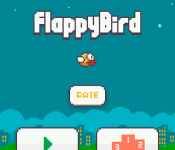
Creator Dong Nguyen says he is taking Flappy Bird down Today
 If you’re generally into trending games, there is no doubt you will have heard about a game called ‘Flappy Bird‘ which shot to the top of the charts over the last few weeks. The premise of the game is devilishly simple: you control a bird and a tap will flap its wings, tapping as you attempt to guide the bird through an endless labyrinth of obstacles. This makes for a simple, yet infuriating, experience which many have already sunk hours into. Apparently though, the stresses of needing to maintain a popular game has gotten to creator Dong Nguyen who tweeted earlier today that he is taking Flappy Bird down today:
I am sorry ‘Flappy Bird’ users, 22 hours from now, I will take ‘Flappy Bird’ down. I cannot take this anymore.
— Dong Nguyen (@dongatory) February 8, 2014
It was recently reported that Nguyen was earning up to $50,000 in ad revenue from the game everyday and that he had many requests for improvements to the game, but it looks like that is all coming to an end. The game’s success is one of those viral stories that we all wish happened to us, but we can’t imagine what Nguyen must have experienced over the last few days that must have led him to this decision. There are some theories that Nguyen is simply pulling a publicity stunt to garner even more attention, but this somehow feels genuine to me.
What do you think: Is Nguyen for real and will Flappy Bird go down tomorrow? Let us know your opinion in the comments.
Source: Twitter via Phone Arena

[LEAK] HTC M8 Mini specs get leaked featuring Sense 6.0 and on-screen Buttons
 We first heard the existence of a possible ‘mini’ version of the incoming HTC M8 flagship when master leaker, evleaks, gave us a rather cryptic tweet suggesting the existence of both the HTC M8 and a HTC M8 Mini (see that article here). Since then, we’ve heard lots about what is probably going to make up the HTC M8, but nothing about its miniature brethren, until today. Evleaks has today tweeted some HTC M8 Mini specs which look pretty well what we’d expect:
HTC M8 mini (mem_ul): SD400 (1.4GHz x4), 4.5″, 720p, 1GB/16GB (+microSD), 13MP/5MP, a/b/g/n/ac, BT4.0, KK4.4.2, Sense6.0, buttons on screen.
— @evleaks (@evleaks) February 8, 2014
As you can see from the tweet, the HTC M8 Mini will probably get a quad-core Snapdragon 400 processor clocked at 1.4GHz, a 4.5-inch 720p display, 1GB RAM with 16GB storage, Android KitKat and probably most notable is the suggestion of Sense 6.0 and buttons on screen. We’ve suspected strongly for some time now that Sense 6.0 would be released with the HTC M8 and have had a steady trail of leaks that have suggested that the new HTC devices will have on-screen buttons. If these specs are correct, just about the only thing we won’t know about the HTC M8 Mini is when it’s going to be released, though it’s been suggested that it will be announced along side its bigger brother in a likely NYC event in March.
Personally, I’ve never been a fan of ‘mini’ devices like the the HTC One Mini and Samsung Galaxy S4 Mini; there have been so many compromises made and yet it still retains the premium price-tag, which when compared to the Sony Xperia Z1 Compact, which is every bit as powerful and possibly even more functional than the full-sized Z1, start to look a little ambitious. That’s just my perspective though: what do you think about the HTC M8 Mini specs? Is this a device you would be interested in getting? Let us know in the comments below.
Source: Twitter via Phone Arena

Alt-week 02.08.14: ancient aliens, power-generating spores and the ‘pruney finger’ mystery solved
Alt-week takes a look at the best science and alternative tech stories from the last seven days.

A new theory is forcing us to reconsider one of life’s big questions — are we alone? Perhaps, it’s more appropriate to ask are we alone right now? If that’s too big of a question to consider on the weekend, what about the slightly more evanescent “why do my fingers go wrinkly in the bath?” Whichever one you’re asking, you’re in the right place. This is alt-week.

If we threw you the words “latex” and “bacteria,” you’d be forgiven for assuming we were just about to embark on a cautionary wardobe-related tale. As it happens, it’s something a lot less… unpleasant than that. When scientists observed the humble Bacillus spore’s reaction to water — it shrinks when dry, expands when wet — they realized this movement could be harnessed to generate power. In comes the latex, a strip of which was covered in the spores, and promptly made wet, then dry, then wet again — and so on. As hoped, this caused the strip to curl up and then re-straighten in response to the change in humidity — enough movement to be considered for generating electricity. It’s estimated that this movement produces an energy density of more than 10 MJ m−3, two orders of magnitude higher than current synthetic water-responsive materials. It’s also suggested that mutations in the spores could be used to double the energy output, and that their self-assembling nature makes them ideal for practical application (layering on silicon etc).

Imagine this, you turn up to a house, and there is debris scattered everywhere, but no one’s around. All the potential signs of life are there: a few jackets strewn on the bed upstairs, the toilet seat is up, and a few empty beer cans rest beside the bin. Well, according to a new theory, that scenario could be a metaphor for life in the universe, with Earth being the late arrival at the metaphorical party. We’re all familiar with the term “Goldilocks zone” that indicates a planet’s likelihood of life-supporting conditions. Harvard astrophysicist Abraham Loeb is suggesting that exoplanets that orbit way outside of this area could have supported life much earlier in the universe’s history, thanks to heat provided by “relic radiation” after the big bang. If true, life could have been around as soon as 15 million years after the now famous event (it’s estimated that life only started on Earth around 3.8 billion years ago, a difference of over 9 billion years). The trick is deciding whether planets for life to, well, live on could have existed then. Conventional wisdom says that the required heavy elements weren’t around yet, but Loeb suggests that “islands” of dense matter could have existed, along with short-lived stars that might have started the heavy-element forming process. Loeb believes that proof of his theory might not even be (relatively) that far away. If we can find any planets in our own galaxy that orbit stars with low levels of heavy elements, it would validate his basic principles.

Alien life, however, is a mere curiosity compared to the baffling conundrum that is bathing-induced “pruney fingers.” Fortunately, the scientific community has given this big issue the attention it deserves too, with new research finally shedding light on the phenomena’s origins. There are a couple of things going on, it seems. Firstly, there’s the variable permeability of the skin which allows it to soak up water when we’re in the bath, doing the dishes or going for a swim etc. It’s the second part that’s a little more tricky. Scientists in Germany created a geometric model that imitates the filaments in the skin, even while they’re holding water. The last part of the puzzle is figuring out how everything returns to normal (i.e. why you don’t have wrinkly fingers to this day). The answer is to do with tension in the system (in our case, the skin), that ultimately pulls back, reversing the process. While it may sound like an unusual thing to explore, the work could lead to new treatments for dermatitis and better skin grafts, as well as more durable synthetic materials that incorporate the same mechanism.
Seen any other far-out articles that you’d like considered for Alt-week? Working on a project or research that’s too cool to keep to yourself? Drop us a line at alt [at] engadget [dot] com.
[Image credits: NASA/Ames/JPL-Caltech, Xi Chen/Columbia University]

Yahoo reportedly set to surface Yelp reviews in search results

According to The Wall Street Journal, the next time you search for a chicken dinner on Yahoo you could be served up a Yelp review for the best bird in your hood. According to the paper’s source, Yahoo CEO Marisa Mayer announced a partnership that would surface Yelp reviews and listing in Yahoo’s search results, during a meeting Friday. Little else is known of the deal.
While the struggling internet company continues to see revenue fall, its latest earnings report revealed that search revenues for Q4 2013 were up eight percent over the same quarter the year before. The company is clearly still invested in its bread-and-butter, but it’s also made a push into content, signing names like David Pogue and Katie Couric to lead new news initiatives. During her CES keynote earlier this year, Mayer, who previously led search at Google, underlined Yahoo’s commitment to search, revealing it added 869 partners, and conducted 600 related experiments in 2013.
Filed under: Internet
Source: The Wall Street Journal

Flappy Bird faces imminent extinction

Flappy Bird went from obscurity to chart-topping success overnight, but that’s all coming to an end. After over 50 million downloads, developer Dong Nguyen said on Twitter that he’s going to take the incredibly tough game down tomorrow… and probably not for the reasons you’d expect.
It’s not because of any legal pressure. It’s not because he sold for some hefty sum. It’s not even because he’s tired of making games. Nguyen said Flappy Bird will cease to be simply because he just “cannot take this anymore”. What exactly he means by that is unclear, but going off an earlier tweet it looks like Nguyen has grown weary of all the attention he’s been getting lately. Who could blame him for shunning the spotlight? He created the app in just a few days in 2013 and it languished before exploding in popularity a few weeks back.
The suddenness of the move prompted some to wonder if this is actually some strange publicity stunt. After all, Nguyen told The Verge just a few days ago that he was mulling over a Flappy Bird sequel, and an official Windows Phone version was in the works. Oh, and it’s a little hard to fathom a one-man app studio walking away from $50,000 in daily ad revenue.
Via: TechCrunch
Source: Twitter
 AIVAnet