


Amazon acquires Double Helix, the games studio behind the latest Killer Instinct

Leaked through a joint recruiting event between Amazon and Double Helix, Amazon has acquired the games studio, reportedly in a bid to grab both talent and IP. The studio is best known for its Killer Instinct remake, although it also includes less luminary titles like G.I. Joe: The Rise of Cobra. (It’s worth noting that Killer Instinct will be published by Microsoft Studios as an Xbox One exclusive.) Incoming games include a remake of Strider — a series that first made its debut back in 1989. Amazon released a statement confirming the deal:
“Amazon has acquired Double Helix as part of our ongoing commitment to build innovate games for customers.”
The announcement adds extra weight to recent rumors that Amazon might even get into the games console business — it certainly doesn’t hurt them.
Source: Techcrunch

Android search update lets you pick video on-demand providers in Google Now

Little software updates sometimes make a big difference. Google has rolled out an update to Android’s search app that’s currently listed as a simple bug fix, yet introduces a deluge of new features for Google Now. You can now choose specific TV and video on demand providers for viewing recommendations, and you’ll see Airbnb reservations. There also won’t be many excuses for being late after this upgrade — Android Police readers note that the app introduces both simpler alarm controls as well as helpful tools for getting to an appointment on time. Google has even seen fit to officially rename the Nexus 5′s home screen interface, calling it the Google Now Launcher. The new search hasn’t been pushed to everyone just yet, but we’d expect it to reach many Android users in the near future.
Filed under: Cellphones, Mobile, Google
Via: Android Police
Source: Google Play

Samsung and Cisco agree to share patents, sue less

Tired of endless patent lawsuits? So are Samsung and Cisco. The two companies have entered a patent cross-license agreement, essentially promising not to sue each other for the next ten years. The decade long deal specifically gives the firms access to each other’s patient portfolios and new patents filed during the timespan of the agreement. It’s not all about avoiding the courtroom, though — sharing patents should make it easier for both companies to create new, groundbreaking products without wading through red tape and licensing contracts. “Innovation is stifled all too often in today’s overly-litigious environment,” Cisco’s Vice President of Intellectual Property, Dan Lang, said in a statement. “By cross-licensing our patent portfolios, Cisco and Samsung are taking important steps to reverse the trend and advance innovation and freedom of operation.” That sounds pretty positive from where we’re sitting. If nothing else, the agreement should make it a little easier for Sammy to stick to its five-year injunction hiatus.
Source: Samsung Tomorrow
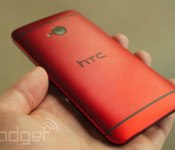
HTC says it’s solved the smartwatch battery life issue, still plans to launch wearable this year

It’s been tough times for HTC. But it’s not going to let a little thing like a competitive, over-saturated smartphone market stop it from dipping its toe into the… competitive, over-saturated world of wearables. Talking to Bloomberg about its offering, Chairman Cher Wang said that the company started looking at smart watches “many years ago,” and that it finally reckons it’s solved the battery issues that have plagued other wearables. Wang added that LCD lighting for these wearables is another problem that the company has tackled and that both were very much “customer-centric problems” — they’re certainly some of the main issues we’ve had with several premium smartwatches seen so far.
Source: Bloomberg

Daily Roundup: Xbox One update inbound, Sony Cyber-shot RX10 review and more!

You might say the day is never really done in consumer technology news. Your workday, however, hopefully draws to a close at some point. This is the Daily Roundup on Engadget, a quick peek back at the top headlines for the past 24 hours — all handpicked by the editors here at the site. Click on through the break, and enjoy.

Sony Cyber-shot RX10 review
Sony’s new $1,300 Cyber-shot RX10 produces spectacular photos and video from its fixed, 24-200m lens. But at that price, are you better off investing a little more cash for the versatility of a DSLR? Read our review and find out.

Xbox One update inbound
The Xbox One’s first major update is on its way in two-tone fashion. Part one will arrive on February 11th, but it won’t be until March 4th before we learn anything more about the console’s revamped party system. Follow the link for more.

Oculus VR to exclusively launch EVE:Valkyrie
We took Oculus’ “Crystal Cove” prototype for a spin inside the cockpit of an EVE Valkyrie back at CES 2014, but now that proof of concept is set to become a reality. Today,the VR company announced a co-publishing agreement with developer CCP Games for an exclusive launch of EVE:Valkyrie. Click through for details.

Sochi visitors should expect to be hacked
NBC is reporting that it’s a near-guarantee that any device connected to hotel network infrastructure will be compromised by hackers within Russia. So if you happen to be a winter sports athlete we’d advise reading up on what’s gone down.
Filed under: Misc

Apple Posts New ‘On The Runway’ Video Showcasing Burberry Fashion Show Shot on iPhone 5s
Apple has added a new video to its iPhone 5s marketing page showcasing footage shot at Burberry’s Spring/Summer 2014 runway show back in September.
The thirty-second spot shows how the then-unreleased iPhone 5s was used to shoot video at the fashion show, including the elaborate camera rigs that were used. The song in the background is Soothing Me So by Victory.
On the runway with iPhone 5s
Burberry Spring/Summer 2014. An incredible collection. Shot with stunning clarity. On iPhone 5s.
Roughly a month after the fashion show was shot with the iPhone 5s, Apple announced the hiring of Burberry CEO Angela Ahrendts to run its retail and online stores. Ahrendts will join Apple in the spring and will continue in her role as Burberry CEO until then.
     |

Google urges artists to get coding for Digital Revolution exhibit in London

Google is hardly new to the art scene. But its latest project, a partnership with Barbican (home of the London Symphony Orchestra), actually has it helping curate an exhibit of what it calls DevArt — interactive installations built around technology. The internet giant wants artists to “give life to code, letting it spill from the screen and onto the canvas.” That means everything from Kinects to typewriters are game (and we’re confident there will be a healthy amount of the former) so long as the creator puts their considerable developer talents to work building something unique and beautiful. A handful of artists have already been commissioned to contribute, but Google is opening up submissions to the public. Wannabe developer artists can head to devart.withgoogle.com to pitch their project. The winner will receive a Google-funded budget of £25,000 to realize their vision, which will ultimately be shown at the Barbican, where millions of tourists and art lovers will see their creations.
The commissioned artists, Karsten Schmidt, Zach Lieberman, and duo Varvara Guljajeva and Mar Canet, will be documenting the birth of their new works. So, if you’re in need of inspiration ahead of the March 28th deadline, you can follow along as these four delve into their own creative processes. In the meantime we’ll be taking bets on how many Arduinos make it into the final exhibit. (I’m guessing 37.)
Source: Official Google Blog
DARPA taps IBM to help create self-destructing gizmos for the battlefield

When you look at DARPA’s newest project, it almost feels like the agency’s recent breakthroughs have left it a little drained, creatively. The government’s research wing has announced that IBM is helping it create non-incendiary self-destructing devices for use in the field. Yawn. The new VAPR (Vanishing Programmable Resources) program would use a CMOS sensor attached to a piece of glass that, when triggered by an RF-signal, would shatter on command and destroy the sensor in the process. As the outfit tells it, this would ensure that these “transient electronics” — such as sensors for monitoring an area for a specific time-period — don’t fall into the wrong hands and give away classified information. These sound pretty handy to be sure, but they aren’t nearly as cool as robo-beetles.
[Image credit: Kenno_mcdonnell/Flickr]
Filed under: Alt
Via: Ars Technica

Chrome apps may soon run without any trace of the web browser

Chrome web apps may behave like native software at times, but they still require some form of the Chrome browser to run — even if it’s just a basic process. They may not need that component for much longer, though. The Next Web has discovered a batch of experimental code for an “App Shell” that would include only those Chrome elements that are absolutely necessary. In theory, you’d get lightweight, browser-independent web apps that still have the advantages of native code. The company isn’t saying whether or not its new technology will reach the public. Given Google’s efforts to package web apps for mobile without requiring Chrome, however, it wouldn’t be surprising if App Shell gets a formal release.
Filed under: Internet, Software, Google
Via: The Next Web
Source: Chromium Code Reviews

A bionic arm and a nerve implant give one amputee a sense of touch

Nothing can quite undo the trauma of losing a limb, but a team of EU researchers has been trying to help by bringing sense to senseless prostheses. They’re doing pretty well at it too: they recently spent a full month giving one lucky test subject some of his sense of touch back. A series of electrodes were implanted into the two main nerve bundles in test subject Dennis Sørensen’s left upper arm, where they were left for 31 days. Sørensen was then fitted with a special sensor-laden prosthetic hand, and algorithms chewed on the data from those sensors to determine just how to stimulate those nerves.
Before Sørensen knew it, bzzzt! That sensory data was converted into nerve impulses so Sørensen could “feel” those objects in real-time. Not only he could discern the different shapes of objects he picked up, he could get a sense of what they were made of too. Unsurprisingly, Sørensen — who lost his left hand in a fireworks accident nine years ago — is itching to use one full time. We’re still a long way off from portable models that don’t require support from a lab, but there’s plenty of interest (not to mention progress) in crafting a new generation of sensitive prosthetics.
Via: Technology Review
Source: EPFL
 AIVAnet