



Panasonic reverses its fortunes amid electric vehicle boom

Not every struggling company story has to have a depressing ending. Though its troubles are far from over yet, Panasonic has just announced 73.7 billion yen ($730 million) in net earnings for Q3. That’s up 20 percent over last year, a disastrous period that saw nearly $10 billion in full-year losses and painful company-wide layoffs. While those cuts are finally helping the bottom line, Panasonic also said it’s no longer relying on its consumer electronics division for profits. Instead, it saw the most growth in the automotive sector, highlighted by booming battery sales to EV makers like Toyota and Tesla — a key part of new president Kazuhiro Tsuga’s strategy. Unfortunately, another part of the plan is to keep eliminating unprofitable divisions until March, 2016. That means the recent death of its much-loved plasma TV unit isn’t the end of the slashing.
Filed under: Transportation

Visitors to Sochi Olympics should expect to be hacked (video)

There’s little question at this point that the logistics in Sochi, from hotel rooms to public infrastructure, are a mess, but one of the greatest threats to visitors is one they can’t even see. According to NBC, it’s a near-guarantee that connected devices are being watched by hackers within Russia, who use malware downloaded on smartphones and laptops to steal personal information. It can be assumed that visiting dignitaries, athletes, and journalists face a particular risk when it comes to unauthorized access. NBC’s Richard Engel came to Russia with brand-new gear littered with fake accounts, testing the waters while limiting exposure to his legitimate data and contacts. The “honeypot” was a success, with Engel’s Galaxy S4, Mac and Windows laptop all compromised within a day of arrival.
If you’re headed to Sochi (or anywhere else in Russia, for that matter), you should exercise extreme caution while browsing the web and opening email attachments. Hackers will likely need to get malware onto your machine in order to easily access files, but with deadline pressures and limited free time to surf online, it may be unreasonable to expect the majority of users to avoid falling victim to these attacks. In fact, many visitors may already be sharing their online movements with hackers, and with the exception of pulling the plug entirely, at this point there’s little hope. According to NBC, the US State Department has informed Americans traveling to the Olympics that they should have “no expectation of privacy” while in Russia. And if a device is infected, it could continue transmitting information back to The Motherland long after tourists return home. At this point, clear tap water and a pillow on every bed may be the most some Olympics visitors can hope for.
Filed under: Internet
Source: NBC
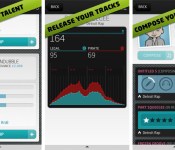
Music Inc. is anti-piracy propaganda posing as a casual game

UK Music and Britain’s Intellectual Property Office don’t believe that most music games tell the whole story — while they show the tunes, they omit labels struggling to find good artists and deal with piracy. To help widen the public’s perspective, they’ve just launched Music Inc. for Android and iOS. The label management game challenges you to foster talent while keeping your company profitable in a market that doesn’t always pay for your songs. The free title underscores a real problem for labels, and it may have you thinking twice about swiping that new album. However, it’s also very one-sided. The game sees every pirated copy as a lost sale, and it doesn’t question the copyright model or the need for labels in the first place. As long as you’re aware of the broader issues, though, it won’t hurt to try the game today.
Filed under: Cellphones, Gaming, Internet, Mobile
Source: App Store, Google Play

NYT: Samsung Galaxy S5 and Galaxy Gear 2 will be announced in three weeks

As Mobile World Congress approaches, it appears to become more and more evident that Samsung has chosen the Barcelona event later this month as the venue to launch the Galaxy S 5. This morning, the New York Times has confirmed through its sources that this will indeed be the case, and it’s going to be quite a bit different from last year’s Galaxy S flagship launch. Whereas last year’s controversial show featured Broadway-style antics and blatant stereotyping, the NYT reports that “Unpacked 2014 Episode 1,” the launch event, will be much more low-key.
The publication also mentions a few details about the device itself. The GS5 will reportedly feature some design enhancements and spec improvements, such as a fancier camera and better processor (we’d wager that we’ll see a 16MP camera and a choice of Exynos 6 or Snapdragon 805), but it sounds like Samsung plans to dial back the number of new firmware features. Curiously, the same sources tell the Times that the S5 oddly won’t come with a bump in display resolution to Quad HD (2,560 x 1,440); if this is indeed the case, it likely means we’ll be seeing a 1080p screen on two Galaxy S flagships in a row. We find this a bit surprising, but we wonder if supply constraints could be a reason why Samsung is holding off for now. The report also claims that we won’t see an eye scanner this time around.
Finally, the Times reports that Samsung isn’t going to wait for its usual yearly product cycle to launch a new Galaxy Gear — apparently, the second version of the smartwatch is also on the Unpacked agenda just a few months after its predecessor arrived. The product’s quick turnaround would certainly be a huge surprise, but given its relatively poor reception and reportedly low sales, it’s not unreasonable to suggest that the company wants to push out a new and improved version as soon as possible.
Filed under: Cellphones, Wearables, Wireless, Mobile, Samsung
Source: NYT
Apple Asks Supreme Court to Curb Patent Abuse Amid New $2 Billion Patent Lawsuit
Apple is joining Google and 13 other companies in a combined effort to curb frivolous lawsuits from patent holding companies, reports Bloomberg. Speaking to the Supreme Court justices, Apple said it has been sued 92 times by patent companies in the last two years. It currently has 228 unresolved patent claims and employs two lawyers who are dedicated to responding to royalty demands.
Google, joined by 13 other companies, told the justices that patent-assertion entities have an unfair advantage because they don’t make products of their own, leaving them effectively immune from countersuits.
Apple and the other technology companies are asking the Supreme Court to make it easier for companies to collect attorney’s fees when patent holding companies lose infringement lawsuits. This allocation of fees, they argue, would cut down on the number of frivolous suits.
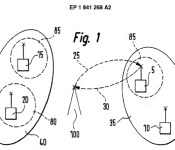
Just as Apple moves to seek judicial assistance in addressing patent abuse in the U.S., German patent holding firm IPCom has filed two patent infringement lawsuits in the German court system that accuse Apple of infringing on cellular technology it owns (via FOSS Patents). Both the European and German patents describe methods of managing priority emergency access when wireless networks are overloaded. Apple could pay more than $2 billion in damages if it loses these legal battles.

The patent asserted in case no. 2 O 53/12, in which, inter alia, a partial claim of damages amounting to 1.57 billion euros ($2.12 billion), plus prejudgment interest, has been brought, is EP1841268. This patent has recently (on January 22, 2014) been the subject of a validity decision by the European Patent Office, in the first instance.
In case no. 2 O 95/13, in which no quantified damages claims but requests for an accounting and for declaratory judgment of liability for damages have been brought so far, the patent-in-suit is DE19910239, a German patent.
IPCom obtained both patents from German automotive parts company Robert Bosch GmbH. Apple, Nokia, HTC and others asked the European Patent Office to invalidate the European patent, but the EPO denied this request.
     |

Former Sony President Recounts Steve Jobs’ Desire to Launch an OS X-Compatible VAIO [Mac Blog]
Steve Jobs had a desire to launch an OS X-compatible Sony VAIO, according to a new blog post from longtime Japanese freelance writer Nobuyuki Hayashi (via The Verge). The account comes from a 2011 interview with former Sony president Kunitake Ando, who stated Jobs and another Apple executive presented him with a VAIO running OS X during a winter golf tournament in Hawaii.

Most of Sony’s executives spends their winter vacation in Hawaii and play golf after celebrating new year. In one of those new year golf competitions back in 2001, “Steve Jobs and another Apple executive were waiting for us at the end of golf course holding VAIO running Mac OS” recalls Ando.
Upon his return to Apple in 1997, Steve Jobs famously ended Apple’s Mac OS licensing program for third-parties. However, Ando notes that Jobs was ready to “make an exception” for Sony’s line of VAIO notebooks. Ando states that the partnership between the two companies never happened due to “bad timing” for Sony, as the company had finished optimizing both the VAIO’s hardware and software specifically for Microsoft’s Windows platform.
In addition to having a strong interest in the company’s notebooks, Ando also claims that Jobs asked many questions about Sony’s line of “SonyStyle” retail stores, which he believes led to inspiration for Apple’s own retail stores. Jobs also reportedly inspired the GPS feature found in many of Sony’s CyberShot cameras, as Ando recounts the former Apple CEO professing his desire for the feature upon using the product.
| |
Apple Captures 19.5% of Global PC and Tablet Market in Q4 2013
Apple again led the combined PC and tablet market in shipments during Q4 2013, according to a report from research firm Canalys. Apple shipped 30.9 million Mac and iPad units, accounting for a 19.5% share of the market. Lenovo secured the second spot behind Apple by increasing its market share 25.5% year-over-year, as the Chinese company jumped over HP and now has an 11.8% share of the global PC market.
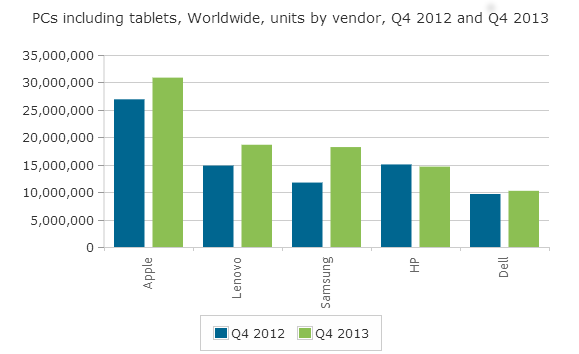
Canalys’ estimates show that 84.3% of Apple’s shipments, or 26 million units, were iPads. The combined launch of the iPad Air and the Retina iPad mini helped boost the company’s share of the overall tablet market from 27.4% in Q4 2012 to 34.1% in Q4 2013.
Apple remained the PC market leader in Q4, shipping 30.9 million units to take a 19.5% share of the market. It shipped 26.0 million iPads, which accounted for 84.3% of its total shipments in Q4. Apple’s share of the overall tablet market increased sequentially from 27.3% to 34.1%, with the launch of the iPad Air and iPad mini with Retina display providing a much needed boost. The original iPad mini also fell in price, down to US$299 in the US, making it cheaper than ever to buy an iPad. But competition is mounting and Android tablets are falling in price, which will put pressure on Apple’s market share in 2014.
Overall, the worldwide combined PC and tablet market was bolstered by strong consumer interest in tablets and grew 17.9% in the final quarter of 2013. The tablet market increased 65.2% year-over-year, while PC shipments declined 6.9% yearly. In total, tablets now account for 48.3% of the total PC market.
| |

Browsing on your Android phone just got safer, thanks to the EFF

In the wake of Edward Snowden’s NSA revelations, finding ways to browse the internet more securely has become of paramount importance. In its mission to help netizens feel that little bit safer, the Electronic Frontier Foundation (EFF) has long offered its HTTPS Everywhere add-on for desktop browsers, and it’s now looking to do the same on mobile. As of yesterday, you can install the HTTPS Everywhere on Firefox for Android, which automatically seeks out HTTPS connections on supported websites. Webpages will be loaded over an encrypted connection, letting you to check your email, shop online and browse the web without fear of a third-party, or surveillance agency like the NSA or GCHQ, intercepting your traffic. To install the add-on, make sure you have the latest version of Firefox for Android on your phone, then install the plugin via the EFF website. Once loaded, the app will display an icon in the address bar, ensuring your browser won’t suffer the same fate as Angry Birds and other mobile apps.
[Image credit: grace_kat, Flickr]
Filed under: Internet, Software, Mobile
Via: EFF Blog
Source: HTTPS Everywhere
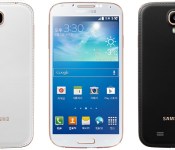
Samsung loved its leather-look Note 3 so much it’s revised the Galaxy S 4 design to match

Samsung tends not to hop around when it comes to design language, instead, choosing to gently sail the calmer waters of familiarity. Probably the biggest deviation from those well-worn design notes of late was the leather-look plastic back that adorned the Galaxy Note 3. We certainly preferred it to the recent smooth, fingerprint-friendly affairs found on the Galaxy S III and S 4. It seems the phone giant did too, and has released a new version of the GS 4 in Korea (Samsung Galaxy S4 LTE-A, if you’re interested) that features the same textured effect on the rear — along with the not-so-needed faux stitching. Oh, and “rose gold” makes a comeback on the metal-look details too! So, while this might be no good to you, with your slippy-slidey OG Galaxy S-whatever, with number five potentially being just around the corner, it could be a suggestion of what it might look like.
Filed under: Cellphones, Mobile, Samsung
Via: Newswire Korea
Source: Flickr (Samsung)
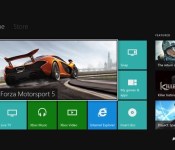
Xbox One’s first major update split in two, launching in February and March

When the first component of Xbox One’s spring update arrives on February 11th, it’ll be a few weeks ahead of the first spring flowers sprouting. Like those flowers, much of what’s contained in the February update is under the surface: Kinect voice recognition improvement, tools for developers and “stability and product updates to improve the customer experience” to name a few non-specific bulletpoints. What you’ll actually care about is the stuff you’ll see, which in this case is a battery meter for gamepads (visible on the dashboard) and a reorganized My Games & Apps section.
That first component is self-explanatory, but the latter piece requires some detail. First, you can actually see how much space you’ve got left on that 500GB HDD — helpful! Second, the applications are being broken out from games, and can be more incrementally managed. “Now you can pick the order in which you want your content to load and we’ve added a boot progress indicator so you can better track updates while they load,” Xbox chief product officer Marc Whitten says in a blog post detailing the update. Additionally, February’s update adds USB keyboard support. Sure, why not? There should also be some other bells and whistles in there, which Microsoft says we’ll find out more about soon (er, uh, before next Tuesday).
Head below for more on the second half of the update, due in March.
The second piece of seasonal update arrives on March 4th, and it’s got a fully revamped party system just in time for the launch of blockbuster game Titanfall (a multiplayer-focused experience). What exactly does that mean? We’ll have to wait to find out, as Whitten’s only offering “a new party and multiplayer system” as detail. And what of promised Twitch.tv streaming ahead of E3 this year? Microsoft’s staying mum for now, but we’d be shocked if it didn’t show up in the first major system update to Xbox One.
Regardless of the spring update, small and continuous updates to the Xbox One will still occur as time goes on. Whitten also says we’ll hear “many” more announcements regarding the upcoming update — here’s hoping next time we find out HBO Go and Spotify are part of the big spring refresh.
Filed under: Gaming, Software, HD, Microsoft
Source: Xbox
 AIVAnet