


Amazon Echo Show (2nd Gen) review: The same, but way better
The new mission at Amazon is quality, and I am here for it.

There’s no nice way to say this — the original Amazon Echo Show isn’t enjoyable to use. The screen is at an odd angle, in addition to being small and easily washed out by direct sunlight. The speaker is loud, but doesn’t sound all the great. And at its launch, it wasn’t entirely clear what Amazon wanted the Echo Show to actually do.
Over a year has passed, and among the wave of Alexa-enabled gadgets Amazon recently announced is a refreshed Echo Show. This second generation is bigger, better, and like the other Echo products released this generation has a significant focus on audio quality. And while bigger isn’t always better, especially when it comes to something you want to stick in a space-constrained kitchen or living room, in this case Amazon seems to have done a lot of things right.
So much nicer
Amazon Echo Show (2nd gen)

$229 at Amazon
An improvement in every way
With its killer speakers and huge display, Amazon’s new smart display is ready to show you a good time. Provided, of course, you know the magic words.
The Good
- Ridiculously good speakers
- Improved display
- High-quality build
- Simple set-up
The Bad
- Alexa is still weird on displays

Amazon Echo Show (2nd Gen): What I like
I don’t know if Amazon’s hardware team has been listening to me complain about the Echo Show through its microphones to compile a list of improvements, but it sure feels like it. For starters, this Echo Show has its own Zigbee hub built in, so I can connect smart home things directly to it, instead of having a different hub installed elsewhere. Over time, Amazon hopes to have a whole suite of devices designed specifically to function through this hub, which is exactly the kind of future-proofing I want. This should be good enough that I don’t feel the need to upgrade to the next generation right away, and I think that’s what we have here.
Amazon is quickly becoming the golden standard with its speaker quality this year, which has been a lot of fun to explore.
This new model addresses every single concern I’ve had with the original smart display. The screen is an impressive 10.1 inches in a significantly smaller profile than the Lenovo Smart Display. It’s noticeably brighter too, and the angle is just slightly bent forward compared to the original Echo Show to address the glare I would frequently get from overhead lights. While this wasn’t really a problem on the original, the decreased bezels on this new Echo Show are nice, too, with the largest section being up top where the microphones and cameras are.
The star of the Show is, like all of the other Echo devices this year, the speaker. The rear-firing Echo Show 2nd generation speakers are incredible. Not only are they nice and loud, but you get lots of bass. Given the size of the speaker, it’s a surprising volume and a surprisingly high quality. I can watch shows on Prime Instant Video with no problem while making lots of noise cooking in the kitchen, and when I’m in the living room I can play music and feel like the speakers are filling more than one room. Amazon is quickly becoming the golden standard with its speaker quality this year, which has been a lot of fun to explore.


Because I’ve been using the original Echo Show for a year now, there was no learning curve with this new model. The software is as close to exactly the same as you can get, which is impressive. The Alexa app is much better at detecting these new Echo models, so finding the new Echo Show and setting it up with my preferences and on my network was a breeze. Amazon is getting very good at making it so I can add devices with ridiculous ease, which is great for everyone.
This is kind of a small thing, but the fabric back of the speaker is really nice as well. This is the same fabric used on all of the other Echo speakers, but on the new Echo Show it makes moving what is otherwise a slab of glass and plastic way easier because the fabric provides grip. Not only does it make the Echo Show feel more like the rest of the Echo line, but it’s functional. And I dig it.

Amazon Echo Show (2nd Gen): What I don’t like
I now have two displays in my house with Alexa-powered brains, but Alexa still isn’t display-friendly. That’s kind of weird, given how much lead time Amazon had over the competition. Lots of the most popular Amazon skills still do nothing with the display, even a handful of the cooking skills. There’s still not a lot of control over what gets displayed on the Echo Show when it’s not in use, the things Amazon chooses to show me as “news” is still a weird situation. This is a really good Amazon Echo, but the Show part of this experience feels a little lacking next to the Google Home Hub experience.
I wish this big beautiful touch screen let me do more with my fingers.
The one place this is particularly apparent is when I’m streaming video. Amazon’s options are a bit limited thanks to its long-standing spat with Google, but even its own services struggle. I can’t say “Alexa, play the next episode of The Man in the High Castle” and have it pick up where I left off, even if I was watching on that Echo Show earlier in the day. I have to specifically give the season and episode number I want to watch, if I want it to start playing right away. In general, using this Echo Show for video while I cook is not as convenient as it should be. Which sucks, because it’s actually enjoyable to use for that.
Finally, I wish this big beautiful touch screen let me do more with my fingers. I like being able to swipe down on the screen to handle Smart Home things like light bulbs when I don’t want to speak to control them, but there’s just about where the touch functionality ends on this thing. I can swipe through the carousel of “news” stories, but can’t really do anything with those items unless I follow the command the display gives me. I have this great big display with all of this extra space now, but it feels terribly underutilized by the software. Hopefully, that changes in the not-too-distant future.

Amazon Echo Show (2nd gen): Should you buy it?
If you’re already a part of the Alexa ecosystem, you’re going to love this new Echo Show. It sounds so nice, and Amazon’s track record of improving the Alexa experience speaks for itself. This experience will be way better than it is right now in a matter of months, and that progress won’t slow anytime soon. It’s a quality kitchen companion, and a solid home hub if that’s what you need.
But if you’re not a part of the Alexa ecosystem already, I’m not sure I’d recommend this as your starting point. For starters, the Echo Dot 3rd Gen gen is way cheaper and very nice as a starter speaker. But the software for this display is currently way outclassed by the considerably less expensive Google Home Hub, making it difficult to recommend this new Echo Show if you’re not already deep in the Amazon game.
4
out of 5
More than anything, I’m excited by the direction Amazon is going with its audio quality. You can pair an Amazon Echo Sub to this thing, which I wasn’t able to do but I bet it’s incredible.
See at Amazon
Do you use Wi-Fi calling on your phone?
Time to check in with the AC forums.
Making phone calls may not be the most exciting thing smartphones are capable of these days, but when you do need to make or accept one, having the call be reliable and clear is a top priority.

If you’re in an area that doesn’t have great wireless coverage, one way you can overcome this is with Wi-Fi calling — the ability to have your entire call handled over a Wi-Fi network.
This is a feature a lot of modern phones support nowadays, but does anyone out there actually use it?
Here’s what the AC forum community says.
mustang7757
10-23-2018 06:39 PM“
not at all , I have good service for most part but I also run 2 Carrier Sims AT&T and T-Mobile on different phones
Reply
bhatech
10-23-2018 06:34 PM“
Same here don’t use Wi-Fi calling partly because I get great signal at both home and work. So never bothered with it or care if my phone has WiFi calling or not.
Reply
digitalbreak
10-23-2018 07:23 PM“
I turn on and let it decide.
Reply
TraderGary
10-23-2018 07:26 PM“
I have a rural acreage at lake level with hills on all sides. Since a cellular connection is only line-of-sight, there is no cellular connection with any carrier at my house. The ONLY way to have calling or data is with WiFi. I have a reliable 180 Mbps Comcast connection. That’s better speed and reliability than most cellular service in my area. I have excellent calling and data via WiFi at my…
Reply
What about you? Do you use Wi-Fi calling?
Join the conversation in the forums!
Halide Developers Enable Portrait Mode on iPhone XR for Objects and Pets
Developers behind iOS camera app Halide say that they are planning to ship a version of the app that enables Portrait Mode on iPhone XR for “all sorts of things,” and not just people (via Reddit). Because the iPhone XR has a single-lens rear camera (and not a dual-lens like iPhone XS), the cheaper smartphone doesn’t capture as much depth information and the Portrait Mode bokeh effect in Apple’s own Camera app only works on people.
Depth on iPhone XR vs iPhone XS. The XR has 1/4 the depth data. (Ignore color differences.) pic.twitter.com/WMkDtznY5o
— Ben Sandofsky (@sandofsky) October 27, 2018
As Wired explained in its review, if you try to take a Portrait image of a pet or object, the camera app will state “No person detected” at the top of the screen. Now, Halide says that it has already gotten the iPhone XR camera to work with Portrait Mode on pets and inanimate objects, but results haven’t been consistent and some subjects can be harder to create a depth effect around.
We think with some more tooling, we’ll be able to ship a version of our app that enables portrait mode for all sorts of things. It seems it’ll be a bit more ‘temperamental’; in some settings it won’t work if there’s not enough variance in relative distance of objects, but a can of soda water on my desk worked just fine.
Still, as Halide’s Reddit post explains, this means that third-party camera apps on the iOS App Store will be able to provide users with a form of Portrait Mode on iPhone XR that enables bokeh effects around more than just people. Halide mentions that the iPhone XR’s depth map is “way lower resolution” than the dual cameras on the iPhone XS, “but it seems usable.”
iPhone XR launched a few days ago on October 26 and was met with positive reviews from the media, which praised its LCD display, bright colors, and iPhone XS-level performance. Thanks to the smartphone’s lower price tag in comparison to the iPhone XS and XS Max, most outlets agreed that the iPhone XR will be the smartphone that most people will want to choose when looking at the new 2018 lineup of iPhones.
Related Roundup: iPhone XRBuyer’s Guide: iPhone XR (Buy Now)
Discuss this article in our forums
Apple Watch Series 4’s ECG Feature Will Work Internationally When Set to U.S. Region
Apple revealed the Apple Watch Series 4 during an event in September, highlighting a new electrocardiogram (ECG) app that will be coming to users in the United States through a watchOS software update later in the year. Regulatory clearance is required for the ECG feature, and because of this it will be limited to the U.S. at launch, although the company is working on approval for other countries.
In a new post by 9to5Mac today, code found within iOS related to the ECG feature suggests that the ECG limitation is based on software, not hardware. This means that gaining access to the ECG app in a non-U.S. territory will be as simple as changing the region of the Apple Watch Series 4 and connected iPhone to the United States.
iPhone region can be changed by going to the Settings app > General > Language and Region, and then selecting the Region of your choice. Those who switch regions should note that the time, date, currency formats, and more will be affected by the change.
The ECG app on Apple Watch Series 4 works by placing a finger on the Digital Crown while wearing the watch. The electrodes in the Apple Watch detect the electrical impulses from your heartbeat and route the data to the S4, where it is converted into a signal for Apple’s algorithms. This results in a heart rhythm classification that can vary between a normal rhythm to an atrial fibrillation. All of your ECG results are stored in the Health app in PDF format and can be easily shared with your doctor.
While the FDA has granted de novo clearance for the ECG feature, that’s not the same as FDA approval and the agency does not recommend that the ECG feature be used by those under 22 or those who have already been diagnosed with atrial fibrillation. The FDA warns that Apple’s ECG app is not designed to replace traditional methods of diagnosis or treatment and is intended for informational use only. The Series 4 is the first ECG product being offered over the counter directly to consumers.
Related Roundups: Apple Watch, watchOS 5Buyer’s Guide: Apple Watch (Buy Now)
Discuss this article in our forums
Seven Advanced Facebook tips and tricks you should know
As it stands, Facebook is one of the most popular and most used social media platforms, with billions of users active every day. There are so many features that Facebook has provided to the users, that it is nearly impossible to fail as a brand operating on this social media platform.
Advertising being one of the strongest arms of Facebook features, businesses have a lot to benefit from this platform. Could you have dabbled with Facebook and not realized the results you anticipated? Here are seven advanced Facebook tips to help you out:
Test engagements for different times
It could be that your activities and posting in Facebook have been at the same time, and the problem with this is that you may not be capitalizing on all your audiences, from different locations, time zones, preferences, among other factors.
The ideal way to maximize your audience reach is to do a test run, where you try sharing messages at different times of the day. You may find that most people who are interested in your product and content are from abroad, or are night owls. Facebook sharing and scheduling tool should allow you to reach out to more people in different walks of life, even when you are not online at the time of posting.
Gather fans off of Facebook
As wide as the Facebook platform may be, you cannot entirely rely on your activity there to bring you all the fan-base you need. Building your fan-base off of Facebook allows you to widen your scope as your increase your visibility as a brand.
On your website, be sure to bring attention to your social media platforms by encouraging them to like you on Facebook for every content you share. You can also cross chare your Facebook posts on other sites and platforms, with links that direct them to your call-to-action.
Clear call-to-action
Basic as a call-to-action seems, people still ignore its essence. Assuming the audience, you have attracted with a particular piece of information is not willing to come back, you need to ensure that you have achieved your goal.
Use a clear call-to-action on your pages, with simple information like “like us,” “call us,” among others. Whatever you want your audience to do, you must show them, and when you are clear with what your intent is, you secure the confidence of your target audience while achieving those very goals.
Post pins
Different from Pinterest pins, Facebook has a feature that allows you to select one post every week that can be featured as the top post on your Facebook page.
If you have a specific message, you have been trying to push out all week long, pin in on the top of our page, and this way, you allow your visitors to see it as the first thing when they open your page. You can customize a shorter version of your main text, stating it is a more intriguing manner that will capture the attention of your audience at first glance.
Emphasis on your milestones
It is okay to flaunt your achievement and accomplishments every once in a while. Facebook is big on capturing milestones, which is why they keep bringing up memories they think are important to you.
Other than celebrating friendships, you can capitalize on your milestones as a business, showcasing your progress. Consider things like events, anniversaries, awards, among others. Create a milestone in the status update section and add as many relevant details as possible, including an image.
Organize for events and activities
Facebook is a rather an active forum, where people want to be engaged in different kinds of activities. Most even promoters have acquired their largest attendance from Facebook. The best thing about using the event feature on this platform is that once a follower shows interest in your activity, Facebook will notify friends of friends about the event.
The more events and activities you set up, the more people are aware of the existence of your brand, with more willingness to consume more content from your page.
Reviews make a difference
As a brand, do not for a moment take for granted the essence of reviews. People on social media are drawn to specific actions because their friends referred it to them, and in a sense, reviews work to your advantage.
Encourage your visitors to review your products or services, which will give you a ranking and preference against your competitors. If you have testimonials, let them be in the frontline of your page, so people can begin to trust your brand.
For the ad messages you create, you can position one testimonial at the start of the ad, which will capture the attention of your target clients.
Facebook is such a powerful tool for any business seeking to grow online, with an audience-base that keeps growing by the day, not to mention, diversifying. These seven tricks should give you dominance and expertise on matters to Facebook in no time.
New-found Icon in iOS 12 Supports iPad Pro Redesign Rumors
A newly discovered icon in iOS 12 appears to confirm recent rumors surrounding Apple’s redesigned iPad Pro, which is expected to be unveiled on Tuesday.
Similar to a previous icon found in iOS 12 beta 5, the new icon discovered by 9to5Mac’s Guilherme Rambo features a tablet with slimmer bezels and no Home button, and more importantly, no notch.
A recent case maker’s rendering of the upcoming iPad Pro displayed many of the same design elements shown in the icon, including the rounded corners and a small top and bottom bezel, with the top bezel housing the TrueDepth camera system for Face ID.
Dimensions sourced from the same case maker indicate the smaller iPad Pro will be 7 inches wide and 9.7 inches tall, while the larger model will be 8.5 inches wide and 11 inches tall.
Icon elements aren’t always proportional relative to the physical dimensions they represent, but the way the iPad Pro’s bezels are drawn suggests Apple has also left plenty of room for holding the device without unintentionally triggering the touchscreen.
The new iPad Pro models are said to be equipped with an A12X Bionic processor that’s even faster than the A12 chip in the new iPhone lineup, with a USB-C connector potentially replacing the Lightning port, and a new version of Face ID that works in both portrait and landscape orientation.
The new iPad Pro devices are expected to be announced at Apple’s second fall 2018 event, set to be held on Tuesday, October 30 in New York City at 10:00 a.m. Easter Time.
Apple is planning to live stream the event on its website and through the Events app on the Apple TV, but for those unable to watch, MacRumors will have live coverage both here on MacRumors.com and on our MacRumorsLive Twitter account.
For more details on everything we could see at the product unveiling, check out our comprehensive What to Expect event roundup.
Related Roundup: iPad ProBuyer’s Guide: 10.5″ iPad Pro (Don’t Buy), 12.9″ iPad Pro (Don’t Buy)
Discuss this article in our forums
Mission to Mercury successfully launched by Japanese and European space agencies
A spacecraft with a mission to explore the planet Mercury has been launched from French Guiana in a combined effort by the European Space Agency (ESA) and the Japan Aerospace Exploration Agency (JAXA). The aim of the mission is to study Mercury’s inner core and perhaps even to discover information about the formation of our solar system.
As the planet closest to the sun, Mercury has been little explored, with only two spacecraft ever visiting it before. The Mariner 10 probe passed by the planet in 1974 and again in 1975, and the MESSENGER robotic spacecraft orbited the planet between 2011 and 2015. These NASA missions succeed in capturing data and images from Mercury, but now Japanese and European scientists hope to gain more information about the least explored inner planet.
Due to its proximity to the sun and the fact that the planet spins very slowly, temperatures on Mercury are extremely variable, ranging from 427 °C (801 °F) to −173 °C (−279 °F). In addition, the planet is bombarded by solar rays leading to high levels of radiation on the surface. This makes collecting data from the planet challenging, although it is known that Mercury has a huge iron core. The current mission aims to learn more about this core through the use of probes.
The BepiColombo spacecraft that was launched is named after the Italian scientist Giuseppe “Bepi” Colombo, and was built in a partnership between the ESA and JAXA. It has an unusual design: it is a “stacked aircraft” consisting of a transport module and two orbiters. One orbiter was built by ESA, and the other by JAXA. The orbiter built by ESA has a special coating of ceramics and insulation designed by the aircraft company Airbus, which should protect it from the high temperatures and harsh conditions on the planet.
The trip to Mercury will take seven years, so we won’t be seeing results from the probes any time soon. The craft will follow an elliptical path and its journey will include one fly-by of Earth, two of Venus, and a total of six of Mercury to allow the craft to slow before the probes are released. If all goes well, the craft should arrive at Mercury in December 2025.
Editors’ Recommendations
- We’re going to the Red Planet! All the past, present, and future missions to Mars
- A Japanese spacecraft just landed two rovers on an asteroid
- Europe’s space agency plans to build its own “low-gravity” moon base — on Earth
- NASA’s planet hunter satellite gets first hit in its search for another Earth
- NASA’s Parker Solar Probe sets out to try and ‘touch’ the sun
Moto brings Android 8.1 Oreo to the G5 and G5 Plus
Who’s ready for some Oreo?
Android Pie has been out for over two months now, so when Moto G5 and G5 Plus users in the US were notified that there was a system update for them, they might have gotten their hopes up for getting a slice of the latest and greatest Android has to offer.
Well, sorry to steal your dessert, but Android 8.1 Oreo is still an upgrade, right?
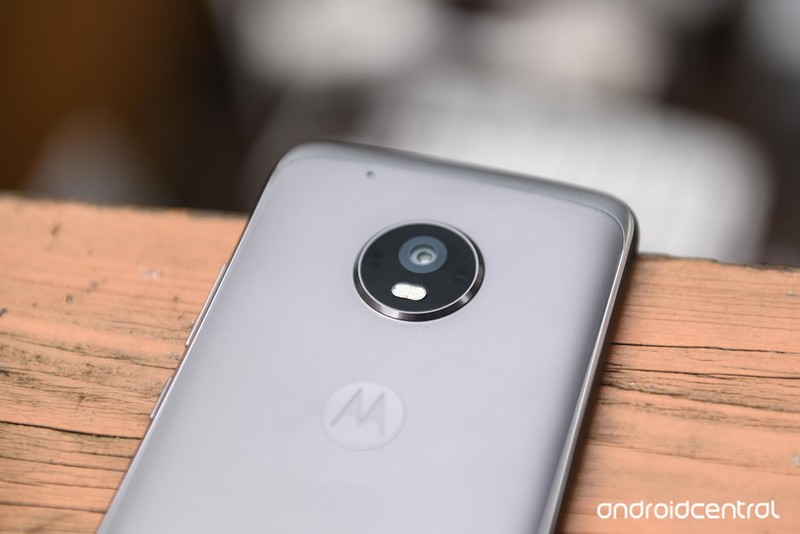
Android 8.1 Oreo may not be the newest Android on the block anymore, but there are still plenty of upgrades in there for users who have been stuck on Nougat. The official release notes on the Motorola support site for the Moto G5 Oreo 8.1 update and Moto G5 Plus Oreo 8.1 update list its improvements as:
- Android™ 8.1 Oreo™: many enhancements including new multitasking features, more efficient notification controls and improved data saver, battery features, new power menu UI and Bluetooth improvements.
- Android security: includes the updates of Android security patches through June 1st 2018.
- Stability improvements: includes changes that fix bugs and improve the stability of your phone.
You may have noticed that monthly security patch is still a few months old, but at least it’ll be slightly less outdated. The OTA update is rolling out to US models of both devices. If you’ve gotten the update, tell us if you’ve noticed any improvements with it — or if any bugs have surfaced after updating.
Chrome OS 70 comes to Stable Channel with floating keyboard, new system UI

Not sure what’s new in Chrome OS? We’ve got you covered!
Chrome OS, Google’s own desktop operating system, receives regular updates to outfit it with new features, bug fixes, and more. There are three main levels of Chrome OS (Stable, Beta, and Developer) and while you can learn more about what these mean here, this guide will be updated regularly to highlight the main additions with each new release.
Since Google releases updates so frequently, we’ll only share them when something significant is added or patched as new builds are rolled out.
Without further ado, here’s what’s new in the Stable, Beta, and Developer Channels for Chrome OS!
Stable
September 19, 2018 — Stable Channel starts getting Chrome OS 70 with floating keyboard, centered dock, and combined notification and quick settings panel

The centered dock we’ve seen popping up on Beta and Dev Channels is finally arriving on the Stable Channel with Chrome OS 70, and with it comes a newer, slicker, and slightly weirder Quick Settings panel, as well as a floating keyboard similar to the one we saw on Gboard’s beta last week. It’s easy to toggle the floating keyboard on and off — the icon resembles a picture-in-picture screen — and even easier to slide the keyboard around the screen with the navigation dot at the bottom of the floating keyboard, but unlike Gboard, this floating keyboard does not turn transparent after a few seconds of inactivity. There’s still no option to theme the on-screen keyboard, either.
The new dock features rounded a rounded pill shape around the time time and connectivity icons on the right, the app drawer icon still on the left — I’m playing with Chrome 70 on my old ThinkPad 11e Chromebook since it’s not available for the Pixelbook yet — and in the middle is a centered bevy of app icons, with pinned apps on the left and open, unpinned apps on the right. This will take some getting used to, but nowhere near as much as the newly combined quick settings/notification panel.


This newly combined panel features rounds corners, a deliciously dark UI, and the Quick Settings portion of it now has two modes: condensed and expanded. I dig the new look — #DarkThemesForever — and it puts the DND for notifications with the rest of the Quick Settings instead of hiding by itself in the Notification panel. The slider for brightness is also a now permanent fixture here, as previously the slide would only appear in the Quick Settings panel when in tablet mode. You can’t re-order or pick which settings you see here yet, but I truly do hope that feature with make the jump from Android to Chrome OS before long.
When a notification appears, you open the Quick Settings panel and the notification will be sitting there above your settings. This makes notifications sit much higher than before and leaves less space for multiple notifications, so I’m not a huge fan so far. The Clear all option is hidden now, too; you’ll have to pull up on the bottom-most notification to reveal it.
Chrome OS 70 also brought with is some security upgrades with it, such as the ability to restrict which websites your installed extensions get to see, as well as updates to Autofill and text-to-speech. The update is rolling out to dozens of models already, and if you’ve got a Chromebook, it’s probably waiting for you.
September 19, 2018 — Stable Channel now getting Chrome OS 69 with Material Theme UI, easy emoji access, and more!
After making its way to the Beta Channel last month, users in the Stable Channel are now receiving their official update to Chrome OS 69.
All of the changes we were introduced to last month are included here, meaning there’s a new UI for the Files app, refreshed Material Theme design for the Chrome browser, the night light feature can be enabled without having to mess with flags, and using a Chrome OS device in tablet mode should now feel a lot better.
Chrome OS 69 also brings something we’ve been waiting for for years — easy access to emojis! Just right-click on any open text field, click “Emoji”, and a virtual keyboard will pop up at the bottom so you can quickly find what you want.
The update is rolling out to everyone on the Stable Channel now, so be sure to keep your eyes peeled!
June 7, 2018 — Progressive Web Apps can be installed and Tablet Mode gets split-screen support
Chrome OS’s Stable Channel was updated to 67.0.3396.78 on June 7, and it comes equipped with a host of new features.
One of the big highlights is the ability to download Progressive Web Apps as standalone applications — similar to how you’d download Android or regular Chrome OS apps. Progressive Web Apps are technically portals to websites but come with refined user interfaces and increased performance. They essentially give you desktop apps for things like Spotify, Flipboard, and more without developers having to create apps specifically for Chrome OS, meaning that we’ve just about ended the complaint that Chrome OS doesn’t have enough applications available for it.
Another big addition is that you can now use apps/websites in split-screen while in Tablet Mode. With devices like the HP Chromebook X2 and Acer Chromebook Tab 10 now around, a feature like this couldn’t have come at a better time.
Other goodies include a cleaner list of your Bluetooth devices, the ability to zip files on Google Drive via the built-in Files app, and new shortcuts that pop up when holding down your power button.
Read through the full changelog here
Beta
August 24, 2018 — Chrome OS 69 adds a blue light filter, Linux app support, and Material Theme UI
Chrome OS 69 is rolling out now to the Beta Channel for “most” Chrome OS devices, and there’s a lot of cool stuff to check out.
First of all, Linux app support is finally included! This is something that’s been limited to the Developer Channel for quite some time, so it’s exciting to see it now be ready for Beta users. Linux support is only available for select Chromebooks, including the Pixelbook, HP Chromebook X2, Samsung Chromebook Plus, and more.
Also new is a night light / blue light filter mode right in the quick settings. This is something that previously required you to enable a flag, so while not an entirely new feature, it’s much easier to access now.
Lastly, this update brings an updated UI with elements from Google’s Material Theme aesthetic and changes to the BIOS and trackpad firmware.
June 7, 2018 — All HTTP sites are now labeled as “Not Secure”
HTTPS is the future of website security, but for whatever reason, there are still some sites that continue to use the old HTTP standard.
As it stands right now, sites using HTTPS show a green “Secure” badge to the left of the domain. Starting with the Chrome OS 68 beta, that “Secure” badge is being removed and all HTTP sites wil show a “Not Secure” label so users can more easily identify if they’re on a site that’s not as safe as it should be.
Read through the full changelog here
Developer
October 21, 2018 — ‘Better Together’ Android phone pairing feature rolling out
Pairing and syncing between Chromebooks and Android phones has been something we’ve all wanted for a while, and Google has been working on the Better Together feature to do it for quite a while, but until now, we’ve only had placeholders, rumors, and strings of Chromium. Well, some users are getting the chance to actually test out Better Together as the service rolls out on the Chromeook Dev channel.
 Source: Android Police
If your Chromebook is eligible, you’ll receive a notification about the service asking you to set it up and manage your device preferences in the new Connected Device settings. Currently, those settings include two of the three features that Better Together was reported to include back in the summer: SMS syncing through the Android Messages desktop client and Smart Lock to keep your Chromebook unlocked when your phone is nearby.
The last feature was Instant tethering — something that the Pixelbook and Pixel phones already do — but as the feature is just beginning its time on the Dev channel, there are plenty of changes that could happen in the coming weeks and months.
July 11, 2018 — Android Nougat’s app shortcuts are now live!

App shorcuts, first introduced with Android Nougat, are finally making their way to Chrome OS.
On July 11, 2018, Chrome OS evangelist François Beaufort announced that they are now live in the Chrome OS Dev Channel.
To start using them, simply enable the flag chrome://flags/#enable-touchable-app-context-menu. Once that’s done, right-click on an Android app that’s pinned to your shelf or in your app drawer and you’ll see the app shortcuts menu pop up.
The flag is still experimental, so don’t be alarmed if things are a bit buggy right now.
June 8, 2018 — The Pixelbook’s power button can act as a physical two-factor authentication key
Two-factor authentication is a great way to secure your online presence, and one way to go about this is by using a USB key. If you’ve got a Pixelbook running the Developer Channel, you can now mimic the functionality of a USB U2F key with its power button.
To enable this, simply open a Chrome Shell and enter u2f_flags g2f. As with everything in the Developer Channel, this feature isn’t the most stable so consider having a USB key anyways just in case something goes wrong.
June 5, 2018 — Chrome OS’s emoji shortcut is now available!
Chrome OS has long been in need of an easy way to access emojis, and if you’re running the Developer Channel, there’s a new tool that allows you to do just that.
After enabling the flag chrome://flags/#enable-emoji-context-menu, right-click on a text field and you’ll see a new “Emoji” option. Click on this, and you’ll be able to insert whatever emoji you’d like.
It’s reported that the implementation is still a little wonky, but it should smooth out as it makes its way through the Beta and Stable Channels.
How to change your software channel on Chrome OS
Chromebooks
- The best Chromebooks
- Chromebooks in education: Everything you need to know
- Should you buy a Chromebook?
- Chromebook Buyers Guide
- Google Pixelbook review
- Join our Chromebook forums
Keezel review: wireless portable VPN made easy
Internet security is a top priority for many these days, especially for those who travel a lot and regularly work on untrustworthy public Wi-Fi networks. Threats of tracking, monitoring, and data theft have seen an increasing number of the general public head for the reassurance of a VPN provider, but managing multiple phones and computers can be a hassle. Keezel, a portable VPN networking hub, aims to tackle these problems with a dash of convenience thrown in.
Editor’s Pick
The best VPN routers of 2018
If you use a VPN service, you’ve likely already encountered the annoyance of having to install the VPN software onto all of your devices. The advantages to going the VPN route are obvious: you get …
Launched with an Indiegogo campaign back in 2015, Keezel is essentially a portable Wi-Fi hotspot with built-in VPN encryption capabilities. The idea is to offer protection on public WiFi networks, such as a coffee shop or airport, while also streamlining the connection process for multiple devices. It even acts as a power bank too, which is always a great backup to have when you’re on the road.
The hub’s main selling point is that rather than installing VPN software on each of your devices and manually connecting each to public Wi-Fi, the Keezel acts as a secure middleman for all your gadgets. Configure the Keezel and everything connected to it is secure and ready to go. I’ve been using the Keezel on and off while traveling for work for the past couple of months, so here are my thoughts.
The device used in this review was provided to Android Authority by Keezel, along with a premium tier VPN subscription.Show More

What’s in the box
In the box, you’ll find the Keezel itself, which is rather nicely designed — it’s neither too bulky nor heavy. There’s also a reversible USB Type-A to Micro USB connector (a nice touch), a carry pouch, and a couple of manuals to get you up and running.
Keezel packs in 802.11 b/g/n Wi-Fi support with both 2.4 and 5GHz modes available, with AES256 encryption used as standard. There’s a Micro USB port for charging the Keezel and a second USB Type-A port for powering up other devices, such as your smartphone. The little hub packs in an 8,000mAh battery, which is certainly enough to fully charge up any smartphone in addition to its regular duties.
The power bank feature is great for business and power users
The company expects the battery to last 20 hours or more on a single charge. Although this will vary on how much you download and the number of connected devices. I obtained multiple days of use on every charge, so battery life is certainly nothing to worry about.
Keezel offers a range of purchasing options. The basic package is priced at $179/199 euros, and comes with unlimited basic VPN use which is capped at 500kbps. There are one and two-year premium VPN options priced at $229/249 euros, and $289/289 euros respectively, which offer HD streaming speeds and many more global VPN locations. After your premium subscription ends, you can pay $60/60 euros for each additional year, which is reasonably competitive. Alternatively, a Keezel with lifelong premium costs $499/499 euros up front.
Secure public Wi-Fi made simple(r)
If you’re fed up of logging into public Wi-Fi over and over again for your laptop, and personal and business phones, Keezel is a breath of fresh air. It eliminates the tediousness of connecting up multiple devices while simultaneously keeping them all secure at no extra hassle.
Setting up for the first time on all your devices takes the same time as connecting to any other Wi-Fi network. It’s a familiar process — turn on your Wi-Fi, connect to your Keezel, enter your password and you’re connected. The hub pays dividends when connecting to unfamiliar networks thereafter, as all of your other devices automatically connect to the Keezel when you turn it on and all you have to do is configure the Keezel once to connect to the public Wi-Fi.
Keezel pays dividends when keeping multiple devices secure over public WiFi
However, Wi-Fi connections can sometimes be slow to connect to devices and occasionally drop out just after powering on. This was only noticeable in busy public places.


Connecting to public Wi-Fi is a simple enough procedure too. Head into any browser on a device connected to the Keezel and enter 192.168.11.1 or type Keezel. From there you can configure the network you want to connect to, log in through a portal if necessary, and change your VPN settings.
My only real complaint with the Keezel is connecting to public networks and swapping over to new VPN locations can be sluggish. It’s certainly slower than performing the equivalent function just once on your phone or laptop. Between 20 and 30 seconds might not sound like a lot of time, but it’s long enough for you to start questioning whether the Keezel is actually connecting.

Keezel easily handles five devices connected to it at once.
How it compares to a VPN app
First up, Keezel works with virtually anything that can connect to Wi-Fi. You can connect your SmartTV, Chromecast, and even Xbox to Keezel for secure browsing and streaming. That’s a lot more options than any regular VPN app, though given the lack of a plug socket it’s definitely not intended for home use in that way. Perhaps I’ll have to start bringing a Chromecast with me for hotel room TVs.
Keezel partners with ProXPN, Le VPN, NordVPN, and PureVPN to offer a wide range of locations and plenty of bandwidth as part of your subscription. You can’t pick which partner your connection goes through, just which country the server is in. This relationship offers an extra layer of protection with the VPN providers though because to them you’re just an anonymous Keezel user rather than a potentially identifiable subscriber.


The premium tier VPN options are bountiful, with 160 different countries to choose from. Although the number drops off quite substantially with the basic service. Speeds are generally very good too, but as I mentioned before, connection times can be a bit slower than other VPN solutions.
Video streaming is certainly possible with the premium tier subscription. However, I found Netflix and some other U.K. streaming services didn’t work abroad when connecting back via the U.K. This is probably the result of new VPN detection systems rather than an issue on Keezel’s end, but it’s something to consider, since you can’t manually configure any VPN settings should you find an alternative provider that better suits your needs.
Keezel’s premium subscription is very competitive, and there’s a free option for light users too

Keezel is almost the perfect solution
As a portable VPN hub, Keezel does everything you could want. It’s simple enough to set up and configure, connects to everything you can throw at it, and streamlines connecting multiple devices to a public Wi-Fi source. The longterm subscription costs are good value compared with the competition too. I can live with the occasional slow login and VPN location switch times, though it takes the sheen off an otherwise streamlined experience.
Editor’s Pick
15 best Android VPN apps
Virtual Private Networks (VPNs) are among the best security tools a web surfer can have. You can use them to surf otherwise seedy public WiFi with more security and privacy. They can even get around …
The Keezel certainly isn’t for everyone though. The lack of VPN provider settings will be a bugbear for more advanced users. Single device owners are better off with a dedicated VPN app, as Keezel has a high setup cost compared with subscription-only services. However, the wider range of providers and locations, superior device compatibility, and power bank functionality will bring Keezel into great value territory for some.
Ultimately, Keezel is targeted towards frequent travelers, business, and power users looking for extra security for multiple devices on the go. If that’s you, Keezel is certainly worth considering.
- Best VPN routers
- How to use a VPN
 AIVAnet