


Samsung Galaxy Watch rumors: Release date, specs, price, and features!
The Galaxy Watch could be Samsung’s best and boldest smartwatch yet — here’s why.
It’s been a hot minute since Samsung released the Gear S3, and while the Gear Sport did a nice job at holding us over for a while longer, it’s time we get a proper sequel to one of 2016’s best smartwatches.
The rumor mill suggests that this year will see Samsung release the successor we’ve been longing for, but instead of a traditional Gear S4, reports are coming out that the new gadget will be called the “Galaxy Watch” and use an operating system Samsung hasn’t dabbled with since 2014.
What is the Galaxy Watch and why should you care about it? Here’s everything you need to know!
The latest Galaxy Watch news
July 23, 2018 — Wireless Charger Duo pictured; will charge the Note 9 and Galaxy Watch simultaneously
Thanks to tipster Roland Quandt, we now have our first look at a new Samsung accessory called the “Wireless Charger Duo.” As we can see from the retail packaging pictured below, the Wireless Charger Duo will not only be able to wirelessly-charge two phones at the same time, but will also support “Charging the Phone and Galaxy Watch.”
This is the Samsung Wireless Charger Duo (EP-N6100) for the Galaxy Note 9. Charges the Galaxy Watch alongside the phone. pic.twitter.com/VnP10xAhvb
— Roland Quandt (@rquandt) July 21, 2018
Not only does this further confirm the Galaxy Watch name, but Quandt’s note about the Wireless Charger Duo launching alongside the Note 9 also reiterates an earlier report about the Galaxy Watch launching with the Note 9 on August 9.
July 18, 2018 — Galaxy Watch to launch with the Note 9, Tizen now expected to be the OS of choice
Up until now, we’ve been unsure as to when Samsung will be announcing the Galaxy Watch. The possibilities include the Note 9 event and IFA, but according to a new report from ZDNet, it’ll be the former of those two.
The Note 9 launch is scheduled to take place on August 9 in New York City, and along with this, ZDNet also says pre-orders will go live just a few days later on August 14 with an official launch following on August 24.
Furthermore, both that report and one from SamMobile claim that the Galaxy Watch will actually run Tizen and not Wear OS like we’ve heard from other rumors. This does seem more likely considering the time and money Samsung’s invested into Tizen, but maybe we’ll still see a special edition of sorts that does run Wear OS? Who knows.
All the big details
What’s with this talk about Wear OS?

Almost all of Samsung’s wearable products have used the company’s own Tizen operating system, but with the Galaxy Watch, that could be changing.
Back in late May, it was reported that some Samsung employees had been seen wearing Gear watches running Google’s Wear OS (previously called Android Wear). That rumor was put to rest a couple weeks later, but then on July 6, another tipster stated that the Galaxy Watch will, in fact, use Wear OS instead of Tizen.
While that may seem like a ball out of left field, this wouldn’t be unheard of for Samsung. In 2014, one of the very first Android Wear watches to come out was the Samsung Gear Live.
However, on July 18, another report popped up claiming that Tizen will actually be the operating system of choice — not Wear OS.
We’re still not entirely sure what’s going to happen here, but a Wear OS watch from Samsung would be a huge win for the platform as a whole. Google needs big names to back Wear OS, and who better to support it than one of the largest companies on the planet?
When will the Galaxy Watch be released?
Samsung’s yet to release any teasers or press invites for the Galaxy Watch, but according to the rumor mill, we’ll see it announced alongside the Galaxy Note 9 on August 9.
Current rumors point to the Galaxy Watch launching on August 24.
Following the August 9 announcement, pre-orders for the Galaxy Watch will follow on August 14. From there, the gadget will officially launch on August 24.
Should that rumor turn out to be false, the next logical announcement will likely come during IFA in Berlin in late August / early September.
How much will the Galaxy Watch cost?
Now, most importantly, let’s talk price.
As much as we loved the Gear S3, its price tag wasn’t the easiest to swallow at the time at $349. However, compared to today’s market, that’s not really unheard of.
A Series 3 Apple Watch with GPS and LTE will set you back at least $399. If you get the model without LTE, you’re still looking at a minimum of $329.
With that in mind, we’ll probably see the Galaxy Watch sell for around $300 – $350 depending on whether or not it has LTE.
That’s certainly not cheap, but if Samsung knocks it out of the park with its design and features, it should be able to hold its over (if not trump) what Apple’s currently offering.
Android Wear
- Everything you need to know about Android Wear 2.0
- LG Watch Sport review
- LG Watch Style review
- These watches will get Android Wear 2.0
- Discuss Android Wear in the forums!
Updated July 18, 2018: Updated Wear OS and release date sections to reflect current rumors/reports.
This $11 Anker cable has built-in Micro-USB, USB-C, and Lightning connectors
For those who just can’t commit to a device.

You can never have too many charging cables, especially when they come with three different charging connectors. Right now, you can pick up Anker’s PowerLine II 3-in-1 cable for just $11.24 when you checkout using coupon code ANKER436. It normally sells for around $15, and this is the first time the cable has been discounted since its release just a few weeks ago.
The cable itself has a Micro-USB connection built into the end of it, and then there are adapters for USB-C and Lightning ports. The adapters are connected to the cable so you don’t have to worry about misplacing them. It offers max speeds of 2.4A on the Micro-USB and Lightning chargers and 3A on the USB-C. It’s MFi-certified, which means Apple has approved it to charge and sync your iPhone and iPad.
Anker is so confident that you’ll love this cable and won’t have issues with it that the company is backing it with a hassle-free lifetime warranty. These are handy to have around since not everyone uses the same devices these days. Be sure to grab a few of these to have in your car, home, travel bag, and more today.
See at Amazon
Suzy Cube review: An Android platformer that beats Mario at his own game

The best $4 you’ll ever spend in the Play Store.
Suzy Cube is a brilliant new 3D platformer developed by indie game studio NorthernBytes Software and published by Noodlecake Studios. It’s a charming premium title that manages to cram all the fun and charm of a Nintendo-style platformer onto your phone with little to no compromise. Goodbye Mario, hello Suzy Cube!
Download: Suzy Cube ($3.99)
Before I get into the full written review, check out this brief video of live gameplay and commentary I recorded using the YouTube Gaming app:
A polished platforming experience

Suzy Cube has been in development by for over three years as a passion project by indie game developer Louis-Nicolas Dozois. It’s been featured at gaming conventions throughout its development and regularly garnered praise from those who had a chance to play it.
Dozois partnered with Noodlecake Studios to help with publishing and you can see their subtle touches to the clean menu design and polished presentation, but it’s the gameplay itself that really shines through. It can be really hard to develop a proper 3D platformer for touchscreen devices because there’s so much that can go wrong. Touch controls are a constant point of criticism for ambitious 3D mobile games, and a game can be completely derailed by a poorly implemented camera angle or boring level designs.

In my mind, there’s a short list of qualities that must be present in any great 3D platformer. They are:
- Solid controls that are quick and responsive.
- Levels offer new challenges and gameplay variety as you progress.
- A dynamic camera that never feels out of position or cumbersome as you play.
Suzy Cube manages to come through on all three points in stride, which is especially impressive given the limitations of developing for touchscreen devices. When it comes to mobile gaming, Suzy Cube might be the new gold standard for touch controls — they simply need to be experienced to be believed. If touchscreen controls just aren’t your thing, there’s Bluetooth controller support which is fantastic as always.
Solid touchscreen controls are essential for a 3D platformer on phones, and this one succeeds.
Coupled with the superb controls is an in-game camera that tracks your character as you play without the player having to struggle with it at all. The player has no control over the camera, so it needs to match the player’s flow and it rarely fails except for a few auto-scrolling levels where that’s by design. Several levels in Suzy Cube include segments where the player’s perspective totally shifts, and it works so well because you never doubt the controls and the camera is quick to adapt — whether you’re sprinting up a spiral mountain or exploring the depths of an underground labyrinth.
Suzy Cube’s great controls allow for more advanced level designs, which you’ll experience as you progress through the game. Each level feels unique from the last and the complexity of the challenges gradually increases as you play. Rather than fighting against the controls or camera to stay on course, you’re left to enjoy the gameplay itself and the variety of set pieces and level styles presented.
Lacking enemy variety

Perhaps the only weaknesses are in the variety of the bad guys and the storyline, which are both simple and mostly feel like an afterthought. Stomping on the little cube baddies is fun, but there’s very little variety among them and you will quickly forget that they are supposedly the main bad guys who stole your kingdom’s gold.
The game is amazing, but the enemy options could be better.
Then there the boss battles, which are five differently colored dragons that share the same design, attack patterns, and weaknesses. It’s not a huge knock on Suzy Cube that each world features essentially same boss battle with just minor tweaks because each offers its own slight attack variation and I would expect that there are some limitations for an indie title like this. Fortunately, it’s a fun sequence that get’s downright diabolical by World 5.
Reasons to play again

Suzy Cube features six levels in each world and a secret world that includes an additional 10 levels that are only unlocked by collecting all the stars in Worlds 1-5. That means you’re going to be playing each level multiple times to unlock all the content in the game.
For some games that can be an exhaustive exercise, but Suzy Cube is such a joy to play that I have just as much fun going back and trying to track down the more tricky hidden stars as I did playing it through the first time. Everything is also kept to a strict timer, so I could see myself trying to do level speed runs and finding new and faster ways of cutting through a level.
Final thoughts

Suzy Cube was developed as a passion project and it’s clear as you’re playing all the care and attention to detail that went into making this one of the best games released for Android this year.
Here’s hoping that we get a sequel that follows up with the same great gameplay and controls because the bedrock has been set for a new franchise for a genre that has been largely maligned on mobile.
Download: Suzy Cube ($3.99)
Android Gaming

- Best Android games
- Best free Android games
- Best games with no in-app purchases
- Best action games for Android
- Best RPGs for Android
- All the Android gaming news!
Sony announces industry-first 48MP smartphone camera sensor
The sensor is also the world’s first to support a 0.8 μm pixel size.
Although their smartphones may not be well-known in the U.S., Sony’s the industry-leader when it comes to crafting mobile camera sensors for phones all around the world. On July 23, the company announced its all-new IMX586 sensor that features the highest megapixel count and smallest pixel size we’ve seen on a mobile sensor to-date.
More megapixels don’t always translate to great-looking photos, but they do result in much more detail being captured. In this case, the IMX586 is the first phone sensor to support an impressive 48MP.
Sony says this will allow the IMX586 to “capture beautiful, high-resolution images even with a smartphone.”
In addition to this, Sony’s also shrunk the pixel size down to an impressive 0.8 μm. However, using its Quad Bayer color filter array, you’ll be able to take photos in low-light scenarios that are the equivalent of a sensor with a larger 1.6 μm size. According to Sony, the Quad Bayer does this in which “adjacent 2×2 pixels come in the same color, making high-sensitivity shooting possible.”

12MP image (left) vs. a 48MP IMX586 one (right)
Add all of this together with a dynamic range that’s four times greater “than conventional products”, and it sure does sound like Sony’s got a winner on its hands.
Sony hasn’t said when we’ll start seeing the IMX586 used in smartphones, but it’s likely handsets will start to make use of it at some point next year.
Sony Xperia XZ2 review: Too much phone, too little value
Philips Hue Outdoor Range Gaining New Weatherproof LightStrip
Philips Hue first announced a range of outdoor lights at CES in January, and then a few months later confirmed the fixtures and bulbs would launch in July. Now that the Philips Hue outdoor collection is out in the U.S., a new accessory has been discovered on the company’s Netherlands website called the Philips Hue White and Color Ambiance LightStrip Outdoor (via HomeKit News).
Similar to the existing indoor LightStrip, the outdoor product is a flexible diffuse light that the company says works for both direct and indirect lighting situations. Available in 2m and 5m, the LightStrip Outdoor lacks a sticky backing like its indoor counterpart, and instead can be attached to a wall, ceiling, or fence with included clips and screws. Customers can also place the light on the ground and bend and shape it to provide lighting along a path.
Like other products in the outdoor range, the LightStrip Outdoor is “completely weatherproof” and can withstand rain, small puddles, and water jets from any direction, according to the company. The accessory also supports hues in both the white and color ambiance spectrum, so customers will be able to light their outdoor spaces with “16 million colors and all shades of white.”

Other Philips Hue Outdoor accessories include the PAR38 bulb, Calla pathway light, Ludere security light, Lucca wall lantern, Inara wall lantern, and an extension cable. Like all other HomeKit-compatible products, Hue’s line of outdoor devices can be added into Apple’s Home app so users can control them in existing HomeKit scenes, automations, and by using Siri.
For the LightStrip Outdoor, it’s unclear when Philips plans to expand availability for the accessory across its website in all territories, but even on the Netherlands-based website the rope light doesn’t appear to be available for purchase at this time. According to a Philips representative, more details about the LightStrip Outdoor should be emerging towards the end of August.
Tag: Philips Hue
Discuss this article in our forums
Fast Chargers May Require USB-C Authentication to Work at Full Speed With 2018 iPhones
Rumors suggest Apple will bundle a faster 18W power adapter with its next-generation iPhones, expected to be unveiled this September, but third-party fast charger compatibility may be limited.
Japanese blog Mac Otakara, citing information from suppliers, claims that third-party fast chargers may require USB-C Authentication [PDF] certification, or C-AUTH, to charge the 2018 lineup of iPhones at full speeds. Otherwise, the iPhones may display a warning, and limit charging speeds to a max of 2.5W.
USB-C Authentication is intended to protect against non-compliant USB chargers and to mitigate risks from maliciously embedded hardware or software in USB devices, so core to Apple, this seems to be all about extra security.
Apple is one of over 1,000 member companies of the USB Implementers Forum, so USB-compliant fast chargers are available from a wide variety of brands. Before purchasing a random fast charger from the likes of Amazon, though, it may be a good idea to check the list to see if the company is in fact a member.
Related Roundup: 2018 iPhonesTags: USB-C, fast charging
Discuss this article in our forums
How laser projection is taking IMAX even further over the top
Previous
Next
1 of 4

Ryan Waniata/Digital Trends

Ryan Waniata/Digital Trends

Ryan Waniata/Digital Trends

Ryan Waniata/Digital Trends
There really is nothing like the sheer grandeur of IMAX.
Soaring on the wing of Tom Hardy’s RAF Spitfire above the emerald Atlantic ocean, courtesy of the 80-foot screen stowed within IMAX’s Toronto, Ontario headquarters, was a stirring reminder of just what IMAX can do to your senses.
Prior to my Toronto trip it had been several years since I’d experienced IMAX (and “experience” is surely the right word), a 3D viewing of Avatar being my last pilgrimage to the mega screen. Thanks in no small part to the company’s latest advancements in laser projection technology, the format has only gotten better since, and Christopher Nolan’s 70mm tour de force, Dunkirk, was definitely a proper reintroduction.
Spectral highlights along the water and cloud-patched sky sparkled with vivid realism.
The plane’s Rolls Royce engine buzzed with guttural, muscle-car force, spectral highlights along the water and cloud-patched sky sparkled with vivid realism, and the film grain, magnified by the monstrous screen size, added just the right mixture of new tech and old-school movie magic to pull me in. The Dunkirk clip was part of a 20-minute demo handpicked by IMAX’s higher-ups to pitch its new laser projectors to mega theater chains like AMC and Regal/Cineworld. Suffice it to say, it’s an impressive presentation.
The battle for eyeballs
With 50 years of experience in the business, screens in over 1,300 theaters, and its new laser projection technology rolling out into multiple theaters, IMAX seems as vital today as it’s ever been.
This, despite the fact that the company is under siege on all fronts: There’s Dolby Cinema’s own dazzling new laser projection technology, an encroaching new emissive LED Cinema screen from Samsung hoping to disrupt the industry altogether, a cornucopia of high end home theater products – from Dolby Atmos to OLED TVs – and the languid seduction of streaming, all seeming to beckon would-be IMAX viewers to other corners of the entertainment universe.
 IMAX Chief Technology Officer, Brian Bonnick Lucas Oleniuk/Getty
Yet, to hear IMAX’s exuberant Chief Technology Officer Brian Bonnick tell it, when it comes to competitors, IMAX has no fear.
“We live the niche.” Bonnick says. “They don’t.”
He has a point. While not all of IMAX’s theaters boast mega screens like the one in its headquarters, even in its smaller theaters, IMAX’s curated sound and projection systems, its wrap around screens, and its stringent regulations and 24/7 support make it among the most sought-after theater experiences in existence.
Bonnick’s cool demeanor also seems to stem from the fact that IMAX has been leading — and redefining — the cinema landscape for its entire five decades now, continuously reinventing and refining its own technology. The theater veteran compares the company to a hotrod, always retooling and tacking on new parts for a more thrill-inducing ride.
Because, lasers
IMAX’s latest retool, and the subject of our visit to the company’s Toronto-based research and development center, is the company’s new laser-powered projectors, specifically its new single-projection laser system. Lasers aren’t new for IMAX – its dual laser projection system, called the GT, has been in select theaters for a few years now. But this latest creation is the first to use a single projector that provides the full “IMAX with Laser” experience on smaller IMAX screens (where an 80-foot tall screen still counts as “smaller”), making it less expensive and easier to implement in more theaters.
Laser light provides myriad improvements over traditional xenon projector lamps, including brighter images (IMAX’s laser projections gets about 60 percent brighter than standard projectors), more colors, and perhaps most importantly, better contrast.
Laser projection provides myriad improvements over traditional xenon projector lamps.
For its new projectors, IMAX has essentially miniaturized its laser tech to cut costs for smaller theaters, where IMAX uses wrap-around screens placed closer to the audience to keep its all-important peripheral immersion. The system offers a 1.9:1 aspect ratio (as opposed to the GT’s 1.43:1) and requires less maintenance than dual-projector systems, which must be calibrated and digitally enhanced to meet IMAX’s rigorous specifications for a perfectly synced image.
Part of the secret to the new system is what the company calls “dual-coupled” lasers, which look like thick cannisters set beneath the projector’s lens. These offer a more direct injection of laser light that allows the projectors to be housed in smaller projection rooms, among other benefits. In contrast, the dual projection system uses fiber-coupled lasers, which winds the laser light through fiber optic tubing, slightly degrading the light.
The projectors are made using space-age materials, including Invar, a nickel-iron alloy which Bonnick claims is one of the most thermally stable materials in existence, as well as another mystery material that’s stronger than steel and made of materials IMAX doesn’t divulge to us media types.

Both projection systems are powered by the same laser-light engine which uses IMAX’s patented prism-less lighting tech, developed in part thanks to a haul of around 120 patents IMAX scrapped from the wreck of what was once Kodak, scooping up 30 engineers in the process. Instead of forcing laser light through glass prisms like traditional xenon projectors (and even Dolby’s laser projection system), IMAX’s laser projectors send red, green, and blue lasers directly to each of three modulation chips (called Digital Micromirror Device chips) mounted on an Invar frame, which reduces the amount of optical glass the image must pass through.
According to IMAX, the Invar design provides a steadier image thanks to better cooling of each of the three chips, along with improved contrast, and a sharper image for better accuracy in detail, measured down to the micron. As we said, these guys are serious about this stuff.
The projectors are made using Invar, one of the most thermally stable materials in existence.
Bonnick also claims only IMAX’s laser system can create true black on screen, in spite of the fact that Dolby’s system offers incredible contrast and better brightness, reaching 38 foot-lamberts compared to IMAX’s 22. Bonnick even admits that Dolby’s system can offer more striking contrast when it comes to images with less color, such as a star-littered sky – something I can account for thanks to a recent viewing of The Force Awakens in Dolby Cinema, where I was consistently blown away by the shots in space.
On the flipside, Bonnick says when it comes to “interframe contrast” where multiple shades of whites and blacks are shown on screen at once, IMAX’s system has the advantage because it’s actually creating a black image. “When Dolby goes black, they are actually turning off two of the chips,” Bonnick says. He claims this makes IMAX’s laser system better at showing realism, whereas Dolby Cinema, he admits, wins with some sci-fi content.
To play off Bonnick’s car reference, you can think of it a bit like comparing a Ferrari to a Lamborghini – both have their fortes, and you’re going to have a hell of a good time taking a seat in either.
Serious sound
Of course, while laser projection was the plat du jour of our tour, we’d be remiss if we didn’t talk about IMAX’s balls-to-the-wall sound system, which again, differs from Dolby’s ever-encroaching Atmos system, but has plenty to crow about. Unlike the object-based, 3D sound delivered by Atmos, which allows for as many as 64 individual speakers in a theater to deliver singular placement of “sound objects,” IMAX’s system is a more old-school.
The company uses massive, horn-loaded speakers developed in-house to create a 12-channel sound system, and unlike every other surround system in existence, it also allows for full-range audio signal delivery to the bass channel. Frankly, when it comes to ultimate surround immersion, we’ll still take Atmos, as it simply has more speakers to work with, and therefore, more options.
 IMAX Corp
That said, IMAX’s speakers have some real advantages. Developed and curated to IMAX’s exact specifications in three different sizes — including towering monstrosities that look like something you’d see in the bat cave — the system offers room shaking power, gorgeous midrange and treble detail, and deep musical bass. In fact, the system we heard in IMAX’s Toronto theater, which included 8 (count them, 8) subwoofers, and utilized the company’s “proportional point source” system, was among the most gorgeous we’ve ever heard.
This aided by IMAX’s impressive acoustic treatment, which cupped our ears in solemn, reflection-less silence the moment we entered the Toronto theater. And, to Bonnick’s point, while Dolby and other theaters rely on third-party speakers, IMAX not only hand-tailors its speakers, but the company’s 24/7 help desk – which handles 94 percent of all technical issues remotely – can do things like instantly compensating for a dead speaker by boosting power to the rest of the system via computers, all from halfway across the world.
The future?
There’s no denying that IMAX’s laser projection offers the kind of experience that’s hard to match anywhere else in cinema. But can the company stay viable in the ever-changing entertainment landscape?
After experiencing it myself, and speaking with the company’s leadership, it’s evident that IMAX isn’t clinging to its past glories like some aging theatrical dinosaur. In fact, IMAX seems as well-positioned to capture the cinematic zeitgeist today as it was when its first mondo-sized screens started showing … well, dinosaurs.
It’s evident that IMAX isn’t clinging to its past glories like some aging theatrical dinosaur.
“Our biggest group is fanboys,” Bonnick told us, and they’ve been ready and willing to pay up for IMAX’s grander theaters. This is the “experience first” generation, after all, where 20-somethings are much more apt to go out for a good meal or hit a club than spend money on possessions or clothing. When younger audiences do get off their phones to go to a theater, Bonnick said, they want a premium experience. That fits IMAX to a T — especially when it comes to its biggest and brightest screens — and the company has also been exploring other experience-based entertainment avenues, such as VR.
Bonnick sees a future where the 24-theater multiplex is slowly replaced by 10 or 12-theater venues, with an IMAX screen at one end, and a feature-tied VR parlor (or something similar) in the lobby.
As for Samsung’s new, ultra-bright LED Cinema screens? IMAX is keeping its eye on the tech, but Bonnick thinks it’s a long way off, claiming it’s still way too expensive to create. Even if they could, Bonnick thinks they wouldn’t know what to do with it to create a “film-like experience.”
Wherever the entertainment landscape turns, IMAX expects to be there, with the latest technology in tow. And we, the movie-going public, will be better off for it.
Editors’ Recommendations
- Samsung’s 34-foot Onyx LED TV looks to change movie theaters forever
- IMAX with laser will bring a major visual upgrade to theaters starting this year
- The best home theater projectors
- Optoma UHD50 Projector review
- How do you re-create the air-ripping launch of 11,000-hp dragsters? Dolby Atmos
SpaceX just landed another of its reusable Block 5 rockets
The only thing more impressive than SpaceX blastoffs may just be SpaceX landings. Early this morning, July 23, Elon Musk’s extraterrestrial focused company managed to land a rocket on a drone ship in the Atlantic Ocean after launching a satellite into orbit from Cape Canaveral in Florida.
The first stage of the rocket landed on the drone ship, which is named “Of Course I Still Love You,” (because why not) at around 2:00 a.m. ET, less than nine minutes after liftoff. The landing is significant not only because it’s the first in quite some time for the startup, but also because it’s one of the very first launches or landings of the newest Falcon 9 rockets, the Block 5.
Part of the reason we’ve gone so long without seeing a SpaceX landing is that the company has been trying to get rid of its excess Block 4 rockets by refusing to land them back on Earth. That has historically always been the way that satellites and other spacecraft are launched — it’s rather inefficient, and certainly expensive and unsustainable. But SpaceX offered a real game changer to the space exploration industry with the debut of the Block 5 launcher, which is both recoverable and reusable. As such, SpaceX should be able to cut down on the expenses related to getting into space.
For this particular trip, the rocket sent the Telstar 19 Vantage communications satellite into orbit, which is tasked with providing broadband internet service for folks in the Americas. Back in May, SpaceX launched Block 5 for the first time, during which it carried Bangladesh’s very first satellite, the Bangabandhu-1. The goal is for Block 5 to allow SpaceX to complete more than two flights with the same Falcon 9 booster, which could help cut down on costs, as well as the time required between launches.
Thus far, SpaceX has not yet relaunched a Block 5 rocket, which makes sense, given that only two successful launches have been completed thus far. However, in the coming weeks and months, we can expect Musk and his team to begin putting the real capabilities of this latest rocket to the test. We’ll be sure to keep you abreast of the latest happenings.
Editors’ Recommendations
- SpaceX nails another launch, but fails to catch the fairing
- SpaceX makes rocket launches look easy, nails 25th Falcon 9 landing
- SpaceX wins confidence-boosting Falcon Heavy contract with U.S. Air Force
- Prepare for liftoff: Upcoming important SpaceX rocket launches
- Here’s everything you need to know about the SpaceX Falcon Heavy rocket
These are all the Android Go phones available today
Entry-level phones from the cheap to the… very cheap.

Android Go is Google’s latest effort to make the experience of owning an entry-level Android phone less frustrating. The $100 price point is overrun by phones that come with outdated versions of Android and underpowered hardware, and Android Go is designed to fix these shortcomings. Aimed primarily at markets like India and Africa — where hundreds of millions of users are projected to make their way online for the first time in the coming years — Android Go aims to offer an uncluttered software experience.
Android Go is a barebones take on Android that is designed specially to run on low-powered hardware — devices with 4GB of storage and 512MB of RAM. Google created lightweight versions of its apps that work better on entry-level hardware, and the OS takes up a mere fraction of the space as a full-fledged Android install. Sure, the hardware isn’t the fastest around, but you’re getting the promise of quick updates and a markedly better user experience.
There are nine Android Go phones currently available in various regions around the world, and Samsung is set to announce its own product in this series shortly. There are hardware limitations in place for a device to be certified for Android Go, so a lot of the phones in this list share a similar set of specs. That said, you’ll see a lot of variety in terms of the design.
Alcatel 1X (U.S., UK)

| Screen | 5.3-inch 18:9 IPS LCD (960×480) |
| SoC | 1.3GHz quad-core MediaTek MT6739 |
| RAM | 1GB |
| Storage | 16GB |
| Camera | 8MP |
| Front Camera | 5MP |
| Battery | 2460mAh |
| Security | Fingerprint sensor |
| Dimensions | 147.5 x 70.6 x 9.1mm |
| Weight | 151g |
| Colors | Black, Blue |
| Price | $99 |
The Alcatel 1X is one of the few Android Go devices that offers an 18:9 display. That isn’t saying much as there are considerable bezels up front, but it is better in comparison with the rest of the phones on this list.
You also get 16GB of storage and an 8MP camera at the back, and the 2460mAh battery is more than adequate to last an entire day without any issues.
With Android Go phones tailored at the $100 price point, one of the features that manufacturers have had to abandon is the fingerprint sensor, but that isn’t the case on the 1X. The phone has a fingerprint sensor located at the back, and it’s perfectly serviceable.
Best of all, the Alcatel 1X is up for sale in the U.S. for $99 unlocked.
See at Amazon
Nokia 1 (Global)

| Screen | 4.5-inch IPS LCD (854×480) |
| SoC | 1.1GHz quad-core MediaTek MT6737M |
| RAM | 1GB |
| Storage | 8GB |
| Camera | 5MP |
| Front Camera | 2MP |
| Battery | 2150mAh |
| Security | PIN |
| Dimensions | 133.6 x 67.8 x 9.5mm |
| Weight | 131g |
| Colors | Warm Red, Dark Blue |
| Price | ₹4,850 ($70) | £79.99 ($105) |
The Nokia 1 is widely available across the world, making it the default option for those looking to try out Android Go. The phone has a vibrant design with colorful polycarbonate back covers that can be easily switched out — like Nokias of old.
The phone has large bezels at the front and there isn’t a fingerprint sensor, but at $70 the Nokia 1 is one of the most affordable devices on this list.
See at Amazon UK
Nokia 2.1 (Global)

| Screen | 5.5-inch IPS LCD (1280×720) |
| SoC | 1.4GHz quad-core Snapdragon 425 |
| RAM | 1GB |
| Storage | 8GB |
| Camera | 8MP |
| Front Camera | 5MP |
| Battery | 4000mAh |
| Security | PIN |
| Dimensions | 153.6 x 77.6 x 9.7mm |
| Weight | 174g |
| Colors | Blue/Copper, Blue/Silver, Grey/Silver |
| Price | $115 |
At its core, the Nokia 2.1 is an entry-level phone with a massive battery. The 720p 5.5-inch display paired with a 4000mAh battery allows the phone to deliver at least two days’ worth of battery life without breaking a sweat.
The Nokia 2.1 is one of very few devices on this list to feature a Qualcomm chipset — there’s a Snapdragon 425 under the hood with four Cortex A53 cores clocked up to 1.4GHz.
Elsewhere, you’ll find an aluminum mid-frame, which adds rigidity to the device and makes it one of the sturdiest Android Go phones available, and there’s a plastic back that feels great to hold.
You also get stereo speakers up front, FM radio, and Gorilla Glass protection on the panel. The Nokia 2.1 is set to go on sale very soon for the equivalent of $115.
See at Nokia
Moto E5 Play with Android Oreo (Go Edition) (UK)

| Screen | 5.3-inch 18:9 IPS LCD (960×480) |
| SoC | 1.4GHz quad-core Snapdragon 425 |
| RAM | 1GB |
| Storage | 16GB |
| Camera | 8MP |
| Front Camera | 5MP |
| Battery | 2100mAh |
| Security | Fingerprint sensor |
| Dimensions | 151 x 74 x 9mm |
| Weight | 150g |
| Colors | Flash Gray, Black, Dark Lake |
| Price | €109 ($125) |
Motorola unveiled the Moto E5 Plus and E5 Play back in April, and has now rolled out an Android Go variant of the Moto E5 Play that’s slated to make its way to the UK.
Whereas the standard variant of the E5 Play comes with a 5.2-inch 16:9 screen, the Moto E5 Play with Android Oreo (Go Edition) features a 5.3-inch 18:9 panel.
As it is running Android Go, the device now comes with 1GB of RAM (instead of 2GB for the regular model).
The phone will launch in the UK shortly, and will make its way across Europe and Latin America in the coming months.
Huawei Y3 2018 (South Africa)

| Screen | 5.0-inch IPS LCD (854×480) |
| SoC | 1.1GHz quad-core MediaTek MT6737M |
| RAM | 1GB |
| Storage | 8GB |
| Camera | 8MP |
| Front Camera | 2MP |
| Battery | 2280mAh |
| Security | PIN |
| Dimensions | 145.1 x 73.7 x 9.5mm |
| Weight | 175g |
| Colors | Gold, White, Gray |
| Price | R999 ($75) |
The Huawei Y3 is primarily sold in African countries, with the phone making its debut earlier this year in South Africa. The phone has a clean design, with Huawei focusing on the single loudspeaker located at the back — the company says it’s one of the loudest in this segment.
There’s also an 8MP f/2.0 camera, and the 2280mAh battery is good enough for a day’s worth of use.
Interestingly, the phone features the F2FS file system over the more conventional EXT4, and Huawei says it is better-optimized for the Y3’s intended use case.
See at Huawei
ASUS ZenFone Live L1 (SE Asia)

| Screen | 5.5-inch 18:9 IPS LCD (1440×720) |
| SoC | 1.4GHz quad-core Snapdragon 425 |
| RAM | 1GB/2GB |
| Storage | 16GB/32GB |
| Camera | 13MP |
| Front Camera | 5MP |
| Battery | 3000mAh |
| Security | PIN |
| Dimensions | 147.3 x 71.8 x 8.2mm |
| Weight | 150g |
| Colors | Space Blue, Rose Pink, Shimmer Gold, Midnight Black |
| Price | $105 |
The ZenFone Live L1 marks ASUS’ foray into Android Go, and the phone is now available in Indonesia — with other Asian markets set to receive the device shortly.
When it comes to specs, the Live L1 is the most interesting phone yet in this space. The phone has a 5.5-inch 18:9 panel with an HD+ resolution, and like the Nokia 2.1 and the Moto G5 Play, it is powered by Qualcomm’s Snapdragon 425.
It also has a 13MP rear camera, and ASUS is selling the device in two variants — one with 1GB of RAM and 16GB of storage, and a model with 2GB of RAM and 32GB of storage.
The hardware combined with the variety of color options on offer make the Live 1 a great choice in this category.
See at ASUS
Micromax Bharat Go (India)

| Screen | 4.5-inch IPS LCD (854×480) |
| SoC | 1.1GHz quad-core MediaTek MT6737М |
| RAM | 1GB |
| Storage | 8GB |
| Camera | 5MP |
| Front Camera | 5MP |
| Battery | 2000mAh |
| Security | PIN |
| Dimensions | 136.5 x 67 x 9.6mm |
| Weight | 130g |
| Colors | Black |
| Price | ₹4,299 ($65) |
Indian manufacturers like Micromax have faded to relative obscurity over the last two years, but the Bharat Go is a decent option for those looking to pick up an Android Go device.
For one thing, it is one of the most affordable phone on the list, selling for the equivalent of $65. The Bharat Go is exclusively sold offline — part of Micromax’s broader push to focus on the retail sector — so you won’t be able to find it on an e-commerce store.
That said, the phone is available at thousands of retail stores across the country, so it shouldn’t be too difficult to get your hands on a unit if you’re living in India.
Lava Z50 (India)

| Screen | 4.5-inch IPS LCD (854×480) |
| SoC | 1.1GHz quad-core MediaTek MT6737М |
| RAM | 1GB |
| Storage | 8GB |
| Camera | 5MP |
| Front Camera | 5MP |
| Battery | 2000mAh |
| Security | PIN |
| Dimensions | 135 x 66.6 x 9.7mm |
| Weight | 140g |
| Colors | Black |
| Price | ₹4,299 ($65) |
Indian brand Lava Mobiles has been a long-time Google partner, so it stands to reason that the manufacturer team up with the search giant over an Android Go phone.
The hardware on offer is identical to what you get with Micromax’s Bharat Go, but there’s a slight variance in design, and you’ll actually be able to buy the Lava Z50 online.
And just like the Bharat Go, the Z50 is available for what amounts to $65.
See at Flipkart
General Mobile GM8 Go (Turkey)

| Screen | 5.5-inch 18:9 IPS LCD (1440×720) |
| SoC | 1.5GHz quad-core MediaTek MT6739 |
| RAM | 1GB |
| Storage | 16GB |
| Camera | 13MP |
| Front Camera | 5MP |
| Battery | 3500mAh |
| Security | Fingerprint sensor |
| Dimensions | 150 x 70.5 x 8.59mm |
| Weight | 152g |
| Colors | Gold, Space Gray |
| Price | $180 |
Turkey’s General Mobile has been making Android One handsets for some time now, and the GM8 Go is a lightweight version of the GM8.
It doesn’t miss out on any essentials — you get a 13MP rear camera, 18:9 screen up front, and the 3500mAh battery should deliver two-day battery life with ease.
There’s also a fingerprint sensor at the back. The phone offers serious hardware (for this segment), and it has a hefty $180 price tag to boot.
See at General Mobile
More to come
There’s no shortage of choice when it comes to Android Go phones, and with Samsung set to make its debut in the coming weeks, this category is only bound to get interesting.
Are you planning to get an Android Go phone? If so, what device are you eyeing? Let us know in the comments below.
Android Oreo
- Android Oreo review!
- Everything new in Android Oreo
- How to get Android Oreo on your Pixel or Nexus
- Oreo will make you love notifications again
- Will my phone get Android Oreo?
- Join the Discussion
Which unlimited plan should you buy: AT&T, Sprint, T-Mobile or Verizon?
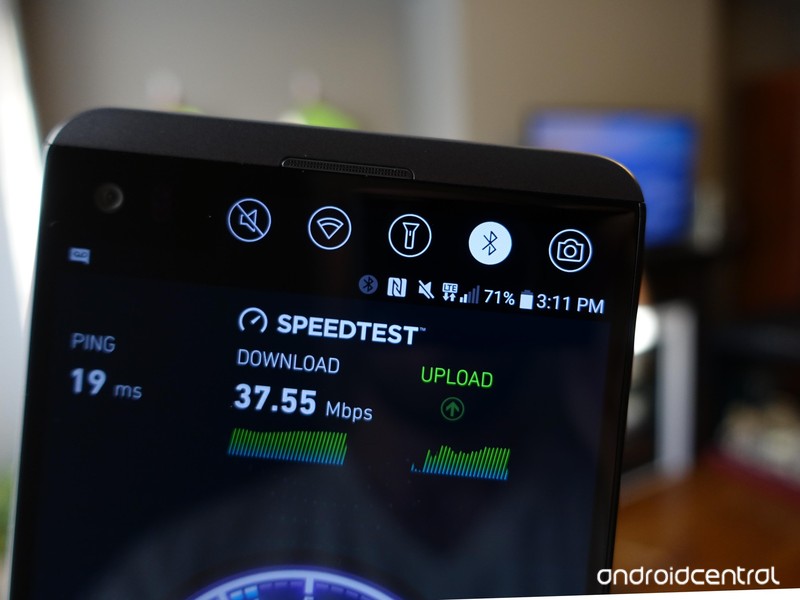
All four major carriers in the U.S. offer unlimited data plans. But which is the best?
The big four networks in the United States (AT&T, Sprint, T-Mobile, and Verizon) all carry an unlimited data plan (or several). That’s important for power users as well as anyone who uses their mobile broadband internet as their sole way to stay in touch or for entertainment. The cost of data overages means that unlimited data is a must for many of us.
 Advertisement
But just because everyone offers unlimited data doesn’t mean that all plans are equal. Pricing is important as are “extras” like tethering and the hidden data cap that pushes you back to slower 3G speeds when you reach it. And of course, zero-rating means we have to pay attention to what unlimited means when it comes to the quality of streaming media as well as the source.
We took a look at what each carrier has to offer so we can decide who delivers the very best unlimited data package. Let’s start with a look at the details for each carrier.
AT&T
Unlimited &More Premium
- Unlimited talk, text, and data
- Subject to data throttling after 22GB
- 15 GB mobile hotspot (tethering)
- Full 1080p video streaming when Stream Saver is turned off
- Unlimited calls and free roaming in Mexico and Canada
- Send unlimited texts to 120 countries
- WatchTV included for free ($15/month value)
- Your choice of HBO, Cinemax, Showtime, Starz, VRV, Amazon Music, or Pandora Premium
- One line of service on an AT&T Unlimited &More Premium plan is $80
- Two lines of service for $150
- Three lines cost $170 while four will set you back $190
Unlimited &More
- Unlimited talk, text, and data
- Subject to data throttling after 22GB
- Standard definition video streaming (480p)
- Streaming speeds are capped at 1.5Mbps
- Unlimited calls and free roaming in Mexico and Canada
- Send unlimited texts to 120 countries
- WatchTV included for free ($15/month value)
- One line of service on an AT&T Unlimited Choice plan is $70
- Two lines of service for $125
- Three lines cost $145 while four will set you back $160
Everything you need to know about AT&T’s unlimited plans
Sprint
Unlimited Plus
- Unlimited talk, text, and data
- Unlimited data for streaming video up to 1080p
- Unlimited data for gaming up to 8Mbps
- Unlimited data for streaming music up to 1.5Mbps
- 15GB LTE mobile hotspot
- Unlimited talk, text, and 10GB of LTE data when in Mexico and Canada
- Global talk and text in over 185 countries
- Hulu included for free ($7.99/month value)
- Tidal included for free ($9.99/month value)
- One line of service is $70
- Five lines costs $42/month per line (total monthly cost of $210)
- For a limited time, bring your own devices and pay just $22/month per line (total monthly cost of $110)
Unlimited Basic
- Unlimited talk, text, and data
- Unlimited data for streaming video up to 480p
- Unlimited data for gaming up to 2Mbps
- Unlimited data for streaming music up to 500Kbps
- 500MB LTE mobile hotspot
- Unlimited talk, text, and 5GB of LTE data when in Mexico and Canada
- Global talk and text in over 185 countries
- Hulu included for free ($7.99/month value)
- One line of service is $60/month
- Five lines of service is $32/month per line (total monthly cost of $160)
Advertisement
Everything you neeed to know about Sprint’s Unlimited Freedom Plan
T-Mobile
T-Mobile ONE
- Unlimited talk, text, and data
- Video streaming capped at 480p
- Unlimited talk, text, and 5GB of LTE in Canada and Mexico
- One hour of free Gogo in-flight Wi-Fi and unlimited texting on enabled flights
- Unlimited data and texting in over 210 locations
- Netflix is included for free ($9.99/month value)
- One line of service on a T-Mobile ONE plan is $70 (including taxes and fees)
- Two lines of service for $120 (including taxes and fees)
- Three lines of service for $140 (including taxes and fees)
- Four lines is $160 and each additional line adds $20 to the total (including taxes and fees)
T-Mobile ONE Plus (add-on)
- Includes 720p video streaming
- 10GB of LTE data and then unlimited 3G speeds
- 2x data speed when traveling (supported in 210 countries)
- Unlimited in-flight Wi-Fi on Gogo-enabled flights
- Voicemail-to-text
- Name ID
- Costs $10 more per month per line
T-Mobile ONE Plus International (add-on)
- Unlimited international calling to landlines in 70+ countries and mobile numbers in 30+ countries
- Unlimited 4G LTE in Mexico and Canada
- Plus all of the other benefits of T-Mobile ONE Plus
- Costs $25 more per month per line
Everything you need to know about T-Mobile’s unlimited plans
Verizon
Above Unlimited
- Unlimited talk and text
- 75GB of Premium Unlimited 4G LTE data
- Video streaming at 720p
- Unlimited mobile hotspot (first 20GB at LTE speeds)
- Unlimited tak and text in Mexico and Canada
- 5 free TravelPasses per month that offer 512MB of LTE data per day (usable in 130 countries)
- 500GB of Verizon Cloud
- $95/month for one line
- $180/month for two lines
- $210/month for three lines and $240/month for four lines
Beyond Unlimited
- Unlimited talk and text
- 22GB of Premium Unlimited 4G LTE data
- Video streaming at 720p
- Unlimited mobile hotspot (first 15GB at LTE speeds)
- Unlimited talk and text in Mexico and Canada
- $85/month for one line
- $160/month for two lines
- $180/month for three lines and $200/month for four lines
Go Unlimited
- Unlimited talk and text
- Unlimited 4G LTE data (your speeds will be throttled more often compared to Beyond Unlimited and Above Unlimited customers)
- Video streaming at 480p
- Unlimited mobile hotspot (max speed of 600Kbps)
- Unlimited talk and text in Mexico
- $75/month for one line
- $130/month for two lines
- $150/month for three lines and $160/month for four lines
Everything you need to know about Verizon’s unlimited plan
The best unlimited data plan
The best plan is the one that works where you need it to work, not the one that’s the cheapest. And we can’t tell you which that one is because it’s different for each of us. Paying more than you need to for phone service is a bad idea, but so is paying for service that doesn’t work.
Generally, if you live outside of a metropolitan area that means Verizon. A look at live, user-generated coverage maps from Open Signal shows there are significant gaps in T-Mobile’s coverage outside of metro areas. You will pay more for Verizon service when compared to T-Mobile (especially once taxes and fees are applied) but chances are Verizon will have the best coverage if you’re in a rural area. There are exceptions, so be sure to investigate before you give any company your money.
If you’re part of the 90% of the U.S. population who lives in a large town or city, your choices are expanded. T-Mobile is a great choice, as even with the One Plus add-on fee of $10 per month you’ll still save money because they include taxes and fees in the cost.
Sprint’s pricing offers a good value, but there are some very valid concerns about their network footprint. These can’t be ignored when talking about “the best”, though. Sprint has taken great strides to improve their coverage, and if Sprint works everywhere you need it to work, you should definitely take a look at what they have to offer.
Of course, none of this includes any customer-loyalty offerings or legacy plans you might be using. In those cases, you might want to stick with the carrier you have now instead of switching because of new pricing or new promotions.
All this makes it very difficult to make a one-size-fits-all recommendation about which plan is the best. If you need nationwide coverage in places that might be a little out of the way, Verizon is a better value than AT&T and generally has a better network according to independent studies from sources like Root Metrics. If you stay on the beaten path, T-Mobile offers the better deal.
We can’t tell you which carrier will be the best for you. But we can tell you what to look for and where to start. Talk to your friends and see what service they are using and how well it’s working, and call each company to see exactly what they have to offer. Most carriers have plans they don’t advertise and one may fit your needs better than the default unlimited plans.
We just want you to enjoy the service you’re paying for!
See plans at AT&T
See plans at Sprint
See plans at T-Mobile
See plans at Verizon
Your turn
What carrier do you subscribe to? Are you happy or are you looking for something new? Add your experience to the comments and help sort this mess out!
Updated July 2018: This article has been updated to reflect changes to AT&T, Sprint, T-Mobile, and Verizon’s unlimited plans.

 AIVAnet