


Roku is working on smart speakers and its own virtual assistant
The two new platforms are called Roku Connect and the Roku Entertainment Assistant.
There are a lot of different smart TV platforms to choose from these days, but if you want access to the most content possible and don’t want to be stuck between middle school feuds, Roku is the way to go. Roku’s been releasing media streaming boxes since as early as 2008, and ten years later in 2018, the company has announced its two latest projects – Roku Connect and the Roku Entertainment Assistant.

Roku Connect

Starting with Roku Connect, this is a new platform the company is launching for smart speakers. There have been rumors of Roku diving into the smart speaker space for a few months now, and this is how it’ll be going about it. However, the approach is a bit different from what we’ve seen from the likes of Google and Amazon.
Rather than creating its own smart speakers, Roku will license out its tech and the Roku Connect platform to third-party OEMs (not unlike what it does with Roku TVs). Roku Connect will be able to power single speakers like we’ve seen with Echo and Google Home products, as well as sound bars, surround-sound systems, and multi-room audio solutions. Roku Connect speakers can connect to each other wirelessly, and TCL will be launching the first Roku Connect-powered device at CES 2018.
We aren’t sure exactly what to expect from this gadget just yet, but it’ll likely just be the first of many that we see throughout the year.
Roku Entertainment Assistant

Powering these Roku Connect speakers is the Roku Entertainment Assistant. This is similar to Alexa and Google Assistant seeing as how it’s a virtual assistant, but that’s where the similarities end. You’ll talk to The Roku Entertainment Assistant by saying “Hey, Roku”, and then the command that you want.
You’ll be able to use the Roku Entertainment System for playing music on your Roku Connect speakers, controlling media playback on your Roku TV/streaming box, turning off your television, and more. Roku wants its Assistant to be focused for only entertainment purposes, meaning that you won’t be talking to it about the weather, traffic conditions, etc.
Roku plans on launching the Roku Entertainment Assistant to its TVs and streaming boxes by Fall of this year, and the idea is that it’ll be used alongside other smart assistants – not as a replacement for them.
Android TV vs. Roku: Which smart TV platform is right for you?
Step up your Instagram game with the 64GB LG V30 smartphone for $675
This sleek entry into LG’s line of smartphones is not one to be overlooked.
For a limited time, B&H Photo is offering $150 off the regular price of the unlocked LG V30 64GB smartphone in Cloud Silver, bringing the price down to $674.99. As a comparison, this device is currently selling at Best Buy for $800. It’s compatible with both GSM and CDMA carriers.

LG’s V30 smartphone features two cameras on the back, one 16MP standard field-of-view lens and a 13MP wide-angle lens, which give you access to some advanced photo and video editing features and effects like Pop-Out Picture Mode and Film Effect. There’s also a front-facing 5MP selfie cam so you can get some nice shots for Instagram or Facebook. It has a vibrant 6-inch display and a 3,300 mAh non-removable battery.
This device comes with 64GB of storage which isn’t bad, but if you like to download things to your device frequently like apps, music or movies, you’ll want to pick up a micro SD card for more space. The phone can hold up to a 2TB card, but since those aren’t even available for sale yet, you’ll be well-prepared for anything you want to download with a 128GB card for $41 or 200GB for $75.
The Android Central review calls the LG V30 a no-nonsense phone with a best-in-class wide-angle camera, high-quality audio, and unique video features:
It does everything well, and then goes the extra mile with a phenomenal camera setup that’s genuinely fun to use. And it does all that at a price considerably below its main rivals.
The discount only makes this device even more worth it. The phone comes with a one-year warranty, and you can extend it by a year for free when you register the device.
See at B&H Photo
HTC U12 render shows off display with hardly any bezels
Saying goodbye to the U11’s circa-2015 bezels.
Although it didn’t have a fancy 18:9 display with slim bezels, the HTC U11 was a truly excellent flagship for 2017 that got more right than wrong. Unfortunately, its arguably outdated design (at least from the front) and stiff competition from Samsung, Apple, and Google held it back from making the impression it probably should have. We’re anticipating a proper sequel at some point this year, and a new render has surfaced of what’s supposedly our first look at the HTC U12.

The HTC U11.
The render showcases the front of the U12 with its screen turned off, and although it’s difficult to see, it’s expected that the U12 will ship with extremely slim bezels unlike the U11. HTC showed that it can trim down bezels with the U11+, and these should be even smaller on the U12. Previous rumors have suggested that we could even get a 4K display on the U12, but it remains to be seen whether or not this comes to fruition.
The U12 should be powered by the Snapdragon 845, the fingerprint sensor will be moved to the back, and HTC might use the U12 to finally get on the dual rear camera bandwagon.

Render of the HTC U12.
As always with these early renders, we advise taking everything here with a grain of salt. Phoney renders have popped up in the past, but what we’re seeing here doesn’t seem far-fetched at all.
If you’re looking forward to the U12, what features/specs are you hoping for the most?
HTC U11
- HTC U11 review
- HTC U11 specs
- Manufacturing the U11: Behind the scenes
- Join our U11 forums
- HTC U11 vs Galaxy S8
- HTC U11 vs LG G6
Amazon
Sprint
HTC
Spotify quietly files to become a public company
It’s a poorly-kept secret that Spotify wants to go public, but when, exactly? Apparently, the answer is “soon.” Axios has learned that Spotify quietly filed initial public offering documents with the US Securities and Exchange Commission in late December. The company has declined to comment, but the insiders claim that Spotify has chosen to go with a direct listing, saving costs and preventing shareholders from losing money. The timing suggests that Spotify could launch its IPO in the first quarter of 2018, although whether or not that happens is up in the air — the streaming service may have serious legal hurdles to clear.
Spotify has already been facing lawsuits over claims it doesn’t have full licenses for songs, and word came just this week that it was facing a $1.6 billion copyright lawsuit from Wixen Music Publishing. It could be difficult to attract those all-important investors if there’s doubt of whether or not Spotify is on solid legal ground, or will have to pay extra licensing fees. An impending IPO might push Spotify to settle or otherwise wrap up lawsuits quickly.
Whenever Spotify does go public, it promises to be a big deal. The company is still struggling to turn a profit, and an IPO could give it the resources it needs to make that happen. Also, it’s facing mounting competition from the likes of Apple, which has very deep pockets that help it buy loads of exclusives and massive ad campaigns. While Spotify has a comfortable lead in paid subscribers, it might need the cash from an IPO to stay ahead.
Source: Axios
Fee Waivers for Apple Developer Program Now Available for Government, Nonprofit Organizations and Educational Institutions
Apple today announced the official availability of fee waivers for its Apple Developer Program for nonprofit organizations, accredited educational institutions, and government entities in the United States who plan to distribute free apps on the App Store.
Qualified organizations are able to apply for the waiver, which will provide a free annual membership to the Developer Program. Apple normally charges developers $99 per year.
Apple’s plan to offer free developer memberships to government and nonprofit apps in the United States was first highlighted in late December when its App Store guidelines were updated.
Apple’s new Membership Fee Waiver webpage includes details on which organizations are eligible for the discount. Requirements include a EIN/Tax ID number, a D-U-N-S number, and legal entity status. Apple will review each fee waiver request.
Entities that receive the fee waiver may not publish paid apps or apps with in-app purchases, and members of the Apple Developer Enterprise Program are not eligible. The program is also not available to individuals and sole proprietors/single person businesses.
Fee waivers are currently limited to the United States, but Apple says waivers will be added for other countries “as they become available.”
Tags: App Store, Apple Developer Program
Discuss this article in our forums
A Nanjing Massacre survivor’s story lives on digitally
On the morning of December 13th, 1937, Japanese troops pounded on the door of Xia Shuqin’s family home in Nanjing, China. Thirteen people had taken shelter under this particular roof: Eight-year-old Xia, her mother and father, two grandparents, four sisters (one, four, 13 and 15 years old), and four neighbors. The Japanese army had ridden into the city on horseback that morning and faced little resistance; the Chinese army had made a full, chaotic retreat the prior evening, December 12th.
When Xia’s father answered the door, the Japanese soldiers immediately shot and killed him. They bludgeoned and killed her one-year-old sister. They raped and killed her mother. They killed her grandparents. They raped and killed her 13-year-old and 15-year-old sisters. And they bayoneted Xia three times in the arm and back.
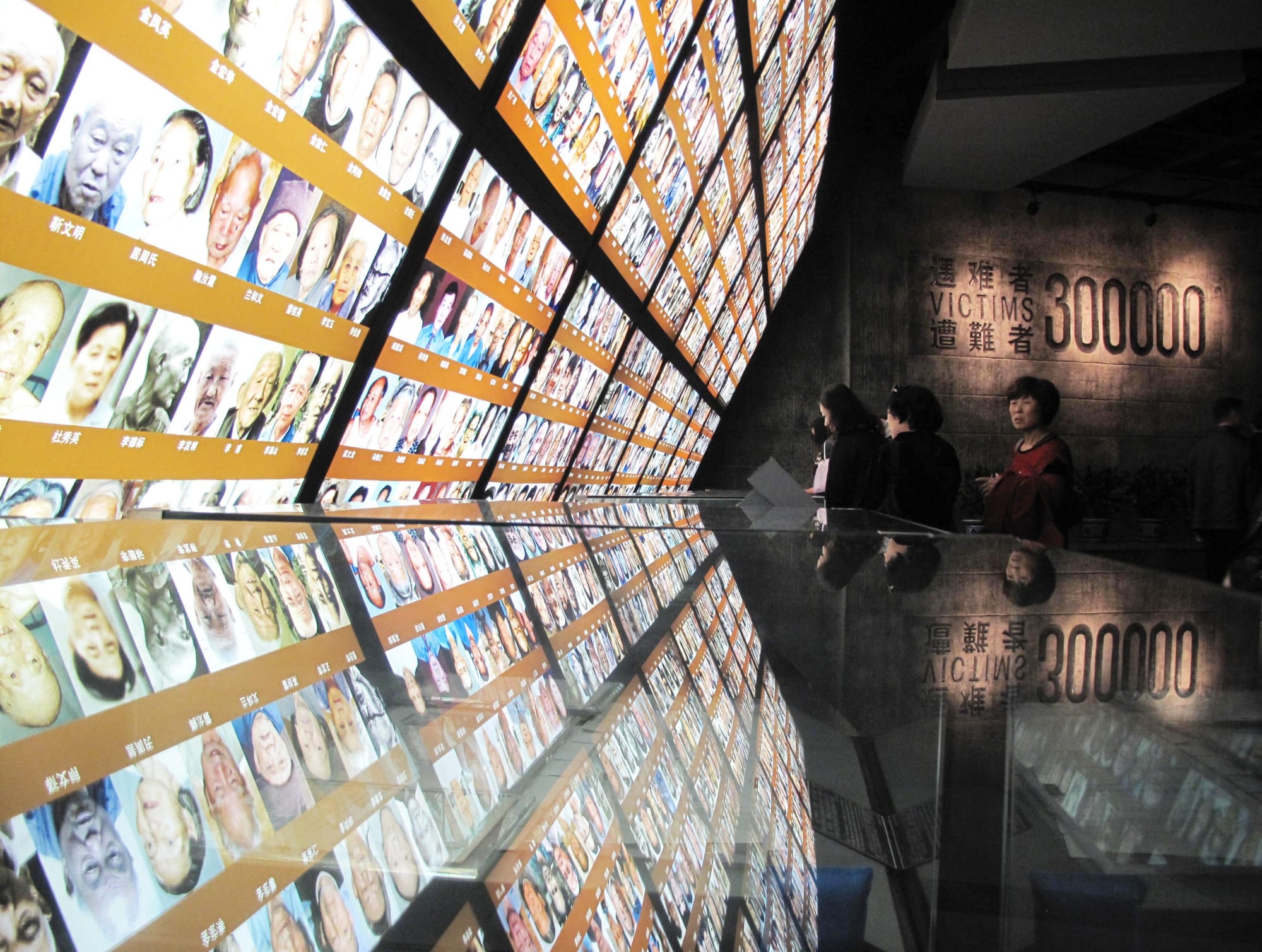
Xia and her four-year-old sister were the only survivors of this onslaught. And for the next ten days, the girls hid inside the house — only moving and searching for food at night — while the Japanese pillaged the rest of the city. The International Military Tribunal for the Far East, convened after World War II to prosecute Japanese war crimes, estimates that 200,000 Chinese were killed over a period of six weeks; China’s official estimate is 300,000 dead. Twenty thousand Chinese women were raped, a number that does not include children or the elderly. Many of those women were then mutilated and killed afterward. But Xia and her sister were found by neighbors and taken to the Nanjing Safety Zone, a demilitarized zone established by Westerners to shelter Chinese refugees from the war.
Today, Madame Xia is 88 years old. She is part of a dwindling population of Nanjing Massacre survivors; when she dies, all that will be left of her story is what historians and organizations can capture through video, audio and textual records.
The University of Southern California Shoah Foundation is one such organization that records and preserves survivor testimony, most recently through its New Dimensions in Testimony (NDT) initiative. In 2014, the USC Shoah Foundation piloted a digital rendition of Pinchas Gutter, a Polish Holocaust survivor who was only seven years old at the start of World War II. Spectators could ask Gutter a question, and the digital rendition would answer it. It is made possible through a combination of voice recognition technology, natural language processing and thoroughness: The Shoah Foundation recorded Gutter for more than 20 hours and asked him more than 1,500 questions to exhaust the possibilities of what a student might ask him.
On December 12th, 2017, the 80th anniversary of the Nanjing Massacre, the Nanjing Memorial Hall in Nanjing, China, debuted a digital rendition of Madame Xia, the latest and most technologically advanced NDT project. There are many firsts to this debut. This is the first time an NDT exhibit has been permanently installed outside the United States. This is the first time the USC Shoah Foundation has recorded a non-Holocaust survivor for NDT. And this is the first time the NDT language processing has been done in Mandarin. There are plans to make these interactive testimonies available online, possibly in the next few years.
Sponsored by the Sichuan Tianfu Bank and Tianfu Group, the new installation at Nanjing Massacre Memorial Hall will create a greater sense of immediacy to an atrocity that, until now, has been passively experienced by people who did not survive or witness the events.
“When I first saw a demonstration of New Dimensions in Testimony with a Holocaust survivor, I quickly understood how important it would be to bring the technology to the people of China,” Hao Wu, president of China Tianfu, said in a Shoah Foundation press release. “A lot of people worked hard to make this happen, but without the generous cooperation of Madame Xia, this would not have been possible.”
Take away dispassionate documentation and history can become a subjective mess, both to people who want to nail down its specifics and to naysayers who might minimize events or deny they happened. But primary accounts are also valuable. Enough of them will form a consensus. And what they lack through subjectivity, they gain through emotional immediacy and impact.

My grandparents were survivors of World War II, and though they were not from Nanjing, they ran and hid from the Imperial Japanese Army during the invasion of Guangzhou. I was only a child when I heard their stories of rape and pillage and thus lacked the wherewithal to ask follow-up questions. What I know is from scattered oral accounts over a period of years.
One of my grandmothers had to flee her home. When she returned, nearly all the animals on her family’s farm were dead — the chickens, even the dog — save for a single ox. The other grandmother served as a nurse for the Chinese army and had to “hide in the mountains.” She saw little Chinese boys “seated” upright on the ends of bayonets. The sort of surreal imagery that was both terrifying and dizzying — too awful to be real.
When I learned about World War II in my American elementary and middle schools, there was zero mention of Japanese war atrocities. My grandparents’ stories felt like alternate, secret histories that I was privy to — sordid and illegitimate, and things that should not be told in mixed, non-Chinese company.
Author and historian Iris Chang led a charge against this sentiment. She published The Rape of Nanking, a historical nonfiction account of the Nanjing Massacre, in 1997. Like me, Chang was an American: She learned about the Japanese war atrocities from her parents, who fled Nanjing before the Japanese sacked the city.
Chang wrote her book to expose the massacre to a wider, Western audience. She researched her subject for two years, even traveling to Nanjing to interview and document survivors’ accounts; among them was Madame Xia’s. And though her book was widely praised and commercially successful — it stayed on The New York Times‘ best-seller list for ten weeks — there was also a backlash to its historical objectivity.
The harshest critics were Japanese nationalists who denied the massacre ever happened in the first place and conflated any inaccuracies in the text to prove this point. But even critics who sympathized with the work expressed that perhaps Chang was too close to the material, that her emotions had clouded her judgment and she was playing one too many roles: on one hand, an unbiased historian and on the other hand, an Asian-American activist who wanted to hold the Japanese government accountable for its misdeeds. Perhaps her written tone had compromised her ethos.
But when I read The Rape of Nanking, I was floored that Chang could take these faded oral accounts, these intangible narratives from my childhood, and give them form with the sort of indignation and blunt horror that befitted them. Chang’s palpable outrage may not have been academic. But the book felt factual and truthful in a manner that a dispassionate recounting would not have. She wanted to do more than simply take down the survivors’ version of events; she also wanted to preserve the survivors’ pain, pride and humanity.
In Tim O’Brien’s novel The Things They Carried, there is a chapter called “How To Tell A True War Story.” O’Brien’s protagonist, an American Vietnam War veteran, makes the argument that a well-told war story captures an emotional truth that cannot be qualified or compromised.
“True war stories do not generalize,” O’Brien writes. “They do not indulge in abstraction or analysis. For example: War is hell. As a moral declaration the old truism seems perfectly true, and yet because it abstracts, because it generalizes, I can’t believe it with my stomach. Nothing turns inside.
“It comes down to gut instinct,” O’Brien concludes. “A true war story, if truly told, makes the stomach believe.”
Iris Chang committed suicide in 2004; she was researching the Bataan Death March at the time of her passing. In the years since, Dr. Ying-Ying Chang, her mother, has taken up her daughter’s activism. The Nanjing survivors whom Iris brought to Western audiences’ attention have not forgotten her either; there is a statue of her likeness at Nanjing Massacre Memorial Hall, the same place where Madame Xia’s digital likeness is installed.
When I spoke to Iris’ mother via phone, she expressed her daughter’s oft-stated sentiments: that the Japanese government has still not properly atoned for its crimes against the Chinese people. She cited Germany, which underwent a denazification after World War II, as a model example of how to facilitate the healing process.
 Nanjing Massacre Commemoration Ceremony, Dec. 13th, 2016
“Japan, up to this moment, has still not officially apologized to China and to the victims of the war,” said Dr. Chang. “And If you don’t think what you did is wrong, you will repeat the same mistake. The Japanese need to understand what happened in their own history.”
Although Japanese prime ministers have not apologized for Nanjing specifically, they have made general, albeit belated apologies for war atrocities. In 1995, on the 50th anniversary of World War II’s end, then Prime Minister Tomiichi Murayama stated, “In the hope that no such mistake be made in the future, I regard, in a spirit of humility, these irrefutable facts of history, and express here once again my feelings of deep remorse and state my heartfelt apology.” In 2005, then Prime Minister Junichiro Koizumi made a similar statement of remorse.
But in 2007, Prime Minister Shinzo Abe denied any evidence that Japan forced “comfort women” into sexual slavery during the war. And in 2015, on the 70th anniversary of World War II’s end, Abe pointedly did not apologize, despite expressing his remorse for Japan’s misdeeds.
When I asked Dr. Chang about the Nanjing Massacre Memorial Hall’s newest digital installation of Madame Xia, she iterated her support and enthusiasm.
“It’s very exciting,” Dr. Chang said. “It’s better than just a recording or a video. You’re forming a bond, like you’re asking a real person. And it’s so important for people to preserve and continue this. After we die, I hope that the next generation will continue to preserve the truth.”
Thus, it’s fitting that in a 1998 speech at Miami Dade College, Iris Chang specifically singled out the USC Shoah Foundation for its work with Holocaust victims. During her speech, she expressed a now prescient wish: that the Nanjing victims would receive similar media treatment.
“I think Steven Spielberg … has done a wonderful thing by creating the Shoah Foundation to film the surviving testimonials of Holocaust victims,” she said. “Historians should follow his lead and gather eyewitness accounts of Japanese brutality … which would create an even richer primary source material archive for future books. This would protect the victims from being written out of history by future revisionists. And there is a very small window of opportunity to do this, because the victims are dying.”
The USC Shoah Foundation, in collaboration with the Nanjing Massacre Memorial Hall, began recording and collecting testimonies of Nanjing survivors in 2012. There are currently more than 100 survivors in their archives, a number of which are available through the Foundation’s Visual History Archive. It was in 2012 that Madame Xia first recorded testimony for the USC Shoah Foundation. The foundation came to her and videotaped her testimony in China. But to record this latest, more-interactive installation, Madame Xia had to fly out to Los Angeles. She recorded her new testimony over five days at the USC Institute for Creative Technologies. She sat under bright lights, surrounded by cameras, for approximately three to four hours per day, with breaks. The team collected 13 to 15 hours of footage total, comprised of 600 different responses.
Questions were phrased to solicit answers that would be accessible for educational purposes, everything from “How old are you” to “What was your worst memory?” It even took questions from Nanjing Massacre Memorial Hall visitors, who were asked, “If you could ask Madame Xia a question, what would it be?” Madame Xia was not given the questions before the interview, to encourage more natural responses.
The final, resulting dialogue simulation is made possible by IBM’s Watson, a question-answering system that runs hundreds of language algorithms at once. Madame Xia’s is the first NDT project that uses Watson exclusively.
“The primary concern for us is to take someone’s question and map it to the most appropriate response,” said Sam Gustman, chief technology officer of the USC Shoah Foundation. “When we do an interview, we have [a set number of] responses [from the subject]. Those never change. But we have tens of thousands of people who talk to these survivors. And we also have all kinds of people [who speak] different languages who are asking these questions.”
The more information that is fed into Watson, the more it is able to process and find patterns in “natural language” — the commonly spoken, unrehearsed manner that a person would use to communicate orally.
“We’ll be able to leverage the power of Watson as it grows, because there are so many people using it now,” Gustman said. “There’s so much being added to it that it overtook what we could do privately. With Watson, we get more functionality.”
“The goal is to create as human an experience as possible,” Gustman continued. “We’re continuing to work on the artificial intelligence so it feels more like a conversation. But at the same time, we’re also working on the display, so it’ll feel like you’re talking to a real person.”
He cited a project at the USC Institute for Creative Technologies in which researchers are perfecting an automultiscopic technology. It creates a simultaneous 3D effect for a large group of people, and it can be seen with the naked eye without the aid of 3D glasses or other peripherals. An early version of this technology was featured in Morgan Spurlock’s CNN documentary series, Inside Man.
That was 2014. Today, this technology is still years away from being implemented in common practice. But the USC Shoah Foundation planned ahead and attempted to make any recorded, raw footage “future-proof.” More than 100 high-end cameras captured Madame Xia’s every movement, facial expression and fidget, from every angle. That way, when the future does arrive, this automultiscopic 3D imaging can still be implemented, even if Madame Xia has passed away in the interim.

No survivor’s account is exactly alike, especially with how she chooses to frame the experience in retrospect. And Madame Xia was specifically chosen for this project based on her hopeful outlook toward the future.
“She is a very well-known and recognized individual for speaking out about her story and for the memory not to fade,” said Karen Jungblut, director of collections at the USC Shoah Foundation. “She promotes peace and the learning experience from her story.”
“We have a long relationship with her.” said Cheng Fang, a USC Shoah Foundation research specialist who conducted the interview in Los Angeles. “When we had the idea to invite her here [to the United States] to conduct this interview, we were kind of worried about her physical condition. She was already 87 years old, and it would take her 15 hours, even on a direct flight, to come here. But she insisted that she would come to do this interview.
“Madame Xia always had this concept that the Westerners — including the Americans — had saved her life,” continued Fang. “She said that she wanted to come to America to express her gratefulness. We asked her, and without any hesitation, she said yes. She fears that one day, when she’s no longer here, there will be no one to tell her story.”
“She said the experience added more years of life to her,” added Jungblut. “As difficult as it was at times, she was extremely grateful. And I think she enjoyed doing this — telling her story and being a part of this.”
Time and again, the Nanjing Massacre is questioned and debated over raw statistics. How many people were raped? How many people were killed? Was it 200,000? Was it 300,000? The cruel irony of war is that both of these figures are numbing in their scope and near impossible to comprehend. They are a statistical monstrosity that threaten to distance us from the horror rather than draw us closer.
But personal narratives give those awful numbers intimacy. And there is an elusive, emotional truth derived from human contact and interplay. One person speaks. Another person listens, processes and responds. Back and forth. Back and forth. It is difficult to deny or refute something so primal and raw. It ensures that the victims — and their lives, loves and losses — are front and center, where they belong. They tell factual stories, but more importantly, they tell true stories, ones that do not generalize. They tell stories that make the stomach believe.
Images: USC Shoah Foundation (Madame Xia photos, memorial service); Peter Parks via Getty Images (Nanjing Statue); VCG via Getty Images (Nanjing Massacre Memorial Hall)
Mophie’s latest portable battery can charge your laptop
If you’ve bought a smartphone in a carrier storefront, chances are you’ve been tempted to pick up a Mophie external battery. The brand has a range of power sources and wireless phone-charging cases, but they’ve previously been limited to the low voltage of devices. But no longer: The company’s new product, the powerstation AC, is a $200 VHS tape-sized power brick that can charge laptops.
The powerstation can recharge anything that typically needs to be plugged into a wall outlet thanks to its GCPI-protected 100W/110V port. With 22,000 mWh of stored juice, Mophie’s site claims that its brick can provide through its USB-A outlet 100 hours of extra smartphone energy or just over 20 hours for a large tablet through. Plugging an appropriate laptop (aka those that draw only 30W, like new MacBooks and MacBook Pros) into the powerstation’s USB-C port will provide nearly 15 hours of power to those machines.
Heftier laptops that draw 90W will drain the whole Mophie brick in an hour, however. And if your charger draws more than 100W of power (like, say, the Dell charger I’m using right now), you won’t be able to recharge it with the powerstation at all. But yes, so long as your charging cables don’t draw over the brick’s 100W cap, you can charge multiple devices at once. Devices will ‘charge through’ the powerstation if it’s plugged into the wall, which Mophie’s accessory will power first before recharging itself. If these restrictions don’t hinder your device style, the powerstation AC could help your wandering gadgeteer lifestyle.
Source: Mophie
Gene therapy treatment for hereditary eye disease will cost $850,000
Last month, the FDA approved a gene therapy called Luxturna, which can treat a rare eye disease that causes blindness. Now the treatment has a price tag, CNBC reports. It will cost $425,000 per eye, and while $850,000 is steep, it’s lower than the $1 million at which many expected the treatment to be priced.
Spark Therapeutics, the company that developed Luxturna, is working out a variety of slightly unconventional payment structures in light of Luxturna’s price. First, like Novartis Pharmaceuticals’ one-time treatment Kymriah, for some, Luxturna’s cost will be rebated if the sight of those receiving the treatment doesn’t improve sufficiently. That rebate program was made with nonprofit health plan Harvard Pilgrim. Additionally, in partnership with Express Scripts, Spark has arranged it so that insurers can buy Luxturna directly instead of treatment centers having to purchase it first. That way, treatment centers don’t have to worry about buying an expensive product and waiting for reimbursement and insurers can avoid any price markups set by the treatment centers.
Spark is also looking into spreading out Luxturna’s costs over time, making the price tag a little more palatable and the treatment more accessible. Spark CEO Jeff Marrazzo told CNBC that the company was discussing Luxturna coverage with a number of insurers including the US Centers for Medicare and Medicaid Services. Coverage announcements should be made within the next few months.
How one-time treatments like Luxturna are priced and paid for is important for their success and, therefore, their availability. Last year, a European-approved gene therapy called Glybera flopped because it treated a very rare disease and cost $1 million. The rarity of the disease meant a lack of data on the treatment’s effectiveness and thus a lack of interest on the part of insurers and providers. “We’re at the infancy of what I think could be a lot of innovations in how we pay for these really expensive drugs,” Express Scripts’ Chief Medical Officer Steve Miller told CNBC. “We’ve got to figure this out, because — let’s be frank — there are going to be more of these drugs coming to the marketplace for even bigger populations.”
Luxturna works by replacing a mutated gene found in those with retinal dystrophy with a normal copy. The non-mutated gene can then produce a necessary protein that allows the retina to convert light into electrical signals. Between 1,000 and 2,000 people in the US are thought to be affected by the mutated gene.
Via: CNBC
Fix for Intel’s massive CPU security flaw might slow down your PC
Intel is grappling with another major security flaw in its processors… and this time, the cost of fixing it may be very steep. Researchers have discovered a design vulnerability in Intel CPUs over the past decade that covers the ability of ordinary programs to determine the content or layout of protected kernel memory (i.e. areas reserved just for the operating system). While the details appear to be under embargo for now, the fix is to completely separate the kernel memory from those ordinary processes. That could carry a significant speed hit, since it requires switching between two memory address spaces every time there’s a system call or a hardware interrupt request.
How much of a slowdown you see depends on the processor and the task in question. The biggest blows are expected to come to virtualization systems like Amazon’s EC2 or Google Compute Engine. The Register claims the performance hits could range from 5 percent to 30 percent, but there’s evidence to suggest steeper hits might be possible. Whether or not this affects everyday tasks like gaming or web browsing is another matter, though — there has yet to be comprehensive testing.
As it’s a chip-level flaw, the bug affects virtually every operating system, including Linux, macOS and Windows. Software fixes are known to be in the works for at least Linux and Windows, but a true solution that maintains performance will require changes at the CPU level. Notably, though, AMD reports that its processors aren’t affected due to key differences in memory handling.
Intel has so far declined to comment. However, to call this ill-timed would be an understatement. After years of maintaining a fairly secure performance lead, it’s facing stiff competition from AMD’s Ryzen and Epyc processors. The last thing it needs is a security hole that not only requires design tweaks, but could slow down virtually all the chips it sells once patches are in place.
Via: Reddit, Bloomberg
Source: Python Sweetness (Tumblr), The Register, LKML.org
High-end Roombas will find your home’s WiFI dead spots
That fancy new Roomba you got over the holidays could help suss out your home’s WiFi weak spots this month. A forthcoming patch will add a wireless coverage map to the Roomba’s vacuum heat map. From the sounds of it, the test group for this new feature could be relatively tiny.
The iRobot Beta pool is limited to folks with the pricey Roomba 900 series, and according to the company (via CNET), there may only be 100 – 200 initial testers. From there, future Beta pools could have between 10 and 20 percent of iRobot users. Hopefully that includes DJ Roomba at some point, too.


