


Digital Trends’ mobile team shares its picks for best tech of CES 2018
Though CES isn’t quite as big deal in the world of mobile devices as the annual Mobile World Congress conference, which occurs at the end of February in Barcelona this year, there was still a vast assortment of interesting mobile products to check out this week in Las Vegas. That was especially true when it came to peripherals like wearables.
From the drama surrounding a rumored brand partnership between Huawei and AT&T to the first working example of an in-display fingerprint sensor that we’ve seen, there was plenty to keep section editor Julian Chokkattu and associate editor Andy Boxall busy this week. Chokkattu and Boxall sat down at the Digital Trends booth to discuss the most interesting technology they saw at this years conference, sharing their insights into how and why each new piece of mobile technology will influence the direction of mobile phones in 2018.
“What the underglass fingerprint sensor means in terms of the general trends of this year is that it allows for more of a bezel-less design,” said Chokkattu of the new touch technology, which his team chose for their Top Tech of CES award in 2018, “This is going to change smartphone design, I think.”
In addition to their top tech pick, the duo spent some time discussing the latest phones from Blackberry and Sony — noting in particular that Sony’s latest entry-level and midtier mobile devices will finally have unlocked fingerprint sensors in the United States, which is something that the company has never done on previous phones, despite the fact that the sensor was installed on the device and usable in other countries.
Check out the full conversation with our mobile editors above, and be sure to read their roundup articles on the best mobile accessories of CES 2018, as well as the best overall technology that we saw in Las Vegas this year.
Editors’ Recommendations
- Edit, sign, append, and save with 12 of the best PDF editors
- ‘Breath of the Wild’ and ‘Horizon Zero Dawn’ lead 2018 GDC Award nominations
- Opinion: iPhone X? Nah. Here’s why I’m recommending the iPhone 6S
- Spice up your 360 videos and photos with VeeR Editor for iOS and Android
- Surprise! DxO keeps Nik Collection alive and launches updated RAW editor
Samsung partners with NextRadio to unlock FM Chip in future devices
While smartphones have FM radio built into it, most manufacturers don’t enable it. In partnership with NextRadio, Samsung announced it will be unlocking the FM Chip in its new smartphone models within the U.S. and Canada.
NextRadio — available on iOS and Android — is an app that allows you to stream live, local FM radio stations on your smartphone. If your phone’s FM chip is activated, the app will also provide you with emergency listening capabilities.
By unlocking the FM Chip, Samsung will allow users to listen to local stations, meaning you’ll use less data and battery to stream radio apps. More importantly, the chip will help those in emergency situations by providing important information from local radio stations when cellular coverage is unavailable.
Last year, LG revealed NextRadio was becoming a native platform on some of its top phones in North and South America. The phones not only have their FM chips enabled, but also already come pre-installed with the app.
NextRadio’s website lists over 200 radio-capable phones — most of which are Samsung phones, along with HTC, and Motorola devices — but the radio will only be available if you download the app.
While NextRadio is available for iOS, Apple smartphones are missing from the list. The iPhone 7 and its latest iPhone 8 are also both chip-free, with future models most likely continuing the pattern. The chip’s absence from iPhones could be due to the company not wanting consumers to use radio, since it may effect Apple Music subscriptions.
Ultimately, it’s the manufacturers that make the decision to enable the FM radio chip within its smartphones. But it does often rest on the carrier as well.
Even though FM radio chips are included in the chipset of most smartphones and can be activated by manufacturers, most carriers have no motive to do so. Having customers stream their music also means they’re using up more data, which allows carriers to make more money.
It’s clear that unlocking the FM Chip in smartphones is necessity when it comes to public safety — especially in the wake of recent natural disasters around the world — and manufacturers are noticing. If you’re looking for a smartphone with an FM radio, it’s clear that an Android device may be your best option.
Editors’ Recommendations
- Your phone probably has an FM radio — so why can’t you use it?
- Norway becomes first country to end support for FM radio in national broadcasts
- Android vs. iOS: Which smartphone platform is the best?
- Keep the lights on and your phone charged off the grid with the SolarHome 620
- Find out how to track a phone with these helpful tracking tips
At CES, Fossil shows off smartwatches that are both useful and stylish
One of the biggest hurdles for smartwatch manufacturers early on was that its products tended to be (let’s not mince words) ugly. Consumers who prefer the timeless elegance of a proper watch may be excited to learn that fashionable watchmakers have begun to enter the smartwatch space, creating smartwatches that blend functionality with aesthetics.
Clothing retailer Fossil has been working to produce fashionable watches for the modern tech user, and Strategy Director Hannah Liu visited Digital Trends’ CES booth, showing off some new wearables for the tech user who likes to look good.
First up was the Kate Spade Scallop Android smartwatch. Kate Spade is a popular women’s fashion brand, and the Scallop is the latest example of manufacturers designing tech for women; it’s particularly notable for not following the “pink it and shrink it” approach, as one Kate Spade executive described it to DT.
The Scallop allows users to tailor the watch face to match their outfit. Simply input factors like the time of day, the color of the dress, the color of jewelry, etc, and the watch will adjust to suit your look. The Scallop was so impressive, DT awarded it the Top Tech of CES Award for Best Wearable.
For those who want a less feminine aesthetic, Liu also showed off the Skagen Falster. A Danish heritage brand, Skagen employs a minimalist style that Scandinavian fashion is known for. It’s a svelte watch, and the tech is so unobtrusive, onlookers might not even know you are wearing a smartwatch until you tell them.
While smartwatches probably won’t usurp Rolex or Grand Seiko as fashion statements, it’s nice to see that tech users can get smartwatches that won’t look ridiculous.
Editors’ Recommendations
- Kate Spade Scallop hands-on review
- Kate Spade’s smartwatch for women shuns tired old ‘shrink it and pink it’ style
- DKNY Minute hybrid smartwatch merges tech and fashion for a neglected audience
- Make some time for the best smartwatch deals available right now
- The Falster is Skagen’s first touchscreen smartwatch, and it runs Android Wear
Genetically engineered algae could bring off-grid solar power to rural Africa
From making eco-friendly shoes to creating a new type of biofuel, algae turns out to be a pretty darn versatile material. Researchers at the U.K.’s University of Cambridge have just demonstrated another use case: a more efficient bio solar cell that’s powered by genetically modified live algae.
“It’s been known for some time that photosynthetic microorganisms — single-celled algae — produce small amounts of electrons, stimulated by light, that can be harvested by electrodes to produce a current,” Professor Chris Howe, one of the lead researchers on the project, told Digital Trends. “You can think of systems based on this as a biological version of a photovoltaic cell. At present, the power per unit area from those cells is low, with the maximum reported as 0.1 watt per square meter. However, we can use the devices to power small items such as environmental sensors. We’ve succeeded in increasing the power output fivefold.”
The new technique developed in collaboration by researchers from the university’s departments of biochemistry, chemistry, and physics involves a two-chamber system, in which the two central processes involved in the operation of a solar cell – generation of electrons and their conversion into power – are separated. This allowed them to improve the performance of the power delivery unit through miniaturization. Because fluids behave differently at miniature scales, this setup resulted in more efficient cells with lower internal resistance and decreased electrical losses.
Despite being 5 times more efficient than previous algae-powered bio cells, however, the team’s creation still produces only one-tenth the power density provided by conventional solar fuel cells. That doesn’t mean it’s without a use, though. “Conventional solar cells produce a higher power density than our devices, although our devices are likely to be cheaper to make — both in financial investment and energy investment — and to decommission at the end of their life,” Howe continued. “In addition, our devices can produce some power in the dark, using materials made by the algal cells in the light, in contrast to conventional solar cells.”
Howe noted that while conventional solar cells are likely to be preferred for large-scale energy production for grid supply, their bio solar cell could be useful in other scenarios. For example, in rural Africa, sunlight is abundant, but there’s no existing electric grid system.
Additional work needs to be carried out to reach that point, however. “Scaling up is always a big hurdle in moving from lab to real-world implementation,” Howe said. “We’re keen to commercialize the systems, but that will be a few years off.”
A paper describing the work was published recently in the journal Nature Energy.
Editors’ Recommendations
- This sweat-powered, stretchable battery could revolutionize wearables
- Thanks to renewable energy, German factories got paid to use power last weekend
- Ingenious new sewage treatment system generates electricity and clean water
- Want to reduce your electric bill? Here’s how to go solar-powered in your home
- Weekly Rewind: Cyber Week deals, water to wine, worms on Mars
Smartglasses from eSight are changing blind people’s lives by enabling them to see
Every once in a while, we see technology that is unlikely to actually be experienced by most people, but is truly transformative and life-changing for select people. That perfectly describes eSight, a pair of smartglasses that give blind people the ability to see. That’s amazing enough, but the glasses — which look like a cross between PlayStation VR and the Avegant Glyph — are so effective that in some cases the previously blind person may have the best sight in the room when wearing them.
We met Rosa Henderson, who is legally blind and has been since birth, at CES 2018. She has been wearing eSight for several months, and her story is one that shows the human side of cutting-edge modern tech. She didn’t talk about how something helped her productivity, or solved a very specific problem, but about something that lets her live. She said eSight gives her control over everyday life, confidence, and independence like no other device before it. It enables her to do the everyday things most people take for granted.
High-tech vision
An example? Henderson talked about attending classes at college, where she would normally have to make special arrangements ahead of time to sit at the very front of the room, and often bring an assistant along to help with dictation and note-taking. That’s after making the journey to the college in the first place, which may have involved the help of other people, using a cane, or owning a service animal — and always required considerable planning. Not impossible, but hugely restrictive, and very reliant on others. It’s hard for sighted people to understand how difficult all this is. Imagine performing your everyday routine with your eyes closed, and it’s probably pretty similar.
Henderson explained that without eSight, she sees nothing long distance, and couldn’t make out my facial features at all when I was sat less than a meter away. Yet with eSight on, not only could she see what I looked like, but she attends those classes without making any prior arrangements, travels safely on her own, and works in the class on her own anywhere she likes.
The classroom experience is a microcosm of real life. Reading signs, being able to see long distances, crossing roads, recognizing people, and even using an Apple Watch is is now possible for Henderson and other eSight wearers. To hear her describe the difference it has made to her life is extremely uplifting.
It’s not the first assistive device she has used, having had experience with everything from a cane to a massive magnification machine that resembled an old microfiche reader and allowed her to view documents. While these often assisted with a single task, none were very convenient, and some didn’t even work well at all.
Everything is solved with eSight, because it enables the wearer to actually see.
Better than 20/20
The eSight is a visor-like device worn on the head, with a pair of corrective glasses built in if they’re needed. A high-speed camera views the world around the wearer, projecting the image onto a pair of OLED screens, where special software enhances and cleans up the image. There’s no lag, the images produced don’t have a digital appearance, and because the visor can be lowered and lifted, peripheral vision isn’t ruined. It’s arguably the true definition of augmented reality.
A high-speed camera views the world around the wearer, projecting the image onto a pair of OLED screens, where special software enhances and cleans up the image.
How much does it change vision? Incredibly, Henderson has the equivalent of 20/20 sight using it. A zoom feature, which is controlled with a linked handset, means she may see further and often with more clarity than sighted people. There’s even an HDMI port to plug in a media device, so the headset acts like a virtual reality display for watching TV and movies. The whole thing is easy to put on, adjust, and take off, thanks to a clever system of magnets. Henderson admits the device could be lighter, but that’s something to work on for the next version.
Unfortunately, eSight costs $10,000, which makes it prohibitively expensive. However, the passion and commitment shown not just by Henderson, but also by Jeff Fenton, eSight’s Director of Outreach, is infectious. To help get eSight into the hands of people who need it, the company offers a financing plan, plus a way to donate and contribute to a worthy cause — making blindness a thing of the past by 2020. We may get all excited over the latest phone, wearable, or game console, but millions of people could experience the same level of freedom and independence as Henderson does by using eSight, and that puts it on a different level.
Editors’ Recommendations
- Engineered for fighter pilots, Everysight Raptor AR goggles are built for bikers
- The best crossovers you can buy
- The best GoPro accessories to make the most of your next adventure
- Open source suicide: This 3D-printable ‘death pod’ provides painless euthanasia
- The Pixelbook nearly doubles Samsung’s Chromebook Pro in price. Is it justified?
Smartglasses from eSight are changing blind people’s lives by enabling them to see
Every once in a while, we see technology that is unlikely to actually be experienced by most people, but is truly transformative and life-changing for select people. That perfectly describes eSight, a pair of smartglasses that give blind people the ability to see. That’s amazing enough, but the glasses — which look like a cross between PlayStation VR and the Avegant Glyph — are so effective that in some cases the previously blind person may have the best sight in the room when wearing them.
We met Rosa Henderson, who is legally blind and has been since birth, at CES 2018. She has been wearing eSight for several months, and her story is one that shows the human side of cutting-edge modern tech. She didn’t talk about how something helped her productivity, or solved a very specific problem, but about something that lets her live. She said eSight gives her control over everyday life, confidence, and independence like no other device before it. It enables her to do the everyday things most people take for granted.
High-tech vision
An example? Henderson talked about attending classes at college, where she would normally have to make special arrangements ahead of time to sit at the very front of the room, and often bring an assistant along to help with dictation and note-taking. That’s after making the journey to the college in the first place, which may have involved the help of other people, using a cane, or owning a service animal — and always required considerable planning. Not impossible, but hugely restrictive, and very reliant on others. It’s hard for sighted people to understand how difficult all this is. Imagine performing your everyday routine with your eyes closed, and it’s probably pretty similar.
Henderson explained that without eSight, she sees nothing long distance, and couldn’t make out my facial features at all when I was sat less than a meter away. Yet with eSight on, not only could she see what I looked like, but she attends those classes without making any prior arrangements, travels safely on her own, and works in the class on her own anywhere she likes.
The classroom experience is a microcosm of real life. Reading signs, being able to see long distances, crossing roads, recognizing people, and even using an Apple Watch is is now possible for Henderson and other eSight wearers. To hear her describe the difference it has made to her life is extremely uplifting.
It’s not the first assistive device she has used, having had experience with everything from a cane to a massive magnification machine that resembled an old microfiche reader and allowed her to view documents. While these often assisted with a single task, none were very convenient, and some didn’t even work well at all.
Everything is solved with eSight, because it enables the wearer to actually see.
Better than 20/20
The eSight is a visor-like device worn on the head, with a pair of corrective glasses built in if they’re needed. A high-speed camera views the world around the wearer, projecting the image onto a pair of OLED screens, where special software enhances and cleans up the image. There’s no lag, the images produced don’t have a digital appearance, and because the visor can be lowered and lifted, peripheral vision isn’t ruined. It’s arguably the true definition of augmented reality.
A high-speed camera views the world around the wearer, projecting the image onto a pair of OLED screens, where special software enhances and cleans up the image.
How much does it change vision? Incredibly, Henderson has the equivalent of 20/20 sight using it. A zoom feature, which is controlled with a linked handset, means she may see further and often with more clarity than sighted people. There’s even an HDMI port to plug in a media device, so the headset acts like a virtual reality display for watching TV and movies. The whole thing is easy to put on, adjust, and take off, thanks to a clever system of magnets. Henderson admits the device could be lighter, but that’s something to work on for the next version.
Unfortunately, eSight costs $10,000, which makes it prohibitively expensive. However, the passion and commitment shown not just by Henderson, but also by Jeff Fenton, eSight’s Director of Outreach, is infectious. To help get eSight into the hands of people who need it, the company offers a financing plan, plus a way to donate and contribute to a worthy cause — making blindness a thing of the past by 2020. We may get all excited over the latest phone, wearable, or game console, but millions of people could experience the same level of freedom and independence as Henderson does by using eSight, and that puts it on a different level.
Editors’ Recommendations
- Engineered for fighter pilots, Everysight Raptor AR goggles are built for bikers
- The best crossovers you can buy
- The best GoPro accessories to make the most of your next adventure
- Open source suicide: This 3D-printable ‘death pod’ provides painless euthanasia
- The Pixelbook nearly doubles Samsung’s Chromebook Pro in price. Is it justified?
GE Lighting wants its smart light bulbs to help you improve your shut-eye
With GE laser-focused on playing a large role in the future of smart homes, Digital Trends caught up with Jeff Patton, GE Lighting’s general manager for connected home products, at CES 2018 to get some insight on the company’s upcoming products and innovations.
Patton touched on a number of GE innovations in the smart home field during his visit to the DT booth, but went into great detail about the Alexa voice integration aspect of the recently released C by GE Sol light.
“[The Sol is] the first lighting product to have Alexa voice assistant embedded,” Patton told Digital Trends. “With the voice assistant embedded in the base of it, the [Sol] is an all-in-one-product. It’s a combination of your table lamp, clock, radio — it’s all built into one.”
The voice integration of Alexa is a big aspect of GE smart home products moving forward. Alexa, however, isn’t GE’s only choice for voice integration, as the company is also utilizing Google Assistant and Apple HomeKit.
“Consumers want choice,” Patton told Digital Trends. “Our goal is to give people what they want. We are going to give them this incredibly valuable product and functionality, and depending on whatever voice platform they want to be on, we are going to make that available to them.”
Patton also briefly touched on how GE’s smart light bulbs are a cost-effective and accessible way for people to embrace smart home technology. He also highlighted how lighting affects sleep patterns and one’s overall health. According to Patton, these types of quality of life aspects are what GE Lighting is focusing on improving with its products.
“We need to spend more time investing in the quality of our sleep,” Patton told Digital Trends. “Because it affects the quality of our lives.”
Editors’ Recommendations
- GE is fast becoming the light of your life with more smart lighting options
- Perfect for that eureka moment: the best LED light bulbs to light up the night
- Wiz Smart Connected Lights review
- Let just the right amount of light in with Halio smart-tinting glass
- Noon Home’s DIY smart lighting system helps you set the mood for any occasion
New bill aims to block U.S. government agencies from communicating over Huawei or ZTE network equipment

H.R. 4747 wants to stop government contracts with telecom companies that use equipment from Huawei or ZTE.
Huawei and ZTE are familiar around these parts because they make some pretty good Android phones, but the bulk of their business comes from the networking equipment the two companies manufacture and sell. Worldwide, both Huawei and ZTE are known for providing equipment like network switches that perform well and aren’t crazy expensive. Their gear is popular, with Huawei being the top seller of networking equipment and ZTE coming in at number five — both companies are very important to China’s economy.
Past findings show a strong relationship between both companies and China’s Communist Party.
Another thing both companies have in common is controversy when it comes to the very same equipment. A 2011 congressional investigation found that Huawei and ZTE were both “directly subject to direction by the Chinese Communist Party,” and former NSA chief General Michael V. Hayden has said that Huawei shared “intimate and extensive knowledge of foreign telecommunications systems” with the Chinese state. These allegations led to bans and regulations against any government agencies buying equipment from either company.
A new bill introduced by Texas Republican Michael Conway dubbed “H.R. 4747 — 115th Congress: Defending U.S. Government Communications Act” aims to take things a step further and block any government agency from using a network service provider that has Huawei or ZTE equipment installed. Specifically, service providers with any of the following would be banned from government contracts should the bill pass:
- Telecommunications equipment produced by Huawei Technologies Company or ZTE Corporation (or any subsidiary or affiliate of such entities).
- Telecommunications services provided by such entities or using such equipment.
- Telecommunications equipment or services produced or provided by an entity that the head of the relevant agency reasonably believes to be an entity owned or controlled by, or otherwise connected to, the government of a covered foreign country.
Language in the bill references the past findings of Huawei and ZTE’s relationship with the Chinese government, but many U.S. officials are also concerned with trade between both companies and other countries that aren’t exactly allies, like Syria, Cuba, or Iran. Last year ZTE was fined over $1 billion for violating U.S.-Iran sanctions and a current investigation into Huawei’s dealings with Syria, Cuba, Iran, and Sudan is underway by the U.S. Treasury Department.
This news comes on the heels of AT&T and Verizon dropping support for the Huawei Mate 10 after concerns were reportedly expressed from the Senate and House Intelligence Committees about the companies ties to China’s Communist Party. It’s also not unusual to see government officials calling for product bans when they think a hostile government may be involved with a company, as we’re recently seen with Kaspersky Labs products and Russian spying concerns.
We’re unsure how much effect this would have on U.S.-China relations or either company’s bottom line, but it surely can’t be good news. The bill is currently being considered by a committee and if approved would go before Congress.
This could be our first look at the LG G7
Spoiler alert – it’s a black bar with slim bezels.
Samsung and LG are often the first two companies to release major Android flagships for the year, and we’re expecting this to be the case once again in 2018. The Galaxy S9 has already leaked in just about every way possible, but details on the G7 have been fewer and further between.
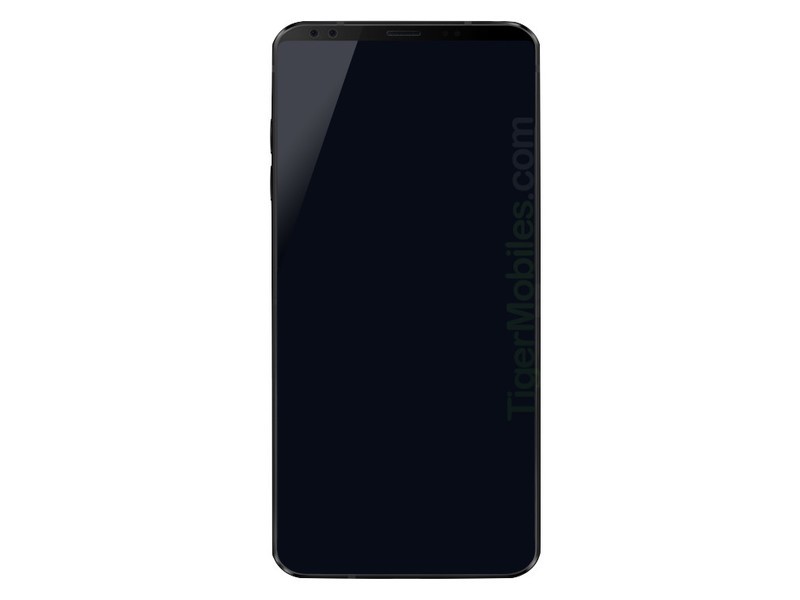
TigerMobiles recently shared a render of what’s supposedly our first look at the LG G7, and while it’s impossible to say for sure if this is what the phone will end up looking like, there’s nothing here that looks too far-fetched.
LG will more than likely be sticking with the 18:9 aspect ratio that it introduced with the G6 last year, and although we can’t tell from the render, we’re expecting an OLED panel to finally make its way to the G-series. It appears that LG will be trimming down bezels quite a bit compared to the G6, and if you look at the top left of the phone, you’ll see two front-facing cameras.
The LG G7 should be announced at some point in February, and according to a previous statement from an LG spokesperson, it’ll actually feature a completely different name and ditch the G-series branding.
Assuming this render is legit, does it have you excited about LG’s 2018 flagship?
LG will stop releasing new phones every year
Android’s notification dots are coming to Chrome OS
A new commit suggests that Chrome OS will soon get Android Oreo’s notification dots.
Oreo wasn’t the biggest Android update ever released, but one of the features it did add was notification dots. Notification dots are those colorful circles that appear next to your app icons, and long-pressing on an app with one of these reveals the notification(s) for that app above your app shortcuts.

A new commit was recently discovered by Chrome Story, and it suggests that these notification dots will soon make their way to Chrome OS. The commit itself is fairly long, but one of the highlights that leads us to believe notification dots are coming to Chrome OS includes “ShelfView::OnShelfItemChanged handles update the icons indicator.”
There are also a few comments regarding the commit, including “Add a notification for the app”, “Pin the app after the notification posts”, and “Draws an indicator in the top right corner of the image to represent an active notification.”
It’s unclear when exactly notification dots will make their way to Chrome OS, but it’s possible they’ll be added within the coming months.
Chrome OS will finally let you run Android apps in the background
 AIVAnet