


The Mi Robot vacuum is my favorite Xiaomi product, and now there’s a new one
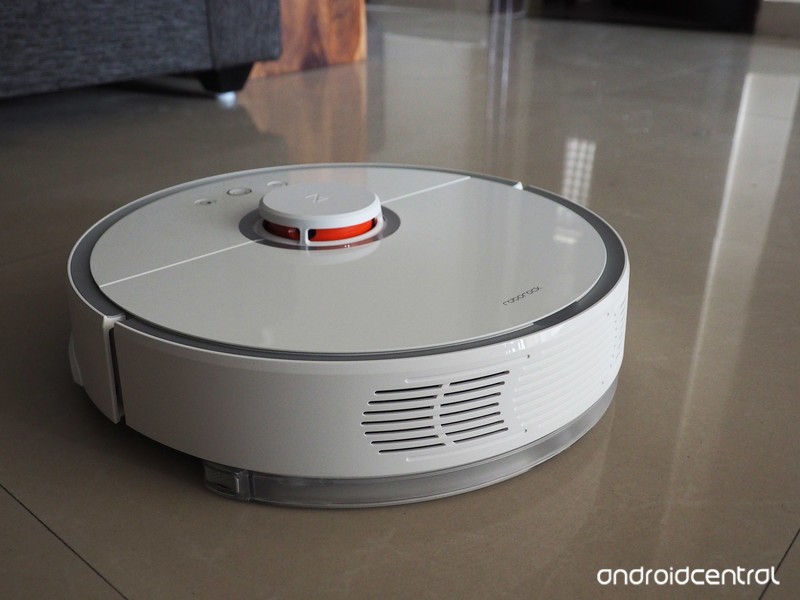
The successor to the Mi Robot vacuum is here, and it brings a host of upgrades.
Xiaomi’s primarily known for its phones, but the Chinese manufacturer is increasingly looking to the lifestyle segment to drive future growth. Xiaomi collaborates with hundreds of Chinese manufacturers for its Mi Ecosystem label, through which it sells everything from rice cookers to scooters, luggage, screwdriver sets, and more. One of the earliest products to come out of the Mi Ecosystem line was the Mi Robot vacuum, a $250 robotic vacuum cleaner with LIDAR and automated cleaning routes.
I bought Xiaomi’s Mi Robot vacuum on a whim back in 2016, and it turned out to be one of my best purchases. The vacuum has a powerful 1800Pa motor, 5200mAh battery, a total of 12 sensors that allow it to navigate the inner confines of your house, and an intelligent routing algorithm through which it can determine the most efficient cleaning routes.
The one downside of the Mi Robot vacuum was that it doesn’t have a wet clean option, but that’s changing with the second-gen variant. The new model comes with a mopping pad at the front, allowing it to sweep and mop in one go.

Although Xiaomi sells the vacuum from its retail stores, it is manufactured by Roborock, just like the first-gen model. However, the main difference this time is that it comes with Roborock branding.
As far as initial impressions go, there’s plenty to like. The process of setting up the vacuum has been vastly simplified by the fact that it has an English language pack installed out of the box. And there’s even a manual in English that gives you an overview of all the vacuum’s functions.
Like its predecessor, you’ll be able to view the Mi Robot vacuum’s charge level and cleaning time through the Mi Home app. You can set automated routines, get a real-time view of the robot as it cleans your house, and see the remaining battery.
The Mi Robot has the same design aesthetic as the first-gen variant, but it has a bulkier body to accommodate the water tank that’s required for the wet clean option. Because there’s a mop up front, you get a pad that can be hooked up to the charging base that prevents the robot from leaving stains across wooden surfaces whenever it’s charging. And yes, it still looks like a cylon.

One of the main features that made the first-gen Mi Robot stand out was its affordability. Sold for just shy of $300, the robot punched significantly above its weight, offering the same performance as $900 vacuums. However, the second-gen model retails for $499 because of the added functionality.
I started using the second-gen Mi Robot a few days ago, and will share my findings on the vacuum’s performance in a few weeks’ time and see if it’s worth the asking price. In the meantime, the first-gen model continues to be brilliant, and is available for $276 with coupon code XIAOMIVAC.
See at GearBest
Here are the best deals from Amazon’s Great Indian Sale
Get your wallets ready.
Amazon is kicking off 2018 with another instalment of the Great Indian Sale. The retailer is offering exciting discounts on phones, accessories, fashion and lifestyle products, and digital content. One of the highlights of the sale is a ₹3,000 discount on the LG Q6, which brings the price of the phone down to ₹11,990. If you’re interested in a physical keyboard, the KEYone is available for ₹34,999.
Amazon has been increasing focus on its own brands — including Solimo, Symbol and Myx but the most interesting of the lot is AmazonBasics. If you haven’t come across the brand yet, AmazonBasics has everything from cables to audio gear, mobile accessories, bags, and even luggage. Having bought a variety of HDMI and Ethernet cables, I can attest to their quality. And the prices are unbelievably low.
Over the last month, Amazon has been adding bedding sets and kitchen essentials to AmazonBasics, and considering the deep discounts, it’s worth checking out what’s on offer.
Mobiles
- LG Q6 – ₹11,990 – ₹3,000 off
- BlackBerry KEYone (Limited Edition Black) – ₹34,990 – ₹8,000 off
- Moto G5s Plus (4GB RAM, 64GB storage) – ₹13,999 – ₹2,000 off
- Redmi Note 4 (4GB RAM, 64GB storage) – ₹10,999 – ₹2,000 off
- Redmi 4 (3GB RAM, 32GB storage) – ₹8,499 – ₹500 off
- Honor 8 Pro (Navy Blue, 6GB RAM/128GB storage) – ₹24,999 – ₹5,000 off
Everything else
- Amazon Fire TV Stick – ₹3,000 – ₹999 off
- Yi Technology wireless security camera – ₹1,990 – ₹5,000 off
- Yi Technology dome security camera – ₹3,990 – ₹6,000 off
- Fitbit Blaze – ₹16,999 – ₹3,000 off
- Fitbit Charge 2 – ₹12,490 – ₹2,509 off
- Kindle Paperwhite Starter Pack – ₹9,798 – ₹2,500 off
- JBL Go Bluetooth Speaker – ₹1,599 – ₹1,100 off
- AmazonBasics – up to 50% off
- Speakers – up to 50% off
What are you guys picking up this time around?
See at Amazon India
Rocket Lab reaches orbit for the first time
Rocket Lab has reached orbit for the first time, even though it’s only the private space company’s second flight. Even more impressive? The test mission, dubbed “Still Testing,” had three customer satellites in tow: one is an Earth-imaging satellite, while the other two will track weather and boats. By successfully sending those satellites to orbit, the company has proven that its Electron rocket flights are a viable low-cost alternative for companies that want to send small payloads to space.
Rocket Lab’s Electron rocket is around one-fourth the size of a Falcon 9 and has a max payload capacity of 500 pounds. It’s definitely much smaller than its peers, but as a result, each flight only costs $5 million. Of course, it helps that the two-stage launch vehicle is powered by Rocket Lab’s Rutherford engines, which are cheap to manufacture. Those engines are primarily composed of 3D-printed components, and they use battery-powered electric motors that are more efficient than those that run on gas. That’s why it only costs around $30,000 to send a CubeSat or a similarly small payload to space atop an Electron.
Still Testing blasted off from the company’s own New Zealand base over a month after its initial ten-day window opened in early December. It was postponed a few times due to technical and weather issues, but it clearly all worked out in the end. Rocket Lab is gearing up to launch a third test flight later this year and might also be preparing to fulfill its contracts with NASA and lunar-mining company Moon Express.
Liftoff from Rocket Lab Launch Complex 1. Space is open for business. #StillTesting pic.twitter.com/BwXqrxa6Y6
— Rocket Lab (@RocketLab) January 21, 2018
Today marks the beginning of a new era in commercial access to space. Thank you to @planetlabs and @SpireGlobal for joining us on this ride. #Electron #StillTesting #PassedTheTest pic.twitter.com/RUMx31MzN8
— Rocket Lab (@RocketLab) January 21, 2018
Earth, as seen by Electron. #StillTesting pic.twitter.com/gPUpaY0AYK
— Rocket Lab (@RocketLab) January 21, 2018
We’ve confirmed Dove Pioneer is successfully in orbit! More soon.
— Planet (@planetlabs) January 21, 2018
Speechless. Just like that, @rocketlab reaches orbit and sets a new bar for launch by reaching orbit on just their 2nd test. Today is a huge win for #electron #commercialspace, #smallsats, and #NZ. #StillTesting = #PassedTest pic.twitter.com/zm8pWvVI30
— Spire (@SpireGlobal) January 21, 2018
Source: AFP, Rocket Lab (Twitter)
Mo’Nique accuses Netflix of gender and race pay gaps
Pay gaps in the entertainment industry might not be limited to conventional productions. Actress and comedienne Mo’Nique has called for a boycott against Netflix after accusing the service of gender- and race-based pay gaps. It reportedly offered Mo’Nique $500,000 for a comedy special where Amy Schumer was offered $11 million (negotiated up to $13 million) and Dave Chappelle was offered $20 million. Mo’Nique said she challenged Netflix on the gap, but received contradictory answers — while the service claimed “we don’t go off resumés” when justifying her pay, it reportedly defended Schumer’s revenue by citing her experience.
She also learned that she wasn’t alone. Wanda Sykes told Mo’Nique on Twitter that Netflix offered her “less than half” of that $500,000 for a Netflix special, leading her to turn to Epix instead. Needless to say, that raised a question: why would the two comedy veterans receive combined offers less than a tenth those of others? Mo’Nique didn’t object to the high pay for others — it just wasn’t clear as to why the figures for her and Sykes were so much lower.
We’ve asked Netflix for comment.
Whether or not the pay difference is evidence of systemic discrimination, it underscores the mounting concerns about discrimination and harassment in streaming services. Now that Netflix and others can regularly pay top dollar for stars, questions over pay gaps could easily become more commonplace: just why is it worth shelling out millions for some stars, but just a fraction of that for others who are clearly famous? This doesn’t mean that companies like Netflix will have to offer a middle-of-the-road actor as much as an A-lister, but they may have to pay more heed to disparities going forward.
#BOYCOTT#NETFLIX FOR #COLORBIAS AND #GENDERBIAS. PLEASE STAND WITH ME. I LOVE US.
A post shared by Mo’nique (@therealmoworldwide) on Jan 19, 2018 at 5:54am PST
“Low Ball” OFFERS TO WANDA SYKES & MO’NIQUE FROM NETFLIX. MAKE IT MAKE SENSE. Luv y’all.
A post shared by Mo’nique (@therealmoworldwide) on Jan 21, 2018 at 12:10pm PST
Via: Deadline
Source: Mo’Nique (Instagram 1), (2), Wanda Sykes (Twitter)
Netflix’s ‘The Crown’ earns the lone streaming win at the SAG Awards
With each new awards season, more streaming series and movies make their way to the list of nominees. In fact, one category at tonight’s 24th Annual Screen Actors Guild Awards, Female Actor in a Drama Series, was comprised entirely of nominees from Hulu and Netflix shows. At the end of this evening’s soirée though, the only winner among the streaming fold was from that very category. Mark down another accolade for Netflix.
The lone win for a streaming service went to Claire Foy for her role as Queen Elizabeth II in The Crown. The first season of the series also won two Golden Globes, two SAG Awards and it was up for multiple Emmys last fall. Season two debuted December 8th on Netflix. This week may not be entirely celebratory for the streaming service though. Actress and comedian Mo’Nique is calling for a boycott, alleging the company discriminates based on gender and race when it comes to pay.
All hail! #TheCrown’s Claire Foy wins Outstanding Performance by a Female Actor in a Drama Series #SAGAwards pic.twitter.com/RjruenWDJj
— Netflix US (@netflix) January 22, 2018
The lineup of nominees from Amazon, Hulu and Netflix did face some stiff competition, so it’s not a huge surprise those movies and series didn’t take home a load of awards. The Handmaid’s Tale, The Crown and Stranger Things lost to TV juggernaut This Is Us for Ensemble in a Drama Series, for example. Sterling K. Brown also won over Jason Bateman (Ozark) and David Harbour (Stranger Things) for his work in This Is Us in the Male Actor in a Drama Series category. HBO’s Veep won over the Netflix comedy duo of Glow and Orange is the New Black — just to give you an idea of what the field of nominees was like.
After racking up two wins earlier this month at the Golden Globes, it’s a little surprising The Handmaid’s Tale walked away empty handed tonight, even though it was only nominated in two categories. Streaming services also did well at the Emmys last fall, with Amazon, Hulu and Netflix all racking up a load of awards.
Source: Screen Actors Guild Awards
Speedy DNA nanorobot could lead to molecular factories
DNA-based robots promise all kinds of microscopic machinery, but there’s a major obstacle: they’re slow. Existing designs that use biochemical processes for movement can take hours to shuffle molecules around, which makes them utterly impractical for anything time sensitive. That might not a hurdle for much longer. Scientists have developed a DNA nanorobot (specifically, an arm) that uses electric fields to move a whopping 100,000 times faster than previous examples, even though it’s based on straightforward concepts.
You see, DNA molecules have negative charges as a matter of course. Researchers found that they could quickly and accurately move the arm by subjecting it to electrical pulses that tug the arm in the right direction. You can spin the arm, move it to another position or even have it apply force, all within milliseconds.
You wouldn’t necessarily see small numbers of these gene-based robots in action. Rather, you’d see “millions” of them working in tandem as part of nanofactories. They could piece together complex molecules (say, for medicine), or identify substances at an extremely small level. And in many ways, the new approach makes DNA nanorobots practical. Whenever technology like this is ready for prime time, it could be used for on-the-fly tasks where you just can’t afford to wait.
Via: ScienceNews
Source: TUM, Science
With WeHe, you can quickly detect net neutrality violations on your network
App Attack is a weekly series where we search the App Store and Google Play Store for the best apps of the week. Check out App Attack every Sunday for the latest.
Last month, the Federal Communications Commission voted to reverse net neutrality regulations. The repeal means internet providers are one step closer to no longer being required to give consumers equal access to online content. But how do we know if carriers aren’t already violating net neutrality? This week, we have an app that will help you to see the extent that your provider is slowing down or even speeding up certain apps.
WeHe‘s goal is to let you know if your network provider is giving different service to different applications that you use on your phone. Developed by researchers from Northeastern University and The University of Massachusetts Amherst, it’s currently available for download on both iOS and Android.
Companies like Google or Netflix won’t simply allow researchers to run arbitrary tests on their infrastructure. So, WeHe records the network traffic that the apps (Youtube, Netflix, Amazon, and more) generate when people are using those apps, and then uses its own servers to simulate what is happening.
When running tests through the app, WeHe replays the traffic that it recorded pertaining to a specific app and sends it in the exact same way. This will measure the amount of throughputs it gets — which in this case is megabits per second.
It then runs a test to see what your network provider is giving you if it’s an app it doesn’t recognize, by scrambling up the megabits in the network traffic. It then measures the throughput when sending the exact same amount of data in the exact same way.
By comparing these two tests, you’re then able to see if your provider is throttling based specifically on the content. Users tend to get faster download speeds when the app sends traffic that is scrambled versus when providers are able to actually recognize what’s being sent.
WeHe specifically looks at applications that do video streaming and audio streaming. This is because these apps are bandwidth-intensive and could compete with a provider’s core business such as telephone calls — which is why an app like Skype is included as a test you can run.
“We have seen over the past few years that when there is throttling, it tends to focus on video traffic — and that makes sense because video traffic is the dominant source of load in terms of network traffic,” David Choffnes, WeHe’s creator, told Digital Trends. “As a result, we wanted to make sure that we picked apps that are popular, not just in the U.S. but worldwide, and that would likely be targets for something like application specific throttling.”
Currently, the app only includes Amazon, YouTube, NBCSports, Netflix, Skype, Spotify, and Vimeo. But going forward, there will be more to choose from. While there is the option of running network traffic from its own users to add to the library of apps available, WeHe wants to stay extremely privacy-conscious, since the traffic could contain personal information. Instead, Choffnes explained the app will use its own network traffic on its own servers which will take some time.
Using WeHe is simple and only takes a few minutes. After downloading the app, you’ll be brought to a list of apps that you can toggle on or off to run tests on. You’ll then tap “Run Replays” in the right-hand corner and it’ll begin to run the tests. After running the replays, you’ll then see one of two results — “No differentiation detected” or “Differentiation detected.”
If there’s differentiation detected, this means your carrier is throttling download speeds on a specific app. If it looks like they’re both being treated equally, then you’ll see “No differentiation detected.”
Under the “Previous Results” tab, you can see more information, such as exactly how many megabits per second your carrier streamed each app. This is also where your history of tests will be stored in case you want to refer back to it later on.
The app offers an online dashboard to view as well. This is where you can see a collection of WeHe’s results from other users — which are all anonymous. Using the dashboard, you can see what other users received for specific apps under the same network provider.
Editors’ Recommendations
- Looking for online privacy and security? Here are the best VPNs for Android
- Put your health first and get into shape with the best iPhone fitness apps
- Protect your privacy with the six best VPN for the iPhone or iPad
- How to root Android phones or tablets (and unroot them) in 2018
- Don’t listen to the guy at the mall. How to pick the best smartphone data plan
Glasses could prevent motion sickness in self-driving cars
Never mind festooning a self-driving car in lights and other devices to fend off motion sickness — you might just have to slip on some eyewear. University of Michigan researchers have patented a system that could use glasses or a headset to prevent a disconnect between your sense of motion and what you see. The approach would use a set of sequentially activated light pipes that would imitate the movement of the autonomous vehicle in your peripheral view, giving your body a frame of reference while freeing you to check your phone without getting sick.
The technology could be embedded into the car itself, but the nature of the design makes it portable. Uber’s recent patent application for a similar concept relied on sensory input that demanded non-wearable gear and was more about signalling intentions and offering distractions than mimicking the car itself.
The researchers aren’t guaranteed to implement the technology, as it’s just a patent, but they’re planning to contact automakers and suppliers to turn this into a shipping product. And it could be necessary. The University noted that roughly half of adults get queasy just by reading a book as a passenger — even more people could feel sick in driverless cars. If the technology is going to get mainstream adoption, especially in designs that have people facing backward, inventions like this might be vital.
Source: USPTO, University of Michigan
US coal industry saw little growth in 2017 despite White House push
The Trump administration has been eager to prop up the US coal industry despite evidence that it’s in a steep decline. But did it have much of an effect? Not really. Reuters has obtained preliminary Mining Health and Safety Administration data showing that there was negligible job growth in coal mining during 2017. The field added a total of 771 jobs, reaching 54,819 — a figure still near historic lows. There was growth in Pennsylvania, Virginia and West Virginia, but that was largely offset by mine closures in several states, including Ohio (414 jobs lost) and Texas (455).
The picture isn’t much brighter for 2018. Pennsylvania, for instance, is poised to see an overall loss in coal jobs now that Dana Mining has planned to close a mine that employs roughly 400.
The job losses are unfortunate, but expected. While renewables are growing quickly, it’s mainly natural gas driving the shift — while it’s not as clean as solar or wind, it’s cheaper than coal and still reduces CO2 emissions. Companies frequently face the choice of switching away from coal or refocusing on those coal operations that still have plenty of business, such as those shipping to overseas customers.
It’s difficult to know whether policies from the White House or the Republicans have had an effect, or even whether they could. While there have been efforts to open the doors to more mining and to roll back environmental protections, those only help if the industry sees a bright future in the first place. When renewable power sources are growing quickly and natural gas is more affordable, it’s possible that there’s little any politician could do to spark growth.
Source: Reuters
The Amazon Go checkout-free grocery store opens to the public January 22
“Grab and go” is the premise of Amazon’s new vision for grocery convenience stores. You walk in, pick up a few items, and walk out — all without standing in a checkout line or swiping your debit card.
After a year of employee-only testing, the Amazon Go flagship store in Seattle will finally open to the public on Monday, January 22. Implementing the concept proved more difficult than Amazon had initially realized, and it ran into a few setbacks along the way.
“This technology didn’t exist,” Gianna Puerini, vice president of Amazon Go, said in an interview with Reuters. “It was really advancing the state of the art of computer vision and machine learning.”
The computer tracker for the store had some difficulty identifying people with similar body types. Items being moved from one shelf to another also caused confusion. The store even survived a Pickachu invasion at one point during testing.
Touring the store before its grand opening, Dilip Kumar of Amazon insisted to GeekWire that the technology wasn’t the problem, it was the sheer volume of customers. “Not at all. We’ve been operational from day one, and it has performed flawlessly,” he said.
“We thought we had to open to the public to get that traffic. But we had a significant amount — well beyond our expectations — of demand from just the Amazon population itself, which allowed us to learn everything that we needed,” he added.
After they check in by scanning their QR code when they enter, the store tracks customers with dozens of sensors suspended from the ceiling. Puerini explained to the Seattle Times that the technology was similar to that used in self-driving cars, with a combination of video feeds with image analysis and laser arrays to identify people and items in the store. The customer’s Amazon account is automatically charged when they leave the store.
The prices seemed to be in line with other similar brick-and-mortar convenience stores, with a whole section devoted to Whole Foods products. Although Amazon Go was unveiled before the $13.7 billion acquisition of the upscale grocery retailer last summer, speculation has been rampant that the Amazon Go model is one they want to replicate in larger stores.
Amazon has been evasive about the future of Amazon Go. “We’d love to open more,” Puerini said, but stopped short of announcing any specific plans. Rather than a traditional grocery store, the emphasis is on office workers in an urban environment. Such a clientele would “cater to what the store does well,” Puerini said. “People pressed for time and hungry.”
Editors’ Recommendations
- Which ‘Walking Dead’ character will transition to ‘Fear The Walking Dead’?
- Walk in water without a problem with the Vessi waterproof knit shoes
- How to lock a Mac
- How to buy bitcoin
- DIRTT uses VR to help users design their future space in real time, from any iPhone
 AIVAnet