


Def Leppard albums you might actually listen to are now streaming
The list of streaming holdouts just got shorter. British rock outfit Def Leppard has made its catalog of older albums available on streaming services for the first time. Until now, only the band’s more recent releases were on the likes of Spotify and others. In other words, the material from the band’s glory days — like Pyromania and Hysteria — weren’t included in music services’ catalogs. Of course, it’s also a nice bit of promotion ahead of the group’s summer tour with Journey.
Def Leppard’s situation was unique compared to some other bands (or the people who owned the rights) who were just cautious to opt in. As Billboard notes, the band was at odds with its former label over licensing, so it was hesitant to even make its older music available for download — let alone streaming. In fact, the rift led Joe Elliot & Co. to re-record some of its older material just to get it on iTunes. It would appear Def Leppard resolved its dispute with Universal Music Group over its biggest hits, since albums dating all the way back to the early ’80s are now available on the likes of Spotify, Apple Music and Google Play.
Via: Billboard
Facebook’s fake war on fake news
It’s hard watching Facebook struggle. Like how for the past two years it’s alternated between looking like it’s doing something about fake news, and actually doing something about fake news.
The company’s latest stab at the problem is saying it will change what people see in their News Feeds. The goal is to show users less posts from companies or brands, and more shares (or posts) from friends, in particular ones its algorithm thinks will get you excited.
They’re not specifically saying this has anything to do with stopping the spread of fake news from virulent racists, politically active conspiracy theorists, or propaganda farms successfully goading our country into tearing itself apart.
No, because that would indicate they’ve identified the problem. Instead, Facebook says this notable change to the News Feed — its cash cow fed by your attention — is to make Facebook feel more positive for users. To bring people closer together.

Wink.
At this stage, Facebook could lead a masterclass on how not to solve the fake news problem. De-prioritizing actual news organizations and instead highlighting that InfoWars story about eating Tide Pods that your racist uncle shared and commented on five times is just the latest hasty missive in what seems like Facebook’s desire to amplify the issue.
While some are stroking their chins thoughtfully and musing unquestionably that Facebook just wants its users to be happy, it’s appropriate to examine the contempt for its users that got us in this situation in the first place.
Right after the November 2016 election, despite being warned by the US government and it being widely reported months in advance that fake news and propaganda were influencing American voters, Mark Zuckerberg flatly denied what everyone was telling him, his users, and the world. “Of all the content on Facebook, more than 99% of what people see is authentic,” he wrote. He also cautioned that the company should not rush into fact-checking.
America began its spin into chaos. Countries around the world, including the US, were seeing racial violence in the streets we now know was directly correlated with racist rhetoric on Facebook.
Facebook had all the data. All the answers.
Facebook treated it like a reputational crisis.
In response the company rolled out a “Disputed” flagging system announced in a December 2016 post. The weight of policing the fake news disaster was placed on users, who would hopefully flag items they believed were fake. These items were then handed to external fact-checking organizations at a glacial pace. When two of the orgs signed off on the alleged fake item, the post got a very attractive “disputed” icon and the kind of stern warning that any marketer could tell you would be great for getting people to click and share.
The “Disputed” flag system was predicted to fail from the start, but Facebook didn’t seem to care.
Facebook characterized its efforts as effective in April 2017 stating that “overall that false news has decreased on Facebook” but did not provide any proof. It said that was because “It’s hard for us to measure because we can’t read everything that gets posted.”

In July, Oxford researchers found that “computational propaganda is now one of the most powerful tools against democracy,” including that Facebook plays a critical role in it.
In August, Facebook announced it would ban pages that post hoax stories from being allowed to advertise on the social network. This precluded a bombshell. In September, everyone who’d been trying to ring the alarm about fake news, despite Facebook’s denials and downplaying, all found out just how right they were.
This was the month Facebook finally admitted — under congressional questioning — that a Russian propaganda mill used the social-media giant’s ad service for political operation around the 2016 campaign. This came out when sources revealed to The Washington Post that Facebook was grilled by 2016 Russia-Trump congressional investigators behind closed doors.
Meanwhile, Facebook’s flag system shambled along like a zombie abandoned in the desert.
In September Facebook’s fact-checking organizations told press they were ready to throw in the towel citing Facebook’s own refusal to work with them. Facebook seemed to be actively undermining the fact-checking efforts.
Politico wrote:
(…) because the company has declined to share any internal data from the project, the fact-checkers say they have no way of determining whether the “disputed” tags they’re affixing to “fake news” articles slow — or perhaps even accelerate — the stories’ spread. They also say they’re lacking information that would allow them to prioritize the most important stories out of the hundreds possible to fact-check at any given moment.
By November 2017 fake news as a service was booming.
The following month, December 2017, Facebook publicly declared that the disputed flag system wasn’t working after all. One full year after its launch.
Its replacement, “Related Articles,” was explained in a Medium post that came across as more experimentation on users and a deep aversion to talk about what’s really going on behind the scenes.
There’s more to this story, but you get the idea. It’s a juggernaut of a rolling disaster capped off by this month’s hand-on-heart pledge to connect people better and cut actual news organizations out of the picture.
“Facebook is a living, breathing crime scene for what happened in the 2016 election — and only they have full access to what happened,” Tristan Harris, a former design ethicist at Google told NBC News this week.
Facebook’s response included the following in a statement:
In the past year, we’ve worked to destroy the business model for false news and reduce its spread, stop bad actors from meddling in elections, and bring a new level of transparency to advertising. Last week, we started prioritizing meaningful posts from friends and family in News Feed to help bring people closer together. We have more work to do and we’re heads down on getting it done.
As my colleague Swapna Krishna put it, “The company is making it harder for legitimate news organizations to share their stories (and thus counter any false narratives), and by doing so, is creating a breeding ground for the fake news it’s trying to stamp out in the first place.”

If only Facebook put as much effort into policing fake news as it does actively stomping on the face of free speech in the form of human sexuality, enforcing extreme, antiquated notions of puritanism with its exacting sex censorship.
Indeed, this week a former Facebook content monitor told NBC News that “Facebook’s team of content reviewers focused mainly on violence and pornography, making it “incredibly easy” for Russian trolls to fly under the radar with their fake news.” They added, “To sum it up, what counts as spam is anything that involves full nudity.”
Thank goodness. I mean, who knows how the world would spiral uncontrollably into chaos and violence if someone saw a boob.
Images: Getty Images/iStockphoto (Holding hands); Simon Potter via Getty Images (Readouts); Getty Images (Mark Zuckerberg)
Netflix orders a weekly show hosted by Joel McHale
Netflix has snagged several former show hosts to head their own programs, from Chelsea Handler to David Letterman. Next on the list is Joel McHale, who notably starred in the priceless sitcom Community but got big helming E! channel’s unscripted pop culture-gouging talk show The Soup. For Netflix, he’ll host The Joel McHale Show Starring Joel McHale…an unscripted pop culture-gouging talk show.
Hey @Netflix: I think you misunderstood when I demanded “a lot of green” for my new show. #JoelMcHaleShow pic.twitter.com/SICdubeL1m
— Joel McHale (@joelmchale) January 19, 2018
In fact, Netflix’s other star-hosted shows are similarly patterned after the programs that got them famous: Letterman interviewed President Obama on his show’s first episode with a list of high-profile celebrities to follow, while Chelsea Handler helmed her own talk show for two seasons.
Like The Soup, which McHale hosted from 2004 to 2015, his new show will feature him talking in front of a green screen to preserve the lo-fi feel. Heck, Netflix even brought The Soup executive producer K.P. Anderson on to The Joel McHale Show Starring Joel McHale, so the new show will likely carry over a lot of the old (and also benefit from producer Paul Feig, the guy behind Freaks and Geeks, Bridesmaids and the new Ghostbusters). McHale’s program will start airing on Netflix on February 18th, with a new half-hour show arriving every week.
Via: Variety
Source: Joel McHale (Twitter)
This chat app only works when your phone battery is low
We spend a lot of time trying to eke out a few more minutes from our smart phones. Apple is offering cheap battery replacements and apologizing for iPhone slowdowns, while Android may update to show you which apps drain your battery the most. It’s not too surprising, then, that a developer might take a darkly humorous approach to the impending loss of battery power. Called Die With Me, this new app offers users a chat room when their phone has less than 5 percent battery left.
As Motherboard reports, the app was developed by Dries Depoorter and David Surprenant, Belgium-based app developers. “We wanted to do something positive with a low battery,” he told the site. “And now we see people happy with a low battery having low battery conversations. We had so much fun creating this.” The app has been in development since 2016, says Motherboard, and is now available (after some delays on the iOS side due to Apple’s struggle with it’s own battery issues) on both the App Store and Google Play.
Via: Motherboard
Source: Die With Me
‘Zikr’ brings transcendental Sufi dancing to VR
Director Gabo Arora has spent the last few years promoting virtual reality as the ideal medium for evoking empathy. He spearheaded the UN’s VR app, which featured two of his films, Clouds Over Sidra and My Mothers Wing. Now with Zikr: A Sufi Revival, his new VR experience debuting at the New Frontier exhibition at Sundance today, he’s also hoping to help people work through their own ingrained biases against Muslims — just as he did.
Growing up in a Hindu family that was forced to flee Pakistan when it gained independence, Arora admits that he picked up plenty of negative ideas about Islam and its followers. But after visiting Sufi shrines in India, and learning about that Islamic sect’s inclusive musical rituals, he was able to outgrow his intolerance. With this VR film, Aurora says, he’s also aiming to give viewers a sense of the transcendental nature of Sufi practices.

“These rituals… I think they transform you, and they have a transformative effect that you can only understand through experience,” Arora tells us. “I just thought, ‘Hey VR, that’s what it’s for!’… Can it work for these types of religious experiences?”
Through a combination of 360-degree video and virtual interactivity, Zikr gives you a front row seat to young singers and dancers, while also letting you partake in the experience. It spotlights the rise of Sufism in Tunisia, as young people look for religious outlets beyond more conservative sects. The film is a co-production between Arora’s company Lightspeed; Sensorium, and its co-founders John Fitzgerald and Matthew Niederhauser; and the creative technology studio Superbright.
It also marks Arora’s first multiplayer VR effort. You’re joined by three other people, and you’re all connected by a chain, which resembles the rope of prayer beads used by Sufi followers. As you move the Vive controllers in your hands, the chain also moves, symbolizing how our actions are all intertwined.
Exploring multiplayer was “fundamental” to this experience, according to Arora. “I think the future of VR is definitely social,” he says. Eventually, he hopes to bring Zikr to Steam to let people from all over the world experience these rituals together from their own homes. During my demo of an early version of the film, I only had one companion, but seeing their movements encouraged me to loosen up and participate in the festivities too.

Sensorium
Compared to other 360-degree video VR films, Zikr stands out by letting you participate a bit in what you’re seeing, rather than just having you sit back and passively view them. It begins with a volumetric, 3D rendered version of a young girl, explaining what Sufi rituals mean to her. And all of a sudden, you’re thrust into the middle of a room, with the girl in front of you and half a dozen women with instruments sitting around you. It’s not long before they’re all performing, with you sitting in the best seat in the house.
Throughout Zikr’s scenes, you can dance to the music, and you’re also given props eventually. First you’ll find a tambourine in your hand, which you can hit alongside the musical performers. And you’ll also end up with a burning bundle of straw, which you can wave around as a devotee dances with two flaming handfuls of straw. There are also hidden interactive features in the film, which will be unlocked when you dance along with the performers.
Much like The Last Goodbye, Arora’s last VR film, he’s paying attention to the entire experience around Zikr. Before they hop into VR, Sundance viewers will go through antechambers preparing them for the rituals ahead. There will also be speakers using spatialization technology to play back Sufi music, which will help to set the devotional mood. While the initial set will be limited by space restrictions at Sundance, Arora is hoping to go bigger for future installations. He’s currently in talks with museums, but there aren’t any firm plans to bring Zikr elsewhere yet.
Oculus shows how much VR has evolved at Sundance
Two years into the rise of modern virtual reality, following the launch of the Oculus Rift, HTC Vive and PlayStation VR, the medium might seem seem as if it’s losing a bit of its luster. Headsets are cheaper and easier to use, especially with new Windows Mixed Reality devices, yet VR experiences are still a mixed bag. That’s understandable, since we’re stepping into an entirely new art form — but consumer adoption depends on VR creators figuring out their storytelling language soon.
Luckily, that seems to be a trend at the Sundance New Frontier Exhibition this year. We’re moving beyond the initial “wow factor” and towards more mature experiences that take advantage of VR’s unique ability to immerse you.
“When VR started, everyone started these lists of things you can’t do,” Oculus Creative Producer, Yelena Rachitsky told Engadget. “They always talked about explaining who you have to be as an audience. For example, you have to be a dead person, or someone who came out of a coma. The thing with all of these [new experiences] … Each one has you as a role of the audience all being completely different from each other, but they all work in their own way… I think creators are getting that much better at that blend of interactivity and storytelling.”
Oculus shut down Story Studio, its internal VR production outfit, last year — now it’s bringing films from its partners to Sundance. Fable Studio, which is made up of former Story Studio employees, is debuting an adaptation of Neil Gaiman’s The Wolves in the Wall. Additionally, there’s Masters of the Sun, a virtual rendition of the Black Eyed Peas’ comic; Space Explorers: A New Dawn, an episodic series about the next generation of space travel; Spheres, a new experience from Fistful of Stars creator Eliza McNitt, which turns you into a black hole (literally); and Dispatch, which puts you in the shoes of a 9-1-1 dispatcher.
What’s truly interesting about each of these experiences, based on my demos, is that they all bring something new to the world of virtual reality. In the The Wolves in the Wall, you play as an imaginary friend to a young girl named Lucy. She’s not your typical scripted character. Lucy can see where you’re looking, and cater her responses to that. She can hand you objects, and you can interrupt her during the story, based on what you’re doing. Most intriguingly, she can remember what you’ve done in the past. She’s the embodiment of what Fable Studio is aiming for: A truly interactive virtual character.
“[Wolves in the Wall] doesn’t show interactivity in a blatant way,” Rachitsky says. “Instead picking up something or throwing something, it’s much more subtle. There are a lot of things you might not notice… It doesn’t change the course of the story, but it changes your experience.”
Masters of the Sun, meanwhile, takes the narrative of a traditional comic into a virtual world. Instead of flat panels, you have meticulously detailed 3D environments to explore. You progress by looking at specific characters or objects, which is similar to how you’d look for speech or narration bubbles. And it uses the power of VR to put you right into the perspective of certain characters. At one point, I found myself looking through the glasses of a drug dealing comic book store clerk, right before he was attacked by a zombie.
Felix & Paul, the VR outfit behind the excellent documentaries from the Obama White House, is debuting a new episode of Space Explorers at the festival. Honestly, knowing that was enough to spark my interest. They’ve shown a knack for pushing VR filmmaking forward, and that continues to be the case with Space Explorers. It’s a gorgeous look at what astronauts are going through today to train for missions to Mars and elsewhere. Consider it the next best thing to a Space Camp vacation.

Eliza McNitt
And with Spheres, Eliza McNitt manages to bring her VR fascination with space to a completely new level. While her last film showed us how stars are born, this one follows what happens after a star dies: Sometimes they turn into black holes. Spheres lets you do things scientists can only dream of. We see a star go supernova, dive beyond the event horizon of a black hole, then come back out to assume the role of a black hole. By waving your hands, you can devour nearby planets, and eventually you end up joining with a neighboring black hole. Let’s just say they haven’t been this exciting since Interstellar.
The survival of virtual reality depends on artists like these — people pushing a new medium forward in bold ways. There’s also a major difference with every VR film this year: Many more people will actually have a chance to see them, thanks to cheaper headsets. That means it’s more important than ever to wow them from the start.
Facebook’s next news feed tweak: ranking ‘trusted’ sources
Last week Mark Zuckerberg kicked off his year of making sure your time on Facebook is “well spent” by announcing that feeds will refocus on items shared by friends, instead of news. Today the CEO followed up with an announcement that the site will try to identify and highlight “trusted sources” based on community feedback. While the combination of these changes is apparently only going to change the mix of news in feeds from five percent to four percent, its stated claim is to avoid ” sensationalism, misinformation and polarization.”
In an interview with the Wall Street Journal, the VP of product management who oversees the news feed, Adam Mosseri, said “This is an interesting and tricky thing for us to pursue because I don’t think we can decide what sources of news are trusted and what are not trusted, the same way I don’t think we can’t decide what is true and what is not.” Under increasing scrutiny from the media, users and regulators about its control over the information seen by billions of people every day, it appears Facebook’s first choice is to attempt regulation by its own users.
Mosseri indicated that user rankings are still just one of the weights Facebook will use in ordering posts on the news feed, but it’s unclear exactly how the site will avoid potential attempts to game the system, whether by use of bots, coordinated group reporting or other means. However it works, according to Zuckerberg, this is just the start of a process to “prioritize news that is trustworthy, informative, and local.”
Source: Mark Zuckerberg (Facebook)
TaylorMade’s new putter can analyze your golf stroke
Blast Motion is known for making sports sensors aimed at improving your golf, baseball or softball performance and now they’ve teamed up with TaylorMade on a putter that can analyze your putting strokes. The Spider Interactive Powered by Blast putter marries TaylorMade’s most popular putter with Blast Motion’s motion capture sensors and can measure and report your backstroke time, forward stroke time, tempo, impact stroke speed and face rotation. With the accompanying app, users will be able to track their progress, access training modules and view videos of their strokes.
Other companies including Garmin and Zepp, the latter of which just agreed to stop selling one of its sensors in the US as part of a patent dispute settlement with Blast Motion, also offer golf swing sensors. But, like Blast Motion’s Blast Golf setup, they’re external sensors that attach to a golfer’s glove or club. The Spider Interactive putter, however, houses the sensor within the grip.
The putter will be available in various versions starting March 23rd and will cost $400. The mobile app will be available on iOS March 1st and on Android later in 2018.
Logan Paul forced YouTube to admit humans are better than algorithms
YouTube is no stranger to controversy. Many of its top stars have been in hot water recently: From PewDiePie making racists remarks, to a “family” channel with abusive kid pranks, the company’s been under fire for not keeping a closer eye on the the type of content that makes it onto the site. Most recently, Logan Paul, a popular YouTuber with more than 15 million subscribers, faced backlash after posting a video that showed a corpse he came across in Japan’s so-called “Suicide Forest.” That clip, which was eventually taken down by Paul himself, forced YouTube to cut almost all ties with him and to figure out ways to prevent another situation like this.
Up until now, Google’s (and by extension YouTube’s) solution had been to take down offensive channels and tweak its advertiser-friendly guidelines to give brands more control over where their ads show up. But the tech giant is now taking that one step further. Earlier this week, it announced YouTube will now manually review uploads from accounts that are part of its Google Preferred ad tier, which lets brands publish advertisements in videos from the top five percent of YouTube creators.
The shift is notable because it means YouTube will rely less on algorithms to catch bad actors, something that social media companies are finally realizing needs to happen. Facebook and Twitter have both also vowed to hire more humans, as they look to crack down on bots and troll accounts that have plagued their sites. What Google and YouTube hope, naturally, is that this will help avoid another mess like the one Logan Paul created.
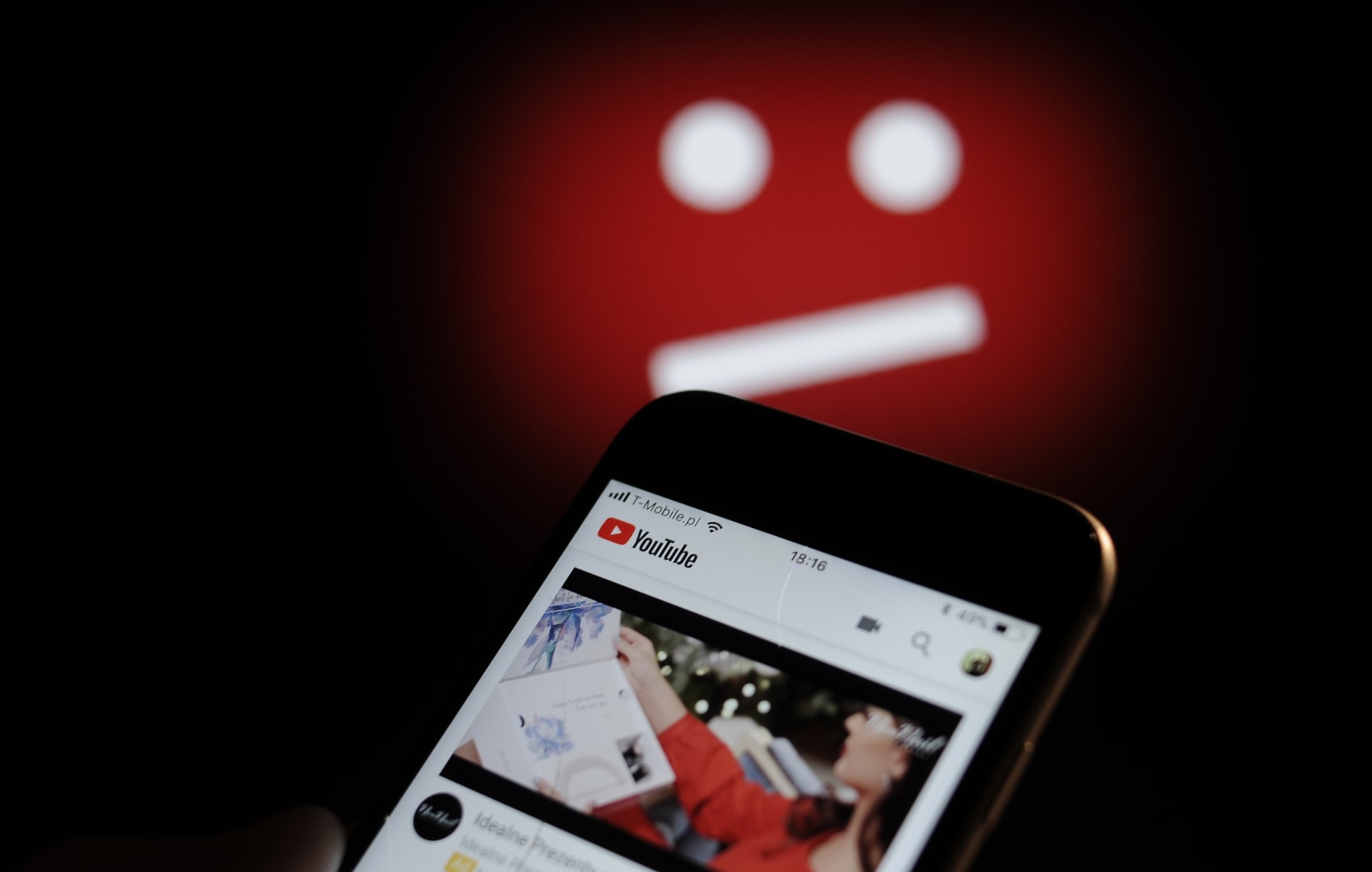
Although Paul’s channel “Logan Paul Vlogs” still lives on the platform, YouTube has put on hold the original projects he was working on for YouTube Red, its paid ad-free streaming service. It also terminated his lucrative Google Preferred ad deal, and while he will still be able to monetize his content, not being a part of that advertising package likely won’t earn him nearly as much money. For context, he was reportedly the fourth highest-paid YouTuber in 2017, according to Forbes, earning an estimated $12.5 million — thanks to Preferred, his Maverick apparel line and sponsored posts on social media.
The decision was likely a tough one for YouTube, considering the millions of people who watch Logan Paul’s channel and, perhaps most importantly, the level of influence he has over a key demographic: teenagers. But YouTube had to make an example out of him in order to appease advertisers, which grow more and more concerned that their ads could appear alongside disturbing or inappropriate videos. Last year, AT&T and Verizon (which owns Engadget), among others, pulled ads from Google’s platform after they were displayed on videos related to terrorism and hate groups.
YouTube is also implementing stricter requirements to its Partner Program, which lets smaller channels earn money by placing ads in their videos, to help filter out offensive content. Creators can now only become a YouTube Partner if they have 4,000 hours of watchtime in the past 12 months and over 1,000 subscribers. These changes are in addition to the ones made in 2017, when YouTube began requiring 10,000 channel views minimum in order to be granted partnership status. The company says setting these thresholds will prevent low-quality videos from making money and stop channels from uploading stolen content. That said, it still plans to depend heavily on viewers flagging videos that may violate YouTube’s community guidelines.
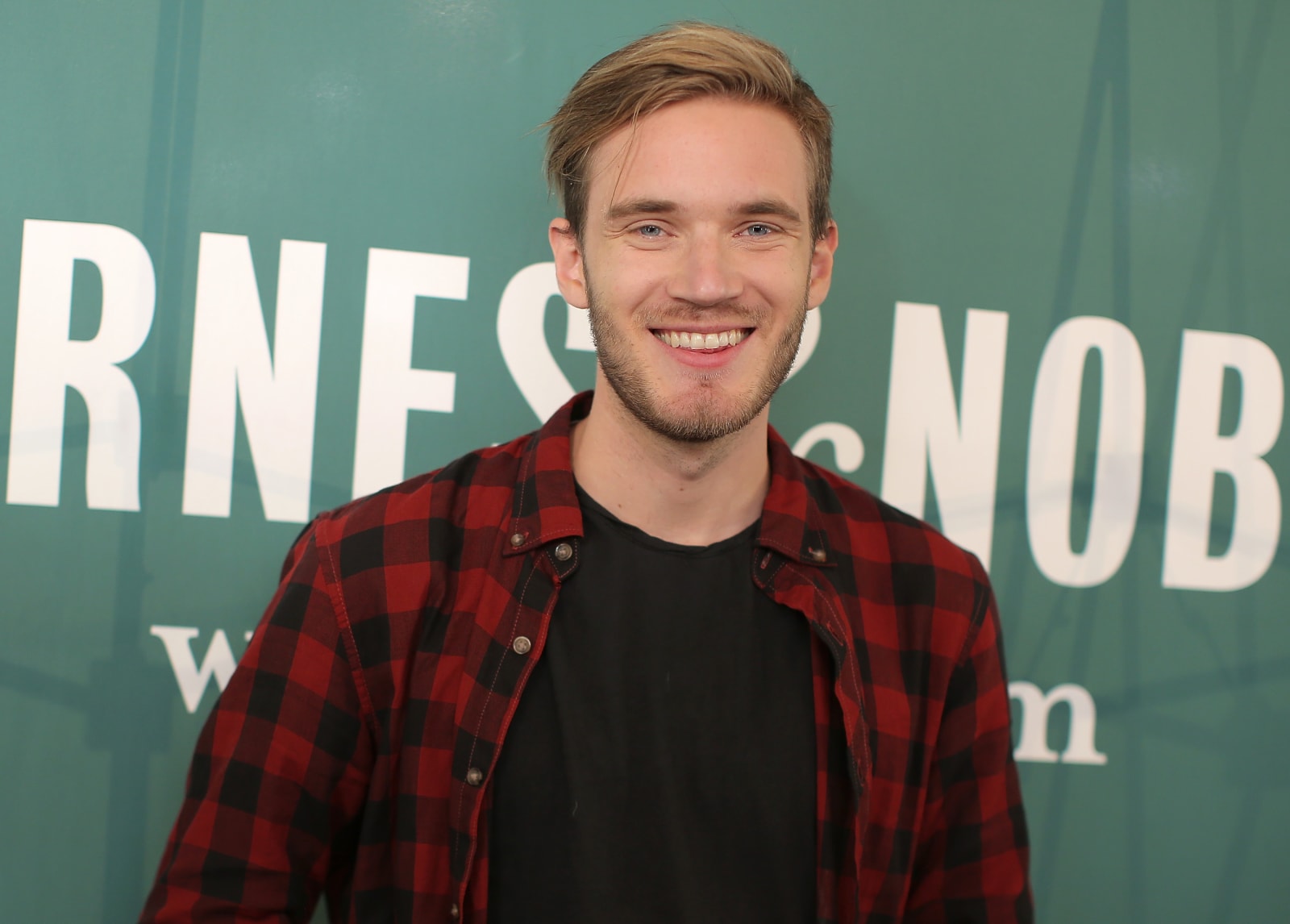
YouTuber star “PewDiePie.”
The main challenge for YouTube, is that often it is top users who are uploading dubious content, not the smaller channels. And that begs the question of why it took it so long to act, at least in a tougher manner. It’s not as if YouTube hasn’t dealt with cases similar to Logan Paul’s in the past. Take Felix “PewDiePie” Kjellberg as an example, the Swedish YouTuber with nearly 60 million subscribers who has published videos filled with anti-Semitic and other racist outbursts on more than one occasion. Or the channel “Toy Freaks,” which had over 8 million subscribers and featured explicit content targeted at young audiences, including videos of children vomiting and in extreme pain that it claimed were “pranks.”
Granted, YouTube did act quickly in both cases: PewDiePie lost his original series Scare PewDiePie and Google Preferred deal, similar to Logan Paul, while the ToyFreaks channel was removed altogether. But those acts should’ve been a huge flag that the company needed to take a hard look at itself and change its video-review process, from depending less on machine learning and more on humans. Just as it plans to do going forward.
If the new system would’ve been in place, chances are the controversial Logan Paul video may have never been viewed by the masses and, therefore, YouTube could’ve saved itself from major public outcry. In fact, there’s still an ongoing petition calling for his channel to be deleted, which so far has been signed by more than half a million people. The hope for YouTube now is that, by having humans monitor popular uploads, there will be less of a chance of any foul videos being published in the future. A YouTube spokesperson told Engadget that every decision the company makes has to work for advertisers, creators and users alike, which can be complicated because not every situation is black and white.
With the overhauled YouTube Partner Program, for example, some creators aren’t happy with the new requirements because they don’t think they’ll be able to make money. But YouTube says that of those channels that will be affected, 99 percent are making less than $100 per year. Ultimately, the spokesperson said, all the changes made recently, both to the advertising and community guidelines, are designed to “move everyone forward,” adding that YouTube doesn’t want someone’s bad judgment call to affect the rest of the platform — even though it certainly feels like it is.

Paul Levinson, a professor of communications and media studies at Fordham University, said he has mixed feelings about the decisions YouTube is making. He believes that, by censoring its creators, it will lose the freedom that’s made it the most popular video site in the world. That said, Levinson also understands that it isn’t appropriate to have a corpse or other “disgusting” content in a video.
“Of course, you could argue that if someone doesn’t like it, they don’t have to view it,” he said. “You know, they can just shut it off the second they see it, but obviously, I get why people find that offensive, even repulsive. And so in that sense, it’s a good thing, but at the same time I’m concerned that we’re beginning to see the end of that totally open [internet].”
Now, as we move past Logan Paul’s controversy, it’ll be interesting to see how effective YouTube’s new monitoring system will be, and whether it decides to expand it beyond just the top five percent of videos. But don’t be surprised if some manage to slip through the cracks, because like the algorithms that have failed YouTube in the past, humans are also far from perfect.
Beats Pill+ Bluetooth Speaker in White Discounted to $116 at Target and Amazon
The Beats Pill+ Bluetooth speaker has received a notable discount today at two retailers, with the White model specifically getting marked down to one of the lowest price points seen for the device. At both Target and Amazon you can get the Beats Pill+ in White for $116.99, which is over $30 lower than the speaker’s more common sale price of $150. When it first launched in 2015, Apple sold the Beats Pill+ for $230.
Note: MacRumors is an affiliate partner with these vendors. When you click a link and make a purchase, we may receive a small payment, which helps us keep the site running.
The only other color that appears slightly lowered in price as well is Black, but on Target the color has sold out at the time of writing, and on Amazon every other color option is $149.00 and above (you’ll have to add the speakers to your cart to see how much they are). Elsewhere at retailers like Best Buy, B&H Photo, Walmart, and Newegg the speaker sits at around a similar $149.00 price point, while Apple still sells it for $179.95.
In other Beats sales, Newegg’s official eBay store has the Beats Solo3 Wireless On-Ear Headphones for $197.00, down from $299.00. Colors available include Gloss Black, Gloss White, Rose Gold, and Gold, and there is a limit to three headphones per customer.
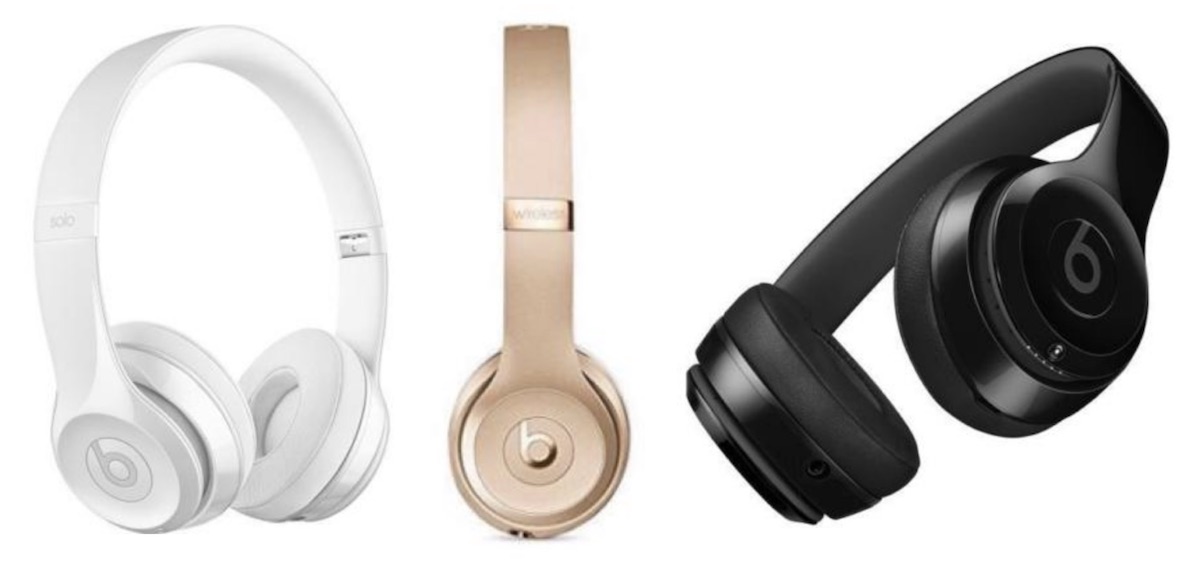
The next best prices can be found at Walmart, Best Buy, and Amazon, which all have the headphones for about $219.99. Like the Beats Pill+ deal, discounts on the Beats Solo3 headphones at these retailers are mostly focused on one color of the device, this time in Black.
For more discounts on Beats and other products — including a UE Megaboom sale going on right now at Best Buy — be sure to visit our Deals Roundup.
Related Roundup: Apple Deals
Discuss this article in our forums
 AIVAnet